Loading...
This comparison has not been analyzed yet.
One-time AI generation (~1 minute). Scores and timeline are already available below.
Chuichi Nagumo vs Otto Perez Molina
Chuichi Nagumo leads by 13.7 pts · 2 figures compared
…

Chuichi Nagumo
General · Modern
51.5Total
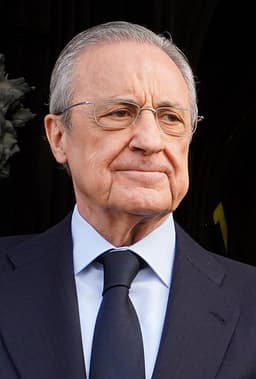
Otto Perez Molina
General · Modern
37.8Total
Basic Information
Born
1887
1950
Died
1944
—
Era
Modern
Modern
Nationality
Japan
Guatemala
Occupation
General
General
Civilization
Eastern
Western
Score Comparison
Military (10%)
67.5
22.6
Political (20%)
29.3
30.8
Influence (20%)
60.0
47.1
Legacy (20%)
49.2
37.5
Leadership (15%)
47.3
45.0
Strategy (15%)
60.0
30.3
TOTAL
51.5
37.8
Chuichi Nagumo — Complete Timeline
1941 AD
Commanded the Attack on Pearl HarborWar
Nagumo commanded the Kido Butai carrier strike force that launched the surprise attack on the US Pacific Fleet at Pearl Harbor, Hawaii. The attack sank or damaged 18 US ships and killed over 2,400 Americans, bringing the US into World War II.
Pearl HarborWorld War IISurprise Attack
Impact: globaldestructive
1942 AD
Led the Indian Ocean RaidWar◆ Major
Nagumo's carrier force raided British naval bases in Ceylon (Sri Lanka) and sank the aircraft carrier HMS Hermes and two heavy cruisers. The raid demonstrated Japanese naval reach but failed to destroy the British Eastern Fleet.
Indian OceanWorld War IINaval Raid
Impact: regional
Defeated at the Battle of MidwayWar
Nagumo commanded the Japanese carrier force at Midway. US dive bombers sank four Japanese carriers (Akagi, Kaga, Soryu, Hiryu) in a single day. The defeat marked the turning point of the Pacific War, shifting the strategic initiative to the US.
Battle of MidwayWorld War IINaval Defeat
Impact: globaltragic
1944 AD
Killed on SaipanWar◆ Major
Nagumo was commanding the Central Pacific Area Fleet on Saipan when US forces invaded the island. As the Japanese defense collapsed, Nagumo committed suicide in his command cave. His death marked the end of a key Japanese naval commander.
SaipanWorld War IISuicide
Impact: regionaltragic
Otto Perez Molina — Complete Timeline
2011 AD
Elected President of GuatemalaPolitical Action◆ Major
Otto Pérez Molina won the 2011 Guatemalan presidential election as candidate of the Patriotic Party. A retired general, he campaigned on a tough-on-crime platform and took office in 2012.
ElectionPresidencyGuatemala
Impact: national
2015 AD
Resigned Amid Corruption ScandalPolitical Action
Pérez Molina resigned the presidency after massive protests and a UN-backed anti-corruption investigation revealed a customs fraud scheme known as 'La Línea'. He was arrested and imprisoned pending trial, becoming the first Guatemalan president to resign due to corruption.
CorruptionResignationPolitical Crisis
Impact: nationaldestructive
2022 AD
Convicted of CorruptionPolitical Action◆ Major
Pérez Molina was convicted of illicit association and customs fraud in connection with the 'La Línea' scandal. He was sentenced to 16 years in prison, marking a significant anti-corruption victory in Guatemala.
ConvictionCorruptionJustice
Impact: nationaldestructive
This comparison has not been analyzed yet.
One-time AI generation (~1 minute). Scores and timeline are already available below.
Rankings
🥇
Chuichi NagumoLeader
Mil: 67.5Pol: 29.3Inf: 60.0
51.5
🥈
Otto Perez Molina
Mil: 22.6Pol: 30.8Inf: 47.1
37.8
+13.7 behind
How This Comparison Works
Algorithm
Each figure is scored on 6 dimensions (0—100 scale) based on structured historical data: Military (10%), Political (20%), Influence (20%), Legacy (20%), Leadership (15%), Strategy (15%). The weighted total produces the final ranking.
Data Sources
Scores are computed from structured sub-indicators in the database. Scale factors adjust for era (Ancient ×0.85, Modern ×1.0) and civilization size (Eastern ×1.05, Other ×0.80) to account for differences in population and military scale.
Maximum 3 Figures
Comparisons are limited to 2—3 figures to ensure readability and statistical meaningfulness.
Error Margins
±5 points per dimension — Sub-scores are derived from historical records with inherent uncertainty. Two figures within 5 points on a dimension should be considered roughly equivalent in that area.
Total Score Accuracy
±3 points overall — The weighted combination of 6 dimensions produces a total score with approximately ±3 points of uncertainty. Differences of less than 3 points are not statistically significant— the figures are effectively tied.
Known Limitations
- Historical records are incomplete and uneven across civilizations
- Figures from oral-tradition societies may be underrepresented
- Occupation labels can misclassify multi-role figures
- Scores measure capability and impact, not moral character
- Quantitative scoring is a comparison tool, not absolute truth
Capability Radar
Military (10%) — Battles & Warfare
Battles
65
10
Win Rate
55
10
Expansion
60
5
Political (20%) — Governance & Reform
Reform
10
10
Diplomacy
20
20
Economy
10
15
Influence (20%) — Cultural & Global Reach
Cultural
30
5
Global
50
5
Legacy (20%) — Historical Impact
Historical
55
10
Longevity
30
5
Leadership (15%) — Power & Stability
Tenure
30
30
Stability
15
5
Strategy (15%) — Tactics & Innovation
Strategy
50
15
Tactics
70
15
Reform
20
10
Similar Comparisons
Comments & Discussion
No comments yet. Be the first to share your thoughts!