Loading...
Cipriano Castro vs Julius Caesar
Julius Caesar leads by 38.9 pts · 2 figures compared
…
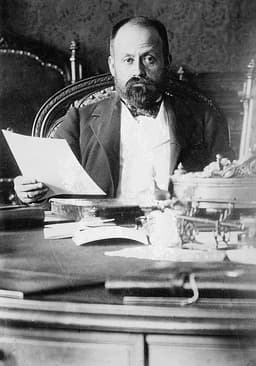
Cipriano Castro
General · Modern
43.9Total

Julius Caesar
General · Ancient
82.8Total
Basic Information
Born
1858
-100
Died
1924
-44
Era
Modern
Ancient
Nationality
Venezuela
Roman Republic
Occupation
General
General
Civilization
Western
Western
Score Comparison
Military (10%)
38.3
88.0
Political (20%)
35.1
78.0
Influence (20%)
51.0
85.0
Legacy (20%)
39.2
82.0
Leadership (15%)
54.2
80.0
Strategy (15%)
41.7
85.0
TOTAL
43.9
82.8
Cipriano Castro — Complete Timeline
1899 AD
Seizure of Power in VenezuelaPolitical Action◆ Major
Castro led a successful invasion from Colombia, seizing power in Venezuela. He established a dictatorship and ruled with an iron fist, suppressing opposition and centralizing authority.
CoupDictatorshipInvasion
Impact: nationaldestructive
1901 AD
Suppression of the Libertadora RevolutionWar◆ Major
Castro suppressed the Libertadora Revolution, a major uprising led by his political opponents. The rebellion was crushed after a long and bloody civil war, but it weakened Castro's regime and led to widespread destruction.
Civil WarSuppressionLibertadora Revolution
Impact: nationaldestructive
1902 AD
Venezuelan Blockade CrisisWar◆ Major
Castro's refusal to pay foreign debts led to a naval blockade of Venezuela by Britain, Germany, and Italy. The blockade forced Castro to negotiate and submit to international arbitration, damaging Venezuela's sovereignty.
BlockadeDebt CrisisInternational Conflict
Impact: globaldestructive
1908 AD
Exile and DeathPolitical Action◆ Major
Castro was overthrown by his vice president, Juan Vicente G
OverthrowExileDeath
Impact: nationaltragic
Julius Caesar — Complete Timeline
58 BC
Gallic WarsWar◆ Major
Caesar, as proconsul of Gaul, launched a series of campaigns that conquered all of Gaul (modern France, Belgium, and parts of Switzerland). He fought numerous battles, including against the Helvetii, the Belgae, and the Gallic chieftain Vercingetorix. The wars brought immense wealth and a loyal army to Caesar.
Gallic WarsConquestRoman Expansion
Impact: regional
49 BC
Crossing the RubiconPolitical Action◆ Major
Caesar led Legio XIII across the Rubicon River into Italy, defying the Roman Senate's order to disband his army. This act triggered a civil war against Pompey and the Optimates, ultimately leading to Caesar's dictatorship and the end of the Roman Republic.
Roman Civil WarEnd of RepublicPower Struggle
Impact: global
48 BC
Battle of PharsalusWar◆ Major
Caesar's outnumbered army defeated the larger forces of Pompey the Great at Pharsalus in Greece. Caesar's tactical use of a reserve line to counter Pompey's cavalry charge proved decisive. Pompey fled to Egypt, where he was assassinated, leaving Caesar as the undisputed master of the Roman world.
Roman Civil WarBattleDecisive Victory
Impact: regional
44 BC
Appointment as Dictator for LifePolitical Action◆ Major
The Roman Senate appointed Caesar dictator perpetuo (dictator for life), granting him unprecedented personal power. This move concentrated military, legislative, and judicial authority in one person, effectively ending the Roman Republic's traditional system of checks and balances and alarming many senators.
DictatorshipEnd of RepublicPower Consolidation
Impact: regionaldestructive
Assassination on the Ides of MarchPolitical Action◆ Major
A group of Roman senators, led by Marcus Junius Brutus and Gaius Cassius Longinus, stabbed Caesar to death at a meeting of the Senate in the Theatre of Pompey. The assassination was intended to restore the Republic, but instead triggered another civil war that led to the rise of the Roman Empire.
AssassinationRoman PoliticsEnd of Republic
Impact: globaldestructive
Expert Analysis
cipriano-castro-vs-julius-caesar
# The General and the Caudillo
On a January morning in 49 BCE, a middle-aged Roman general stood at the banks of a small, unassuming river in northern Italy. The Rubicon marked the boundary of his command, the line he could not legally cross with his army. Julius Caesar hesitated—then plunged forward, uttering the words that would echo through history: “The die is cast.” Two thousand years later, in the autumn of 1899, another general, Cipriano Castro, led a ragged band of soldiers across the Colombian border into Venezuela. He too was crossing a line, seizing power in a country that had known little but chaos and strongmen. Both men were generals who became rulers. But the distance between them is not merely measured in centuries—it is measured in the difference between building an empire and merely occupying a palace.
Origins
Julius Caesar was born into the patrician Julian clan, one of Rome’s oldest families, but his branch had fallen into obscurity and debt. The Rome of 100 BCE was a republic in name, a battlefield in practice—riven by civil wars, slave revolts, and the rivalry of generals like Marius and Sulla. Caesar grew up watching men seize power through military force, and he learned early that in a dying republic, ambition needed no other justification. His uncle Marius was a populist reformer; his enemy Sulla was a dictator who posted lists of political enemies for execution. The lesson was clear: in Rome, the sword was the ultimate argument.
Cipriano Castro was born in 1858 in the Andean state of Táchira, Venezuela, a region of coffee plantations and cattle ranches, far from the coastal elite of Caracas. The Venezuela of his youth was a country exhausted by the Federal War and the long dictatorship of Antonio Guzmán Blanco. The political culture was personal, not institutional—loyalty to a *caudillo*, a strongman, mattered more than loyalty to a constitution. Castro learned to ride and shoot before he learned to read, and his education came not from philosophers but from the brutal logic of local feuds. He was a product of the *llanos*, the plains, where a man’s power was measured in the number of armed men he could command.
Rise to Power
Caesar’s path was a masterpiece of calculated risk. He climbed the Roman political ladder—quaestor, aedile, praetor—borrowing enormous sums to fund public spectacles that bought him popularity. In 60 BCE, he formed the First Triumvirate with Pompey and Crassus, an alliance that gave him command of Gaul. Over the next eight years, he conquered a territory larger than Italy itself, writing his own propaganda in the *Commentaries* that made him a legend. His military score of 88 reflects a general who fought against overwhelming odds and won—against the Helvetii, the Germans, the Gauls under Vercingetorix. But it was his political score of 78 that mattered most: Caesar understood that victory in the field meant nothing without control of Rome.
Castro’s rise was quicker and cruder. In 1899, he gathered a force of 60 men, mostly peasants and bandits from the Táchira mountains, and invaded Venezuela. His “Restorative Liberal Revolution” was less a campaign than a gamble. The existing government was weak, divided, and corrupt. Within months, Castro reached Caracas and declared himself president. His military score of 46.7 tells the story: he was not a great strategist but a lucky opportunist. Where Caesar had legions, Castro had guerrillas; where Caesar had a plan, Castro had audacity. The difference was not in courage but in scale—Castro seized a country of 2 million people; Caesar conquered a continent.
Leadership & Governance
As dictator, Caesar was a whirlwind of reform. He reorganized the calendar, gave land to veterans, expanded Roman citizenship to the provinces, and launched public works that employed the poor. He centralized power but also tried to heal the wounds of civil war—pardoning former enemies, including Brutus, who would later kill him. His leadership score of 82 reflects a man who could inspire loyalty but also provoke fear. He ruled with the Senate, but only as a rubber stamp. His reforms were aimed at stability, but they were imposed from above, and the old aristocracy never forgave him.
Castro’s governance was a different kind of disaster. He ruled Venezuela from 1899 to 1908, a period marked by corruption, nepotism, and constant rebellion. He crushed the Libertadora Revolution in 1901, but his methods were brutal—executions, confiscations, and the destruction of rival estates. His political score of 72 is generous: he maintained power through a web of personal loyalties, not institutions. The most infamous moment of his rule was the Venezuelan blockade crisis of 1902, when Britain, Germany, and Italy sent warships to force payment of debts Castro had refused to honor. He responded with bluster, calling the Europeans “pirates,” but had no navy to back his words. The crisis was resolved by international arbitration, but it revealed the hollowness of his regime. Where Caesar built an empire, Castro merely survived.
Triumph & Tragedy
Caesar’s greatest moment was the Siege of Alesia in 52 BCE, where he surrounded the Gallic fortress and simultaneously fought off a massive relief army. It was a feat of engineering and tactics that remains studied in military academies today. His tragedy came on the Ides of March, 44 BCE, when senators stabbed him 23 times. He died not in battle but in the Senate chamber, betrayed by men he had trusted. His last words, according to legend, were “Et tu, Brute?”—a recognition that even the greatest power cannot buy loyalty.
Castro’s triumph was simply staying in power for nine years, a feat in a country where presidents rarely lasted months. His tragedy was his own body. In 1908, he traveled to Europe for medical treatment, leaving his vice president, Juan Vicente Gómez, in charge. Gómez promptly overthrew him, and Castro never returned. He died in exile in 1924, a forgotten man in a foreign land. His legacy score of 53.6 reflects a ruler who left nothing behind—no reforms, no institutions, no lasting peace.
Character & Destiny
Caesar was a man of immense intellect and ambition, a writer as well as a warrior. He believed in his own destiny, and he was right: his name became synonymous with absolute power. But his arrogance blinded him to the hatred he inspired. He dismissed the conspiracy against him, saying, “It is more important for the state that I should survive.” He was wrong.
Castro was a man of petty vices and limited vision. He loved money, women, and the trappings of power, but he had no grand design for Venezuela. He ruled because he could, not because he had a plan. His character was shaped by the *caudillo* culture of 19th-century Latin America, where power was personal and politics was war by other means. He was a product of his time, not a shaper of it.
Legacy
Caesar’s legacy is the Roman Empire. His adopted heir, Octavian, became Augustus, the first emperor. The title “Caesar” became a synonym for ruler, passing into German as *Kaiser* and Russian as *Tsar*. His writings survive, his reforms shaped Europe, and his assassination set the pattern for political murder for millennia. He is remembered as a genius and a tyrant, a man who destroyed the Republic but created an empire that lasted 500 years.
Castro’s legacy is the dictatorship of Juan Vicente Gómez, who ruled Venezuela for 27 years with an iron fist. Castro opened the door, but Gómez walked through it. Today, Castro is a footnote in Venezuelan history, remembered mostly for the blockade and his comic-opera exile. He is studied as an example of *caudillismo*, the personalist rule that plagued Latin America, but he left no institutions, no ideas, no enduring mark.
Conclusion
Standing on the banks of the Rubicon, Caesar saw an empire. Crossing the border from Colombia, Castro saw a palace. Both were generals who became rulers, but the difference between them is the difference between a founder and a placeholder. Caesar changed the world; Castro simply occupied a chair. In the end, the scores tell the story: Caesar’s total of 83.3 against Castro’s 63.6 is not just a number—it is the measure of how far ambition, talent, and circumstance can carry a man. One built a civilization; the other lived in its ruins.
Rankings
🥇
Julius CaesarLeader
Mil: 88.0Pol: 78.0Inf: 85.0
82.8
🥈
Cipriano Castro
Mil: 38.3Pol: 35.1Inf: 51.0
43.9
+38.9 behind
How This Comparison Works
Algorithm
Each figure is scored on 6 dimensions (0—100 scale) based on structured historical data: Military (10%), Political (20%), Influence (20%), Legacy (20%), Leadership (15%), Strategy (15%). The weighted total produces the final ranking.
Data Sources
Scores are computed from structured sub-indicators in the database. Scale factors adjust for era (Ancient ×0.85, Modern ×1.0) and civilization size (Eastern ×1.05, Other ×0.80) to account for differences in population and military scale.
Maximum 3 Figures
Comparisons are limited to 2—3 figures to ensure readability and statistical meaningfulness.
Error Margins
±5 points per dimension — Sub-scores are derived from historical records with inherent uncertainty. Two figures within 5 points on a dimension should be considered roughly equivalent in that area.
Total Score Accuracy
±3 points overall — The weighted combination of 6 dimensions produces a total score with approximately ±3 points of uncertainty. Differences of less than 3 points are not statistically significant— the figures are effectively tied.
Known Limitations
- Historical records are incomplete and uneven across civilizations
- Figures from oral-tradition societies may be underrepresented
- Occupation labels can misclassify multi-role figures
- Scores measure capability and impact, not moral character
- Quantitative scoring is a comparison tool, not absolute truth
Capability Radar
Military (10%) — Battles & Warfare
Battles
30
95
Win Rate
35
92
Expansion
25
97
Political (20%) — Governance & Reform
Reform
20
90
Diplomacy
25
85
Economy
15
82
Influence (20%) — Cultural & Global Reach
Cultural
15
88
Global
20
94
Legacy (20%) — Historical Impact
Historical
25
95
Longevity
10
96
Leadership (15%) — Power & Stability
Tenure
45
75
Stability
10
60
Strategy (15%) — Tactics & Innovation
Strategy
30
94
Tactics
25
96
Reform
20
88
Similar Comparisons
Comments & Discussion
凯撒批评家6/17/2026
别把凯撒捧成圣人!他跨过卢比孔河就是叛国,公报私仇的独裁者!卡斯特罗至少是本土反抗寡头,1899年他不过是终结了“重新征服”的代理人战争。凯撒在希腊屠杀十万平民,卡斯特罗在马拉开波溪流里就放了十枪。你们迷恋罗马的宏大叙事,却忽视卡斯特罗代表了被殖民的坚韧——他连拉丁语都不懂,这才是真正的反帝国主义!
历史发烧友6/17/2026
比较这两人根本是荒谬的!凯撒改写历法、征服高卢、写书立传,死后封神,遗产横跨两千年。卡斯特罗在1899年10月占领加拉加斯后,除了个人贪腐和操纵选举,什么都没留下。他模仿欧洲贵族摆烂,却连军队都养不起,1908年就被赶下台。凯撒的“我来,我见,我征服”是真实履历;卡斯特罗的“我来,我偷,我逃跑”才是真历史。
Historian7476/17/2026
As a military historian, Caesar vs. Castro is like comparing a Ferrari to a mule cart. Castro’s 1899 invasion with 60 ill-equipped Andean mountaineers was a bumbling farce—he bribed defecting troops and waltzed into Caracas without a single major battle. Caesar’s Rubicon crossing was a calculated constitutional coup de théâtre, backed by veteran legions that conquered Gaul. Castro’s “victory” was just a lucky squall in a storm of Venezuelan chaos; Caesar reshaped the Mediterranean world. One wro
ColdScribe116/17/2026
Stop romanticizing! Castro’s advantage? He faced a decrepit, bankrupt regime under Ignacio Andrade, not Caesar’s optimized, war-hardened Rome. Castro didn’t need military genius—he exploited a power vacuum with 2,000 loyal thugs and foreign loans. Caesar crossed the Rubicon with one legion; Castro crossed the Táchira River with barely a brigade. Yet both won by luck and timing, not some profound strategic vision. Calling Castro “Caesar” is like calling a puddle the Atlantic—same concept, vastly
BoldEye806/17/2026
The real gap is ideology: Caesar fought for personal supremacy within a decaying republic, penning the Commentaries to frame his ambition as duty. Castro fought to topple a *caudillo* system but immediately became its embodiment—a racist Mannerist parody. Caesar’s legacy produced Augustus, empire, and Western political thought; Castro’s left a trail of bankruptcies and self-dealing. Caesar was a visionary warlord; Castro was just a provincial bandit who got lucky with a sofa.