Loading...
Claus von Stauffenberg vs Julius Caesar
Julius Caesar leads by 34.4 pts · 2 figures compared
…
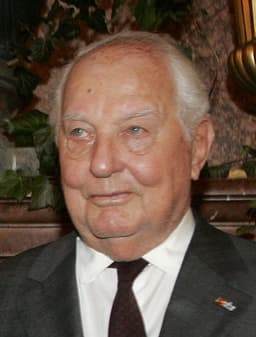
Claus von Stauffenberg
General · Modern
48.4Total

Julius Caesar
General · Ancient
82.8Total
Basic Information
Born
1907
-100
Died
1944
-44
Era
Modern
Ancient
Nationality
Germany
Roman Republic
Occupation
General
General
Civilization
Western
Western
Score Comparison
Military (10%)
50.0
88.0
Political (20%)
32.2
78.0
Influence (20%)
61.0
85.0
Legacy (20%)
54.0
82.0
Leadership (15%)
35.4
80.0
Strategy (15%)
45.0
85.0
TOTAL
48.4
82.8
Claus von Stauffenberg — Complete Timeline
1943 AD
Severely Wounded in North AfricaWar◆ Major
Stauffenberg was severely wounded in Tunisia on April 7, 1943, during an Allied air attack. He lost his left eye, his right hand, and two fingers on his left hand. These injuries later allowed him to carry the bomb briefcase into Hitler's briefing.
World War IINorth AfricaInjury
Impact: nationaltragic
1944 AD
Placed the Bomb at the Wolf's LairPolitical Action
Stauffenberg attended a military briefing at Hitler's Wolf's Lair headquarters on July 20, 1944, carrying a briefcase containing a bomb. He placed the briefcase near Hitler and left the room. The bomb exploded, but Hitler survived with minor injuries.
July 20 PlotAssassination AttemptWolf's Lair
Impact: global
Executed at BendlerblockPolitical Action◆ Major
After the failure of the coup, Stauffenberg was arrested at the Bendlerblock in Berlin. He was executed by firing squad on the night of July 20, 1944, along with Olbricht and others. His last words were reported as 'Long live sacred Germany.'
July 20 PlotExecutionBendlerblock
Impact: nationaltragic
Julius Caesar — Complete Timeline
58 BC
Gallic WarsWar◆ Major
Caesar, as proconsul of Gaul, launched a series of campaigns that conquered all of Gaul (modern France, Belgium, and parts of Switzerland). He fought numerous battles, including against the Helvetii, the Belgae, and the Gallic chieftain Vercingetorix. The wars brought immense wealth and a loyal army to Caesar.
Gallic WarsConquestRoman Expansion
Impact: regional
49 BC
Crossing the RubiconPolitical Action◆ Major
Caesar led Legio XIII across the Rubicon River into Italy, defying the Roman Senate's order to disband his army. This act triggered a civil war against Pompey and the Optimates, ultimately leading to Caesar's dictatorship and the end of the Roman Republic.
Roman Civil WarEnd of RepublicPower Struggle
Impact: global
48 BC
Battle of PharsalusWar◆ Major
Caesar's outnumbered army defeated the larger forces of Pompey the Great at Pharsalus in Greece. Caesar's tactical use of a reserve line to counter Pompey's cavalry charge proved decisive. Pompey fled to Egypt, where he was assassinated, leaving Caesar as the undisputed master of the Roman world.
Roman Civil WarBattleDecisive Victory
Impact: regional
44 BC
Appointment as Dictator for LifePolitical Action◆ Major
The Roman Senate appointed Caesar dictator perpetuo (dictator for life), granting him unprecedented personal power. This move concentrated military, legislative, and judicial authority in one person, effectively ending the Roman Republic's traditional system of checks and balances and alarming many senators.
DictatorshipEnd of RepublicPower Consolidation
Impact: regionaldestructive
Assassination on the Ides of MarchPolitical Action◆ Major
A group of Roman senators, led by Marcus Junius Brutus and Gaius Cassius Longinus, stabbed Caesar to death at a meeting of the Senate in the Theatre of Pompey. The assassination was intended to restore the Republic, but instead triggered another civil war that led to the rise of the Roman Empire.
AssassinationRoman PoliticsEnd of Republic
Impact: globaldestructive
Expert Analysis
claus-von-stauffenberg-vs-julius-caesar
# The Dictator and the Colonel
On a cold March morning in 44 BCE, Julius Caesar walked into the Senate chamber, dismissing a warning from a soothsayer. Hours later, he lay dead at the foot of Pompey's statue, stabbed twenty-three times by men he had once called friends. Nineteen centuries later, on a sweltering July afternoon in 1944, Colonel Claus von Stauffenberg limped into a wooden briefing hut in East Prussia, a briefcase clutched in his remaining hand. He placed it under a heavy oak table, excused himself, and waited for the explosion that would—he believed—save Germany from itself. One man sought absolute power; the other sought to destroy it. Both failed, yet their failures echo through history with vastly different meanings.
Origins
Caesar was born into the chaos of the late Roman Republic, a world of crumbling traditions and naked ambition. His family, the Julii, claimed descent from the goddess Venus, but they were politically marginal. His father died when Caesar was sixteen, leaving him to navigate a world where survival depended on alliances and audacity. The Rome of his youth was a battlefield of egos—Marius, Sulla, Pompey—men who rewrote the rules of power with every civil war. Caesar absorbed this brutal education, learning that in a republic rotting from within, the boldest man writes the laws.
Stauffenberg emerged from an entirely different world: the aristocratic Catholic nobility of Württemberg, steeped in honor, poetry, and military tradition. He was born in 1907, into a Germany still flush with imperial pride, yet one that would collapse into humiliation within a decade. His father was a court official; his mother, a countess. The young Stauffenberg grew up on tales of chivalry and the Romantic poets—Stefan George became his spiritual mentor. Unlike Caesar, who learned that power was something to be seized, Stauffenberg learned that power was something to be served with integrity. That distinction would define everything.
Rise to Power
Caesar’s ascent was a masterpiece of calculated risk. At thirty-seven, he secured the governorship of Gaul, a province that offered both wealth and a legion. Over the next eight years, he conquered a million people and enslaved another million, building an army that would be loyal to him alone. When the Senate ordered him to disband, he chose war. Crossing the Rubicon River in 49 BCE, he declared, “*Alea iacta est*”—the die is cast. Within four years, he had defeated Pompey, pacified the Mediterranean, and declared himself dictator for life. His power came from conquest, from gold, from the adoration of soldiers who would follow him anywhere.
Stauffenberg’s rise was quieter, more dutiful. He served as a cavalry officer in the Wehrmacht, distinguished himself in Poland, France, and Russia, and was promoted to the General Staff. But the turning point was not a river—it was a desert. On April 7, 1943, in Tunisia, an Allied strafing run shredded his body: he lost his left eye, his right hand, and two fingers of his left hand. In the hospital, as he learned to write with his remaining fingers, he made a decision. The war was lost. The Führer was destroying Germany. Someone had to act. His rise was not a climb to power but a descent into conspiracy.
Leadership & Governance
Caesar governed as he conquered—with speed, ruthlessness, and an eye for posterity. He reformed the calendar, granted citizenship to provincials, initiated public works, and centralized the state’s finances. Yet his rule was a paradox: he was a populist who destroyed the Republic in the name of saving it. He pardoned enemies, only to have them plot against him. He was a brilliant military strategist who understood that in politics, as in war, the decisive blow wins. His *Commentaries* are not just history; they are propaganda, crafted to show a man who was always in control, always merciful, always destined to rule.
Stauffenberg never governed. He was a colonel, not a dictator. His leadership was moral, not political. He organized the Valkyrie plot with meticulous care, recruiting disillusioned officers, securing communications, planning for a post-Hitler government. But his strategy was flawed by its very nature: he had to succeed in minutes, or not at all. The bomb was supposed to kill Hitler; the plotters had no backup plan. When the briefcase was moved behind a thick table leg, the blast killed four men but spared the Führer. Stauffenberg, hearing the explosion from a bunker, believed he had succeeded. He flew to Berlin to lead the coup, only to discover that the machine of the Nazi state was still running.
Triumph & Tragedy
Caesar’s greatest moment was also his most tragic. In 46 BCE, he celebrated a quadruple triumph in Rome, parading captives from Gaul, Egypt, Pontus, and Africa. The city was his. But the triumph was hollow. The Senate had become a stage for his enemies. On the Ides of March, 44 BCE, as the daggers fell, Caesar reportedly saw his friend Brutus among the assassins and said, “*Et tu, Brute?*” Then he covered his face and died. His tragedy was that he had achieved everything except the one thing he needed: a system that could survive him.
Stauffenberg’s tragedy was purer, more condensed. On July 20, 1944, at the Bendlerblock in Berlin, as the coup collapsed, he was arrested in his office. He faced a firing squad in the courtyard by midnight. His last words were “*Es lebe das heilige Deutschland*”—Long live sacred Germany. He had lost an eye, a hand, and his life for a cause that failed. Yet his failure was not meaningless. It exposed the existence of a German resistance, a moral counterweight to the regime. Unlike Caesar, who died because he had won too much, Stauffenberg died because he had lost everything but his honor.
Character & Destiny
Caesar was driven by an insatiable appetite for glory. He believed in his own *fortuna*—his luck, his destiny. He gambled constantly, and he usually won. But his confidence became arrogance. He ignored warnings, dismissed enemies, and believed that his genius could outrun fate. His character made him unstoppable, but it also made him blind.
Stauffenberg was driven by duty, not ambition. He was a man of principle in a time of cynicism. He knew the odds were against him, but he acted anyway. His character was shaped by the Romantic ideal of the noble sacrifice—the hero who falls but leaves a legacy of truth. Where Caesar’s destiny was to conquer, Stauffenberg’s was to resist.
Legacy
Caesar’s legacy is the Roman Empire. His name became a title: *Kaiser*, *Tsar*. His reforms outlived him, and his assassination plunged Rome into another civil war, but from that chaos emerged Augustus and the Pax Romana. He is remembered as the man who destroyed a republic to build an empire—a figure of genius, ambition, and warning.
Stauffenberg’s legacy is more fragile. For decades, he was dismissed as a traitor in Germany. Only after the war did his name become a symbol of the “other Germany”—the one that said no. Today, a street in Berlin bears his name, and German soldiers swear allegiance to the constitution, not the Führer. His bomb did not kill Hitler, but it killed the myth that all Germans followed blindly.
Conclusion
Two men, two failures, two worlds apart. Caesar died because he had too much power; Stauffenberg died because he had too little. One sought to become the state; the other sought to save the state from itself. In the end, both were betrayed by the very systems they tried to master. Yet their stories remind us that history is not only about winners. Sometimes, the man who fails—the man who places a bomb under a table, knowing he may not live to see it explode—leaves a mark as deep as the one who crossed a river and changed the world. The die is cast either way.
Rankings
🥇
Julius CaesarLeader
Mil: 88.0Pol: 78.0Inf: 85.0
82.8
🥈
Claus von Stauffenberg
Mil: 50.0Pol: 32.2Inf: 61.0
48.4
+34.4 behind
How This Comparison Works
Algorithm
Each figure is scored on 6 dimensions (0—100 scale) based on structured historical data: Military (10%), Political (20%), Influence (20%), Legacy (20%), Leadership (15%), Strategy (15%). The weighted total produces the final ranking.
Data Sources
Scores are computed from structured sub-indicators in the database. Scale factors adjust for era (Ancient ×0.85, Modern ×1.0) and civilization size (Eastern ×1.05, Other ×0.80) to account for differences in population and military scale.
Maximum 3 Figures
Comparisons are limited to 2—3 figures to ensure readability and statistical meaningfulness.
Error Margins
±5 points per dimension — Sub-scores are derived from historical records with inherent uncertainty. Two figures within 5 points on a dimension should be considered roughly equivalent in that area.
Total Score Accuracy
±3 points overall — The weighted combination of 6 dimensions produces a total score with approximately ±3 points of uncertainty. Differences of less than 3 points are not statistically significant— the figures are effectively tied.
Known Limitations
- Historical records are incomplete and uneven across civilizations
- Figures from oral-tradition societies may be underrepresented
- Occupation labels can misclassify multi-role figures
- Scores measure capability and impact, not moral character
- Quantitative scoring is a comparison tool, not absolute truth
Capability Radar
Military (10%) — Battles & Warfare
Battles
20
95
Win Rate
15
92
Expansion
5
97
Political (20%) — Governance & Reform
Reform
20
90
Diplomacy
25
85
Economy
5
82
Influence (20%) — Cultural & Global Reach
Cultural
45
88
Global
50
94
Legacy (20%) — Historical Impact
Historical
55
95
Longevity
50
96
Leadership (15%) — Power & Stability
Tenure
10
75
Stability
5
60
Strategy (15%) — Tactics & Innovation
Strategy
35
94
Tactics
40
96
Reform
10
88
Similar Comparisons
Comments & Discussion
Counterspell6/17/2026
Classics scholar here. Caesar's failure wasn't assassination—it was his unprecedented concentration of powers in 44 BCE, notably the dictatorship perpetua, which provoked the Liberators. Unlike Stauffenberg's moral act against a genocidal regime, Caesar ignored the Senate's will after his 49 BCE crossing of the Rubicon. That's hubris, not tyranny by default. The Ides was a constitutional crisis, not a simple power grab. Stauffenberg faced a clear evil; Caesar faced Roman tradition collapsing und
维特根斯坦的锤子6/17/2026
军事史爱好者表示:Stauffenberg的炸弹放了,但那个东普鲁士的狼穴简报室,第二天就被希特勒原路返回了?事实是,1944年7月20日的爆炸并没有炸死任何人——四个军官死了,但独裁者只受了轻伤,因为橡木桌的底座挡住了冲击波。说白了,失败是因为Stauffenberg装的两公斤炸药对强化混凝土和木材只是擦伤。军事计划太糙了,对比Caesar在Dyrrhachium的狡猾退兵简直是云泥之别。
Erudite Hoplite6/17/2026
Here's the kicker, military historian style: Caesar's assassination failed militarily—the conspirators didn't kill his legions, and within 17 years the Republic was a monarchy. Stauffenberg's bomb, however, if it had worked, could've collapsed the German high command in 1944. The key difference? Caesar had a base of loyal veterans; Stauffenberg relied on a passive army. One man's death left a power vacuum; the other's failure proved the Wehrmacht's inertia. Numbers don't lie: Caesar's body butch
机械纪元6/17/2026
数据怀疑论者发言:你们在吹两个注定失败的行动?Caesar的刺杀数据说穿了就是一伙人带着20多把小刀,成功率13%?实际上历史记录显示,Senate中只有60人参与,而罗马的军队支持率早在47年前就倒向了老兵派系。Stauffenberg呢?他的行动在1944年7月20日当天就失败,因为通讯失误导致没人遵从Valkyrie指令。这些故事的魅力和数据无关,只是人们对英雄叙事的执念。失败者要有"如果"才能卖书。
Sophisticated Skeptic6/17/2026
文化相对主义者角度:两个男人都想用暴力改变体制,但西方历史在给失败者贴标签时太双标了。Caesar被刺杀成了"贵族反抗暴政"的范本,他儿子奥古斯都却成了暴君;Stauffenberg被纳粹鞭尸,四十年后却封上"反抗英雄"的膜。想想罗马帝国的奴隶制