Loading...
This comparison has not been analyzed yet.
One-time AI generation (~1 minute). Scores and timeline are already available below.
Cleopatra II of Egypt vs Nahapana
Nahapana leads by 1.7 pts · 2 figures compared
…

Cleopatra II of Egypt
Emperor · Ancient
40.3Total
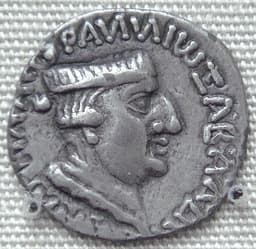
Nahapana
Emperor · Ancient
42.0Total
Basic Information
Born
-185
33
Died
-116
78
Era
Ancient
Ancient
Nationality
Ptolemaic Egypt
India
Occupation
Emperor
Emperor
Civilization
Middle Eastern
Indian
Score Comparison
Military (10%)
50.0
46.7
Political (20%)
27.9
30.8
Influence (20%)
45.5
45.5
Legacy (20%)
36.7
36.7
Leadership (15%)
41.5
55.3
Strategy (15%)
43.7
38.3
TOTAL
40.3
42.0
Cleopatra II of Egypt — Complete Timeline
175 BC
Marriage to Ptolemy VI PhilometorPolitical Action◆ Major
Cleopatra II married her brother Ptolemy VI Philometor, becoming queen consort of Ptolemaic Egypt. This marriage was part of the Ptolemaic tradition of sibling marriage to consolidate power.
MarriagePtolemy VISibling
Impact: national
132 BC
Revolt against Ptolemy VIII PhysconPolitical Action
Cleopatra II led a popular rebellion in Alexandria against her brother-husband Ptolemy VIII Physcon, who had murdered her son Ptolemy VII. The revolt forced Ptolemy VIII to flee to Cyprus, and Cleopatra II ruled Egypt alone for several years.
RevoltPtolemy VIIIAlexandria
Impact: national
124 BC
Reconciliation with Ptolemy VIIIPolitical Action◆ Major
After years of civil war, Cleopatra II reconciled with Ptolemy VIII Physcon, agreeing to a joint rule with him and her daughter Cleopatra III. This ended the conflict but left her with diminished power.
ReconciliationJoint RulePtolemy VIII
Impact: national
116 BC
Death and legacyPolitical Action
Cleopatra II died in 116 BC, having outlived both Ptolemy VI and Ptolemy VIII. Her rebellion and subsequent reconciliation shaped the turbulent politics of Ptolemaic Egypt in the 2nd century BC.
DeathLegacyPtolemaic
Impact: national
Nahapana — Complete Timeline
50 AD
Expanded Kshaharata TerritoryWar◆ Major
Nahapana expanded the Kshaharata kingdom by conquering parts of Gujarat, Malwa, and the Deccan. He defeated local rulers and established control over a large area, making his kingdom a major power in western India.
ConquestExpansionKshaharata
Impact: regional
55 AD
Issued Coins with Brahmi and Greek ScriptsCultural
Nahapana issued silver and copper coins featuring his name in Brahmi and Greek scripts. These coins were widely circulated and influenced later Satavahana coinage, reflecting cultural syncretism.
CoinageCultural SyncretismTrade
Impact: regionalconstructive
60 AD
Controlled Major Trade RoutesOther◆ Major
Nahapana's kingdom controlled key trade routes connecting the Deccan to the western coast, including the port of Bharuch. He issued coins and facilitated trade with the Roman Empire, amassing significant wealth.
TradeCoinageWealth
Impact: regional
78 AD
Defeated by Gautamiputra SatakarniWar
Nahapana, the Kshaharata Shaka ruler, was decisively defeated by the Satavahana king Gautamiputra Satakarni. The battle ended Nahapana's rule and resulted in the Satavahanas reclaiming territories in the Deccan and western India.
DefeatSatavahanaEnd of Reign
Impact: regionaltragic
This comparison has not been analyzed yet.
One-time AI generation (~1 minute). Scores and timeline are already available below.
Rankings
🥇
NahapanaLeader
Mil: 46.7Pol: 30.8Inf: 45.5
42.0
🥈
Cleopatra II of Egypt
Mil: 50.0Pol: 27.9Inf: 45.5
40.3
+1.7 behind
How This Comparison Works
Algorithm
Each figure is scored on 6 dimensions (0—100 scale) based on structured historical data: Military (10%), Political (20%), Influence (20%), Legacy (20%), Leadership (15%), Strategy (15%). The weighted total produces the final ranking.
Data Sources
Scores are computed from structured sub-indicators in the database. Scale factors adjust for era (Ancient ×0.85, Modern ×1.0) and civilization size (Eastern ×1.05, Other ×0.80) to account for differences in population and military scale.
Maximum 3 Figures
Comparisons are limited to 2—3 figures to ensure readability and statistical meaningfulness.
Error Margins
±5 points per dimension — Sub-scores are derived from historical records with inherent uncertainty. Two figures within 5 points on a dimension should be considered roughly equivalent in that area.
Total Score Accuracy
±3 points overall — The weighted combination of 6 dimensions produces a total score with approximately ±3 points of uncertainty. Differences of less than 3 points are not statistically significant— the figures are effectively tied.
Known Limitations
- Historical records are incomplete and uneven across civilizations
- Figures from oral-tradition societies may be underrepresented
- Occupation labels can misclassify multi-role figures
- Scores measure capability and impact, not moral character
- Quantitative scoring is a comparison tool, not absolute truth
Capability Radar
Military (10%) — Battles & Warfare
Battles
20
30
Win Rate
15
20
Expansion
10
35
Political (20%) — Governance & Reform
Reform
20
20
Diplomacy
30
25
Economy
15
30
Influence (20%) — Cultural & Global Reach
Cultural
20
20
Global
10
10
Legacy (20%) — Historical Impact
Historical
25
25
Longevity
15
15
Leadership (15%) — Power & Stability
Tenure
40
40
Stability
10
30
Strategy (15%) — Tactics & Innovation
Strategy
20
25
Tactics
25
25
Reform
10
15
Similar Comparisons
Comments & Discussion
No comments yet. Be the first to share your thoughts!