Loading...
Commius vs Zhang Fei
Zhang Fei leads by 13.2 pts · 2 figures compared
…

Commius
General · Ancient
39.7Total
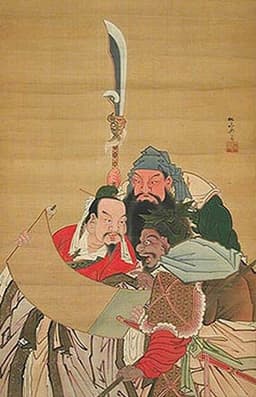
Zhang Fei
General · Ancient
52.9Total
Basic Information
Born
-80
167
Died
-20
221
Era
Ancient
Ancient
Nationality
Gaul
China
Occupation
General
General
Civilization
Western
Eastern
Score Comparison
Military (10%)
40.0
61.7
Political (20%)
30.7
35.0
Influence (20%)
47.9
57.2
Legacy (20%)
39.2
50.0
Leadership (15%)
33.5
62.6
Strategy (15%)
43.3
52.5
TOTAL
39.7
52.9
Commius — Complete Timeline
57 BC
Appointed King of the Atrebates by CaesarPolitical Action◆ Major
Julius Caesar appointed Commius as king of the Atrebates after the Roman conquest of their territory. Commius became a loyal Roman ally, providing cavalry and support for Caesar's campaigns in Gaul and Britain.
AppointmentGallic WarsRoman Ally
Impact: regionalconstructive
55 BC
Diplomatic Mission to BritainPolitical Action
Caesar sent Commius to Britain as an envoy to negotiate with British tribes before the first Roman invasion. Commius was briefly imprisoned by the Britons but later released, providing Caesar with intelligence about British resistance.
DiplomacyRoman InvasionBritain
Impact: regional
52 BC
Battle of AlesiaWar◆ Major
Commius fought at the Battle of Alesia, where Vercingetorix's forces were besieged by Caesar. After the Gallic defeat, Commius escaped and continued resistance against Roman rule in northern Gaul.
BattleGallic WarsRoman Victory
Impact: regionaltragic
Defection to the Gallic RebellionPolitical Action
Commius joined Vercingetorix's Gallic rebellion against Rome, abandoning his alliance with Caesar. He led Atrebate forces in the uprising and became a key leader in the resistance.
DefectionGallic WarsRebellion
Impact: regionaldestructive
50 BC
Flight to BritainPolitical Action◆ Major
After continued guerrilla warfare against Roman forces, Commius fled to Britain with his followers. He established a new kingdom among the British Atrebates, escaping Roman pursuit and maintaining his independence.
FlightGallic WarsExile
Impact: regional
Zhang Fei — Complete Timeline
208 AD
Zhang Fei's Defense of Changban BridgeWar◆ Major
After Cao Cao's cavalry caught up with Liu Bei's fleeing army at Changban, Zhang Fei held the bridge with only 20 horsemen. He shouted a challenge to the enemy, and fearing an ambush, Cao Cao's forces did not advance, allowing Liu Bei to escape.
BattleRearguard ActionEscape
Impact: regional
214 AD
Zhang Fei's Capture of Yan YanWar
During Liu Bei's invasion of Yi Province, Zhang Fei captured the enemy general Yan Yan. Impressed by Yan Yan's defiance, Zhang Fei released him and treated him as an honored guest, a rare act of mercy that helped win over local support.
CaptureMercyYi Province
Impact: regionalconstructive
221 AD
Zhang Fei's AssassinationOther◆ Major
While preparing for Liu Bei's campaign against Wu, Zhang Fei was murdered in his sleep by his own subordinates, Fan Jiang and Zhang Da. They cut off his head and delivered it to Sun Quan. His death was a severe blow to Shu Han.
AssassinationBetrayalDeath
Impact: nationaltragic
Expert Analysis
Origins
Commius was born around 85 BCE into the Atrebates, a Belgic tribe in Gaul. He rose to become their king after Julius Caesar appointed him following the Roman conquest of the region. Little is known of his early life, but he was a trusted ally of Caesar, even serving as a diplomat to Britain in 55 BCE. His background was one of tribal nobility, and his initial loyalty to Rome shaped his early career.
Zhang Fei (c. 166–221 CE) was born in Zhuo Commandery (modern Hebei) during the late Eastern Han dynasty. He was a close friend of Liu Bei and Guan Yu, with whom he formed a sworn brotherhood. Zhang Fei came from a modest background, but his physical strength and martial prowess earned him a place in Liu Bei's early campaigns. He was known for his fierce temper and loyalty.
Rise to Power
Commius's rise came through Caesar's favor. After the Gallic Wars began, Caesar appointed him king of the Atrebates around 57 BCE, expecting him to maintain order. However, Commius defected to the Gallic rebellion led by Vercingetorix in 52 BCE, a turning point that aligned him with the anti-Roman cause. He led Atrebate forces at the Battle of Alesia, where the Gauls were defeated. After escaping, he continued guerrilla warfare against Rome, eventually fleeing to Britain where he established a new kingdom among the British Atrebates.
Zhang Fei's rise was tied to the formation of the Shu Han kingdom. He fought alongside Liu Bei from the 190s, participating in campaigns against rival warlords. His defense of Changban Bridge in 208 CE was a key event: with only 20 horsemen, he faced Cao Cao's pursuing army, shouting a challenge that caused the enemy to hesitate, allowing Liu Bei's forces to escape. This act cemented his reputation as a fearless warrior.
Leadership & Governance
Commius governed as a tribal king, relying on personal loyalty and traditional Celtic structures. After defecting, he led his warriors in hit-and-run tactics against Roman supply lines. His leadership was more about inspiration than administration; he lacked the resources for sustained campaigns. Politically, he scored 30.7, reflecting his limited statecraft.
Zhang Fei was a military commander under Liu Bei, known for his strict discipline and use of intimidation. He was effective in battle but harsh with subordinates, which ultimately led to his downfall. His leadership score of 62.6 indicates a capable field commander. He governed territories as a general, but his governance was secondary to his military role.
Triumph & Tragedy
Commius's greatest success was escaping the Roman trap after Alesia and continuing resistance for years. He managed to flee to Britain and establish a new kingdom, preserving his people's identity. His failures include losing the rebellion and failing to maintain unity among the Gauls. His political score of 30.7 reflects his inability to secure lasting alliances.
Zhang Fei's triumph was his heroic stand at Changban Bridge, which saved Liu Bei's family and became legendary in Chinese lore. His capture and release of Yan Yan also showcased strategic mercy. His tragedy was his assassination in 221 CE by his own officers while preparing for war against Wu—a direct result of his abusive temper. He scored 50.0 in legacy, indicating a mixed but notable memory.
Character & Destiny
Commius was pragmatic but ultimately driven by loyalty to his tribe. His defection shows a willingness to change sides when his people's interests shifted. His destiny was shaped by the overwhelming power of Rome; despite his efforts, he could not reverse the tide of conquest. He died in Britain around 50 BCE, fading from history.
Zhang Fei was impulsive and violent, often beating his subordinates. His character flaw directly caused his death: his officers, fearing for their lives, murdered him. This contrasts with his sworn brothers' more measured temperaments. His destiny was to be remembered as a fierce warrior but a flawed leader.
Legacy
Commius's legacy is minor: he is known primarily from Caesar's Commentaries, where he appears as a former ally turned rebel. His flight to Britain may have influenced later migrations, but he remains a footnote in Gallic history. His influence score of 47.9 reflects limited long-term impact.
Zhang Fei's legacy is immense in Chinese culture. He is deified as a god of wealth and a patron of warriors, appearing in the novel Romance of the Three Kingdoms and countless operas and films. His military score of 61.7 and influence score of 57.2 underscore his lasting fame. He is a symbol of loyalty and bravery, albeit with a cautionary tale about anger.
Conclusion
Zhang Fei had greater impact than Commius. His military achievements (61.7 vs 40.0) and leadership (62.6 vs 33.5) were superior. While Commius resisted Rome, Zhang Fei helped found a kingdom that endured for decades in Chinese history. His legacy endures in literature and religion, while Commius is largely forgotten outside academic circles. The 13.2-point score gap reflects this disparity. Zhang Fei's combination of battlefield prowess and cultural resonance places him above Commius.
Rankings
🥇
Zhang FeiLeader
Mil: 61.7Pol: 35.0Inf: 57.2
52.9
🥈
Commius
Mil: 40.0Pol: 30.7Inf: 47.9
39.7
+13.2 behind
How This Comparison Works
Algorithm
Each figure is scored on 6 dimensions (0—100 scale) based on structured historical data: Military (10%), Political (20%), Influence (20%), Legacy (20%), Leadership (15%), Strategy (15%). The weighted total produces the final ranking.
Data Sources
Scores are computed from structured sub-indicators in the database. Scale factors adjust for era (Ancient ×0.85, Modern ×1.0) and civilization size (Eastern ×1.05, Other ×0.80) to account for differences in population and military scale.
Maximum 3 Figures
Comparisons are limited to 2—3 figures to ensure readability and statistical meaningfulness.
Error Margins
±5 points per dimension — Sub-scores are derived from historical records with inherent uncertainty. Two figures within 5 points on a dimension should be considered roughly equivalent in that area.
Total Score Accuracy
±3 points overall — The weighted combination of 6 dimensions produces a total score with approximately ±3 points of uncertainty. Differences of less than 3 points are not statistically significant— the figures are effectively tied.
Known Limitations
- Historical records are incomplete and uneven across civilizations
- Figures from oral-tradition societies may be underrepresented
- Occupation labels can misclassify multi-role figures
- Scores measure capability and impact, not moral character
- Quantitative scoring is a comparison tool, not absolute truth
Capability Radar
Military (10%) — Battles & Warfare
Battles
30
65
Win Rate
40
60
Expansion
25
40
Political (20%) — Governance & Reform
Reform
15
5
Diplomacy
45
15
Economy
20
5
Influence (20%) — Cultural & Global Reach
Cultural
20
55
Global
15
40
Legacy (20%) — Historical Impact
Historical
25
60
Longevity
20
55
Leadership (15%) — Power & Stability
Tenure
40
20
Stability
25
10
Strategy (15%) — Tactics & Innovation
Strategy
30
45
Tactics
35
70
Reform
10
10
Similar Comparisons
Comments & Discussion
No comments yet. Be the first to share your thoughts!