Loading...
Constantine V vs Henry III of England
Constantine V leads by 9.4 pts · 2 figures compared
…
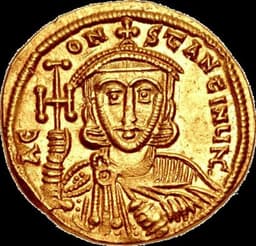
Constantine V
Emperor · Medieval
60.7Total
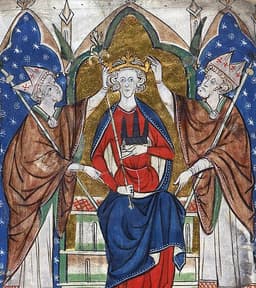
Henry III of England
Emperor · Medieval
51.3Total
Basic Information
Born
718
1207
Died
775
1272
Era
Medieval
Medieval
Nationality
Byzantine Empire
England
Occupation
Emperor
Emperor
Civilization
Western
Western
Score Comparison
Military (10%)
76.0
50.0
Political (20%)
45.0
37.9
Influence (20%)
58.3
56.4
Legacy (20%)
52.0
47.5
Leadership (15%)
80.0
74.0
Strategy (15%)
68.1
35.7
TOTAL
60.7
51.3
Constantine V — Complete Timeline
754 AD
Council of Hieria (754)Political Action◆ Major
Constantine V convened the Council of Hieria, which formally condemned the veneration of icons as idolatry. This council established iconoclasm as official Byzantine Church doctrine, intensifying the religious controversy that divided the empire.
IconoclasmChurch CouncilReligious Policy
Impact: regionaldestructive
Persecution of Iconophiles (after 754)Political Action◆ Major
Following the Council of Hieria, Constantine V intensified persecution of icon venerators. Monks were imprisoned, executed, or forced to marry. Monasteries were confiscated and converted to barracks or secular use. This policy deepened the iconoclast schism.
IconoclasmPersecutionMonasticism
Impact: regionaldestructive
755 AD
Campaigns against the Bulgars (755-775)War◆ Major
Constantine V led nine major campaigns against the Bulgarian Empire, achieving several victories including the Battle of Marcellae (759) and the Battle of Anchialus (763). These campaigns temporarily weakened Bulgaria but did not destroy it.
Byzantine-Bulgarian WarsMilitary Campaigns
Impact: regional
768 AD
Rebuilding of the Aqueduct of ValensOther
Constantine V oversaw the restoration of the Aqueduct of Valens, which had been damaged by the Avars. The repaired aqueduct restored water supply to Constantinople, improving urban infrastructure and public health.
InfrastructurePublic Works
constructive
775 AD
Death in Battle against BulgarsWar◆ Major
Constantine V died while on campaign against the Bulgars. His death occurred during a military expedition, and he was succeeded by his son Leo IV. His campaigns had temporarily checked Bulgarian expansion but left the empire exhausted.
DeathMilitary Campaign
Impact: regional
Henry III of England — Complete Timeline
1245 AD
Rebuilding of Westminster AbbeyCultural◆ Major
Henry III began the rebuilding of Westminster Abbey in the Gothic style, dedicating it to Edward the Confessor. This project became a major architectural achievement and a symbol of royal piety and power.
ArchitectureReligionWestminster
Impact: nationalconstructive
1258 AD
Provisions of OxfordPolitical Action◆ Major
Under baronial pressure, Henry III agreed to the Provisions of Oxford, which established a council of barons to oversee royal governance. This reform limited royal power and created a precedent for parliamentary oversight.
ReformBaronial CouncilParliament
Impact: nationalconstructive
1264 AD
Second Barons' WarWar◆ Major
Henry III faced the Second Barons' War led by Simon de Montfort. He was captured at the Battle of Lewes, but later restored after the royalist victory at the Battle of Evesham, where de Montfort was killed.
Civil WarSimon de MontfortBattle
Impact: nationaldestructive
1265 AD
Battle of EveshamWar◆ Major
Royalist forces under Prince Edward defeated Simon de Montfort's army at the Battle of Evesham. De Montfort was killed, ending the baronial rebellion and restoring Henry III's full authority.
BattleBaronial RevoltRoyalist Victory
Impact: national
1266 AD
Dictum of KenilworthPolitical Action
Henry III issued the Dictum of Kenilworth, a compromise that allowed rebel barons to reclaim their lands by paying fines. This helped reconcile the kingdom after the Second Barons' War.
ReconciliationCompromise
Impact: nationalconstructive
Expert Analysis
Origins
Constantine V (born 718) was the son of Emperor Leo III, founder of the Isaurian dynasty. His early life was shaped by the Iconoclastic Controversy, as Leo III had banned icons in 726. Constantine received a military education and was crowned co-emperor in 720 at age two. His nickname "Copronymus" (dung-named) was given by iconophile opponents, referring to an alleged baptismal accident.
Henry III (born 1207) was the son of King John of England and Isabella of Angoulême. He ascended the throne at age nine in 1216, amid the chaos of the First Barons' War. His minority was dominated by regents William Marshal and Hubert de Burgh. Henry was deeply religious and devoted to the cult of Edward the Confessor.
Rise to Power
Constantine V became sole emperor upon Leo III's death in 741. He faced an immediate usurpation attempt by his brother-in-law Artavasdos, who seized Constantinople. Constantine raised an army from the Anatolic theme and defeated Artavasdos in 743, blinding him and his sons. This victory solidified his control and allowed him to pursue his iconoclast policies.
Henry III assumed personal rule in 1227 at age 20, but his reign was marked by conflict with the English barons. His reliance on foreign favorites, particularly his Lusignan half-brothers, and his expensive military campaigns in France alienated the nobility. By 1258, baronial opposition forced him to accept the Provisions of Oxford, which established a council of 15 barons to oversee royal governance.
Leadership & Governance
Constantine V ruled as an autocratic military emperor. He personally led campaigns against the Bulgars and Arabs, earning a military score of 76.0. His governance focused on centralization and iconoclasm: he confiscated monastic lands, redistributed wealth to the army, and enforced religious uniformity through the Council of Hieria (754). However, his political score of 45.0 reflects the divisiveness of his policies, which alienated monks and iconophiles.
Henry III's leadership style was more passive and pious. He was a patron of the arts, commissioning the rebuilding of Westminster Abbey in the Gothic style (1245 onward). However, his political score of 37.9 indicates weak governance: he was indecisive, prone to favoritism, and unable to control his barons. His military score of 50.0 reflects failed campaigns in France (e.g., the Saintonge War, 1242) and the loss of Poitou.
Triumph & Tragedy
Constantine V's greatest success was his military campaign against the Bulgars. He led nine major expeditions (755-775), winning the Battle of Marcellae (759) and the Battle of Anchialus (763). He also restored the Aqueduct of Valens, improving Constantinople's water supply. His greatest failure was the persecution of iconophiles, which was brutal and divisive. He executed monks, forced nuns into marriage, and destroyed icons. This alienated many subjects and damaged the empire's cultural heritage.
Henry III's greatest success was the rebuilding of Westminster Abbey, which became a masterpiece of Gothic architecture and a symbol of English monarchy. He also founded the Hospital of St. John in Oxford. His greatest failure was the Second Barons' War (1264-1267). He was captured at the Battle of Lewes (1264) and forced to accept Simon de Montfort's rule. Although he was restored after the royalist victory at Evesham (1265), the conflict weakened the crown and led to the Dictum of Kenilworth (1266), a compromise that fined rebels but allowed them to retain lands.
Character & Destiny
Constantine V was a determined, ruthless iconoclast. His military leadership (80.0) and strategic acumen (68.1) made him effective in war, but his religious fanaticism created lasting division. He died in 775 while campaigning against the Bulgars, possibly from fever or wounds. His son Leo IV continued his policies but died after five years.
Henry III was pious, cultured, but politically naive. His leadership score of 74.0 reflects his personal piety and patronage, but his strategic score of 35.7 indicates poor decision-making. He died in 1272 after a 56-year reign, the longest of any English king until Edward III. His legacy was overshadowed by his son Edward I, who became a strong warrior-king.
Legacy
Constantine V's legacy is mixed. He strengthened the Byzantine military and secured the frontiers against the Bulgars and Arabs. His iconoclast policies were reversed by the Second Council of Nicaea (787) and later by Empress Theodora (843). However, his reign demonstrated the power of imperial religious authority. His restoration of the aqueduct had lasting practical benefits. His overall legacy score is 52.0.
Henry III's legacy is more tangible. Westminster Abbey remains a national symbol and coronation site. The Provisions of Oxford are considered a step toward constitutional government, though they were annulled. His reign saw the development of Parliament, as the barons' councils evolved into a representative body. His legacy score is 47.5.
Conclusion
Constantine V had a greater impact on his empire and era than Henry III. His military campaigns (76.0 vs 50.0) secured Byzantine borders for decades, and his iconoclast policies, though controversial, demonstrated the power of imperial religious reform. Henry's architectural contributions are impressive, but his political weakness (37.9 vs 45.0) and military failures limited his influence. Constantine's total score of 60.7 vs Henry's 51.3 reflects a more decisive and consequential reign. While Henry's Westminster Abbey endures, Constantine's military achievements and religious upheaval shaped the Byzantine Empire more profoundly. Thus, Constantine V was the more impactful ruler.
Rankings
🥇
Constantine VLeader
Mil: 76.0Pol: 45.0Inf: 58.3
60.7
🥈
Henry III of England
Mil: 50.0Pol: 37.9Inf: 56.4
51.3
+9.4 behind
How This Comparison Works
Algorithm
Each figure is scored on 6 dimensions (0—100 scale) based on structured historical data: Military (10%), Political (20%), Influence (20%), Legacy (20%), Leadership (15%), Strategy (15%). The weighted total produces the final ranking.
Data Sources
Scores are computed from structured sub-indicators in the database. Scale factors adjust for era (Ancient ×0.85, Modern ×1.0) and civilization size (Eastern ×1.05, Other ×0.80) to account for differences in population and military scale.
Maximum 3 Figures
Comparisons are limited to 2—3 figures to ensure readability and statistical meaningfulness.
Error Margins
±5 points per dimension — Sub-scores are derived from historical records with inherent uncertainty. Two figures within 5 points on a dimension should be considered roughly equivalent in that area.
Total Score Accuracy
±3 points overall — The weighted combination of 6 dimensions produces a total score with approximately ±3 points of uncertainty. Differences of less than 3 points are not statistically significant— the figures are effectively tied.
Known Limitations
- Historical records are incomplete and uneven across civilizations
- Figures from oral-tradition societies may be underrepresented
- Occupation labels can misclassify multi-role figures
- Scores measure capability and impact, not moral character
- Quantitative scoring is a comparison tool, not absolute truth
Capability Radar
Military (10%) — Battles & Warfare
Battles
85
25
Win Rate
80
20
Expansion
75
10
Political (20%) — Governance & Reform
Reform
70
40
Diplomacy
60
30
Economy
65
30
Influence (20%) — Cultural & Global Reach
Cultural
65
50
Global
55
30
Legacy (20%) — Historical Impact
Historical
70
45
Longevity
60
40
Leadership (15%) — Power & Stability
Tenure
85
80
Stability
70
25
Strategy (15%) — Tactics & Innovation
Strategy
80
20
Tactics
75
15
Reform
70
10
Similar Comparisons
Comments & Discussion
No comments yet. Be the first to share your thoughts!