Loading...
Aditya I vs Henry III of England
Henry III of England leads by 2.6 pts · 2 figures compared
…
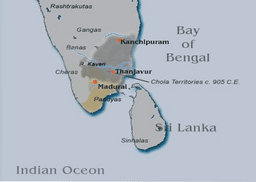
Aditya I
Emperor · Medieval
48.7Total
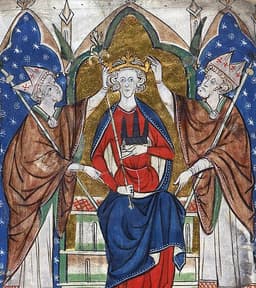
Henry III of England
Emperor · Medieval
51.3Total
Basic Information
Born
871
1207
Died
907
1272
Era
Medieval
Medieval
Nationality
India
England
Occupation
Emperor
Emperor
Civilization
Indian
Western
Score Comparison
Military (10%)
30.0
50.0
Political (20%)
40.8
37.9
Influence (20%)
51.0
56.4
Legacy (20%)
43.3
47.5
Leadership (15%)
67.0
74.0
Strategy (15%)
60.0
35.7
TOTAL
48.7
51.3
Aditya I — Complete Timeline
880 AD
Conquest of Kongu NaduWar
Aditya I conquered the Kongu region (western Tamil Nadu) from the Pandya and Pallava control. This expansion gave the Cholas control over important trade routes and fertile lands, boosting the kingdom's economic base.
Territorial ExpansionKongu NaduChola Conquest
Impact: regionalconstructive
890 AD
Alliance with the Chera KingdomPolitical Action◆ Major
Aditya I formed a marital and military alliance with the Chera kingdom of Kerala, strengthening the Chola position against the Pandya and Rashtrakuta kingdoms. This alliance helped secure the western frontier and facilitated trade.
AllianceChera KingdomDiplomacy
Impact: regionalconstructive
897 AD
Defeat of Aparajita Varman and End of Pallava RuleWar◆ Major
Aditya I defeated and killed the Pallava king Aparajita Varman at the Battle of Tirupati, ending the Pallava dynasty. He annexed the entire Pallava kingdom into the Chola domain, making the Cholas the dominant power in Tamil Nadu.
Pallava ConquestChola ExpansionDynastic Change
Impact: regionaldestructive
Henry III of England — Complete Timeline
1245 AD
Rebuilding of Westminster AbbeyCultural◆ Major
Henry III began the rebuilding of Westminster Abbey in the Gothic style, dedicating it to Edward the Confessor. This project became a major architectural achievement and a symbol of royal piety and power.
ArchitectureReligionWestminster
Impact: nationalconstructive
1258 AD
Provisions of OxfordPolitical Action◆ Major
Under baronial pressure, Henry III agreed to the Provisions of Oxford, which established a council of barons to oversee royal governance. This reform limited royal power and created a precedent for parliamentary oversight.
ReformBaronial CouncilParliament
Impact: nationalconstructive
1264 AD
Second Barons' WarWar◆ Major
Henry III faced the Second Barons' War led by Simon de Montfort. He was captured at the Battle of Lewes, but later restored after the royalist victory at the Battle of Evesham, where de Montfort was killed.
Civil WarSimon de MontfortBattle
Impact: nationaldestructive
1265 AD
Battle of EveshamWar◆ Major
Royalist forces under Prince Edward defeated Simon de Montfort's army at the Battle of Evesham. De Montfort was killed, ending the baronial rebellion and restoring Henry III's full authority.
BattleBaronial RevoltRoyalist Victory
Impact: national
1266 AD
Dictum of KenilworthPolitical Action
Henry III issued the Dictum of Kenilworth, a compromise that allowed rebel barons to reclaim their lands by paying fines. This helped reconcile the kingdom after the Second Barons' War.
ReconciliationCompromise
Impact: nationalconstructive
Expert Analysis
Origins
**Aditya I** was born around 870 CE into the Chola dynasty, which had been in decline under Pallava domination. His father, Vijayalaya Chola, had captured Thanjavur and re-established Chola power. Little is known of Aditya’s early life, but he was trained in military and administrative affairs from a young age. The Cholas were a Tamil dynasty with a strong maritime tradition, but in the 9th century they were overshadowed by the Pallavas and Pandyas.
**Henry III** was born on 1 October 1207 at Winchester Castle, the eldest son of King John of England and Isabella of Angoulême. He inherited a kingdom in turmoil after his father’s disastrous reign and the baronial conflict that led to Magna Carta. Henry was crowned at age nine in 1216, with the country under the regency of William Marshal. His upbringing was shaped by the need to restore royal authority after the First Barons' War.
Rise to Power
Aditya I rose to prominence by defeating the Pallava king Aparajita Varman at the Battle of Tirupati around 880 CE. This victory, secured with the help of the Chera king, ended Pallava rule and annexed their territory into the Chola kingdom. Aditya’s alliance with the Cheras, sealed by marriage, strengthened his position against the Pandyas and Rashtrakutas. He also conquered Kongu Nadu, expanding Chola control over western Tamil Nadu.
Henry III’s rise was more gradual. After his father’s death, the regency government, led by William Marshal and then Hubert de Burgh, stabilized the kingdom. Henry assumed personal rule in 1227 at age 20, but he faced ongoing baronial discontent over his reliance on foreign favorites and his costly military campaigns in France. His reign was marked by a struggle to assert royal authority against the magnates, culminating in the Provisions of Oxford (1258) and the Second Barons' War.
Leadership & Governance
Aditya I’s leadership was characterized by military expansion and diplomatic alliances. He integrated conquered territories through administrative reforms, though records are sparse. His alliance with the Cheras was a strategic masterstroke, securing his western flank. He also patronized Hindu temples, reinforcing Chola cultural identity. However, his governance relied heavily on local chieftains, which later led to internal fragmentation.
Henry III was a patron of the arts and architecture, most famously rebuilding Westminster Abbey in the Gothic style. Politically, he was less adept. His favoritism towards his Poitevin half-brothers and his failed invasion of France alienated the barons. The Provisions of Oxford forced him to accept a council of barons to oversee governance, a precursor to parliamentary development. His leadership score of 74.0 reflects his cultural patronage but poor political judgment (37.9).
Triumph & Tragedy
Aditya I’s greatest triumph was ending Pallava supremacy, scoring 30.0 in military but effectively using alliances. His conquest of Kongu Nadu secured key trade routes. However, his failure to fully subdue the Pandyas left a persistent threat. His death around 907 CE led to a succession struggle, undoing some gains.
Henry III’s triumph was the completion of Westminster Abbey, a lasting architectural legacy. He also survived the Second Barons' War, eventually restored by his son Edward's victory at the Battle of Evesham (1265). His tragedy was the civil war itself, which exposed his weak governance and led to his capture at Lewes (1264). The Dictum of Kenilworth (1266) allowed reconciliation but at the cost of royal prestige.
Character & Destiny
Aditya I was a pragmatic and ambitious ruler, using marriage and military force to rebuild Chola power. His decisiveness at Tirupati contrasts with Henry’s indecisiveness. Henry was pious and cultured but politically naive, often swayed by favorites. His character led to repeated baronial revolts, while Aditya’s aggression secured short-term gains but left a fragile domain.
Legacy
Aditya I’s legacy is foundational for the Chola Empire, which reached its zenith under his successors. He scored 43.3 in legacy, having ended Pallava rule and set the stage for Rajaraja Chola’s expansion. However, his immediate impact was limited to South India.
Henry III’s legacy is more visible: Westminster Abbey remains a national icon. His reign saw the development of Parliament through the Provisions of Oxford, scoring 47.5 in legacy. The Second Barons' War also influenced constitutional limits on royal power. Henry’s total score of 51.3 edges Aditya’s 48.7, reflecting broader institutional impacts.
Conclusion
While Aditya I was a capable conqueror who restored Chola fortunes, Henry III’s longer reign and the constitutional developments under his rule had greater lasting effect on governance. Henry’s rebuilding of Westminster Abbey and the baronial reforms influenced English history for centuries. Despite his political failures, Henry’s cultural contributions and the evolution of parliamentary oversight give him a slightly higher impact. Aditya I remains important regionally, but Henry III’s legacy is more globally recognized. The score gap of 2.6 points in Henry’s favor reflects this, though both were pivotal in their own contexts.
Rankings
🥇
Henry III of EnglandLeader
Mil: 50.0Pol: 37.9Inf: 56.4
51.3
🥈
Aditya I
Mil: 30.0Pol: 40.8Inf: 51.0
48.7
+2.6 behind
How This Comparison Works
Algorithm
Each figure is scored on 6 dimensions (0—100 scale) based on structured historical data: Military (10%), Political (20%), Influence (20%), Legacy (20%), Leadership (15%), Strategy (15%). The weighted total produces the final ranking.
Data Sources
Scores are computed from structured sub-indicators in the database. Scale factors adjust for era (Ancient ×0.85, Modern ×1.0) and civilization size (Eastern ×1.05, Other ×0.80) to account for differences in population and military scale.
Maximum 3 Figures
Comparisons are limited to 2—3 figures to ensure readability and statistical meaningfulness.
Error Margins
±5 points per dimension — Sub-scores are derived from historical records with inherent uncertainty. Two figures within 5 points on a dimension should be considered roughly equivalent in that area.
Total Score Accuracy
±3 points overall — The weighted combination of 6 dimensions produces a total score with approximately ±3 points of uncertainty. Differences of less than 3 points are not statistically significant— the figures are effectively tied.
Known Limitations
- Historical records are incomplete and uneven across civilizations
- Figures from oral-tradition societies may be underrepresented
- Occupation labels can misclassify multi-role figures
- Scores measure capability and impact, not moral character
- Quantitative scoring is a comparison tool, not absolute truth
Capability Radar
Military (10%) — Battles & Warfare
Battles
40
25
Win Rate
45
20
Expansion
45
10
Political (20%) — Governance & Reform
Reform
30
40
Diplomacy
45
30
Economy
35
30
Influence (20%) — Cultural & Global Reach
Cultural
30
50
Global
15
30
Legacy (20%) — Historical Impact
Historical
35
45
Longevity
25
40
Leadership (15%) — Power & Stability
Tenure
50
80
Stability
40
25
Strategy (15%) — Tactics & Innovation
Strategy
40
20
Tactics
35
15
Reform
20
10
Similar Comparisons
Comments & Discussion
No comments yet. Be the first to share your thoughts!