Loading...
Constantius Chlorus vs Tanshihuai
Tanshihuai leads by 0.1 pts · 2 figures compared
…

Constantius Chlorus
Emperor · Ancient
59.1Total
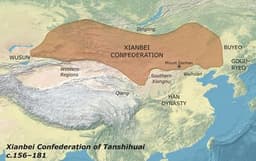
Tanshihuai
Emperor · Ancient
59.2Total
Basic Information
Born
250
141
Died
306
181
Era
Ancient
Ancient
Nationality
Roman Empire
Xianbei
Occupation
Emperor
Emperor
Civilization
Western
Eastern
Score Comparison
Military (10%)
70.0
82.0
Political (20%)
68.0
68.0
Influence (20%)
54.1
52.5
Legacy (20%)
48.3
44.2
Leadership (15%)
74.0
74.0
Strategy (15%)
52.5
55.0
TOTAL
59.1
59.2
Constantius Chlorus — Complete Timeline
296 AD
Reconquest of BritainWar◆ Major
Constantius Chlorus, as Caesar under Maximian, led a campaign to recover Britain from the usurper Allectus. His forces landed near London and defeated Allectus's troops, restoring Roman control over the province.
Military CampaignBritainTetrarchy
Impact: regionalconstructive
305 AD
Appointment as AugustusPolitical Action◆ Major
Following the abdication of Diocletian and Maximian, Constantius Chlorus became the senior Augustus of the Western Roman Empire. He ruled jointly with Galerius in the East, continuing the Tetrarchy system.
TetrarchyImperial Succession
Impact: national
306 AD
Death at EboracumOther
Constantius Chlorus died in Eboracum (modern York) while preparing a campaign against the Picts. His death led to the acclamation of his son Constantine as emperor by the troops, a pivotal moment in Roman history.
DeathConstantineImperial Succession
Impact: global
Tanshihuai — Complete Timeline
156 AD
Raid on the Han frontier (156 AD)War
Tanshihuai led a large-scale raid into Han territory, attacking commanderies in the northern provinces. The Han forces were unable to stop him, and the raid caused significant destruction and loss of life, demonstrating Xianbei military power.
Han-Xianbei WarRaid
Impact: regionaldestructive
Unification of the Xianbei tribesPolitical Action◆ Major
Tanshihuai united the disparate Xianbei tribes of the Mongolian steppe into a powerful confederation. He established a centralized leadership and expanded Xianbei territory, creating a major rival to the Han dynasty in the north.
UnificationXianbei Confederation
Impact: regionalconstructive
158 AD
Defeat of the Han army at the Battle of the Yinshan MountainsWar◆ Major
Tanshihuai ambushed and defeated a Han punitive expedition in the Yinshan Mountains. The Han commander was killed, and the Xianbei captured large amounts of supplies and weapons, solidifying Tanshihuai's reputation as a formidable military leader.
BattleHan-Xianbei War
Impact: regionaldestructive
160 AD
Establishment of a Xianbei legal codeReform
Tanshihuai implemented a unified legal code for the Xianbei confederation, replacing tribal customs with standardized laws. This reform strengthened central authority and facilitated the administration of the growing empire.
Legal ReformXianbei Empire
Impact: regionalconstructive
Expert Analysis
Origins
Constantius Chlorus (c. 250–306 AD) was a Roman emperor of humble birth from the Danubian provinces. He rose through the military ranks under Emperor Aurelian and later served as a protector under Carus. His early career included campaigns in the East and along the Danube. Little is known of his family before his rise, but his son Constantine would become one of history's most influential figures.
Tanshihuai (c. 130–181 AD) was a Xianbei chieftain born on the Mongolian steppe. The Xianbei were a nomadic confederation that had previously been subjects of the Xiongnu. Tanshihuai's father was a minor tribal leader, and he grew up in a society of constant warfare and herding. He rose to prominence by demonstrating exceptional skill in archery and leadership, unifying scattered Xianbei clans through a combination of diplomacy and military force.
Rise to Power
Constantius Chlorus was appointed Caesar (junior emperor) by Maximian in 293 AD as part of the Tetrarchy, a system of four co-emperors established by Diocletian. His primary task was to secure Gaul and Britain. In 296 AD, he launched a successful invasion of Britain to oust the usurper Allectus. His forces landed near London and defeated Allectus's army, restoring Britain to Roman control after a decade of secession. This victory solidified his reputation as a capable commander. In 305 AD, when Diocletian and Maximian abdicated, Constantius became Augustus of the West, ruling alongside Galerius in the East.
Tanshihuai's rise began in the mid-2nd century when he united the Xianbei tribes under his leadership. He established a centralized confederation with a capital near the Orkhon River. His military campaigns expanded Xianbei territory from the Liao River in the east to the Altai Mountains in the west. In 156 AD, he led a massive raid into Han China, plundering commanderies in the northern provinces. The Han court was unable to mount an effective defense, and the Xianbei returned with vast amounts of loot and captives. His greatest military achievement came in 177 AD when he ambushed and defeated a Han punitive expedition at the Battle of the Yinshan Mountains, killing the Han commander.
Leadership & Governance
Constantius Chlorus governed as a traditional Roman emperor, delegating authority to provincial governors and maintaining the existing administrative structures. He was known for his moderation and clemency, particularly in contrast to his co-emperor Galerius. He reduced taxes in Gaul and Britain and tolerated Christians, a policy his son Constantine would later expand. His military leadership was pragmatic; he focused on securing frontiers rather than ambitious conquests. His reconquest of Britain was a well-planned amphibious operation that demonstrated his logistical skill.
Tanshihuai implemented a unified legal code for the Xianbei, replacing tribal customs with standardized laws. This reform strengthened central authority and reduced internal conflicts. He organized the confederation into three administrative divisions—eastern, central, and western—each led by a trusted commander. His governance was based on personal charisma and military prowess rather than bureaucratic institutions. He maintained control through a network of loyal tribal leaders, but the confederation lacked the administrative depth of the Han Empire.
Triumph & Tragedy
Constantius Chlorus's greatest success was the reconquest of Britain, which restored a key province to Roman rule and secured his legacy as a capable general. He also successfully defended the Rhine frontier against Germanic incursions. However, his reign was cut short by his death in 306 AD at Eboracum (modern York) while preparing a campaign against the Picts. His death triggered a power struggle that ultimately led to the rise of Constantine, who would transform the Roman Empire. Constantius's failure to secure a smooth succession—he left the empire divided among multiple claimants—was his greatest political misstep.
Tanshihuai's triumph was uniting the Xianbei and making them the dominant power on the steppe, dealing the Han Empire a series of humiliating defeats. However, his confederation was fragile and depended on his personal authority. After his death in 181 AD, the Xianbei quickly fragmented into warring factions. His legal code and administrative reforms did not survive him. The Han Empire, though weakened, eventually recovered and launched counteroffensives that pushed the Xianbei back. Tanshihuai's failure to create lasting institutions meant his achievements were ephemeral.
Character & Destiny
Constantius Chlorus was a pragmatic and cautious leader, known for his even temper and strategic patience. He avoided unnecessary conflicts and preferred diplomacy when possible. His character was shaped by his military background and his role as a subordinate in the Tetrarchy, which taught him to operate within a system of shared power. His destiny was to be a transitional figure—a bridge between the chaotic 3rd century and the Constantinian era. His early death at Eboracum, while preparing for a campaign, was a turning point that allowed his son to seize power.
Tanshihuai was ambitious and ruthless, with a vision of Xianbei unity that transcended traditional tribal loyalties. He was a charismatic leader who inspired fierce loyalty among his followers. His character was marked by a willingness to take risks, as seen in his deep raids into Han territory. However, his reliance on personal authority rather than institutional structures meant his empire was a reflection of his own will, and it collapsed without him. His destiny was to be a unifier who failed to build a lasting state, remembered primarily as a symbol of steppe resistance to Chinese expansion.
Legacy
Constantius Chlorus's legacy is overshadowed by that of his son Constantine, but he was instrumental in restoring Roman control over Britain and Gaul. His policies of tolerance and moderation set a precedent that Constantine would follow. His military campaigns helped stabilize the Western Empire after decades of crisis. In historical assessments, he scores 48.3 in legacy, reflecting his role as a supporting actor rather than a lead. However, his reconquest of Britain had lasting effects: Roman Britain continued for another century, and the province's Romanization deepened.
Tanshihuai's legacy is that of a unifier who briefly challenged Han dominance. He is remembered as a national hero among some Mongolic peoples, but his confederation did not survive him. His scores of 44.2 in legacy and 52.5 in influence reflect the temporary nature of his achievements. The Xianbei would later produce more lasting states, such as the Tuoba Wei, but Tanshihuai's direct impact was limited. His legal code and administrative divisions were precursors to later steppe empires, but they did not endure.
Conclusion
Constantius Chlorus had a greater long-term impact than Tanshihuai, despite scoring lower in total (59.1 vs 59.2). His actions directly enabled the rise of Constantine, who transformed the Roman Empire and Christianity. The reconquest of Britain maintained Roman control over a key province for generations. Tanshihuai's unification of the Xianbei was impressive but ephemeral, and his military victories did not lead to lasting territorial gains. While Tanshihuai scored higher in military (82.0 vs 70.0) and leadership (74.0 vs 74.0, tied), Constantius's political decisions had more enduring consequences. The Roman Empire's continued existence as a unified entity under Constantine's successors was partly due to the stability Constantius provided. Tanshihuai's confederation dissolved within a generation, leaving no permanent mark on the political map. Thus, Constantius Chlorus, though less famous, was more historically significant.
Rankings
🥇
TanshihuaiLeader
Mil: 82.0Pol: 68.0Inf: 52.5
59.2
🥈
Constantius Chlorus
Mil: 70.0Pol: 68.0Inf: 54.1
59.1
+0.1 behind
How This Comparison Works
Algorithm
Each figure is scored on 6 dimensions (0—100 scale) based on structured historical data: Military (10%), Political (20%), Influence (20%), Legacy (20%), Leadership (15%), Strategy (15%). The weighted total produces the final ranking.
Data Sources
Scores are computed from structured sub-indicators in the database. Scale factors adjust for era (Ancient ×0.85, Modern ×1.0) and civilization size (Eastern ×1.05, Other ×0.80) to account for differences in population and military scale.
Maximum 3 Figures
Comparisons are limited to 2—3 figures to ensure readability and statistical meaningfulness.
Error Margins
±5 points per dimension — Sub-scores are derived from historical records with inherent uncertainty. Two figures within 5 points on a dimension should be considered roughly equivalent in that area.
Total Score Accuracy
±3 points overall — The weighted combination of 6 dimensions produces a total score with approximately ±3 points of uncertainty. Differences of less than 3 points are not statistically significant— the figures are effectively tied.
Known Limitations
- Historical records are incomplete and uneven across civilizations
- Figures from oral-tradition societies may be underrepresented
- Occupation labels can misclassify multi-role figures
- Scores measure capability and impact, not moral character
- Quantitative scoring is a comparison tool, not absolute truth
Capability Radar
Military (10%) — Battles & Warfare
Battles
55
65
Win Rate
60
70
Expansion
50
80
Political (20%) — Governance & Reform
Reform
45
50
Diplomacy
55
55
Economy
50
45
Influence (20%) — Cultural & Global Reach
Cultural
30
40
Global
35
35
Legacy (20%) — Historical Impact
Historical
50
55
Longevity
40
30
Leadership (15%) — Power & Stability
Tenure
50
60
Stability
55
50
Strategy (15%) — Tactics & Innovation
Strategy
60
75
Tactics
55
60
Reform
40
55
Similar Comparisons
Comments & Discussion
No comments yet. Be the first to share your thoughts!