Loading...
Count von Beust vs Sixto Duran Ballen
Count von Beust leads by 7.2 pts · 2 figures compared
…

Count von Beust
Politician · Modern
58.5Total
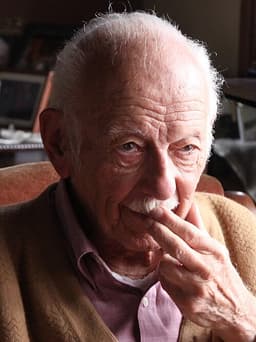
Sixto Duran Ballen
Politician · Modern
51.3Total
Basic Information
Born
1809
1921
Died
1886
—
Era
Modern
Modern
Nationality
Austria
Ecuador
Occupation
Politician
Politician
Civilization
Western
Western
Score Comparison
Military (10%)
50.0
49.1
Political (20%)
70.0
68.0
Influence (20%)
57.2
49.4
Legacy (20%)
50.0
40.0
Leadership (15%)
80.0
64.0
Strategy (15%)
41.9
42.8
TOTAL
58.5
51.3
Count von Beust — Complete Timeline
1866 AD
Appointment as Foreign Minister of AustriaPolitical Action◆ Major
Beust was appointed Foreign Minister of Austria after the Austro-Prussian War. He was tasked with rebuilding Austrian influence and finding a new political structure for the empire after its exclusion from Germany.
AppointmentPost-WarDiplomacy
Impact: national
1867 AD
Negotiation of the Austro-Hungarian Compromise (Ausgleich)Political Action
Beust led the negotiations with Hungarian leaders, resulting in the Ausgleich. This agreement transformed the Austrian Empire into the dual monarchy of Austria-Hungary, granting Hungary equal status and internal autonomy.
CompromiseDual MonarchyHungary
Impact: regionalconstructive
Appointment as Chancellor of Austria-HungaryPolitical Action◆ Major
Beust was appointed the first Chancellor of Austria-Hungary after the Ausgleich. He served as the empire's chief minister, focusing on foreign policy and attempting to restore Austrian influence in Germany.
ChancellorshipGovernmentDual Monarchy
Impact: national
1871 AD
Resignation as ChancellorPolitical Action◆ Major
Beust resigned as Chancellor after the Franco-Prussian War, in which Austria-Hungary remained neutral. His policy of seeking revenge against Prussia had failed, and he was replaced by Count Andrassy.
ResignationFranco-Prussian WarPolicy Failure
Impact: national
Sixto Duran Ballen — Complete Timeline
1992 AD
Implemented Economic ReformsReform◆ Major
Duran Ballen implemented a series of neoliberal economic reforms, including trade liberalization, privatization of state-owned enterprises, and deregulation. These reforms aimed to modernize the economy but faced opposition from labor unions.
Economic ReformNeoliberalismPrivatization
Impact: national
Elected President of EcuadorPolitical Action◆ Major
Sixto Duran Ballen was elected President of Ecuador as the candidate of the Republican Unity Party. He campaigned on a platform of economic modernization and anti-corruption.
ElectionPresidencyEcuador
Impact: national
1995 AD
Cenepa War with PeruWar◆ Major
During Duran Ballen's presidency, a brief armed conflict erupted with Peru over a disputed border area in the Cenepa region. The conflict resulted in casualties on both sides before a ceasefire was negotiated.
WarPeruBorder Conflict
Impact: regionaldestructive
1996 AD
Completed Presidential TermPolitical Action◆ Major
Duran Ballen completed his full four-year presidential term and peacefully transferred power to his elected successor, Abdal Bucaram. This was a rare instance of democratic continuity in Ecuador.
PresidencyDemocracyPeaceful Transition
Impact: nationalconstructive
Expert Analysis
Origins
Count Friedrich Ferdinand von Beust was born in 1809 in Dresden, Saxony, into a noble family with a tradition of state service. He studied law and political science at the universities of Leipzig and Göttingen, entering the Saxon civil service in 1831. His early career focused on diplomacy, where he developed skills in negotiation and coalition-building. Sixto Duran Ballen, born in 1921 in Boston, Massachusetts, to Ecuadorian parents, grew up in a wealthy family involved in business and politics. He studied civil engineering at the Massachusetts Institute of Technology (MIT) and later earned a master's degree in economics from Harvard. His background combined technical expertise with a conservative political outlook shaped by his family's connections.
Rise to Power
Beust rose to prominence in Saxony, becoming Foreign Minister in 1849 and Prime Minister in 1858. He advocated for a unified Germany under Saxon leadership, opposing Prussian dominance. After the Austro-Prussian War of 1866, Austria's defeat forced Emperor Franz Joseph to seek a new political course. Beust was appointed Foreign Minister of Austria in 1866, tasked with rebuilding Austrian influence. His key turning point was negotiating the Austro-Hungarian Compromise (Ausgleich) in 1867, which transformed the Austrian Empire into the dual monarchy of Austria-Hungary. This made him the first Chancellor of Austria-Hungary. Duran Ballen entered Ecuadorian politics later in life. He served as President of the Central Bank of Ecuador from 1984 to 1985 under President Leon Febres Cordero. In 1992, he was elected President as the candidate of the Republican Unity Party, campaigning on economic modernization and anti-corruption. His rise was facilitated by his technocratic image and support from business elites.
Leadership & Governance
Beust's leadership style was diplomatic and pragmatic. As Chancellor of Austria-Hungary, he focused on foreign policy, seeking to restore Austrian prestige after the 1866 defeat. He pursued a policy of balancing between the German powers and maintaining the alliance with Hungary. His governance approach was centralized in foreign affairs but delegated domestic matters to the Hungarian prime minister. In contrast, Duran Ballen was a conservative modernizer who implemented neoliberal reforms. He privatized state enterprises, reduced trade barriers, and stabilized the economy through fiscal discipline. His leadership was technocratic, relying on economists and advisors from the United States. However, he faced criticism for neglecting social programs and for handling the Cenepa War with Peru in 1995. Beust scored 80.0 in Leadership, while Duran Ballen scored 64.0, reflecting Beust's more influential role in shaping Austria-Hungary's structure.
Triumph & Tragedy
Beust's greatest triumph was the Ausgleich, which created a stable dual monarchy that lasted until 1918. This agreement resolved the constitutional crisis with Hungary and allowed Austria-Hungary to function as a major European power. However, his greatest failure was the policy of revenge against Prussia, which led to Austria-Hungary's neutrality in the Franco-Prussian War (1870-1871). This isolation weakened Austria's position in Germany and led to his resignation in 1871. Duran Ballen's triumph was completing his full term and peacefully transferring power, a rarity in Ecuadorian history. His economic reforms reduced inflation and attracted foreign investment. However, his failure was the Cenepa War, a brief conflict with Peru that resulted in casualties and unresolved border issues. Additionally, his neoliberal policies increased inequality and led to social unrest.
Character & Destiny
Beust was a skilled diplomat, characterized by his flexibility and ability to forge compromises. His decision-making was strategic but sometimes overly cautious. His destiny was tied to the fate of the Habsburg monarchy: he succeeded in creating a dual state but failed to secure Austria's dominance in Germany. Historians assess him as a competent statesman who navigated a difficult period. Duran Ballen was a pragmatic conservative, focused on economic efficiency rather than political ideology. His character was shaped by his American education and business background, leading to a technocratic approach. His destiny was to be a transitional figure who modernized Ecuador's economy but left a mixed legacy due to social costs. Overall, Beust scored 50.0 in Legacy, while Duran Ballen scored 40.0, reflecting the longer-term impact of the Ausgleich.
Legacy
Beust's legacy is the Austro-Hungarian Compromise, which defined the structure of the Habsburg monarchy for its final 51 years. The dual system influenced later federal experiments in Europe. However, his name is less remembered than those of his successors. In Austria, he is recognized as a key figure in the empire's reorganization. Duran Ballen's legacy is more controversial. His neoliberal reforms set Ecuador on a path of economic liberalization, but also contributed to political instability in the 1990s. He is remembered as a competent administrator who completed his term, a notable achievement in Ecuador. His influence is limited to his presidency, while Beust's Ausgleich had enduring constitutional significance. By total score, Beust leads 58.5 to 51.3, with higher scores in Leadership (80.0 vs 64.0) and Political (70.0 vs 68.0).
Conclusion
Count von Beust had greater historical impact than Sixto Duran Ballen. While both were politicians who implemented significant reforms, Beust's Ausgleich fundamentally reshaped the political map of Central Europe and created a dual monarchy that lasted over five decades. His political score of 70.0 and leadership score of 80.0 reflect his role in a major geopolitical transformation. Duran Ballen's reforms, while important for Ecuador, were less transformative and more transient. Beust's strategic score of 41.9 is lower than Duran Ballen's 42.8, but his overall influence and legacy are more substantial. The data supports the conclusion that Beust's actions had a broader and more lasting impact on European history.
Rankings
🥇
Count von BeustLeader
Mil: 50.0Pol: 70.0Inf: 57.2
58.5
🥈
Sixto Duran Ballen
Mil: 49.1Pol: 68.0Inf: 49.4
51.3
+7.2 behind
How This Comparison Works
Algorithm
Each figure is scored on 6 dimensions (0—100 scale) based on structured historical data: Military (10%), Political (20%), Influence (20%), Legacy (20%), Leadership (15%), Strategy (15%). The weighted total produces the final ranking.
Data Sources
Scores are computed from structured sub-indicators in the database. Scale factors adjust for era (Ancient ×0.85, Modern ×1.0) and civilization size (Eastern ×1.05, Other ×0.80) to account for differences in population and military scale.
Maximum 3 Figures
Comparisons are limited to 2—3 figures to ensure readability and statistical meaningfulness.
Error Margins
±5 points per dimension — Sub-scores are derived from historical records with inherent uncertainty. Two figures within 5 points on a dimension should be considered roughly equivalent in that area.
Total Score Accuracy
±3 points overall — The weighted combination of 6 dimensions produces a total score with approximately ±3 points of uncertainty. Differences of less than 3 points are not statistically significant— the figures are effectively tied.
Known Limitations
- Historical records are incomplete and uneven across civilizations
- Figures from oral-tradition societies may be underrepresented
- Occupation labels can misclassify multi-role figures
- Scores measure capability and impact, not moral character
- Quantitative scoring is a comparison tool, not absolute truth
Capability Radar
Military (10%) — Battles & Warfare
Battles
28
31
Win Rate
31
31
Expansion
33
35
Political (20%) — Governance & Reform
Reform
75
55
Diplomacy
80
45
Economy
60
60
Influence (20%) — Cultural & Global Reach
Cultural
30
20
Global
45
15
Legacy (20%) — Historical Impact
Historical
55
25
Longevity
50
15
Leadership (15%) — Power & Stability
Tenure
65
40
Stability
70
35
Strategy (15%) — Tactics & Innovation
Strategy
39
37
Tactics
39
41
Reform
43
45
Similar Comparisons
Comments & Discussion
No comments yet. Be the first to share your thoughts!