Loading...
Alexander Kerensky vs Sixto Duran Ballen
Sixto Duran Ballen leads by 7.8 pts · 2 figures compared
…

Alexander Kerensky
Politician · Modern
43.5Total
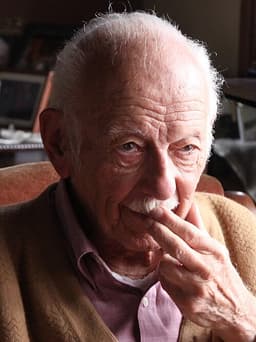
Sixto Duran Ballen
Politician · Modern
51.3Total
Basic Information
Born
1881
1921
Died
1970
—
Era
Modern
Modern
Nationality
Russia
Ecuador
Occupation
Politician
Politician
Civilization
Western
Western
Score Comparison
Military (10%)
48.5
49.1
Political (20%)
35.1
68.0
Influence (20%)
52.5
49.4
Legacy (20%)
45.0
40.0
Leadership (15%)
31.2
64.0
Strategy (15%)
42.9
42.8
TOTAL
43.5
51.3
Alexander Kerensky — Complete Timeline
1917 AD
Appointment as Minister of JusticePolitical Action◆ Major
After the February Revolution, Kerensky was appointed Minister of Justice in the Provisional Government. He was the only socialist in the cabinet and became a key figure in the government, advocating for continued war effort and gradual reforms.
Provisional GovernmentMinister of JusticeFebruary Revolution
Impact: national
Kornilov AffairPolitical Action
Kerensky, as Prime Minister, accused General Lavr Kornilov of attempting a coup and dismissed him. Kornilov then marched troops toward Petrograd. Kerensky armed the Bolshevik Red Guards to defend the city, which strengthened the Bolsheviks' position and undermined the Provisional Government.
Kornilov AffairCoup AttemptProvisional Government
Impact: nationaldestructive
Overthrow by the BolsheviksPolitical Action
During the October Revolution, Bolshevik forces led by Lenin seized key points in Petrograd and stormed the Winter Palace. Kerensky fled the city in a car provided by the American embassy, leaving the Provisional Government to collapse. He later went into exile.
October RevolutionBolsheviksProvisional Government
Impact: globaltragic
1918 AD
Exile and Anti-Bolshevik ActivitiesPolitical Action
After fleeing Russia, Kerensky settled in Paris and later the United States. He wrote memoirs and continued to advocate for democratic socialism, but failed to gain significant support. He remained a controversial figure, blamed by both the left and right for the failure of the Provisional Government.
ExileAnti-BolshevikMemoirs
Impact: national
Sixto Duran Ballen — Complete Timeline
1992 AD
Implemented Economic ReformsReform◆ Major
Duran Ballen implemented a series of neoliberal economic reforms, including trade liberalization, privatization of state-owned enterprises, and deregulation. These reforms aimed to modernize the economy but faced opposition from labor unions.
Economic ReformNeoliberalismPrivatization
Impact: national
Elected President of EcuadorPolitical Action◆ Major
Sixto Duran Ballen was elected President of Ecuador as the candidate of the Republican Unity Party. He campaigned on a platform of economic modernization and anti-corruption.
ElectionPresidencyEcuador
Impact: national
1995 AD
Cenepa War with PeruWar◆ Major
During Duran Ballen's presidency, a brief armed conflict erupted with Peru over a disputed border area in the Cenepa region. The conflict resulted in casualties on both sides before a ceasefire was negotiated.
WarPeruBorder Conflict
Impact: regionaldestructive
1996 AD
Completed Presidential TermPolitical Action◆ Major
Duran Ballen completed his full four-year presidential term and peacefully transferred power to his elected successor, Abdal Bucaram. This was a rare instance of democratic continuity in Ecuador.
PresidencyDemocracyPeaceful Transition
Impact: nationalconstructive
Expert Analysis
Origins
Alexander Kerensky was born in 1881 in Simbirsk, Russia, into a middle-class family. His father was a school principal and his mother came from a noble background. Kerensky studied law at St. Petersburg University, graduating in 1904. He became a lawyer defending revolutionaries and joined the Socialist Revolutionary Party in 1905, influenced by populist ideals. His early career was marked by legal work for political prisoners, which built his reputation as a committed socialist.
Sixto Duran Ballen was born in 1921 in Boston, USA, to an Ecuadorian diplomat family. He studied engineering at the University of Illinois and later earned a master's in economics from Harvard. His father was a prominent politician, and Duran Ballen worked in private business before entering politics. He served as mayor of Quito from 1970 to 1978, focusing on urban development. His background in engineering and economics shaped his technocratic approach.
Rise to Power
Kerensky rose rapidly after the February Revolution of 1917. He was elected to the Petrograd Soviet and appointed Minister of Justice in the Provisional Government in March 1917. He became Minister of War in May, gaining popularity for his fiery speeches and support for continuing WWI. By July, he became Prime Minister, the youngest in Russian history at age 36. His ascent was driven by his oratory and position as the sole socialist in the cabinet, but he lacked a strong power base.
Duran Ballen's path to presidency was longer. After his mayoral term, he founded the Republican Unity Party in 1991. He was elected President in 1992, winning a runoff with 57% of the vote. His campaign focused on economic modernization, promising to reduce inflation and attract foreign investment. His rise was facilitated by Ecuador's economic crisis and public desire for technocratic leadership.
Leadership & Governance
Kerensky's leadership was chaotic. He attempted to maintain a coalition government between liberals and socialists, but failed to address land reform or end WWI. His handling of the Kornilov Affair in August 1917—where he dismissed General Kornilov, then armed the Bolsheviks to defend Petrograd—backfired. He scored 31.2 in leadership and 42.9 in strategy, reflecting his indecisiveness. He alienated conservatives by suspending the death penalty and socialists by postponing reforms.
Duran Ballen governed as a neoliberal reformer. He implemented austerity measures, privatized state industries, and opened Ecuador to trade. His policies reduced inflation from 60% to 23% during his term. He scored 64.0 in leadership and 42.8 in strategy. His governance was consistent but faced opposition from labor unions and indigenous groups. He also managed the Cenepa War with Peru in 1995, a brief conflict that ended with a ceasefire.
Triumph & Tragedy
Kerensky's greatest success was overseeing the first free elections in Russia in November 1917, though the Constituent Assembly was soon dissolved. His greatest failure was the October Revolution, when Bolsheviks seized power while he fled Petrograd. He scored 48.5 in military and 35.1 in political, showing his inability to control armed forces or build coalitions. His legacy is one of missed opportunities.
Duran Ballen's triumph was completing his term and peacefully transferring power, a rarity in Ecuador. His economic reforms stabilized the economy, but also increased inequality. His tragedy was the Cenepa War, which cost 500 lives and ended with a peace agreement that left the border unresolved. He scored 49.1 in military and 68.0 in political, indicating stronger political skills.
Character & Destiny
Kerensky was a charismatic orator but indecisive and overly optimistic. He believed in democratic socialism but failed to compromise or enforce order. His character—idealistic but weak—led to his downfall. Historians assess him as a tragic figure whose flaws were amplified by circumstance.
Duran Ballen was a pragmatic technocrat, disciplined and focused. His character—reserved and methodical—allowed him to implement reforms despite opposition. He scored 51.3 total, higher than Kerensky's 43.5, reflecting his effectiveness. His destiny was to be a transitional figure in Ecuador's modernization.
Legacy
Kerensky's legacy is as the man who lost Russia to the Bolsheviks. He is remembered for his failure to prevent the Soviet takeover. His ideas of democratic socialism were overshadowed by Lenin's success. He influenced later Russian liberals but had little practical impact.
Duran Ballen's legacy is more concrete. His neoliberal reforms set the stage for Ecuador's dollarization and economic liberalization. He is remembered as a competent president who broke cycles of instability. His peaceful transfer of power was a model for later leaders.
Conclusion
Sixto Duran Ballen had a greater impact than Alexander Kerensky. Duran Ballen scored 51.3 total versus Kerensky's 43.5, a gap of 7.8 points. Duran Ballen's political score of 68.0 dwarfs Kerensky's 35.1, showing his ability to govern effectively. While Kerensky's failure was monumental, Duran Ballen's success in implementing reforms and maintaining stability had lasting effects on Ecuador. Kerensky's historical role is as a warning, not a model. Duran Ballen, though less known, achieved tangible results.
Rankings
🥇
Sixto Duran BallenLeader
Mil: 49.1Pol: 68.0Inf: 49.4
51.3
🥈
Alexander Kerensky
Mil: 48.5Pol: 35.1Inf: 52.5
43.5
+7.8 behind
How This Comparison Works
Algorithm
Each figure is scored on 6 dimensions (0—100 scale) based on structured historical data: Military (10%), Political (20%), Influence (20%), Legacy (20%), Leadership (15%), Strategy (15%). The weighted total produces the final ranking.
Data Sources
Scores are computed from structured sub-indicators in the database. Scale factors adjust for era (Ancient ×0.85, Modern ×1.0) and civilization size (Eastern ×1.05, Other ×0.80) to account for differences in population and military scale.
Maximum 3 Figures
Comparisons are limited to 2—3 figures to ensure readability and statistical meaningfulness.
Error Margins
±5 points per dimension — Sub-scores are derived from historical records with inherent uncertainty. Two figures within 5 points on a dimension should be considered roughly equivalent in that area.
Total Score Accuracy
±3 points overall — The weighted combination of 6 dimensions produces a total score with approximately ±3 points of uncertainty. Differences of less than 3 points are not statistically significant— the figures are effectively tied.
Known Limitations
- Historical records are incomplete and uneven across civilizations
- Figures from oral-tradition societies may be underrepresented
- Occupation labels can misclassify multi-role figures
- Scores measure capability and impact, not moral character
- Quantitative scoring is a comparison tool, not absolute truth
Capability Radar
Military (10%) — Battles & Warfare
Battles
32
31
Win Rate
34
31
Expansion
32
35
Political (20%) — Governance & Reform
Reform
40
55
Diplomacy
20
45
Economy
15
60
Influence (20%) — Cultural & Global Reach
Cultural
15
20
Global
30
15
Legacy (20%) — Historical Impact
Historical
40
25
Longevity
20
15
Leadership (15%) — Power & Stability
Tenure
10
40
Stability
5
35
Strategy (15%) — Tactics & Innovation
Strategy
38
37
Tactics
40
41
Reform
45
45
Similar Comparisons
Comments & Discussion
No comments yet. Be the first to share your thoughts!