Loading...
Crassus vs Tariq ibn Ziyad
Tariq ibn Ziyad leads by 0.2 pts · 2 figures compared
…
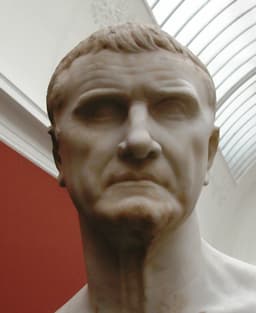
Crassus
General · Ancient
55.5Total

Tariq ibn Ziyad
General · Ancient
55.7Total
Basic Information
Born
-115
-670
Died
-53
—
Era
Ancient
Ancient
Nationality
Roman Republic
Umayyad Caliphate
Occupation
General
General
Civilization
Western
Middle Eastern
Score Comparison
Military (10%)
65.0
77.5
Political (20%)
46.6
32.2
Influence (20%)
57.2
61.0
Legacy (20%)
50.0
58.0
Leadership (15%)
61.1
43.8
Strategy (15%)
60.0
68.1
TOTAL
55.5
55.7
Crassus — Complete Timeline
71 BC
Suppression of Spartacus's RevoltWar◆ Major
Crassus raised and commanded six legions to crush the slave rebellion led by Spartacus. After cornering and defeating the rebels in Lucania, he crucified 6,000 survivors along the Appian Way, ending the Third Servile War.
Slave RevoltSpartacusCrucifixionThird Servile War
Impact: nationaldestructive
60 BC
Formation of the First TriumviratePolitical Action
Crassus allied with Julius Caesar and Pompey the Great to form an informal political coalition known as the First Triumvirate. This alliance dominated Roman politics, advancing each member's interests against the Senate.
Political AllianceCaesarPompeySenate
Impact: global
53 BC
Battle of CarrhaeWar◆ Major
Crassus invaded Parthia without proper support and was defeated at Carrhae. His army was annihilated by Parthian cavalry, and Crassus was killed during negotiations. This disaster marked a major Roman defeat and ended the Triumvirate.
Parthian WarDefeatDeath
Impact: regionaltragic
Tariq ibn Ziyad — Complete Timeline
711 AD
Battle of GuadaleteWar
Tariq ibn Ziyad led a Berber army across the Strait of Gibraltar and defeated the Visigothic King Roderic at the Battle of Guadalete. This victory opened the way for the Islamic conquest of the Iberian Peninsula, marking the beginning of Al-Andalus.
Islamic ConquestAl-AndalusVisigothic Kingdom
Impact: global
Capture of ToledoWar◆ Major
After the Battle of Guadalete, Tariq ibn Ziyad's forces captured Toledo, the Visigothic capital, without significant resistance. This secured the central Iberian Peninsula for the Umayyad Caliphate and facilitated further conquests.
Islamic ConquestAl-AndalusToledo
Impact: regional
Burning of the ShipsWar
According to legend, Tariq ibn Ziyad ordered his ships burned upon landing in Spain to motivate his troops to fight or die. This story, though disputed, symbolizes his determination and is a key part of his legacy.
LegendMotivationConquest
Impact: regional
712 AD
Recall to DamascusPolitical Action
After his initial conquests, Tariq ibn Ziyad was recalled to Damascus by the Umayyad caliph al-Walid I, possibly due to tensions with his superior Musa ibn Nusayr. He spent the remainder of his life in obscurity, with no further military commands.
Umayyad CaliphateRecallEnd of Career
Impact: regional
Expert Analysis
Origins
Marcus Licinius Crassus (c. 115–53 BCE) was born into a wealthy plebeian family in the Roman Republic. His father, Publius Licinius Crassus, was a consul and censor, but after his death during the Marian proscriptions, young Crassus fled to Spain. He rebuilt his fortune through property speculation, mining, and slave trading, becoming the richest man in Rome. Tariq ibn Ziyad (c. 670–720 CE) was a Berber Muslim commander born in North Africa under Umayyad rule. His early life is obscure, but he likely rose through military ranks as a mawla (client) of Musa ibn Nusayr, the governor of Ifriqiya. Unlike Crassus's aristocratic background, Tariq was of humble origins, relying on military prowess.
Rise to Power
Crassus gained prominence by suppressing the slave revolt of Spartacus in 71 BCE. He raised six legions at his own expense and, after a brutal campaign, crucified 6,000 survivors along the Appian Way. This military success earned him a consulship in 70 BCE alongside Pompey. In 60 BCE, he formed the First Triumvirate with Julius Caesar and Pompey, an informal alliance that dominated Roman politics. Tariq ibn Ziyad rose by leading the Umayyad conquest of Visigothic Hispania. In 711 CE, he crossed the Strait of Gibraltar with 7,000 Berber troops, defeating King Roderic at the Battle of Guadalete. His victory opened the doors to Iberia, and he swiftly captured Toledo, the Visigothic capital. His success, however, led to friction with his superior Musa ibn Nusayr, who joined him later and claimed credit.
Leadership & Governance
Crassus's leadership was transactional and profit-driven. He used his wealth to buy influence, lending money to senators and financing Caesar's debts. As governor of Syria, he sought military glory to match Pompey and Caesar, but his governance was marred by greed—he plundered the temple of Jerusalem and taxed locals heavily. Tariq ibn Zayad's leadership was more ideological, rooted in Islamic expansion. He motivated his troops with religious zeal and the famous (though disputed) burning of ships, signaling no retreat. His governance in Hispania was pragmatic: he granted terms to cities that surrendered, preserving local laws and taxing non-Muslims through the jizya. Crassus scored 46.6 in political skill, reflecting his reliance on money over diplomacy, while Tariq scored 32.2, indicating limited political maneuvering beyond military conquest.
Triumph & Tragedy
Crassus's greatest triumph was crushing Spartacus, which restored his military reputation. His greatest tragedy was the Battle of Carrhae in 53 BCE. Invading Parthia without proper cavalry support, he was outmaneuvered by Parthian horse archers. His army of 35,000 was annihilated; Crassus was killed during parley, and his head was reportedly used as a prop in a play. Tariq's triumph was the conquest of most of Hispania within two years, a feat that reshaped European history. His tragedy came after his recall to Damascus, where he fell into obscurity, possibly imprisoned or executed. Unlike Crassus's dramatic battlefield death, Tariq's end is murky—he likely died in poverty, overshadowed by Musa.
Character & Destiny
Crassus was ambitious, greedy, and insecure about his military reputation. He craved the glory of his rivals, leading him to invade Parthia despite warnings. His character—impatient and overconfident—doomed him. Tariq was more disciplined and strategic, as seen in his rapid campaigns and use of Berber troops. However, his destiny was tied to Umayyad politics; his success made him a threat to superiors, leading to his recall. Both men were shaped by their environments: Crassus by Roman competitive politics, Tariq by Islamic expansionism.
Legacy
Crassus's legacy is mixed: he is remembered as the richest Roman and a key figure in the fall of the Republic, but his defeat at Carrhae became a symbol of Roman hubris. His wealth set precedents for using money in politics. Tariq's legacy is more positive: he is honored as a conqueror in Islamic history; the Strait of Gibraltar (Jabal Tariq) is named after him. His conquest laid the foundation for al-Andalus, which lasted 700 years. Crassus scores 50.0 in legacy, Tariq 58.0, reflecting the longer-lasting impact of the Islamic conquest.
Conclusion
Tariq ibn Ziyad had a greater impact than Crassus. While Crassus's wealth and political maneuvering influenced Rome's transition from Republic to Empire, his military failures limited his lasting effect. Tariq's conquest of Hispania created a civilization that influenced European science, philosophy, and culture for centuries. With a total score of 55.7 vs Crassus's 55.5, Tariq edges ahead, but more importantly, his legacy endured in a way Crassus's did not. Crassus is a cautionary tale; Tariq is a founder of a golden age.
Rankings
🥇
Tariq ibn ZiyadLeader
Mil: 77.5Pol: 32.2Inf: 61.0
55.7
🥈
Crassus
Mil: 65.0Pol: 46.6Inf: 57.2
55.5
+0.2 behind
How This Comparison Works
Algorithm
Each figure is scored on 6 dimensions (0—100 scale) based on structured historical data: Military (10%), Political (20%), Influence (20%), Legacy (20%), Leadership (15%), Strategy (15%). The weighted total produces the final ranking.
Data Sources
Scores are computed from structured sub-indicators in the database. Scale factors adjust for era (Ancient ×0.85, Modern ×1.0) and civilization size (Eastern ×1.05, Other ×0.80) to account for differences in population and military scale.
Maximum 3 Figures
Comparisons are limited to 2—3 figures to ensure readability and statistical meaningfulness.
Error Margins
±5 points per dimension — Sub-scores are derived from historical records with inherent uncertainty. Two figures within 5 points on a dimension should be considered roughly equivalent in that area.
Total Score Accuracy
±3 points overall — The weighted combination of 6 dimensions produces a total score with approximately ±3 points of uncertainty. Differences of less than 3 points are not statistically significant— the figures are effectively tied.
Known Limitations
- Historical records are incomplete and uneven across civilizations
- Figures from oral-tradition societies may be underrepresented
- Occupation labels can misclassify multi-role figures
- Scores measure capability and impact, not moral character
- Quantitative scoring is a comparison tool, not absolute truth
Capability Radar
Military (10%) — Battles & Warfare
Battles
55
75
Win Rate
60
80
Expansion
30
85
Political (20%) — Governance & Reform
Reform
30
30
Diplomacy
60
60
Economy
85
35
Influence (20%) — Cultural & Global Reach
Cultural
40
65
Global
45
60
Legacy (20%) — Historical Impact
Historical
55
70
Longevity
50
65
Leadership (15%) — Power & Stability
Tenure
65
40
Stability
40
40
Strategy (15%) — Tactics & Innovation
Strategy
40
80
Tactics
45
85
Reform
10
30
Similar Comparisons
Comments & Discussion
No comments yet. Be the first to share your thoughts!