Loading...
Cuauhtemoc vs Umar II
Umar II leads by 6.9 pts · 2 figures compared
…
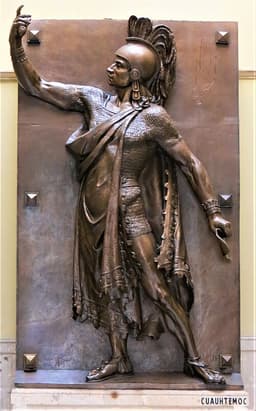
Cuauhtemoc
Emperor · Medieval
49.0Total
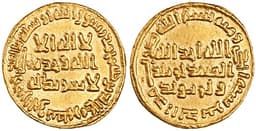
Umar II
Emperor · Medieval
55.9Total
Basic Information
Born
1497
682
Died
1525
720
Era
Medieval
Medieval
Nationality
Aztec Empire
Umayyad Caliphate
Occupation
Emperor
Emperor
Civilization
Other
Middle Eastern
Score Comparison
Military (10%)
46.7
10.2
Political (20%)
30.7
78.0
Influence (20%)
56.7
62.0
Legacy (20%)
58.0
56.0
Leadership (15%)
33.6
71.0
Strategy (15%)
60.0
30.3
TOTAL
49.0
55.9
Cuauhtemoc — Complete Timeline
1440 AD
Expanded the Aztec Empire through Military CampaignsWar◆ Major
Moctezuma I launched a series of military campaigns that extended Aztec control into the Gulf Coast, Oaxaca, and Guerrero regions. He conquered cities such as Cuetlaxtlan and Coixtlahuaca, incorporating them into the tribute system.
Aztec ExpansionMilitary ConquestTribute System
Impact: regional
1450 AD
Implemented the Flower Wars (Xochiyaoyotl)War◆ Major
Moctezuma I institutionalized the Flower Wars, ritualized conflicts with Tlaxcala and other city-states. These battles were designed to capture prisoners for religious sacrifice rather than territorial conquest, reinforcing Aztec religious practices.
Ritual WarfareHuman SacrificeAztec Religion
Impact: regionaldestructive
Constructed the Aqueduct of ChapultepecCultural
Moctezuma I commissioned the construction of a stone aqueduct from Chapultepec springs to Tenochtitlan, providing fresh water to the island city. This engineering project improved public health and supported the city's growing population.
InfrastructureWater SupplyUrban Development
constructive
Umar II — Complete Timeline
717 AD
Accession as CaliphPolitical Action◆ Major
Umar II became the Umayyad caliph after the death of Sulayman ibn Abd al-Malik. He is often considered the fifth 'Rashidun' (rightly guided) caliph due to his piety and reforms.
SuccessionCaliphate
Impact: global
718 AD
Withdrawal from the Siege of ConstantinopleWar◆ Major
Umar II ordered the withdrawal of Umayyad forces from the prolonged siege of Constantinople, which had failed to capture the city. This ended a major military campaign and saved resources.
SiegeConstantinopleWithdrawal
Impact: regional
Reforms in taxation and justiceReform◆ Major
Umar II implemented reforms that equalized tax treatment between Arab Muslims and non-Arab converts (mawali), abolished discriminatory taxes, and ensured fairer administration of justice. These reforms reduced social tensions.
Tax ReformJusticeEquality
Impact: globalprogressive
720 AD
Death and short reignOther
Umar II died after a reign of only three years, possibly poisoned. His short tenure was marked by significant reforms, and he was later remembered as a model of Islamic piety and justice.
DeathReignPiety
Impact: globaltragic
Expert Analysis
Origins
Cuauhtemoc, born around 1496, was the nephew of Moctezuma II and a member of the Aztec royal family. He was educated in the Calmecac school for nobles and trained as a warrior. His early life was shaped by the expanding Aztec Empire and the growing threat of Spanish conquistadors. Umar II, born in 682 CE in Medina, was a member of the Umayyad clan. His father, Abd al-Aziz ibn Marwan, was the governor of Egypt, providing Umar with a privileged upbringing. He studied Islamic jurisprudence and became known for his piety and learning.
Rise to Power
Cuauhtemoc rose to power in 1520 after the death of Moctezuma II and the brief rule of Cuitlahuac, who died of smallpox. He was elected tlatoani (emperor) during the siege of Tenochtitlan, leading the Aztec resistance against Hernán Cortés. His leadership was tested immediately as the Spanish blockaded the city. Umar II became caliph in 717 CE after the death of his cousin, Caliph Sulayman. He was not the first choice but was appointed due to his reputation for piety. His accession was marked by a shift from expansionist policies to internal reforms.
Leadership & Governance
Cuauhtemoc's leadership was primarily military, as he organized the defense of Tenochtitlan. He used the city's canal system and causeways to fight the Spanish and their indigenous allies. His political score of 30.7 reflects his short reign focused on survival. Umar II, with a political score of 78.0, implemented sweeping reforms. He equalized tax treatment between Arab Muslims and non-Arab converts (mawali), abolished discriminatory taxes, and ensured justice for all subjects. He also withdrew from the failed siege of Constantinople, ending costly campaigns.
Triumph & Tragedy
Cuauhtemoc's greatest triumph was his courageous defense of Tenochtitlan, resisting the Spanish for 80 days. His failure was the eventual fall of the city on August 13, 1521, and his capture. He was later tortured to reveal treasure locations and executed in 1525. Umar II's triumphs include his reforms that improved the status of non-Arab Muslims and his reputation as a pious ruler. His tragedy was his short reign of only three years; he died possibly poisoned, limiting the lasting impact of his reforms.
Character & Destiny
Cuauhtemoc is remembered for his bravery and defiance. He reportedly said, "I am not here for flowers, but to defend my city." His fate was sealed by the technological and biological advantages of the Spanish. Umar II was known for his simplicity and justice. He refused to use the caliphal treasury for personal gain. His destiny was to be remembered as the fifth 'rightly guided' caliph, despite being an Umayyad.
Legacy
Cuauhtemoc's legacy is that of a symbol of indigenous resistance in Mexico. He is commemorated in statues and currency. His military score of 46.7 reflects his tactical skills, but his overall score of 49.0 is lower due to his short reign. Umar II's legacy is more administrative; his reforms influenced later Islamic governance. He scored 55.9 overall, with high political and leadership scores. However, his reforms were partially reversed after his death.
Conclusion
While Cuauhtemoc symbolizes resistance, Umar II had greater practical impact through his reforms that affected millions of subjects. Umar II's total score of 55.9 exceeds Cuauhtemoc's 49.0, and his political and leadership scores are significantly higher. Therefore, Umar II had greater historical impact, despite his short reign.
Rankings
🥇
Umar IILeader
Mil: 10.2Pol: 78.0Inf: 62.0
55.9
🥈
Cuauhtemoc
Mil: 46.7Pol: 30.7Inf: 56.7
49.0
+6.9 behind
How This Comparison Works
Algorithm
Each figure is scored on 6 dimensions (0—100 scale) based on structured historical data: Military (10%), Political (20%), Influence (20%), Legacy (20%), Leadership (15%), Strategy (15%). The weighted total produces the final ranking.
Data Sources
Scores are computed from structured sub-indicators in the database. Scale factors adjust for era (Ancient ×0.85, Modern ×1.0) and civilization size (Eastern ×1.05, Other ×0.80) to account for differences in population and military scale.
Maximum 3 Figures
Comparisons are limited to 2—3 figures to ensure readability and statistical meaningfulness.
Error Margins
±5 points per dimension — Sub-scores are derived from historical records with inherent uncertainty. Two figures within 5 points on a dimension should be considered roughly equivalent in that area.
Total Score Accuracy
±3 points overall — The weighted combination of 6 dimensions produces a total score with approximately ±3 points of uncertainty. Differences of less than 3 points are not statistically significant— the figures are effectively tied.
Known Limitations
- Historical records are incomplete and uneven across civilizations
- Figures from oral-tradition societies may be underrepresented
- Occupation labels can misclassify multi-role figures
- Scores measure capability and impact, not moral character
- Quantitative scoring is a comparison tool, not absolute truth
Capability Radar
Military (10%) — Battles & Warfare
Battles
55
10
Win Rate
30
10
Expansion
10
5
Political (20%) — Governance & Reform
Reform
10
85
Diplomacy
15
70
Economy
10
75
Influence (20%) — Cultural & Global Reach
Cultural
60
60
Global
55
50
Legacy (20%) — Historical Impact
Historical
65
65
Longevity
60
55
Leadership (15%) — Power & Stability
Tenure
20
30
Stability
10
60
Strategy (15%) — Tactics & Innovation
Strategy
55
10
Tactics
60
10
Reform
10
20
Similar Comparisons
Comments & Discussion
No comments yet. Be the first to share your thoughts!