Loading...
Cuauhtemoc vs John I of Portugal
John I of Portugal leads by 11.3 pts · 2 figures compared
…
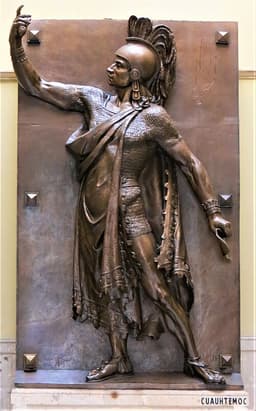
Cuauhtemoc
Emperor · Medieval
49.0Total
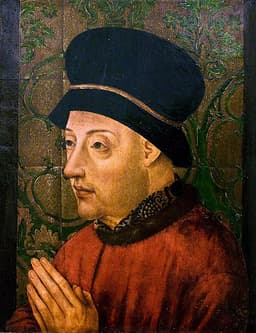
John I of Portugal
Emperor · Medieval
60.3Total
Basic Information
Born
1497
1357
Died
1525
1433
Era
Medieval
Medieval
Nationality
Aztec Empire
Portugal
Occupation
Emperor
Emperor
Civilization
Other
Western
Score Comparison
Military (10%)
46.7
65.0
Political (20%)
30.7
55.0
Influence (20%)
56.7
56.7
Legacy (20%)
58.0
58.0
Leadership (15%)
33.6
72.0
Strategy (15%)
60.0
60.7
TOTAL
49.0
60.3
Cuauhtemoc — Complete Timeline
1440 AD
Expanded the Aztec Empire through Military CampaignsWar◆ Major
Moctezuma I launched a series of military campaigns that extended Aztec control into the Gulf Coast, Oaxaca, and Guerrero regions. He conquered cities such as Cuetlaxtlan and Coixtlahuaca, incorporating them into the tribute system.
Aztec ExpansionMilitary ConquestTribute System
Impact: regional
1450 AD
Implemented the Flower Wars (Xochiyaoyotl)War◆ Major
Moctezuma I institutionalized the Flower Wars, ritualized conflicts with Tlaxcala and other city-states. These battles were designed to capture prisoners for religious sacrifice rather than territorial conquest, reinforcing Aztec religious practices.
Ritual WarfareHuman SacrificeAztec Religion
Impact: regionaldestructive
Constructed the Aqueduct of ChapultepecCultural
Moctezuma I commissioned the construction of a stone aqueduct from Chapultepec springs to Tenochtitlan, providing fresh water to the island city. This engineering project improved public health and supported the city's growing population.
InfrastructureWater SupplyUrban Development
constructive
John I of Portugal — Complete Timeline
1385 AD
Battle of AljubarrotaWar
John I led Portuguese forces to a decisive victory over the Castilian army at Aljubarrota. This battle secured Portuguese independence and solidified John's claim to the throne.
BattleIndependenceCastile
Impact: regionalconstructive
Accession to the thronePolitical Action
John I became King of Portugal after the 1383-1385 Crisis, being elected by the Cortes of Coimbra. His accession ended the Burgundian dynasty and founded the House of Aviz.
SuccessionDynastyAviz
Impact: nationalconstructive
1386 AD
Treaty of WindsorPolitical Action◆ Major
John I signed the Treaty of Windsor with England, establishing a perpetual alliance between Portugal and England. This alliance, the oldest in the world, has endured to the present day.
TreatyAllianceEngland
Impact: globalconstructive
1415 AD
Conquest of CeutaWar◆ Major
John I led the conquest of Ceuta in North Africa, marking the beginning of Portuguese overseas expansion. The capture of the city opened the era of European colonialism.
ConquestColonialismNorth Africa
Impact: global
Expert Analysis
Origins
Cuauhtemoc (c. 1496–1525) was born into the Aztec nobility as a member of the House of Tlacopan. His early life coincided with the height of the Aztec Empire under his predecessor Moctezuma II. He received typical noble education in military and religious training. Little is known of his early exploits before the Spanish invasion. In contrast, John I of Portugal (1357–1433) was born as the illegitimate son of King Peter I and Teresa Lourenço. Despite his illegitimacy, he was raised in the royal court and later became Master of the Order of Aviz. His early years were marked by the political instability of the 1383–1385 Crisis, during which Portugal faced a succession war with Castile.
Rise to Power
Cuauhtemoc rose to power in 1520 after the death of Moctezuma II and the brief rule of Cuitláhuac, who succumbed to smallpox. With Tenochtitlan under siege by Hernán Cortés, Cuauhtemoc was elected tlatoani (emperor) in February 1521. His primary task was to organize the defense of the island city. He quickly fortified the causeways and mobilized warriors from allied city-states. John I's rise was more gradual but equally dramatic. After the death of King Ferdinand I in 1383, John of Aviz led the resistance against Castilian claims. In 1385, the Cortes of Coimbra elected him king, cementing his legitimacy. His decisive victory at the Battle of Aljubarrota on August 14, 1385, secured Portuguese independence and his throne. He then founded the House of Aviz, which would rule Portugal for two centuries.
Leadership & Governance
Cuauhtemoc's leadership was tested under extreme duress. He commanded the defense of Tenochtitlan with limited resources, using guerrilla tactics on the causeways and waterways. He rejected multiple Spanish offers of surrender, choosing to fight to the death. His governance score of 33.6 reflects the chaotic wartime conditions, but he maintained loyalty among his warriors even as famine and disease ravaged the city. John I, with a leadership score of 72.0, consolidated his rule by establishing strong institutions. He reformed the administration, strengthened the crown's authority, and promoted the Portuguese language in official documents. He also signed the Treaty of Windsor with England in 1386, creating the oldest diplomatic alliance in the world. His political acumen (score 55.0) allowed him to balance nobility and clergy, while Cuauhtemoc's political score of 30.7 indicates the collapse of imperial governance under siege.
Triumph & Tragedy
Cuauhtemoc's greatest triumph was his staunch resistance during the Siege of Tenochtitlan (May–August 1521). Despite overwhelming odds, his forces inflicted heavy casualties on the Spanish and their indigenous allies. His tragedy was the fall of the city on August 13, 1521, followed by his capture and eventual execution by hanging in 1525 during Cortés's expedition to Honduras. He is remembered as a symbol of resistance. John I's triumph was the victory at Aljubarrota, which secured Portugal's independence and ended the threat of Castilian annexation. He also initiated the Age of Discovery by capturing Ceuta in 1415, opening the era of European overseas expansion. His tragedy was less personal: the costly maintenance of the English alliance and the economic strain of early expeditions. However, his legacy far outweighs his failures. In military terms, John I scores 65.0 against Cuauhtemoc's 46.7, reflecting the strategic importance of his campaigns.
Character & Destiny
Cuauhtemoc is often portrayed as a courageous and determined leader, willing to sacrifice everything for his people. His decision to fight to the end rather than surrender reflects a stoic fatalism. Historical assessments describe him as a tragic hero who faced an impossible situation. John I, by contrast, was pragmatic and diplomatic. He knew when to compromise and when to strike. His character was shaped by his illegitimacy, driving him to prove his worth through military and political success. He was also a patron of culture, sponsoring the translation of classical works. Their fates diverged: Cuauhtemoc died a captive, while John I died peacefully in 1433 after a long reign.
Legacy
Cuauhtemoc's legacy is primarily symbolic. He is venerated in Mexico as the last Aztec emperor and a symbol of indigenous resistance. His name is invoked in movements for indigenous rights. However, his direct impact on institutions is minimal. John I's legacy is monumental. He founded the Aviz dynasty, which oversaw Portugal's golden age of exploration. His capture of Ceuta marked the start of European colonialism. The Anglo-Portuguese Alliance he forged remains active today. His influence score of 56.7 matches Cuauhtemoc's, but his legacy score of 58.0 is equal, though John's impact is more tangible in global history. Cuauhtemoc's total score of 49.0 is lower than John's 60.3, reflecting a narrower scope of achievement.
Conclusion
John I of Portugal had a greater impact on world history than Cuauhtemoc. While Cuauhtemoc's resistance is admirable, it was ultimately futile and did not alter the course of colonization. John I, however, secured Portuguese independence, founded a dynasty, and initiated the European Age of Discovery. His military score of 65.0, political score of 55.0, and leadership score of 72.0 all exceed Cuauhtemoc's corresponding scores (46.7, 30.7, 33.6). The overall score gap of 11.3 points reflects John's broader and more lasting influence. History remembers Cuauhtemoc as a symbol; John I as a founder of an era.
Rankings
🥇
John I of PortugalLeader
Mil: 65.0Pol: 55.0Inf: 56.7
60.3
🥈
Cuauhtemoc
Mil: 46.7Pol: 30.7Inf: 56.7
49.0
+11.3 behind
How This Comparison Works
Algorithm
Each figure is scored on 6 dimensions (0—100 scale) based on structured historical data: Military (10%), Political (20%), Influence (20%), Legacy (20%), Leadership (15%), Strategy (15%). The weighted total produces the final ranking.
Data Sources
Scores are computed from structured sub-indicators in the database. Scale factors adjust for era (Ancient ×0.85, Modern ×1.0) and civilization size (Eastern ×1.05, Other ×0.80) to account for differences in population and military scale.
Maximum 3 Figures
Comparisons are limited to 2—3 figures to ensure readability and statistical meaningfulness.
Error Margins
±5 points per dimension — Sub-scores are derived from historical records with inherent uncertainty. Two figures within 5 points on a dimension should be considered roughly equivalent in that area.
Total Score Accuracy
±3 points overall — The weighted combination of 6 dimensions produces a total score with approximately ±3 points of uncertainty. Differences of less than 3 points are not statistically significant— the figures are effectively tied.
Known Limitations
- Historical records are incomplete and uneven across civilizations
- Figures from oral-tradition societies may be underrepresented
- Occupation labels can misclassify multi-role figures
- Scores measure capability and impact, not moral character
- Quantitative scoring is a comparison tool, not absolute truth
Capability Radar
Military (10%) — Battles & Warfare
Battles
55
65
Win Rate
30
70
Expansion
10
60
Political (20%) — Governance & Reform
Reform
10
70
Diplomacy
15
75
Economy
10
70
Influence (20%) — Cultural & Global Reach
Cultural
60
60
Global
55
55
Legacy (20%) — Historical Impact
Historical
65
65
Longevity
60
60
Leadership (15%) — Power & Stability
Tenure
20
75
Stability
10
65
Strategy (15%) — Tactics & Innovation
Strategy
55
65
Tactics
60
60
Reform
10
55
Similar Comparisons
Comments & Discussion
No comments yet. Be the first to share your thoughts!