Loading...
Cudjoe vs Julius Caesar
Julius Caesar leads by 32.3 pts · 2 figures compared
…
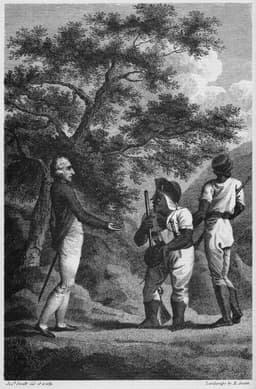
Cudjoe
General · Modern
50.5Total

Julius Caesar
General · Ancient
82.8Total
Basic Information
Born
1680
-100
Died
1764
-44
Era
Modern
Ancient
Nationality
Jamaica
Roman Republic
Occupation
General
General
Civilization
Other
Western
Score Comparison
Military (10%)
40.0
88.0
Political (20%)
45.1
78.0
Influence (20%)
56.4
85.0
Legacy (20%)
45.8
82.0
Leadership (15%)
65.7
80.0
Strategy (15%)
43.3
85.0
TOTAL
50.5
82.8
Cudjoe — Complete Timeline
1720 AD
Led Leeward Maroons in First Maroon WarWar◆ Major
Cudjoe emerged as the leader of the Leeward Maroons in western Jamaica during the First Maroon War against British colonial forces. He organized and commanded maroon fighters in guerrilla campaigns that disrupted British plantations and military patrols, becoming the most prominent maroon military leader.
Maroon WarLeadershipGuerrilla
Impact: regional
1739 AD
Signed Treaty with British (1739)Political Action◆ Major
Cudjoe signed a peace treaty with British colonial authorities in March 1739, ending the First Maroon War for the Leeward Maroons. The treaty granted the maroons 1,500 acres of land, self-governance, and freedom from slavery, in exchange for ceasing hostilities and agreeing to capture and return runaway slaves.
TreatyPeaceLand Grant
Impact: regional
Established Maroon Town of AccompongPolitical Action◆ Major
Following the 1739 treaty, Cudjoe established the maroon settlement of Accompong in the Cockpit Country of Jamaica. The town became the administrative and cultural center of the Leeward Maroons, maintaining autonomy and traditional practices under Cudjoe's leadership for decades.
SettlementMaroonAutonomy
Impact: regionalconstructive
Julius Caesar — Complete Timeline
58 BC
Gallic WarsWar◆ Major
Caesar, as proconsul of Gaul, launched a series of campaigns that conquered all of Gaul (modern France, Belgium, and parts of Switzerland). He fought numerous battles, including against the Helvetii, the Belgae, and the Gallic chieftain Vercingetorix. The wars brought immense wealth and a loyal army to Caesar.
Gallic WarsConquestRoman Expansion
Impact: regional
49 BC
Crossing the RubiconPolitical Action◆ Major
Caesar led Legio XIII across the Rubicon River into Italy, defying the Roman Senate's order to disband his army. This act triggered a civil war against Pompey and the Optimates, ultimately leading to Caesar's dictatorship and the end of the Roman Republic.
Roman Civil WarEnd of RepublicPower Struggle
Impact: global
48 BC
Battle of PharsalusWar◆ Major
Caesar's outnumbered army defeated the larger forces of Pompey the Great at Pharsalus in Greece. Caesar's tactical use of a reserve line to counter Pompey's cavalry charge proved decisive. Pompey fled to Egypt, where he was assassinated, leaving Caesar as the undisputed master of the Roman world.
Roman Civil WarBattleDecisive Victory
Impact: regional
44 BC
Appointment as Dictator for LifePolitical Action◆ Major
The Roman Senate appointed Caesar dictator perpetuo (dictator for life), granting him unprecedented personal power. This move concentrated military, legislative, and judicial authority in one person, effectively ending the Roman Republic's traditional system of checks and balances and alarming many senators.
DictatorshipEnd of RepublicPower Consolidation
Impact: regionaldestructive
Assassination on the Ides of MarchPolitical Action◆ Major
A group of Roman senators, led by Marcus Junius Brutus and Gaius Cassius Longinus, stabbed Caesar to death at a meeting of the Senate in the Theatre of Pompey. The assassination was intended to restore the Republic, but instead triggered another civil war that led to the rise of the Roman Empire.
AssassinationRoman PoliticsEnd of Republic
Impact: globaldestructive
Expert Analysis
cudjoe-vs-julius-caesar
# The General and the Guerrilla
On a March morning in 44 BCE, the most powerful man in the Roman world fell beneath twenty-three dagger blows, his blood pooling at the base of Pompey’s statue. Just over seventeen hundred years later and an ocean away, another man who had fought the might of an empire died peacefully in his sleep, surrounded by the forests he had turned into a fortress. Julius Caesar and Cudjoe—one a name that echoes through every classroom, the other nearly lost to history—both defied the established order. Yet one built an empire and died for his ambition, while the other secured a sanctuary and lived to see his people free. Why did their paths diverge so radically?
Origins
Caesar was born into the patrician Julian clan, a family that claimed descent from the goddess Venus. The Roman Republic in 100 BCE was a cauldron of ambition and corruption, where senatorial factions murdered rivals and generals marched armies for personal glory. Caesar’s childhood was marked by civil war: his uncle Marius and rival Sulla butchered their enemies in proscriptions. Young Caesar learned early that power came from swords, not votes.
Cudjoe’s origins are shrouded in the violence of the Middle Passage. Born around 1680 in what is now Ghana, he was captured and sold into slavery in Jamaica. But he escaped into the island’s impenetrable Cockpit Country—a labyrinth of limestone sinkholes and dense jungle where British muskets were useless. Here, he joined the Maroons, communities of runaways who built a world beyond the plantation’s whip. While Caesar inherited a legacy of conquest, Cudjoe inherited a legacy of survival.
Rise to Power
Caesar’s ascent was a masterclass in calculated risk. He borrowed fortunes to throw games that won him popularity, served as governor of Spain to prove his military mettle, and formed the First Triumvirate with Pompey and Crassus. But his true springboard was Gaul. Between 58 and 50 BCE, Caesar conquered a territory larger than Italy, slaughtering perhaps a million people and enslaving another million. His *Commentaries* turned this genocide into propaganda, depicting himself as a civilizer. When the Senate ordered him to disband his army, he crossed the Rubicon River in 49 BCE, declaring, “The die is cast.” Civil war followed, and within three years Caesar was master of Rome.
Cudjoe’s rise was quieter but no less strategic. In 1720, he emerged as leader of the Leeward Maroons during the First Maroon War. While Caesar commanded legions in set-piece battles, Cudjoe waged a guerrilla war: ambushing British patrols, raiding plantations, melting into the jungle. The British sent hundreds of soldiers and bloodhounds; they found only empty trails. Cudjoe’s power came not from conquering territory but from making the colony ungovernable. By 1739, after nearly two decades of war, the British realized they could not defeat him.
Leadership & Governance
Caesar’s rule was absolute and transformative. As dictator, he reformed the calendar (giving us the Julian calendar), granted citizenship to Gauls, launched public works projects, and centralized tax collection. But his style was impatient and autocratic. He accepted a lifetime dictatorship, had his image stamped on coins while still alive, and treated the Senate as a rubber stamp. When warned of a conspiracy, he reportedly dismissed it: “It is more important for the Republic that I should not fear death.”
Cudjoe’s governance was a study in diplomacy. The 1739 treaty he signed granted the Maroons autonomy in exchange for returning runaway slaves and aiding the British against invaders. Critics call this a betrayal—Cudjoe became a slave-catcher for his former enemies. But the treaty was a masterpiece of limited victory. The Maroons kept their land, their weapons, and their freedom. Cudjoe established the town of Accompong, which still exists today. He governed not as a dictator but as a chief, relying on consensus and the practical wisdom of the forest.
Triumph & Tragedy
Caesar’s greatest triumph was his swift defeat of Pompey’s forces, culminating in the Battle of Pharsalus in 48 BCE. His greatest tragedy came on the Ides of March, 44 BCE, when senators he had pardoned stabbed him to death. He had centralized power but failed to build a system that could survive him. His adopted heir, Octavian, would turn the Republic into an empire—a monument to Caesar’s ambition, but not his design.
Cudjoe’s triumph was the treaty itself. To secure freedom for his people, he accepted a compromise that would tarnish his legacy. His tragedy is that he is largely forgotten—a footnote in histories that celebrate the very empires he resisted. While Caesar’s name adorns months, cities, and surgical procedures, Cudjoe’s survives mainly in the remote hills of Jamaica.
Character & Destiny
Caesar was driven by an insatiable need for glory. He once wept at a statue of Alexander the Great, realizing he had achieved nothing at an age when Alexander had conquered the world. This hunger made him brilliant but blind—he could not imagine his own mortality until the daggers found him.
Cudjoe’s character is harder to read, but his actions suggest a man of profound patience. He fought not to conquer but to endure. He understood that freedom sometimes means knowing what you cannot change. Where Caesar gambled everything on a single throw, Cudjoe played the long game, trading glory for survival.
Legacy
Caesar’s legacy is the Roman Empire itself—the template for Western civilization. His name became a title: Kaiser, Tsar. He is remembered as a genius and a tyrant, a man who destroyed a republic and built a world.
Cudjoe’s legacy is quieter but no less real. Accompong remains a symbol of resistance. His treaty is one of the earliest examples of a colonial power recognizing indigenous sovereignty. He proved that enslaved people could fight and win—not total victory, but enough. In the pantheon of freedom fighters, he stands as a reminder that history’s winners are not always those who conquer, but those who survive.
Conclusion
Caesar and Cudjoe faced the same fundamental question: How do you challenge an overwhelming power? Caesar answered by becoming the power himself, crushing all rivals until there was nothing left to oppose. Cudjoe answered by carving out a space where power could not reach. One died in the Senate house, his body a testament to the limits of force. The other died in his sleep, his people free in a fortress of stone and jungle. Perhaps the difference is not in their courage—both were fearless—but in their definition of victory. For Caesar, victory meant ruling the world. For Cudjoe, it meant finding a corner of it where his people could live.
Rankings
🥇
Julius CaesarLeader
Mil: 88.0Pol: 78.0Inf: 85.0
82.8
🥈
Cudjoe
Mil: 40.0Pol: 45.1Inf: 56.4
50.5
+32.3 behind
How This Comparison Works
Algorithm
Each figure is scored on 6 dimensions (0—100 scale) based on structured historical data: Military (10%), Political (20%), Influence (20%), Legacy (20%), Leadership (15%), Strategy (15%). The weighted total produces the final ranking.
Data Sources
Scores are computed from structured sub-indicators in the database. Scale factors adjust for era (Ancient ×0.85, Modern ×1.0) and civilization size (Eastern ×1.05, Other ×0.80) to account for differences in population and military scale.
Maximum 3 Figures
Comparisons are limited to 2—3 figures to ensure readability and statistical meaningfulness.
Error Margins
±5 points per dimension — Sub-scores are derived from historical records with inherent uncertainty. Two figures within 5 points on a dimension should be considered roughly equivalent in that area.
Total Score Accuracy
±3 points overall — The weighted combination of 6 dimensions produces a total score with approximately ±3 points of uncertainty. Differences of less than 3 points are not statistically significant— the figures are effectively tied.
Known Limitations
- Historical records are incomplete and uneven across civilizations
- Figures from oral-tradition societies may be underrepresented
- Occupation labels can misclassify multi-role figures
- Scores measure capability and impact, not moral character
- Quantitative scoring is a comparison tool, not absolute truth
Capability Radar
Military (10%) — Battles & Warfare
Battles
35
95
Win Rate
40
92
Expansion
25
97
Political (20%) — Governance & Reform
Reform
25
90
Diplomacy
50
85
Economy
20
82
Influence (20%) — Cultural & Global Reach
Cultural
30
88
Global
20
94
Legacy (20%) — Historical Impact
Historical
35
95
Longevity
30
96
Leadership (15%) — Power & Stability
Tenure
30
75
Stability
35
60
Strategy (15%) — Tactics & Innovation
Strategy
40
94
Tactics
45
96
Reform
20
88
Similar Comparisons
Comments & Discussion
CockpitConsigliere6/17/2026
Caesar conquered Gaul with professional legions; Cudjoe defeated British regulars with runaway slaves and guerrilla tactics. That’s the real contrast: one had the Roman war machine, the other had machetes and terrain. If Caesar had faced the Cockpit Country instead of open field battles, he’d have been picking javelins out of his back, not crossing the Rubicon. Cudjoe outsmarted an empire with geography; Caesar outsmarted republicans with ambition. Different tools, different outcomes.
数据侦探6/17/2026
这场对比是典型的“历史爱好者”意淫。Caesar留下了档案、硬币、雕像,Cudjoe连出生年份都靠推测。你拿什么比?幸存者偏差全开——Cudjoe能“寿终正寝”是因为他根本没留下值得杀头的记录。Caesar被刺杀是因为他太出名。这不是策略差异,是史料丰富度碾压。我赌Cudjoe的真相比传说阴暗十倍,只是历史没兴趣写下来。
ClassicsCathedral6/17/2026
You’re romanticizing a tribal leader who signed a treaty his people later broke. Caesar’s assassination was the price of ending a Republic that had already rotted for decades—his dictatorship was the cure, not the disease. Cudjoe made a deal with the British that returned runaway slaves to their owners. Freedom for some, betrayal for others. Caesar’s blood launched an empire; Cudjoe’s treaty preserved a pocket. Scale matters.
丛林历史家6/17/2026
Cudjoe赢在目标更现实——不争帝国,只求活路。Caesar要当独裁者,必然被元老捅死。Cudjoe只想要部落自治,英国人就懒得剿了。把两个野心放在同一天平上本身就是错误:一个要月亮,一个要晚饭。Caesar的悲剧在于得太多,Cudjoe的智慧在于要得少。你跟我说谁更聪明?活下来的人。
GaulNotGhana6/17/2026
Cudjoe didn’t lead a mass revolt; he led a survival community. Caesar was a world-historical figure who redesigned Europe’s political DNA. Comparing them is like comparing a local flood to the Atlantic Ocean. Yes, the flood killed people and made a point, but the ocean reshapes continents. Cudjoe deserves respect, but not this false parity. One man’s name is a month; the other’s is a footnote. Let’s keep perspective.