Loading...
This comparison has not been analyzed yet.
One-time AI generation (~1 minute). Scores and timeline are already available below.
D. F. Malan vs Robert Borden
Robert Borden leads by 4.2 pts · 2 figures compared
…

D. F. Malan
Politician · Modern
53.5Total
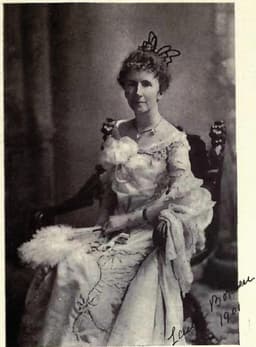
Robert Borden
Politician · Modern
57.7Total
Basic Information
Born
1874
1854
Died
1959
1937
Era
Modern
Modern
Nationality
South Africa
Canada
Occupation
Politician
Politician
Civilization
Other
Western
Score Comparison
Military (10%)
43.7
36.7
Political (20%)
60.0
72.0
Influence (20%)
62.0
56.4
Legacy (20%)
58.0
49.2
Leadership (15%)
40.0
72.0
Strategy (15%)
40.9
60.0
TOTAL
53.5
57.7
D. F. Malan — Complete Timeline
1948 AD
Became Prime Minister of South AfricaPolitical Action
Malan led the National Party to victory in the 1948 general election, defeating Jan Smuts' United Party. He became Prime Minister and began implementing the apartheid system, which institutionalized racial segregation and white supremacy.
Prime MinisterApartheidElection
Impact: nationaldestructive
1950 AD
Passed the Population Registration ActReform◆ Major
Malan's government passed the Population Registration Act, which required all South Africans to be classified by race: White, Black, or Coloured (later including Indian/Asian). This classification determined every aspect of a person's life under apartheid.
ApartheidRacial ClassificationLegislation
Impact: nationaldestructive
Passed the Group Areas ActReform◆ Major
Malan's government passed the Group Areas Act, which designated separate residential and business areas for different racial groups. This led to forced removals of non-whites from areas designated for whites, destroying communities.
ApartheidForced RemovalsSegregation
Impact: nationaldestructive
Passed the Suppression of Communism ActPolitical Action◆ Major
Malan's government passed the Suppression of Communism Act, which broadly defined communism and allowed the government to ban any organization or individual deemed communist. It was used to silence anti-apartheid activists and organizations.
ApartheidRepressionAnti-Communism
Impact: nationaldestructive
1954 AD
Retired as Prime MinisterPolitical Action◆ Major
Malan retired as Prime Minister and was succeeded by J.G. Strijdom. His tenure had established the legal and administrative framework of apartheid, which would be further entrenched by his successors.
RetirementApartheidLegacy
Impact: national
Robert Borden — Complete Timeline
1911 AD
Became Prime Minister of CanadaPolitical Action◆ Major
Borden became the eighth Prime Minister of Canada, leading a Conservative government. His victory was largely due to opposition to Laurier's reciprocity agreement with the United States.
Government FormationElectionConservatism
Impact: national
1914 AD
Led Canada through World War IWar◆ Major
Borden led Canada's war effort during World War I. He committed over 600,000 troops to the conflict, expanded the military, and managed the domestic war economy. The war deeply divided Canada along linguistic lines.
World War IMilitaryWar Effort
Impact: global
1917 AD
Introduced conscription in CanadaPolitical Action◆ Major
Borden's government passed the Military Service Act, introducing conscription for overseas service. The policy was deeply unpopular in Quebec and led to the Conscription Crisis of 1917, which exacerbated French-English tensions.
ConscriptionCrisisQuebec
Impact: nationaldestructive
1919 AD
Secured Canada's signature on the Treaty of VersaillesPolitical Action
Borden insisted that Canada sign the Treaty of Versailles as an independent nation, separate from Britain. This marked a significant step in Canada's evolution from a colony to a sovereign state, gaining a separate seat in the League of Nations.
TreatySovereigntyLeague of Nations
Impact: globalconstructive
This comparison has not been analyzed yet.
One-time AI generation (~1 minute). Scores and timeline are already available below.
Rankings
🥇
Robert BordenLeader
Mil: 36.7Pol: 72.0Inf: 56.4
57.7
🥈
D. F. Malan
Mil: 43.7Pol: 60.0Inf: 62.0
53.5
+4.2 behind
How This Comparison Works
Algorithm
Each figure is scored on 6 dimensions (0—100 scale) based on structured historical data: Military (10%), Political (20%), Influence (20%), Legacy (20%), Leadership (15%), Strategy (15%). The weighted total produces the final ranking.
Data Sources
Scores are computed from structured sub-indicators in the database. Scale factors adjust for era (Ancient ×0.85, Modern ×1.0) and civilization size (Eastern ×1.05, Other ×0.80) to account for differences in population and military scale.
Maximum 3 Figures
Comparisons are limited to 2—3 figures to ensure readability and statistical meaningfulness.
Error Margins
±5 points per dimension — Sub-scores are derived from historical records with inherent uncertainty. Two figures within 5 points on a dimension should be considered roughly equivalent in that area.
Total Score Accuracy
±3 points overall — The weighted combination of 6 dimensions produces a total score with approximately ±3 points of uncertainty. Differences of less than 3 points are not statistically significant— the figures are effectively tied.
Known Limitations
- Historical records are incomplete and uneven across civilizations
- Figures from oral-tradition societies may be underrepresented
- Occupation labels can misclassify multi-role figures
- Scores measure capability and impact, not moral character
- Quantitative scoring is a comparison tool, not absolute truth
Capability Radar
Military (10%) — Battles & Warfare
Battles
23
48
Win Rate
25
47
Expansion
25
56
Political (20%) — Governance & Reform
Reform
70
60
Diplomacy
60
70
Economy
50
55
Influence (20%) — Cultural & Global Reach
Cultural
45
30
Global
55
50
Legacy (20%) — Historical Impact
Historical
65
55
Longevity
60
40
Leadership (15%) — Power & Stability
Tenure
55
65
Stability
40
60
Strategy (15%) — Tactics & Innovation
Strategy
29
57
Tactics
35
58
Reform
39
64
Similar Comparisons
Comments & Discussion
No comments yet. Be the first to share your thoughts!