Loading...
Dag Hammarskjold vs Eleftherios Venizelos
Dag Hammarskjold leads by 0.0 pts · 2 figures compared
…
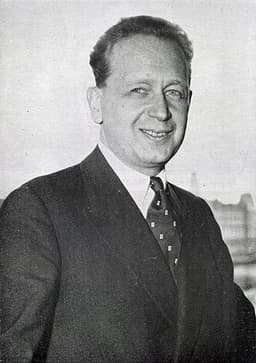
Dag Hammarskjold
Politician · Modern
60.3Total

Eleftherios Venizelos
Politician · Modern
60.3Total
Basic Information
Born
1905
1864
Died
1961
1936
Era
Modern
Modern
Nationality
Sweden
Greece
Occupation
Politician
Politician
Civilization
Western
Western
Score Comparison
Military (10%)
48.4
46.7
Political (20%)
60.0
78.0
Influence (20%)
58.3
65.0
Legacy (20%)
56.0
40.0
Leadership (15%)
79.8
78.0
Strategy (15%)
59.5
60.0
TOTAL
60.3
60.3
Dag Hammarskjold — Complete Timeline
1953 AD
Elected Secretary-General of the United NationsPolitical Action◆ Major
Dag Hammarskj
UN Secretary-GeneralLeadershipPost-War
Impact: globalconstructive
1956 AD
Established the UN Emergency ForcePolitical Action◆ Major
Hammarskjöld created the first UN peacekeeping force, the UN Emergency Force, to supervise the withdrawal of invading forces during the Suez Crisis. This established the precedent for UN peacekeeping operations.
PeacekeepingSuez CrisisUNEF
Impact: globalconstructive
1960 AD
Mediated the Congo CrisisPolitical Action◆ Major
Hammarskjöld deployed UN peacekeepers to the Congo to restore order after independence and prevent secession of Katanga. The mission faced challenges, including the death of Prime Minister Patrice Lumumba and accusations of bias.
CongoPeacekeepingDecolonization
Impact: regional
1961 AD
Killed in a plane crashOther◆ Major
Hammarskjöld died in a plane crash near Ndola, Northern Rhodesia (now Zambia), while en route to negotiate a ceasefire in the Congo. His death remains controversial, with theories of sabotage or assassination.
DeathPlane CrashCongo
Impact: globaltragic
Awarded the Nobel Peace Prize posthumouslyCultural◆ Major
Hammarskjöld was posthumously awarded the Nobel Peace Prize for his efforts to strengthen the UN and resolve international conflicts. He remains the only UN Secretary-General to receive the prize after death.
Nobel PrizePeaceUN
Impact: globalconstructive
Eleftherios Venizelos — Complete Timeline
1897 AD
Led the Cretan RevoltWar◆ Major
Venizelos organized and led the Cretan revolt against Ottoman rule, demanding union with Greece. The revolt led to the Greco-Turkish War of 1897, which ended in Greek defeat but resulted in Crete becoming an autonomous state under international protection.
RevoltCreteOttoman Empire
Impact: regional
1910 AD
Elected Prime Minister of GreecePolitical Action◆ Major
Venizelos was elected Prime Minister of Greece after a landslide victory. He initiated a comprehensive reform program, including constitutional amendments, land redistribution, and military modernization, transforming Greece into a modern state.
ElectionReformModernization
Impact: nationalconstructive
1912 AD
Led Greece in the Balkan WarsWar◆ Major
Venizelos orchestrated Greece's participation in the Balkan Wars, leading to the capture of Thessaloniki and the doubling of Greek territory. The wars ended Ottoman rule in the Balkans and established Greece as a regional power.
Balkan WarsTerritorial ExpansionMilitary Victory
Impact: regional
1915 AD
National Schism with King ConstantinePolitical Action◆ Major
Venizelos clashed with King Constantine I over Greece's entry into World War I on the Allied side. The dispute led to the National Schism, with Venizelos forming a rival government in Thessaloniki, dividing the country politically and militarily.
Political CrisisWorld War IDivision
Impact: nationaldestructive
1920 AD
Signed the Treaty of SèvresPolitical Action◆ Major
Venizelos signed the Treaty of S
TreatyTerritorial ExpansionAsia Minor
Impact: regional
Defeated in the 1920 ElectionsPolitical Action◆ Major
Venizelos lost the November 1920 elections to the royalist opposition, leading to his exile. The defeat resulted in the return of King Constantine and the continuation of the Asia Minor campaign, which ended in the Catastrophe of 1922.
Election DefeatExilePolitical Shift
Impact: nationaltragic
Expert Analysis
Origins
Dag Hammarskjöld was born in 1905 into a prominent Swedish family. His father, Hjalmar Hammarskjöld, served as Prime Minister of Sweden. He studied humanities and law at Uppsala University, earning a doctorate in economics. His early career included roles in the Swedish civil service and as a professor of political economy.
Eleftherios Venizelos was born in 1864 in Crete, then under Ottoman rule. His family were Cretan Greek nationalists. He studied law at the University of Athens and became a lawyer. He was elected to the Cretan Assembly in 1889, where he led the movement for union with Greece.
Rise to Power
Hammarskjöld rose to prominence through his work in the Swedish government as an undersecretary of finance and later as a diplomat. In 1953, at age 47, he was elected Secretary-General of the United Nations, a compromise candidate acceptable to both the US and USSR. His tenure began with the release of American prisoners in Korea, establishing his credibility.
Venizelos came to power in Greece after the 1909 Goudi coup. He was invited to become Prime Minister in 1910, winning a landslide election. He quickly pushed through a new constitution and reforms. In 1912, he led Greece into the Balkan Wars, which doubled Greek territory with the capture of Thessaloniki.
Leadership & Governance
Hammarskjöld's leadership style was characterized by quiet diplomacy and proactive interpretation of the UN Charter. He established the first UN peacekeeping force, the UN Emergency Force (UNEF), during the 1956 Suez Crisis, a move that required immense diplomatic skill. He scored 79.8 in leadership, reflecting his ability to navigate Cold War tensions. However, his governance was constrained by the UN's limited authority.
Venizelos was a transformative leader who implemented a comprehensive reform program including constitutional amendments, land redistribution, and education reform. He modernized the Greek military and navy. His leadership score of 78.0 is comparable to Hammarskjöld's, but his governance was more domestically focused. He faced the National Schism with King Constantine I over Greece's entry into World War I, a conflict that split the nation.
Triumph & Tragedy
Hammarskjöld's greatest triumph was the creation of UNEF, a precedent for peacekeeping that earned him the Nobel Peace Prize posthumously. He also successfully mediated the 1955 release of US soldiers from China. However, his handling of the Congo Crisis was controversial. His insistence on centralizing UN operations led to conflict with Soviet bloc states. His death in a 1961 plane crash under mysterious circumstances remains a tragedy, with unresolved questions about sabotage.
Venizelos's peak was the Treaty of Sèvres in 1920, which awarded Greece Eastern Thrace and Smyrna, fulfilling the Megali Idea. He doubled Greek territory through the Balkan Wars. His tragedy was the Asia Minor Disaster: the Treaty of Sèvres was never ratified, and the subsequent Greco-Turkish War of 1919-1922 ended in Greek defeat, with the burning of Smyrna. Venizelos lost the 1920 election and went into exile. His political score of 78.0 reflects these highs and lows.
Character & Destiny
Hammarskjöld was a deeply intellectual and introspective man, known for his moral integrity. His book 'Markings' reveals a spiritual side. He operated with a sense of duty, often taking personal risks. His destiny was cut short by his commitment to peace, dying on a mission to negotiate a ceasefire. Some historians believe his activism made him enemies, possibly leading to his death.
Venizelos was a charismatic and pragmatic politician, a master of strategy. He had a strong will and was willing to confront the monarchy. His destiny was shaped by his ambition for a Greater Greece, but also by the limits of that ambition. The National Schism and the Asia Minor Disaster were partly due to his overreach. He scored 60.0 in strategy, reflecting both his successes and failures.
Legacy
Hammarskjöld's legacy is the modern concept of UN peacekeeping. He set standards for impartiality, consent, and use of force. The UN Emergency Force became a model for over 70 subsequent missions. His posthumous Nobel Peace Prize in 1961 underscores his influence. He scored 56.0 in legacy, but this understates his impact on international law.
Venizelos is remembered as the 'Father of Modern Greece'. His reforms modernized the state, and his territorial expansion shaped the country's borders. However, his legacy is mixed due to the National Schism and the Asia Minor Disaster. He scored 40.0 in legacy, reflecting the controversial nature of his decisions. Nonetheless, he is widely regarded as the greatest Greek statesman of the 20th century.
Conclusion
While both leaders scored identically at 60.3 overall, their impact differs in scope. Hammarskjöld's influence is global, shaping international peacekeeping and the UN's role. Venizelos's impact is national, transforming Greece but with lasting divisions. Hammarskjöld's moral authority and creation of UNEF had a more enduring effect on world order. Venizelos's legacy, though significant, is more contested. Therefore, Dag Hammarskjöld had greater impact due to his systemic contributions to global governance.
Rankings
🥇
Dag HammarskjoldLeader
Mil: 48.4Pol: 60.0Inf: 58.3
60.3
🥈
Eleftherios Venizelos
Mil: 46.7Pol: 78.0Inf: 65.0
60.3
How This Comparison Works
Algorithm
Each figure is scored on 6 dimensions (0—100 scale) based on structured historical data: Military (10%), Political (20%), Influence (20%), Legacy (20%), Leadership (15%), Strategy (15%). The weighted total produces the final ranking.
Data Sources
Scores are computed from structured sub-indicators in the database. Scale factors adjust for era (Ancient ×0.85, Modern ×1.0) and civilization size (Eastern ×1.05, Other ×0.80) to account for differences in population and military scale.
Maximum 3 Figures
Comparisons are limited to 2—3 figures to ensure readability and statistical meaningfulness.
Error Margins
±5 points per dimension — Sub-scores are derived from historical records with inherent uncertainty. Two figures within 5 points on a dimension should be considered roughly equivalent in that area.
Total Score Accuracy
±3 points overall — The weighted combination of 6 dimensions produces a total score with approximately ±3 points of uncertainty. Differences of less than 3 points are not statistically significant— the figures are effectively tied.
Known Limitations
- Historical records are incomplete and uneven across civilizations
- Figures from oral-tradition societies may be underrepresented
- Occupation labels can misclassify multi-role figures
- Scores measure capability and impact, not moral character
- Quantitative scoring is a comparison tool, not absolute truth
Capability Radar
Military (10%) — Battles & Warfare
Battles
30
30
Win Rate
32
40
Expansion
36
55
Political (20%) — Governance & Reform
Reform
70
90
Diplomacy
85
85
Economy
40
70
Influence (20%) — Cultural & Global Reach
Cultural
50
70
Global
70
70
Legacy (20%) — Historical Impact
Historical
65
80
Longevity
55
65
Leadership (15%) — Power & Stability
Tenure
55
75
Stability
75
65
Strategy (15%) — Tactics & Innovation
Strategy
39
45
Tactics
42
35
Reform
45
60
Similar Comparisons
Comments & Discussion
No comments yet. Be the first to share your thoughts!