Loading...
Dag Hammarskjold vs Napoleon Bonaparte
Napoleon Bonaparte leads by 10.6 pts · 2 figures compared
…
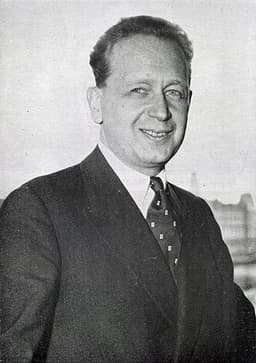
Dag Hammarskjold
Politician · Modern
60.3Total

Napoleon Bonaparte
General · Modern
70.9Total
Basic Information
Born
1905
1769
Died
1961
1821
Era
Modern
Modern
Nationality
Sweden
France
Occupation
Politician
General
Civilization
Western
Western
Score Comparison
Military (10%)
48.4
94.0
Political (20%)
60.0
72.0
Influence (20%)
58.3
40.0
Legacy (20%)
56.0
80.0
Leadership (15%)
79.8
78.0
Strategy (15%)
59.5
90.0
TOTAL
60.3
70.9
Dag Hammarskjold — Complete Timeline
1953 AD
Elected Secretary-General of the United NationsPolitical Action◆ Major
Dag Hammarskj
UN Secretary-GeneralLeadershipPost-War
Impact: globalconstructive
1956 AD
Established the UN Emergency ForcePolitical Action◆ Major
Hammarskjöld created the first UN peacekeeping force, the UN Emergency Force, to supervise the withdrawal of invading forces during the Suez Crisis. This established the precedent for UN peacekeeping operations.
PeacekeepingSuez CrisisUNEF
Impact: globalconstructive
1960 AD
Mediated the Congo CrisisPolitical Action◆ Major
Hammarskjöld deployed UN peacekeepers to the Congo to restore order after independence and prevent secession of Katanga. The mission faced challenges, including the death of Prime Minister Patrice Lumumba and accusations of bias.
CongoPeacekeepingDecolonization
Impact: regional
1961 AD
Killed in a plane crashOther◆ Major
Hammarskjöld died in a plane crash near Ndola, Northern Rhodesia (now Zambia), while en route to negotiate a ceasefire in the Congo. His death remains controversial, with theories of sabotage or assassination.
DeathPlane CrashCongo
Impact: globaltragic
Awarded the Nobel Peace Prize posthumouslyCultural◆ Major
Hammarskjöld was posthumously awarded the Nobel Peace Prize for his efforts to strengthen the UN and resolve international conflicts. He remains the only UN Secretary-General to receive the prize after death.
Nobel PrizePeaceUN
Impact: globalconstructive
Napoleon Bonaparte — Complete Timeline
1799 AD
Coup of 18 BrumaireOther◆ Major
Napoleon Bonaparte, with support from his brother Lucien and key political figures, overthrew the Directory in a bloodless coup. He established the Consulate with himself as First Consul, effectively becoming the ruler of France. This event ended the French Revolution's most unstable period.
French RevolutionCoupRise to Power
Impact: regional
1804 AD
Promulgation of the Napoleonic CodeOther◆ Major
Napoleon enacted the Civil Code of the French, known as the Napoleonic Code, a comprehensive set of laws that replaced the fragmented feudal legal systems. The code established legal equality, protected property rights, and secularized law. It became the basis for legal systems in many European and world countries.
Legal ReformNapoleonic CodeCivil Law
Impact: globalconstructive
1805 AD
Battle of AusterlitzWar◆ Major
Napoleon's Grande Arm
Napoleonic WarsBattleDecisive Victory
Impact: global
1812 AD
Invasion of RussiaWar◆ Major
Napoleon led the Grande Arm
Napoleonic WarsInvasionDisaster
Impact: globaldestructive
1815 AD
Battle of WaterlooWar◆ Major
Napoleon's French army was defeated by the combined forces of the Duke of Wellington's Anglo-Allied army and Gebhard Leberecht von Bl
Napoleonic WarsBattleFinal Defeat
Impact: globaldestructive
Expert Analysis
dag-hammarskjold-vs-napoleon-bonaparte
# The Conqueror and the Conciliator
On a June morning in 1815, Napoleon Bonaparte watched his Imperial Guard march into the smoking fields of Waterloo, knowing that one last charge would decide the fate of Europe. One hundred and forty-six years later, on a September night in 1961, Dag Hammarskjöld boarded a DC-6 aircraft in Leopoldville, knowing that one last negotiation might decide the fate of the Congo. Both men were flying toward their deaths—the first on a battlefield, the second in a crash that would never be fully explained. What drives a man to stake everything on a single moment? And what drives another to stake everything on a quiet conversation? The question is not merely about two careers but about two radically different visions of power itself.
Origins
Napoleon Bonaparte was born in 1769 on the island of Corsica, a place that had only recently become French. His family was minor nobility, but they were poor, and young Napoleon spoke French with an Italian accent that marked him as an outsider. The French Revolution, which erupted when he was twenty, was his great stroke of luck: it shattered the old aristocracy and opened every military command to talent. He devoured history and military theory, and by age twenty-four he had already driven the British out of Toulon. The Revolution gave him ambition; Corsica gave him a chip on his shoulder. He would prove himself worthy—again and again, until the world had no choice but to agree.
Dag Hammarskjöld was born in 1905 in Sweden, into a family of statesmen. His father served as Prime Minister, and the Hammarskjöld household breathed the air of law, diplomacy, and quiet duty. He studied economics and philosophy, wrote a doctoral thesis on business cycles, and rose through Sweden’s civil service with the steady, unflashy competence of a man who believed in institutions. Where Napoleon learned to command armies, Hammarskjöld learned to chair committees. Where Napoleon’s early life was shaped by revolution and war, Hammarskjöld’s was shaped by neutrality and negotiation. Sweden had not fought a war since 1814.
Rise to Power
Napoleon’s rise was a cannonball. In 1796, at age twenty-six, he took command of the French army in Italy and within a year had smashed three Austrian armies, dictated peace terms, and covered himself in glory. He then launched a disastrous but brilliantly publicized campaign in Egypt, returned to France in 1799, and staged a coup that made him First Consul. By 1804, he crowned himself Emperor. Every step was a gamble, and every gamble paid off—until one did not.
Hammarskjöld’s rise was a staircase. In 1953, at age forty-seven, he was elected the second Secretary-General of the United Nations, a position that had been designed to be weak. His predecessors had been caretakers; Hammarskjöld intended to be something else. He took the vague phrase “the Secretary-General” in the UN Charter and read it as a mandate for independent action. Quietly, methodically, he began to build the office into a moral and diplomatic force. The turning point came in 1956, when he created the first UN peacekeeping force, the UN Emergency Force, to supervise the withdrawal of invading forces from the Suez Canal. It was a radical innovation—soldiers who fought for nobody, under a flag that belonged to everyone.
Leadership & Governance
Napoleon ruled through will and speed. He reorganized France’s legal system into the Napoleonic Code, a rational, secular framework that abolished feudal privileges and became a model for much of Europe. He centralized education, built roads, stabilized the currency, and made peace with the Catholic Church. But his greatest talent was war. He could read a battlefield like a chessboard, moving corps across Europe faster than his enemies could react, striking at the enemy’s flank or rear with devastating precision. His score of 93 in strategy reflects a mind that saw war as a science of timing and geometry.
Hammarskjöld ruled through patience and principle. He had no army, no treasury, no territory. His only weapons were the UN Charter, his own integrity, and the trust he built with smaller nations. During the Congo Crisis of 1960, he deployed UN peacekeepers to restore order after independence and prevent the secession of the mineral-rich Katanga province. It was a chaotic, bloody operation—Belgian forces, Soviet interference, and a murdered prime minister—but Hammarskjöld held the line. He insisted that the UN was not a tool of the great powers but a servant of the international community. His political score of 81 reflects a man who could move governments without commanding a single soldier.
Triumph & Tragedy
Napoleon’s greatest triumph was Austerlitz in 1805, where he destroyed the combined armies of Russia and Austria in a single day. The sun shone through the mist; his soldiers cheered; and for a moment, Europe lay at his feet. His greatest tragedy was the invasion of Russia in 1812. He marched 600,000 men into the vastness of winter and lost nearly all of them. He never recovered. Exiled to Elba, he escaped, raised another army, and was defeated at Waterloo in 1815. He died six years later, alone on a remote island in the South Atlantic, at age fifty-one.
Hammarskjöld’s greatest triumph was the creation of peacekeeping itself—a concept that would save countless lives in the decades to come. His greatest tragedy was that he did not live to see it mature. On September 18, 1961, his plane crashed in Northern Rhodesia while he was flying to negotiate a ceasefire in the Congo. He was fifty-six. The cause of the crash remains disputed; some suspect sabotage. He was posthumously awarded the Nobel Peace Prize, but the award felt like an epitaph.
Character & Destiny
Napoleon was driven by a hunger that could never be satisfied. “I am a man of circumstance,” he once said, but he created his own circumstances, again and again, until the wheel stopped. His personality—brilliant, impatient, ruthless—made him unstoppable in ascent and incapable of moderation in power. He could not stop conquering, and that is why he fell.
Hammarskjöld was driven by a sense of duty that bordered on the mystical. He kept a private journal of spiritual reflections, later published as *Markings*, in which he wrote: “In our era, the road to holiness necessarily passes through the world of action.” He believed that the UN was not a building but an idea, and that ideas required martyrs. He became one.
Legacy
Napoleon left a continent reshaped by war and law. The Napoleonic Code still underpins legal systems from France to Louisiana to Egypt. His military campaigns are studied in every war college. But his legacy is ambiguous: he spread the ideals of the French Revolution—equality before the law, secular government, meritocracy—yet he also drowned Europe in blood.
Hammarskjöld left an institution strengthened by his sacrifice. He transformed the Secretary-General from a clerk into a moral voice. His vision of peacekeeping—neutral, multilateral, consent-based—guided the UN for decades. His legacy is quieter but perhaps more durable: he proved that power does not only come from guns.
Conclusion
Napoleon conquered a continent; Hammarskjöld tried to govern it. One commanded armies; the other commanded only a charter and a conscience. And yet both died in the middle of their stories, leaving behind questions that still haunt us. Is greatness measured by the size of the empire or the depth of the principle? The general who reshaped the world through force, or the diplomat who reshaped it through persuasion? Perhaps the real difference is not in their methods but in what they sought: Napoleon wanted to win; Hammarskjöld wanted to serve. History remembers both, but it honors only one.
Rankings
🥇
Napoleon BonaparteLeader
Mil: 94.0Pol: 72.0Inf: 40.0
70.9
🥈
Dag Hammarskjold
Mil: 48.4Pol: 60.0Inf: 58.3
60.3
+10.6 behind
How This Comparison Works
Algorithm
Each figure is scored on 6 dimensions (0—100 scale) based on structured historical data: Military (10%), Political (20%), Influence (20%), Legacy (20%), Leadership (15%), Strategy (15%). The weighted total produces the final ranking.
Data Sources
Scores are computed from structured sub-indicators in the database. Scale factors adjust for era (Ancient ×0.85, Modern ×1.0) and civilization size (Eastern ×1.05, Other ×0.80) to account for differences in population and military scale.
Maximum 3 Figures
Comparisons are limited to 2—3 figures to ensure readability and statistical meaningfulness.
Error Margins
±5 points per dimension — Sub-scores are derived from historical records with inherent uncertainty. Two figures within 5 points on a dimension should be considered roughly equivalent in that area.
Total Score Accuracy
±3 points overall — The weighted combination of 6 dimensions produces a total score with approximately ±3 points of uncertainty. Differences of less than 3 points are not statistically significant— the figures are effectively tied.
Known Limitations
- Historical records are incomplete and uneven across civilizations
- Figures from oral-tradition societies may be underrepresented
- Occupation labels can misclassify multi-role figures
- Scores measure capability and impact, not moral character
- Quantitative scoring is a comparison tool, not absolute truth
Capability Radar
Military (10%) — Battles & Warfare
Battles
30
95
Win Rate
32
90
Expansion
36
95
Political (20%) — Governance & Reform
Reform
70
95
Diplomacy
85
80
Economy
40
85
Influence (20%) — Cultural & Global Reach
Cultural
50
85
Global
70
90
Legacy (20%) — Historical Impact
Historical
65
95
Longevity
55
90
Leadership (15%) — Power & Stability
Tenure
55
85
Stability
75
70
Strategy (15%) — Tactics & Innovation
Strategy
39
95
Tactics
42
98
Reform
45
92
Similar Comparisons
Comments & Discussion
WaterlooWonk6/17/2026
Hammarskjöld vs Napoleon isn't even a contest—one died with his boots muddy at Waterloo, the other in a mysterious plane crash over Africa. Napoleon was a tactical genius who conquered half of Europe before thirty; Hammarskjöld was a bureaucrat who wrote poetry. You can't compare a guy who reorganized entire kingdoms with a guy who handled U.N. press releases. Put Napoleon in charge of the Congo Crisis and he'd have sorted it with cavalry, not tea.
历史课代表6/17/2026
拿破仑才是真英雄,哈马舍尔德连个跟班都算不上。拿破仑24岁就攻下土伦,哈马舍尔德24岁还在写博士论文。拿破仑输就输在滑铁卢那场大雨,不然惠灵顿早跑回伦敦喝茶了。哈马舍尔德呢?飞了趟刚果就坠机了,连敌人在哪都不知道。这能比?拿破仑征服的是大陆,哈马舍尔德征服的是一堆文件夹。
RealPolitikPaul6/17/2026
Calling Hammarskjöld Napoleon's equal is like comparing a chess grandmaster to a sledgehammer. Sure, both reshape the board, but one does it with surgical precision and the other by smashing the table. Napoleon's military genius is undeniable—his 1805 campaign alone redefined warfare. Hammarskjöld's legacy is about quiet diplomacy, not dragoons and cannons. Different tools for different jobs, but let's not pretend they're in the same league.
功夫熊猫6/17/2026
数据不会骗人:拿破仑打了60多场仗,输了8次;哈马舍尔德呢?打了0场。你说他厉害?那叫运气好没遇上真对手。刚果危机他调解了两年,最后啥结果?自己还搭上条命。拿破仑就算输了滑铁卢,也留下了法典和银行体系。哈马舍尔德留下了什么?一本日记和一堆未解之谜。这水平还敢跟皇帝比?
ClassicsCraig6/17/2026
You're all missing the point—this isn't about body count or battlefields, it's about contrasting philosophies of power. Napoleon was the quintessential Caesar: he seized power by the sword, imposed order through force, and died in exile. Hammarskjöld was more like a Stoic sage—he wielded moral authority, not legions, and died on a mission of peace. One remade Europe's map; the other redefined global governance. Apples and oranges, but both are fruits worth tasting.