Loading...
Daniel OConnell vs Mette Frederiksen
Daniel OConnell leads by 7.8 pts · 2 figures compared
…
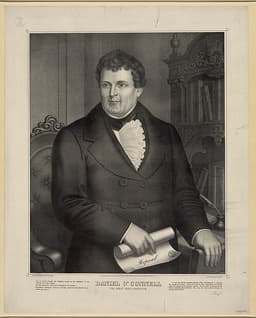
Daniel OConnell
Politician · Modern
57.0Total

Mette Frederiksen
Politician · Modern
49.2Total
Basic Information
Born
1775
1977
Died
1847
—
Era
Modern
Modern
Nationality
Ireland
Denmark
Occupation
Politician
Politician
Civilization
Western
Western
Score Comparison
Military (10%)
50.0
13.3
Political (20%)
72.0
68.0
Influence (20%)
55.0
53.3
Legacy (20%)
52.0
40.0
Leadership (15%)
68.0
72.0
Strategy (15%)
42.7
35.5
TOTAL
57.0
49.2
Daniel OConnell — Complete Timeline
1823 AD
Catholic Association FoundedPolitical Action◆ Major
O'Connell founded the Catholic Association to campaign for Catholic emancipation. The organization used mass membership and the 'Catholic Rent' (a penny a month subscription) to mobilize Irish Catholics politically.
Catholic EmancipationPolitical OrganizationMass Mobilization
Impact: nationalprogressive
1828 AD
Election to ParliamentPolitical Action◆ Major
O'Connell won a by-election in County Clare, defeating a Protestant candidate. As a Catholic, he was legally barred from taking his seat, forcing the British government to pass the Catholic Relief Act 1829 to avoid civil unrest.
ElectionCatholic EmancipationPolitical Crisis
Impact: nationalprogressive
1829 AD
Catholic Relief Act 1829Reform
The British Parliament passed the Catholic Relief Act, allowing Catholics to sit in Parliament and hold most public offices. O'Connell's campaign was the primary cause, though the act also raised the property qualification for Irish voters.
Catholic EmancipationLegislationReform
Impact: nationalprogressive
1840 AD
Repeal Association FoundedPolitical Action◆ Major
O'Connell founded the Repeal Association to campaign for the repeal of the Acts of Union 1800 and the restoration of an Irish parliament. The movement used mass meetings, known as 'monster meetings', to demonstrate popular support.
RepealNationalismMass Politics
Impact: nationalprogressive
1843 AD
Monster Meeting at TaraPolitical Action
O'Connell held a massive 'monster meeting' at the Hill of Tara, attracting an estimated 750,000 people. These peaceful demonstrations demonstrated the strength of the Repeal movement but alarmed the British government.
Monster MeetingRepealMass Mobilization
Impact: nationalprogressive
1844 AD
Trial for ConspiracyPolitical Action◆ Major
O'Connell was tried and convicted for conspiracy to incite rebellion, based on his Repeal campaign speeches. He was sentenced to a year in prison but was released after three months by the House of Lords on appeal.
TrialImprisonmentRepeal
Impact: national
Mette Frederiksen — Complete Timeline
2011 AD
Appointed Minister of Employment and Gender EqualityPolitical Action
Mette Frederiksen was appointed Minister of Employment in the Helle Thorning-Schmidt government. She later became Minister of Justice and Minister of Immigration, gaining experience in social and justice policy.
Danish PoliticsMinisterSocial Policy
Impact: nationalconstructive
2015 AD
Elected Leader of the Social DemocratsPolitical Action◆ Major
Frederiksen became leader of the Social Democratic Party after the party's electoral defeat. She shifted the party to a more centrist position on immigration and welfare, aiming to regain voter support.
Danish PoliticsSocial DemocratsParty Leadership
Impact: nationalconstructive
2019 AD
Became Prime Minister of DenmarkPolitical Action
Frederiksen became Prime Minister of Denmark, leading a single-party Social Democratic government. She was the youngest prime minister in Danish history and the second woman to hold the office.
Danish PoliticsPrime MinisterFirst Woman
Impact: nationalconstructive
2020 AD
Ordered Culling of All Danish MinkPolitical Action◆ Major
Frederiksen ordered the culling of all 15-17 million mink in Denmark after a mutated COVID-19 strain was found in mink farms. The decision faced legal challenges and criticism for lacking legal authority, leading to a political scandal.
COVID-19Mink CullingScandal
Impact: nationaldestructive
Implemented Strict COVID-19 LockdownsPolitical Action◆ Major
Frederiksen's government imposed some of Europe's strictest COVID-19 lockdowns, including early school closures and travel bans. The measures were credited with low infection rates but criticized for economic and social costs.
COVID-19LockdownPublic Health
Impact: national
2022 AD
Formed Broad Coalition Government After 2022 ElectionPolitical Action◆ Major
After the 2022 general election, Frederiksen formed a broad coalition government including the Social Democrats, the Liberal Party, and the Conservative People's Party. The coalition aimed to address security and economic challenges.
Danish PoliticsCoalitionElection
Impact: nationalconstructive
Expert Analysis
Origins
Daniel O'Connell was born in 1775 into a Catholic gentry family in County Kerry, Ireland. Despite the Penal Laws restricting Catholic rights, he studied in France and at Lincoln's Inn, becoming a barrister. His early exposure to Enlightenment ideas and the French Revolution shaped his commitment to peaceful constitutional reform.
Mette Frederiksen was born in 1968 in Aalborg, Denmark, to a social democratic family. She studied administration and social science at Aalborg University. Her early involvement in the Social Democratic Youth led to a political career, serving as Minister of Employment and later Minister of Justice before becoming party leader.
Rise to Power
O'Connell's rise began with his legal career, where he defended Catholics against Protestant landlords. In 1823, he co-founded the Catholic Association, using mass membership and a penny-a-month 'Catholic Rent' to mobilize popular support. The 1828 by-election in County Clare, where O'Connell won despite being a Catholic, forced the British government to pass the Catholic Relief Act 1829, granting Catholic emancipation. O'Connell's political score of 72.0 reflects this strategic triumph.
Frederiksen became Prime Minister in 2019 after leading the Social Democrats to victory. She had previously served as Minister of Employment (2011-2014) and Justice (2014-2016), building a reputation for tough immigration policies. Her shift to a centrist stance on immigration helped the party regain support after electoral losses in 2015. She scored 68.0 in political acumen.
Leadership & Governance
O'Connell's leadership was grounded in mass mobilization and non-violence. He founded the Repeal Association in 1840 to campaign for restoring an Irish parliament, organizing 'monster meetings' with hundreds of thousands. However, his reliance on constitutional methods was criticized as ineffective during the Great Famine. His leadership score of 68.0 reflects his ability to unite diverse groups but also his failure to achieve repeal.
Frederiksen led Denmark through the COVID-19 pandemic with strict lockdowns, school closures, and travel bans. Her decision to cull all 15-17 million mink in 2020 due to a mutated virus strain was controversial and later deemed illegal, leading to a ministerial reshuffle. She formed a broad coalition after the 2022 election, including the Liberal Party and Conservatives, to ensure stability. Her leadership score of 72.0 is slightly higher than O'Connell's.
Triumph & Tragedy
O'Connell's greatest triumph was Catholic emancipation, achieved through peaceful agitation. His tragedy was the failure of the Repeal movement and his inability to address the Great Famine. He was convicted for conspiracy in 1844 and imprisoned for a year, though his conviction was later overturned. His influence score of 55.0 reflects his limited success after 1830.
Frederiksen's triumphs include managing the pandemic effectively, with low infection rates and high public trust. Her tragedy is the mink culling scandal, which damaged her reputation and led to legal challenges. She also faced criticism for her government's handling of the 2022 election campaign. Her legacy score of 40.0 is lower than O'Connell's 52.0.
Character & Destiny
O'Connell was charismatic, eloquent, and deeply committed to constitutional reform. His decision to avoid violence even when provoked alienated more militant nationalists. His character shaped his fate: his reliance on mass mobilization succeeded for emancipation but failed for repeal as the British government refused to concede.
Frederiksen is pragmatic and decisive, but her top-down decision-making style led to the mink culling fiasco. She is seen as a skilled coalition builder, but her shifting positions on immigration have drawn criticism. Her character reflects a modern politician focused on results over ideology.
Legacy
O'Connell's legacy is as 'The Liberator' who won Catholic emancipation, paving the way for further Irish nationalism. His methods of mass democratic agitation influenced later movements. He scored 52.0 in legacy, reflecting his foundational role but also the incomplete nature of his achievements.
Frederiksen's legacy is still forming. She will be remembered for her pandemic response and the mink culling controversy. Her coalition government broke a tradition of single-party rule. Her legacy score of 40.0 is lower, partly because her impact is more recent and less transformative.
Conclusion
Daniel O'Connell had a greater overall impact, with a total score of 57.0 compared to Frederiksen's 49.2. His achievement of Catholic emancipation fundamentally changed Irish politics and set a precedent for peaceful mass mobilization. While Frederiksen's pandemic management was effective, her actions did not reshape Danish society as profoundly. O'Connell's legacy as a pioneer of democratic activism endures, whereas Frederiksen's is still subject to historical assessment. Therefore, O'Connell is the more significant historical figure.
Rankings
🥇
Daniel OConnellLeader
Mil: 50.0Pol: 72.0Inf: 55.0
57.0
🥈
Mette Frederiksen
Mil: 13.3Pol: 68.0Inf: 53.3
49.2
+7.8 behind
How This Comparison Works
Algorithm
Each figure is scored on 6 dimensions (0—100 scale) based on structured historical data: Military (10%), Political (20%), Influence (20%), Legacy (20%), Leadership (15%), Strategy (15%). The weighted total produces the final ranking.
Data Sources
Scores are computed from structured sub-indicators in the database. Scale factors adjust for era (Ancient ×0.85, Modern ×1.0) and civilization size (Eastern ×1.05, Other ×0.80) to account for differences in population and military scale.
Maximum 3 Figures
Comparisons are limited to 2—3 figures to ensure readability and statistical meaningfulness.
Error Margins
±5 points per dimension — Sub-scores are derived from historical records with inherent uncertainty. Two figures within 5 points on a dimension should be considered roughly equivalent in that area.
Total Score Accuracy
±3 points overall — The weighted combination of 6 dimensions produces a total score with approximately ±3 points of uncertainty. Differences of less than 3 points are not statistically significant— the figures are effectively tied.
Known Limitations
- Historical records are incomplete and uneven across civilizations
- Figures from oral-tradition societies may be underrepresented
- Occupation labels can misclassify multi-role figures
- Scores measure capability and impact, not moral character
- Quantitative scoring is a comparison tool, not absolute truth
Capability Radar
Military (10%) — Battles & Warfare
Battles
28
23
Win Rate
31
24
Expansion
35
30
Political (20%) — Governance & Reform
Reform
85
55
Diplomacy
80
55
Economy
30
50
Influence (20%) — Cultural & Global Reach
Cultural
65
30
Global
55
30
Legacy (20%) — Historical Impact
Historical
70
30
Longevity
60
20
Leadership (15%) — Power & Stability
Tenure
40
60
Stability
60
50
Strategy (15%) — Tactics & Innovation
Strategy
40
34
Tactics
38
31
Reform
44
40
Similar Comparisons
Comments & Discussion
No comments yet. Be the first to share your thoughts!