Loading...
Daniel Ortega vs Sun Yat-sen
Sun Yat-sen leads by 4.4 pts · 2 figures compared
…
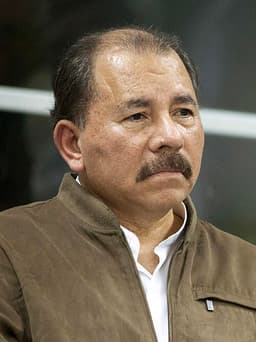
Daniel Ortega
Revolutionary · Modern
48.1Total
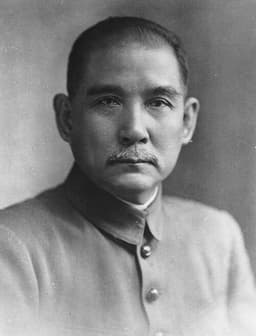
Sun Yat-sen
Revolutionary · Modern
52.5Total
Basic Information
Born
1945
1866
Died
—
1925
Era
Modern
Modern
Nationality
Nicaragua
China
Occupation
Revolutionary
Revolutionary
Civilization
Western
Eastern
Score Comparison
Military (10%)
45.0
45.0
Political (20%)
42.3
68.0
Influence (20%)
51.0
61.0
Legacy (20%)
42.5
58.0
Leadership (15%)
67.0
33.5
Strategy (15%)
38.6
30.3
TOTAL
48.1
52.5
Daniel Ortega — Complete Timeline
1979 AD
Sandinista RevolutionWar
Ortega was a key commander in the Sandinista National Liberation Front (FSLN) that overthrew the Somoza dictatorship. The revolution ended decades of authoritarian rule and established a socialist-oriented government, with Ortega becoming a member of the ruling junta.
RevolutionSandinistaSomoza
Impact: nationalconstructive
1984 AD
Election as President of NicaraguaPolitical Action◆ Major
Ortega was elected president in Nicaragua's first democratic election after the revolution, winning 67% of the vote. His government faced a US-backed Contra war and implemented land reform, literacy campaigns, and social programs.
ElectionSandinistaSocial Reform
Impact: nationalconstructive
1990 AD
Electoral defeat and transition of powerPolitical Action◆ Major
Ortega lost the presidential election to Violeta Chamorro, marking the first peaceful transfer of power in Nicaragua's history. The defeat ended 11 years of Sandinista rule and was a result of war fatigue and economic crisis.
ElectionDefeatDemocracy
Impact: national
2007 AD
Return to presidencyPolitical Action◆ Major
Ortega was re-elected president after 17 years in opposition, winning 38% of the vote. His return marked a shift toward authoritarianism, as he consolidated power, controlled the judiciary, and suppressed political opposition.
ElectionReturnAuthoritarianism
Impact: national
2018 AD
2018 protests and crackdownPolitical Action◆ Major
Mass protests erupted against Ortega's government over social security reforms, which were later withdrawn. The government responded with a violent crackdown, resulting in hundreds of deaths and thousands of arrests, leading to international condemnation.
ProtestsRepressionHuman Rights
Impact: nationaldestructive
Sun Yat-sen — Complete Timeline
1894 AD
Founded the Revive China SocietyPolitical Action◆ Major
Sun Yat-sen founded the Revive China Society (Xingzhonghui) in Honolulu, the first modern revolutionary organization among overseas Chinese. The society aimed to overthrow the Qing dynasty and establish a republic, marking the beginning of organized revolutionary activity.
RevolutionOverseas ChineseRepublic
Impact: nationalconstructive
1911 AD
Led the Xinhai RevolutionPolitical Action
Sun Yat-sen's revolutionary activities culminated in the Wuchang Uprising of October 1911, which sparked the Xinhai Revolution. The uprising spread across China, leading to the abdication of the Qing emperor in 1912 and the end of 2,000 years of imperial rule.
RevolutionQing DynastyRepublic
Impact: globalconstructive
1912 AD
Proclaimed the Republic of ChinaPolitical Action
On January 1, 1912, Sun Yat-sen was inaugurated as the provisional president of the Republic of China in Nanjing. He proclaimed the establishment of the first republic in Asia, based on his Three Principles of the People: nationalism, democracy, and livelihood.
RepublicPresidencyThree Principles
Impact: globalconstructive
Resigned Presidency in Favor of Yuan ShikaiPolitical Action◆ Major
To secure the abdication of the Qing emperor and avoid civil war, Sun Yat-sen resigned the provisional presidency in February 1912 in favor of Yuan Shikai. This decision, while pragmatic, allowed Yuan to consolidate power and later attempt to restore the monarchy.
Power TransferYuan ShikaiCompromise
Impact: national
1919 AD
Reorganized the KuomintangPolitical Action◆ Major
Sun Yat-sen reorganized the Chinese Revolutionary Party into the Kuomintang (KMT) in 1919, with a more centralized structure. He later accepted Soviet aid and CCP members into the party under the policy of 'alliance with Russia and the Communists,' reshaping the revolutionary movement.
KuomintangSoviet AllianceCCP
Impact: nationalconstructive
Expert Analysis
Sun Yat-sen vs Daniel Ortega
# The Revolutionary's Paradox
On a crisp January morning in 1912, Sun Yat-sen stood before the provisional assembly in Nanjing, his hand raised to swear an oath as the first president of the Republic of China. The man who had spent sixteen years in exile, who had watched his revolution falter time and again, had finally toppled an empire that had stood for two millennia. Half a world away and seven decades later, Daniel Ortega walked through the rubble of Managua in July 1979, a young guerrilla commander whose Sandinista forces had just shattered the Somoza dynasty, a family that had ruled Nicaragua like a private plantation for forty-three years. Both men had overthrown ancient orders. Both had dreamed of building a new world. But the paths they carved from that shared starting point could not have diverged more sharply—and the difference tells us something uncomfortable about the nature of revolutionary power.
Origins
Sun Yat-sen was born in 1866 in a village called Cuiheng, in Guangdong province, a region that had long been a gateway between China and the outside world. His family were farmers, modest but not destitute, and young Sun received an education that blended Confucian classics with Western learning at a missionary school in Honolulu, where his elder brother had emigrated. This dual inheritance—rooted in Chinese tradition yet exposed to Western ideas of democracy, science, and republicanism—shaped everything that followed. He saw the Qing dynasty not merely as corrupt but as fundamentally obsolete, a medieval relic in a modern world.
Daniel Ortega came of age in a different kind of twilight. Born in 1945 in La Libertad, a mining town in central Nicaragua, he grew up in the shadow of the Somoza family, who had turned the country into their personal fiefdom with American backing. His father was a bookkeeper who opposed the regime, and young Daniel was radicalized early. By his teens, he was distributing leaflets for the Sandinista movement, named after Augusto Sandino, a guerrilla leader who had fought the U.S. Marines in the 1930s. Where Sun had been shaped by books and ideas, Ortega was shaped by bullets and underground cells.
Rise to Power
Sun Yat-sen's path to power was a study in patience and frustration. In 1894, he founded the Revive China Society in Honolulu, the first modern revolutionary organization among Chinese overseas. But his early efforts failed spectacularly. An attempted uprising in Guangzhou in 1895 collapsed before it began; Sun fled into exile, his head priced at a bounty. For the next sixteen years, he traveled the world—Europe, America, Japan, Southeast Asia—raising funds, writing manifestos, and building networks. He was a revolutionary without an army, a prophet without a country. His breakthrough came in 1911, not through his own direct action but through a mutiny of Qing troops in Wuchang that spread like wildfire. Sun was in Denver, Colorado, when he read the news. He returned to China to find himself acclaimed as the revolution's symbolic leader.
Daniel Ortega's rise was more violent and more direct. By the 1970s, the Sandinistas had become a disciplined guerrilla force, and Ortega, then in his thirties, was one of its key commanders. The turning point came in 1979, when a national insurrection, fueled by widespread disgust with Somoza's corruption and brutality, finally overwhelmed the dictatorship. Ortega was part of the nine-member National Directorate that took power. He was not the sole leader, but he was the most visible, and when elections were held in 1984—the first democratic vote in Nicaragua's history—he won 67 percent of the ballot. Unlike Sun, who had to wait decades for his moment, Ortega seized his at the head of a victorious army.
Leadership & Governance
Here the two men's stories diverge most dramatically. Sun Yat-sen's tenure as president lasted just forty-four days. Facing the reality that the Qing military strongman Yuan Shikai held the real power, Sun resigned in February 1912, hoping to preserve national unity and avoid civil war. It was a decision that revealed both his idealism and his weakness: he believed in democracy so deeply that he handed power to a dictator. For the rest of his life, Sun would be a figurehead, a symbol rather than a ruler, reorganizing the Kuomintang in 1919 and articulating his Three Principles of the People—nationalism, democracy, and livelihood—that would later inspire both the Republic of China and, in adapted form, the People's Republic.
Ortega, by contrast, held power and never let it go—at least not permanently. His first presidency, from 1985 to 1990, was consumed by the Contra War, a brutal conflict funded by the United States that killed tens of thousands. Ortega's government became increasingly authoritarian, censoring newspapers and drafting young men into the army. When he lost the 1990 election to Violeta Chamorro, he accepted defeat—a rare and honorable act for a revolutionary—but he did not disappear. For seventeen years, he maneuvered, building alliances with the Catholic Church and big business, and in 2007, he returned to the presidency. This time, his rule turned dark. The 2018 protests against social security reforms were met with a crackdown that left hundreds dead. Ortega, the revolutionary who had once fought for freedom, had become the very thing he had overthrown.
Triumph & Tragedy
Sun Yat-sen's greatest triumph was not in what he built but in what he destroyed. The Xinhai Revolution of 1911 ended two thousand years of imperial rule, a feat that no Chinese revolutionary before him had accomplished. His tragedy was that he could not finish the work. He died in 1925, a disappointed man, convinced that his revolution had been stolen by warlords and opportunists. His last words were reportedly, "Peace, struggle, salvation."
Ortega's triumph was the Sandinista Revolution itself—the overthrow of a dynasty that had seemed unshakeable. His tragedy is that he has become its betrayer. The man who once wore guerrilla fatigues now lives in a presidential palace, his government accused of corruption, electoral fraud, and human rights abuses. The same hands that signed land reforms have now crushed peaceful protesters.
Character & Destiny
What drove these divergent outcomes? Sun Yat-sen was, at his core, an intellectual and a visionary. His power came from ideas, not armies, and he was always more comfortable in exile than in office. He never truly wanted to rule; he wanted to inspire. Ortega, by contrast, is a survivor, a tactician who has always understood that power is not a philosophy but a possession. He held onto it through war, electoral defeat, and international isolation, and when he returned, he held it tighter than before. Sun's tragedy was that he could not hold power. Ortega's tragedy is that he could not let it go.
Legacy
Sun Yat-sen is revered by both the People's Republic of China and the Republic of Taiwan, a rare figure of consensus in a deeply divided nation. His face stares down from portraits in government buildings, and his Three Principles remain the official ideology of the Kuomintang. Ortega's legacy is contested and bitter. To his supporters, he is still the commander who freed Nicaragua. To his critics, he is a caudillo who traded one dictatorship for another. The Sandinista flag still flies, but its meaning has grown ambiguous.
Conclusion
Both men began as revolutionaries, but one became a monument and the other a warning. Sun Yat-sen's story teaches us that revolutions need ideas to survive; Ortega's teaches us that they need institutions to resist decay. The difference between them is not simply a matter of character or circumstance. It is the difference between a man who believed that power was a tool for transformation and a man who came to believe that power was the transformation itself. In the end, revolutions are not judged by their beginnings. They are judged by what they become.
Rankings
🥇
Sun Yat-senLeader
Mil: 45.0Pol: 68.0Inf: 61.0
52.5
🥈
Daniel Ortega
Mil: 45.0Pol: 42.3Inf: 51.0
48.1
+4.4 behind
How This Comparison Works
Algorithm
Each figure is scored on 6 dimensions (0—100 scale) based on structured historical data: Military (10%), Political (20%), Influence (20%), Legacy (20%), Leadership (15%), Strategy (15%). The weighted total produces the final ranking.
Data Sources
Scores are computed from structured sub-indicators in the database. Scale factors adjust for era (Ancient ×0.85, Modern ×1.0) and civilization size (Eastern ×1.05, Other ×0.80) to account for differences in population and military scale.
Maximum 3 Figures
Comparisons are limited to 2—3 figures to ensure readability and statistical meaningfulness.
Error Margins
±5 points per dimension — Sub-scores are derived from historical records with inherent uncertainty. Two figures within 5 points on a dimension should be considered roughly equivalent in that area.
Total Score Accuracy
±3 points overall — The weighted combination of 6 dimensions produces a total score with approximately ±3 points of uncertainty. Differences of less than 3 points are not statistically significant— the figures are effectively tied.
Known Limitations
- Historical records are incomplete and uneven across civilizations
- Figures from oral-tradition societies may be underrepresented
- Occupation labels can misclassify multi-role figures
- Scores measure capability and impact, not moral character
- Quantitative scoring is a comparison tool, not absolute truth
Capability Radar
Military (10%) — Battles & Warfare
Battles
35
15
Win Rate
40
10
Expansion
20
5
Political (20%) — Governance & Reform
Reform
40
85
Diplomacy
45
60
Economy
30
20
Influence (20%) — Cultural & Global Reach
Cultural
40
70
Global
35
65
Legacy (20%) — Historical Impact
Historical
45
80
Longevity
40
75
Leadership (15%) — Power & Stability
Tenure
65
30
Stability
25
15
Strategy (15%) — Tactics & Innovation
Strategy
35
20
Tactics
30
10
Reform
25
40
Similar Comparisons
Comments & Discussion
SunSlayer666/16/2026
Sun Yat-sen was a genuine idealist who gave up power voluntarily—name me one Sandinista who ever did that. Ortega clung to the presidency like a barnacle on a sinking ship, rigging elections and silencing critics. Sun stepped down for Yuan Shikai, naively hoping for unity, while Ortega rewrote Nicaragua’s constitution so he could rule forever. One was a dreamer, the other a dictator in guerrilla drag.
QingToppler6/16/2026
Comparing Ortega to Sun Yat-sen is like comparing a forest fire to a lantern. Sun overthrew a 2,000-year-old empire and inspired a nation’s rebirth; Ortega inherited a revolution and turned it into a family business. Sun’s legacy is three principles—nationalism, democracy, livelihood. Ortega’s legacy is a stolen election, a wife-son ticket, and broken promises. Don’t fetishize the starting point; judge the endpoint.
数据侦探6/16/2026
这种对比太表面了。Sun推翻清朝时的社会经济基础是农业社会,人口4亿;Ortega面对的尼加拉瓜是农业出口国,人口仅300万。规模差异决定了革命工具和价值——Sun靠海外华侨汇款和秘密会社,Ortega靠古巴和苏联武器。拿结局反推动机是史学家偷懒。真要比较,应该看土地改革执行率:孙中山从未真正执政推行过,而奥尔特加1979年土改分地超过100万公顷,虽然后来崩盘了。
古典学人6/16/2026
谈革命者,必须区分“立宪共和”与“波拿巴主义”。孙中山的临时约法效仿的是美国三权分立,尽管失败,但理想清晰;奥尔特加1984年选举后迅速转向个人专制,组阁只放家族亲信,连古巴卡斯特罗都警告过他“别走火入魔”。西方所有哲人都说过:革命者的第一敌人是按剑的征服欲,第二敌人才是外敌。谁没扛过第一关,谁就只是换名号的暴君。
历史混子6/16/2026
你漏了最关键的一点:两人都背叛了初衷,但背叛方式截然不同。Sun一生流亡、筹款、食言,但他没动用过酷刑和暗杀队;而奥尔特加1979年上台后第一道命令就是成立“九人军事法庭”,处决了数百名国民警卫队战俘。数据上,孙中山手上几乎没有直接政治血债,奥尔特加的1990年代与2020年镇压学生运动却造成上百人死亡。手段定义革命者的良心。不流血不一定高尚,但流血后不忏悔,就是纯粹的马基雅维利工具人。