Loading...
Daniel Salamanca vs Wladyslaw Gomulka
Wladyslaw Gomulka leads by 1.3 pts · 2 figures compared
…
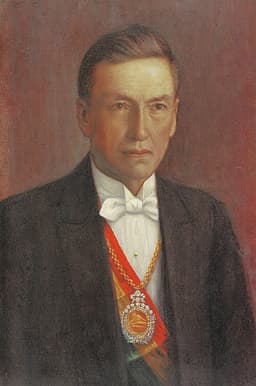
Daniel Salamanca
Politician · Modern
43.7Total

Wladyslaw Gomulka
Politician · Modern
45.0Total
Basic Information
Born
1868
1905
Died
1935
1982
Era
Modern
Modern
Nationality
Bolivia
Poland
Occupation
Politician
Politician
Civilization
Western
Western
Score Comparison
Military (10%)
36.6
13.1
Political (20%)
33.6
46.6
Influence (20%)
47.1
51.8
Legacy (20%)
38.3
42.5
Leadership (15%)
55.3
65.0
Strategy (15%)
53.5
34.1
TOTAL
43.7
45.0
Daniel Salamanca — Complete Timeline
1931 AD
Elected President of BoliviaPolitical Action◆ Major
Daniel Salamanca was elected president of Bolivia, taking office in 1931. His presidency was dominated by the Chaco War with Paraguay, which began in 1932.
PresidencyBolivia
Impact: national
1932 AD
Chaco War BeginsWar◆ Major
Under Salamanca's presidency, Bolivia entered the Chaco War against Paraguay over control of the Chaco Boreal region. The war was a major conflict that lasted until 1935, resulting in heavy casualties and territorial losses for Bolivia.
Chaco WarWar
Impact: regionaltragic
1934 AD
Overthrown in CoupPolitical Action◆ Major
Salamanca was overthrown by a military coup led by General Enrique Pe
CoupChaco War
Impact: nationaldestructive
Exiled to ChilePolitical Action
After his overthrow, Salamanca was exiled to Chile, where he lived until his death in 1935. His exile marked the end of his political career.
Exile
Impact: nationaltragic
Wladyslaw Gomulka — Complete Timeline
1956 AD
Election as First Secretary of the Polish United Workers' PartyPolitical Action
Gomulka was elected First Secretary of the Polish United Workers' Party on October 21, 1956, during the Polish October. He replaced Stalinist leader Edward Ochab and promised reforms, including de-Stalinization, greater autonomy from the Soviet Union, and improved living standards.
Polish OctoberDe-StalinizationReform
Impact: nationalconstructive
1957 AD
Implementation of the Gomulka reformsReform◆ Major
Gomulka's government implemented a series of reforms, including the release of political prisoners, relaxation of censorship, and a shift from heavy industry to consumer goods production. Agricultural collectivization was halted, and private farming was allowed. These reforms marked a liberalization of the Polish communist system.
ReformLiberalizationConsumer Goods
Impact: nationalprogressive
1968 AD
Suppression of the 1968 Polish political crisisPolitical Action◆ Major
In March 1968, Gomulka's government cracked down on student protests in Warsaw and other cities. The protests were sparked by the banning of a play by Adam Mickiewicz. The government used police force, arrested hundreds of students, and launched an anti-Semitic campaign that forced thousands of Polish Jews to emigrate.
RepressionAnti-Semitic CampaignStudent Protests
Impact: nationaldestructive
1970 AD
Signing of the Treaty of Warsaw with West GermanyPolitical Action◆ Major
Gomulka signed the Treaty of Warsaw on December 7, 1970, with West German Chancellor Willy Brandt. The treaty recognized the Oder-Neisse line as the border between Poland and Germany, normalizing relations between the two countries. This was a major achievement in Polish foreign policy.
TreatyBorder RecognitionOder-Neisse
Impact: globalconstructive
Resignation after the 1970 Polish protestsPolitical Action
In December 1970, Gomulka's government announced sharp increases in food prices, triggering widespread strikes and protests in Gda
ResignationProtestsPrice Hikes
Impact: nationaltragic
Expert Analysis
Origins
Daniel Salamanca (1869–1935) was born into a wealthy landowning family in Cochabamba, Bolivia. He studied law and economics, and entered politics as a liberal reformer. His early career included serving as a deputy, senator, and finance minister. Salamanca's intellectual background shaped his belief in strong executive power and nationalistic economic policies.
Wladyslaw Gomulka (1905–1982) was born in Krosno, Poland, into a working-class family. He joined the Communist Party of Poland as a young man and was imprisoned for his activities during the interwar period. Gomulka rose through the party ranks during World War II, leading communist resistance in occupied Poland. His humble origins and wartime experience forged a pragmatic, nationalist communist outlook.
Rise to Power
Salamanca was elected president of Bolivia in 1931 amid the Great Depression. His presidency was dominated by the Chaco War (1932–1935) with Paraguay over the Chaco Boreal region. Salamanca pushed for war despite military unpreparedness, believing in Bolivia's inherent superiority. He micromanaged the campaign, leading to conflicts with generals. His downfall came in 1934 when a military coup, led by General Enrique Peñaranda, overthrew him while he was visiting the front.
Gomulka became First Secretary of the Polish United Workers' Party in October 1956 during the Polish October. He replaced the Stalinist leader Bolesław Bierut after a period of unrest. Gomulka was seen as a moderate who could stabilize the country. His rise was supported by workers and intellectuals seeking reforms. He skillfully negotiated with Soviet leader Nikita Khrushchev to maintain Polish autonomy while staying in the Soviet bloc.
Leadership & Governance
Salamanca governed as a civilian president with authoritarian tendencies. He centralized decision-making, often ignoring military advice. His leadership during the Chaco War was marked by strategic errors: he appointed commanders based on loyalty rather than competence, and refused to negotiate peace until too late. Domestically, he pursued austerity measures to fund the war, causing hardship. His governance score of 55.3 reflects his hands-on but flawed approach.
Gomulka's leadership (score 65.0) combined communist orthodoxy with limited liberalization. After 1956, he released political prisoners, relaxed censorship, and shifted from heavy industry to consumer goods. However, by the 1960s, he grew more authoritarian, suppressing the 1968 student protests and purging liberals. His economic policies stagnated, leading to the 1970 price hike protests that forced his resignation. Gomulka's style was pragmatic but increasingly rigid.
Triumph & Tragedy
Salamanca's triumph was his initial vision of a modern Bolivia, but his tragedy was the Chaco War. He scored 36.6 in military and 33.6 in political categories. The war cost Bolivia 60,000 lives and vast territory. Salamanca's refusal to accept a negotiated settlement in 1933 prolonged the conflict. His overthrow and exile in Chile ended his career in disgrace.
Gomulka's triumph was the 1956 Polish October, where he stabilized Poland and gained limited sovereignty from the USSR. His reforms earned him popularity. However, his tragedy was the 1968 crackdown and the 1970 protests. He scored 46.6 in political influence. His legacy is mixed: he modernized Poland but failed to sustain reform. The 1970 protests led to his downfall and the rise of Edward Gierek.
Character & Destiny
Salamanca was stubborn, intellectual, and overconfident. He believed in his own strategic genius, ignoring dissenting voices. His character directly caused his downfall: he alienated the military and persisted in a losing war. Historical assessments paint him as a tragic figure whose pride destroyed his presidency.
Gomulka was pragmatic, cautious, but increasingly paranoid. He balanced between Soviet demands and Polish nationalism. His character allowed him to navigate the 1956 crisis, but later his inability to adapt led to repression. Historians note his initial courage in standing up to Stalinism, but criticize his later conservatism.
Legacy
Salamanca's legacy is negative in Bolivia. He is remembered as the president who lost the Chaco War. His name is associated with national humiliation. However, his presidency highlighted Bolivia's need for military reform. His total score is 43.7, with legacy at 38.3.
Gomulka's legacy is complex. He is seen as a reformer who freed Poland from Stalinist terror but later became a symbol of failed communism. The Treaty of Warsaw (1970) recognized Poland's western borders, a diplomatic achievement. His influence score is 51.8. In Poland, he is viewed as a transitional figure who ultimately could not deliver lasting change.
Conclusion
Wladyslaw Gomulka had greater impact than Daniel Salamanca. Gomulka's political score of 46.6 and influence of 51.8 exceed Salamanca's 33.6 and 47.1. Gomulka's leadership (65.0) and legacy (42.5) also surpass Salamanca's (55.3 and 38.3). While both leaders ended their careers in failure, Gomulka's reforms shaped Poland's post-war trajectory and eased its path toward the 1980s Solidarity movement. Salamanca's impact was limited to a disastrous war that set Bolivia back decades. Gomulka's total score of 45.0 versus 43.7 reflects his more significant, albeit flawed, role in history.
Rankings
🥇
Wladyslaw GomulkaLeader
Mil: 13.1Pol: 46.6Inf: 51.8
45.0
🥈
Daniel Salamanca
Mil: 36.6Pol: 33.6Inf: 47.1
43.7
+1.3 behind
How This Comparison Works
Algorithm
Each figure is scored on 6 dimensions (0—100 scale) based on structured historical data: Military (10%), Political (20%), Influence (20%), Legacy (20%), Leadership (15%), Strategy (15%). The weighted total produces the final ranking.
Data Sources
Scores are computed from structured sub-indicators in the database. Scale factors adjust for era (Ancient ×0.85, Modern ×1.0) and civilization size (Eastern ×1.05, Other ×0.80) to account for differences in population and military scale.
Maximum 3 Figures
Comparisons are limited to 2—3 figures to ensure readability and statistical meaningfulness.
Error Margins
±5 points per dimension — Sub-scores are derived from historical records with inherent uncertainty. Two figures within 5 points on a dimension should be considered roughly equivalent in that area.
Total Score Accuracy
±3 points overall — The weighted combination of 6 dimensions produces a total score with approximately ±3 points of uncertainty. Differences of less than 3 points are not statistically significant— the figures are effectively tied.
Known Limitations
- Historical records are incomplete and uneven across civilizations
- Figures from oral-tradition societies may be underrepresented
- Occupation labels can misclassify multi-role figures
- Scores measure capability and impact, not moral character
- Quantitative scoring is a comparison tool, not absolute truth
Capability Radar
Military (10%) — Battles & Warfare
Battles
5
20
Win Rate
5
28
Expansion
5
28
Political (20%) — Governance & Reform
Reform
30
40
Diplomacy
20
45
Economy
20
30
Influence (20%) — Cultural & Global Reach
Cultural
10
20
Global
10
30
Legacy (20%) — Historical Impact
Historical
20
40
Longevity
10
25
Leadership (15%) — Power & Stability
Tenure
40
55
Stability
10
25
Strategy (15%) — Tactics & Innovation
Strategy
5
33
Tactics
5
33
Reform
5
37
Similar Comparisons
Comments & Discussion
No comments yet. Be the first to share your thoughts!