Loading...
This comparison has not been analyzed yet.
One-time AI generation (~1 minute). Scores and timeline are already available below.
Dantidurga vs Indra III
Dantidurga leads by 7.4 pts · 2 figures compared
…
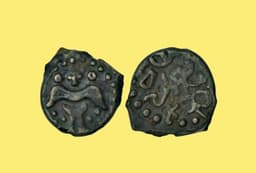
Dantidurga
Emperor · Medieval
58.7Total

Indra III
Emperor · Medieval
51.3Total
Basic Information
Born
735
914
Died
756
929
Era
Medieval
Medieval
Nationality
India
India
Occupation
Emperor
Emperor
Civilization
Indian
Indian
Score Comparison
Military (10%)
67.5
70.0
Political (20%)
68.0
39.4
Influence (20%)
56.4
51.8
Legacy (20%)
50.0
42.5
Leadership (15%)
65.7
58.8
Strategy (15%)
52.5
60.0
TOTAL
58.7
51.3
Dantidurga — Complete Timeline
753 AD
Founding of the Rashtrakuta DynastyPolitical Action
Dantidurga overthrew his overlord, the Chalukya king Kirtivarman II, in a coup. He established the Rashtrakuta dynasty as the dominant power in the Deccan, with Manyakheta as his capital. This marked the beginning of a new imperial era.
Impact: regionalconstructive
754 AD
Performance of the Hiranyagarbha RitualCultural
Dantidurga performed the Hiranyagarbha (golden womb) ritual, a Vedic ceremony that symbolically rebirthed him as a Kshatriya. This legitimized his rule by claiming a higher caste status, as the Rashtrakutas were originally of humble origin.
Impact: nationalconstructive
755 AD
Conquest of MalwaWar◆ Major
Dantidurga led a military campaign into Malwa, defeating the Gurjara-Pratihara ruler Nagabhata I. He annexed the region, expanding Rashtrakuta territory northward. This victory established Rashtrakuta influence in central India.
Impact: regionaldestructive
Indra III — Complete Timeline
916 AD
Sack of KannaujWar◆ Major
Indra III led a military expedition to the Ganges-Yamuna doab and sacked Kannauj, the capital of the Pratihara Empire. This raid demonstrated Rashtrakuta military power and weakened the Pratihara dynasty.
PratiharaKannaujRaid
Impact: regionaldestructive
920 AD
Campaign against the KalachurisWar
Indra III fought against the Kalachuri king Gangeyadeva, expanding Rashtrakuta influence into central India. This campaign secured the northern frontiers of the empire.
KalachuriCentral IndiaExpansion
Impact: regional
This comparison has not been analyzed yet.
One-time AI generation (~1 minute). Scores and timeline are already available below.
Rankings
🥇
DantidurgaLeader
Mil: 67.5Pol: 68.0Inf: 56.4
58.7
🥈
Indra III
Mil: 70.0Pol: 39.4Inf: 51.8
51.3
+7.4 behind
How This Comparison Works
Algorithm
Each figure is scored on 6 dimensions (0—100 scale) based on structured historical data: Military (10%), Political (20%), Influence (20%), Legacy (20%), Leadership (15%), Strategy (15%). The weighted total produces the final ranking.
Data Sources
Scores are computed from structured sub-indicators in the database. Scale factors adjust for era (Ancient ×0.85, Modern ×1.0) and civilization size (Eastern ×1.05, Other ×0.80) to account for differences in population and military scale.
Maximum 3 Figures
Comparisons are limited to 2—3 figures to ensure readability and statistical meaningfulness.
Error Margins
±5 points per dimension — Sub-scores are derived from historical records with inherent uncertainty. Two figures within 5 points on a dimension should be considered roughly equivalent in that area.
Total Score Accuracy
±3 points overall — The weighted combination of 6 dimensions produces a total score with approximately ±3 points of uncertainty. Differences of less than 3 points are not statistically significant— the figures are effectively tied.
Known Limitations
- Historical records are incomplete and uneven across civilizations
- Figures from oral-tradition societies may be underrepresented
- Occupation labels can misclassify multi-role figures
- Scores measure capability and impact, not moral character
- Quantitative scoring is a comparison tool, not absolute truth
Capability Radar
Military (10%) — Battles & Warfare
Battles
60
55
Win Rate
65
60
Expansion
65
60
Political (20%) — Governance & Reform
Reform
45
30
Diplomacy
55
40
Economy
50
35
Influence (20%) — Cultural & Global Reach
Cultural
40
30
Global
30
20
Legacy (20%) — Historical Impact
Historical
55
35
Longevity
50
20
Leadership (15%) — Power & Stability
Tenure
40
40
Stability
45
35
Strategy (15%) — Tactics & Innovation
Strategy
60
55
Tactics
55
50
Reform
40
30
Similar Comparisons
Comments & Discussion
No comments yet. Be the first to share your thoughts!