Loading...
Dantidurga vs Napoleon Bonaparte
Napoleon Bonaparte leads by 12.2 pts · 2 figures compared
…
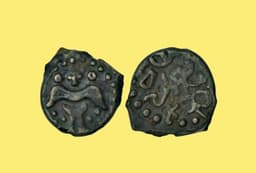
Dantidurga
Emperor · Medieval
58.7Total

Napoleon Bonaparte
General · Modern
70.9Total
Basic Information
Born
735
1769
Died
756
1821
Era
Medieval
Modern
Nationality
India
France
Occupation
Emperor
General
Civilization
Indian
Western
Score Comparison
Military (10%)
67.5
94.0
Political (20%)
68.0
72.0
Influence (20%)
56.4
40.0
Legacy (20%)
50.0
80.0
Leadership (15%)
65.7
78.0
Strategy (15%)
52.5
90.0
TOTAL
58.7
70.9
Dantidurga — Complete Timeline
753 AD
Founding of the Rashtrakuta DynastyPolitical Action
Dantidurga overthrew his overlord, the Chalukya king Kirtivarman II, in a coup. He established the Rashtrakuta dynasty as the dominant power in the Deccan, with Manyakheta as his capital. This marked the beginning of a new imperial era.
Impact: regionalconstructive
754 AD
Performance of the Hiranyagarbha RitualCultural
Dantidurga performed the Hiranyagarbha (golden womb) ritual, a Vedic ceremony that symbolically rebirthed him as a Kshatriya. This legitimized his rule by claiming a higher caste status, as the Rashtrakutas were originally of humble origin.
Impact: nationalconstructive
755 AD
Conquest of MalwaWar◆ Major
Dantidurga led a military campaign into Malwa, defeating the Gurjara-Pratihara ruler Nagabhata I. He annexed the region, expanding Rashtrakuta territory northward. This victory established Rashtrakuta influence in central India.
Impact: regionaldestructive
Napoleon Bonaparte — Complete Timeline
1799 AD
Coup of 18 BrumaireOther◆ Major
Napoleon Bonaparte, with support from his brother Lucien and key political figures, overthrew the Directory in a bloodless coup. He established the Consulate with himself as First Consul, effectively becoming the ruler of France. This event ended the French Revolution's most unstable period.
French RevolutionCoupRise to Power
Impact: regional
1804 AD
Promulgation of the Napoleonic CodeOther◆ Major
Napoleon enacted the Civil Code of the French, known as the Napoleonic Code, a comprehensive set of laws that replaced the fragmented feudal legal systems. The code established legal equality, protected property rights, and secularized law. It became the basis for legal systems in many European and world countries.
Legal ReformNapoleonic CodeCivil Law
Impact: globalconstructive
1805 AD
Battle of AusterlitzWar◆ Major
Napoleon's Grande Arm
Napoleonic WarsBattleDecisive Victory
Impact: global
1812 AD
Invasion of RussiaWar◆ Major
Napoleon led the Grande Arm
Napoleonic WarsInvasionDisaster
Impact: globaldestructive
1815 AD
Battle of WaterlooWar◆ Major
Napoleon's French army was defeated by the combined forces of the Duke of Wellington's Anglo-Allied army and Gebhard Leberecht von Bl
Napoleonic WarsBattleFinal Defeat
Impact: globaldestructive
Expert Analysis
Napoleon Bonaparte vs Dantidurga
# The Conqueror and the Founder: Two Paths to Power
On a June morning in 1815, Napoleon Bonaparte watched his army collapse near a Belgian village called Waterloo. The man who had once ruled from Madrid to Moscow stood defeated, his dreams of empire dissolving into mud and blood. Seventy years earlier and four thousand miles away, another man performed a very different kind of ritual. In 754, Dantidurga sat within a golden womb, emerging reborn as a Kshatriya warrior. Where Napoleon would end in exile, Dantidurga would die in power. The difference between these two founders of dynasties tells us something profound about how ambition meets history.
Origins
Napoleon was born in 1769 on the island of Corsica, a place that had just become French against the will of its people. His family were minor nobles, poor enough to feel the sting of inferiority but proud enough to nurse grievances. The French Revolution shattered the old order, and Napoleon—small, intense, hungry—seized the chaos as his opportunity. He was a child of revolution, shaped by the belief that talent could overthrow birth.
Dantidurga emerged from the shadows of medieval India, a land of competing dynasties and ritual hierarchies. We know little of his early life, but his world was one where legitimacy came not from popular will but from cosmic order. The Chalukyas of Badami ruled the Deccan, and Dantidurga was their feudatory—a subordinate chief expected to pay tribute and obey. In 753, he overthrew his overlord Kirtivarman II in a quiet coup, then sought not to justify this act through ideology but through ceremony. The Hiranyagarbha ritual of 754 was his declaration: the gods themselves had chosen him.
Rise to Power
Napoleon’s ascent was a masterpiece of speed and audacity. By 1796, at twenty-six, he commanded the French army in Italy. He won battles not through brute force but through rapid marches, concentrated artillery, and the psychological terror of his presence. Each victory fed the next: Italy, Egypt, the coup of 1799 that made him First Consul, then Emperor in 1804. He rose on the back of a revolution that had destroyed every traditional authority, leaving a vacuum that only genius could fill.
Dantidurga’s rise was slower, more deliberate, and more constrained. His conquest of Malwa in 755 was a careful campaign against the Gurjara-Pratihara ruler Nagabhata I, not a whirlwind sweep across continents. He did not seek to remake the world; he sought to insert himself into its existing order. Where Napoleon broke boundaries, Dantidurga worked within them. The difference was not merely personal but civilizational: Napoleon’s Europe was a continent of collapsing thrones, while Dantidurga’s India was a lattice of ancient hierarchies that demanded respect.
Leadership & Governance
Napoleon governed as he conquered: with relentless energy and total centralization. The Napoleonic Code, his greatest peacetime achievement, standardized French law across Europe, sweeping away feudal privileges in favor of rational order. He appointed officials based on merit, built roads and schools, and created a modern state. Yet his rule was also a dictatorship. He silenced dissent, controlled the press, and crowned himself Emperor in a gesture that betrayed the revolution he claimed to serve.
Dantidurga ruled differently. As a Rashtrakuta king, he did not impose a new legal system or dream of universal empire. He performed the Hiranyagarbha to claim Kshatriya status, acknowledging that power required ritual legitimacy. He patronized Brahmins and temples, respecting the cultural fabric that held his world together. His conquests were expansions of territory, not crusades for ideology. Where Napoleon demanded that the world change to fit him, Dantidurga changed himself to fit the world.
Triumph & Tragedy
Napoleon’s greatest triumph was also the seed of his tragedy. By 1812, he ruled an empire of seventy million people, the largest Europe had seen since Rome. Then he invaded Russia. The campaign destroyed his Grande Armée—half a million men lost to cold, hunger, and guerrilla warfare. He was exiled to Elba, returned, and met final defeat at Waterloo. His ambition, which had lifted him so high, proved boundless enough to consume him.
Dantidurga knew no such fall. He died in 756, still ruling, still expanding. His tragedy is quieter: he left no grand narrative, no legend of hubris and ruin. His dynasty would flourish for two centuries, producing kings who carved cave temples at Ellora and traded with the Arabs, but Dantidurga himself remains a name in inscriptions, not a figure of myth. He succeeded too completely to be remembered as a tragic hero.
Character & Destiny
Napoleon was driven by an insatiable hunger. “I am not a man,” he once said, “I am a thing—I have no heart.” He saw himself as the instrument of fate, a force of nature that could not be stopped. This belief gave him courage but also blindness. He could not imagine limits, and so he found them the hard way.
Dantidurga was more pragmatic, more patient. His rituals and conquests suggest a man who understood that power must be clothed in legitimacy. He did not try to be everything; he tried to be enough. His character matched his destiny: a founder, not a destroyer; a builder, not a revolutionary.
Legacy
Napoleon left a continent transformed. The Napoleonic Code still shapes European law. Nationalism, which he both harnessed and betrayed, became the dominant political force of the nineteenth century. His name is synonymous with ambition, genius, and overreach. He is studied, debated, and endlessly reinterpreted.
Dantidurga left a dynasty. The Rashtrakutas would rule for over two hundred years, patrons of art and architecture, masters of the Deccan. But his legacy is local, not global; it belongs to Indian history, not world myth. He is honored by scholars, not romanticized by poets.
Conclusion
Standing at Waterloo, Napoleon must have felt the universe collapsing around him. Dantidurga, dying in his palace a thousand years earlier, likely felt the universe holding steady. One man tried to conquer the world and lost everything; the other tried to found a dynasty and succeeded. Their stories remind us that history rewards not only ambition but also the wisdom to know what can be taken—and what must be earned.
Rankings
🥇
Napoleon BonaparteLeader
Mil: 94.0Pol: 72.0Inf: 40.0
70.9
🥈
Dantidurga
Mil: 67.5Pol: 68.0Inf: 56.4
58.7
+12.2 behind
How This Comparison Works
Algorithm
Each figure is scored on 6 dimensions (0—100 scale) based on structured historical data: Military (10%), Political (20%), Influence (20%), Legacy (20%), Leadership (15%), Strategy (15%). The weighted total produces the final ranking.
Data Sources
Scores are computed from structured sub-indicators in the database. Scale factors adjust for era (Ancient ×0.85, Modern ×1.0) and civilization size (Eastern ×1.05, Other ×0.80) to account for differences in population and military scale.
Maximum 3 Figures
Comparisons are limited to 2—3 figures to ensure readability and statistical meaningfulness.
Error Margins
±5 points per dimension — Sub-scores are derived from historical records with inherent uncertainty. Two figures within 5 points on a dimension should be considered roughly equivalent in that area.
Total Score Accuracy
±3 points overall — The weighted combination of 6 dimensions produces a total score with approximately ±3 points of uncertainty. Differences of less than 3 points are not statistically significant— the figures are effectively tied.
Known Limitations
- Historical records are incomplete and uneven across civilizations
- Figures from oral-tradition societies may be underrepresented
- Occupation labels can misclassify multi-role figures
- Scores measure capability and impact, not moral character
- Quantitative scoring is a comparison tool, not absolute truth
Capability Radar
Military (10%) — Battles & Warfare
Battles
60
95
Win Rate
65
90
Expansion
65
95
Political (20%) — Governance & Reform
Reform
45
95
Diplomacy
55
80
Economy
50
85
Influence (20%) — Cultural & Global Reach
Cultural
40
85
Global
30
90
Legacy (20%) — Historical Impact
Historical
55
95
Longevity
50
90
Leadership (15%) — Power & Stability
Tenure
40
85
Stability
45
70
Strategy (15%) — Tactics & Innovation
Strategy
60
95
Tactics
55
98
Reform
40
92
Similar Comparisons
Comments & Discussion
BUONAPARTE'S GHOST6/16/2026
Napoleon's rise was a fluke of revolutionary chaos—Dantidurga built from cosmic order. Waterloo wasn't just a battle lost; it was the final proof that war doesn't sustain empires. Napoleon conquered Europe in a decade, yet his dynasty crumbled in a day. Dantidurga's ritual rebirth in 754 tied his rule to divine legitimacy, not bayonets. Give me the man who emerges from a golden womb over the one who dies in exile any era.
数据侦探6/16/2026
数据不会说谎:拿破仑打了几十场仗,胜率超70%,但最后死在圣赫勒拿;Dantidurga只记载了五次主要战役,死后权力平稳传承。关键是战利品转化率——拿破仑拿莫斯科换不来一顿热饭,Dantidurga拿一个玛哈拉施特拉寺庙的铜板就巩固了王朝根基。效率上,小规模、高回报的南印度策略完胜欧洲大陆的劳民伤财。
THE GOLDEN WOMB TRUTH6/16/2026
Call Dantidurga an 'upstart'? Wrong. Sure, he was a Rashtrakuta feudatory who toppled the Chalukyas, but his coronation via the hiranyagarbha ritual wasn't just theater—it was a masterstroke of political theology. He literally rewrote his caste to claim Kshatriya status, legitimizing his usurpation. Napoleon just shot his way up, leaving a trail of empty thrones. One rebirthed himself; the other just recycled old crowns. I know which founder I'd bet on.
古典迷6/16/2026
拿破仑读的是凯撒和普鲁塔克,Dantidurga靠的是《往世书》里的帝王术。前者用刺刀推行《拿破仑法典》,后者用婆罗门的仪式认证赢得服从。两种合法性的对决:革命理性的效率vs宇宙秩序的永恒。可历史证明,Dantidurga的建国模式在印度存续近三百年,拿破仑的帝国十五年就垮了。谁更聪明?当然是那位懂得在新国土上扮演宇宙之子的策略家。
REVISIONIST'S REBUTTAL6/16/2026
Stop fetishizing Dantidurga's 'legend.' We know almost nothing about him—just a few copper plates and temple inscriptions. Napoleon's life is documented down to his hemorrhoids at Waterloo. Dantidurga's 'golden womb' ritual might be later Rashtrakuta propaganda to cover up a murderous coup. At least Napoleon's ambition is clear: conquer or die. Give me the Corsican's transparent hunger over some mystic's manufactured divinity any time.