Loading...
Dantidurga vs Peter III of Aragon
Peter III of Aragon leads by 0.7 pts · 2 figures compared
…
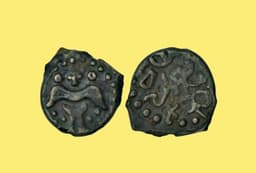
Dantidurga
Emperor · Medieval
58.7Total
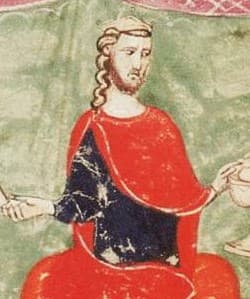
Peter III of Aragon
Emperor · Medieval
59.4Total
Basic Information
Born
735
1239
Died
756
1285
Era
Medieval
Medieval
Nationality
India
Aragon
Occupation
Emperor
Emperor
Civilization
Indian
Western
Score Comparison
Military (10%)
67.5
61.7
Political (20%)
68.0
68.0
Influence (20%)
56.4
57.2
Legacy (20%)
50.0
49.2
Leadership (15%)
65.7
65.0
Strategy (15%)
52.5
66.3
TOTAL
58.7
59.4
Dantidurga — Complete Timeline
753 AD
Founding of the Rashtrakuta DynastyPolitical Action
Dantidurga overthrew his overlord, the Chalukya king Kirtivarman II, in a coup. He established the Rashtrakuta dynasty as the dominant power in the Deccan, with Manyakheta as his capital. This marked the beginning of a new imperial era.
Impact: regionalconstructive
754 AD
Performance of the Hiranyagarbha RitualCultural
Dantidurga performed the Hiranyagarbha (golden womb) ritual, a Vedic ceremony that symbolically rebirthed him as a Kshatriya. This legitimized his rule by claiming a higher caste status, as the Rashtrakutas were originally of humble origin.
Impact: nationalconstructive
755 AD
Conquest of MalwaWar◆ Major
Dantidurga led a military campaign into Malwa, defeating the Gurjara-Pratihara ruler Nagabhata I. He annexed the region, expanding Rashtrakuta territory northward. This victory established Rashtrakuta influence in central India.
Impact: regionaldestructive
Peter III of Aragon — Complete Timeline
1282 AD
Conquest of Sicily after the Sicilian VespersWar◆ Major
Following the Sicilian Vespers rebellion against Angevin rule, Peter III invaded Sicily and was crowned king in Palermo. This conquest established Aragonese rule in Sicily and triggered a long conflict with the Angevin dynasty and the Papacy.
ConquestSicilyAragon
Impact: regionalconstructive
Conquest of the Kingdom of SicilyWar◆ Major
Peter III landed at Trapani and quickly conquered the island of Sicily, defeating the Angevin forces of Charles I. He was crowned King of Sicily in Palermo, establishing the Aragonese Sicilian dynasty.
ConquestSicilyAragon
Impact: regionalconstructive
1283 AD
Excommunication by Pope Martin IVPolitical Action◆ Major
Pope Martin IV excommunicated Peter III for invading Sicily, a papal fief, and declared a crusade against him. The excommunication isolated Aragon diplomatically and led to a French invasion of Catalonia.
ExcommunicationPapacyConflict
Impact: regionaldestructive
1285 AD
Defense against the French CrusadeWar◆ Major
Peter III successfully defended the Crown of Aragon against a French crusade led by Philip III of France. The French army was defeated at the Battle of the Col de Panissars and forced to retreat, securing Aragonese independence.
WarDefenseAragon
Impact: regionalconstructive
Expert Analysis
Origins
Dantidurga (reigned c. 735–756 CE) was a feudatory of the Chalukya dynasty in the Deccan region of India. His early life is obscure, but he was likely born into a noble family of the Rashtrakuta clan, which served the Chalukyas. His father, Indra II, was a vassal. Dantidurga's formative experiences included military service under the Chalukya king Kirtivarman II, which gave him insight into the weaknesses of his overlord.
Peter III of Aragon (1239–1285) was born into the House of Barcelona, the son of King James I of Aragon and Violant of Hungary. He received an excellent education in statecraft and military strategy, typical for a medieval prince. His marriage to Constance of Hohenstaufen, heiress to the Kingdom of Sicily, provided a legal claim to that realm, shaping his future ambitions.
Rise to Power
Dantidurga rose by overthrowing his overlord, Kirtivarman II, in a coup around 753 CE. He defeated the Chalukya army and established the Rashtrakuta dynasty as the dominant power in the Deccan. He then expanded westward, conquering Malwa from the Gurjara-Pratihara ruler Nagabhata I (c. 756 CE). To legitimize his rule, he performed the Hiranyagarbha ritual, a Vedic ceremony that symbolically rebirthed him as a Kshatriya, thereby gaining acceptance among orthodox Hindu rulers. His political score of 68.0 reflects this shrewd combination of military force and ritual legitimacy.
Peter III inherited the Crown of Aragon in 1276 upon his father's death. His major rise came after the Sicilian Vespers rebellion in 1282, when Sicilians revolted against Angevin rule. Peter, claiming the throne through his wife, invaded Sicily and was crowned King in Palermo in September 1282. This conquest triggered a war with the Papacy and Charles I of Anjou. Pope Martin IV excommunicated Peter and declared a crusade against Aragon, but Peter successfully defended his realm against a French invasion at the Battle of the Col de Panissars (1285). His military score of 61.7 and strategy score of 66.3 highlight his effective use of opportunity and defensive warfare.
Leadership & Governance
Dantidurga's leadership style was that of a conqueror and consolidator. He expanded Rashtrakuta territory through military campaigns, but also focused on legitimizing his dynasty through religious rituals. He patronized Brahminical Hinduism, as evidenced by the Hiranyagarbha, which helped integrate his rule into the existing social order. His governance likely followed the established Chalukyan administrative system, though records are sparse. He scored 65.7 in leadership, indicating effective command but limited institutional innovation.
Peter III's leadership was characterized by boldness and diplomatic maneuvering. He successfully managed a multi-front conflict: defending Aragon from French invasion while securing Sicily. He used naval power effectively, controlling the Mediterranean. His governance included strengthening the Crown's authority over the nobility, though he faced internal opposition. His political score of 68.0 matches Dantidurga's, reflecting similar skill in navigating complex power structures. However, Peter's excommunication isolated Aragon diplomatically, a strategic cost.
Triumph & Tragedy
Dantidurga's greatest triumph was founding the Rashtrakuta dynasty, which would become a major power in India for over two centuries. His conquest of Malwa expanded his realm significantly. His tragedy lies in his short reign (c. 753–756) and the lack of detailed records. His early death prevented him from fully consolidating his gains, and his successor, Krishna I, had to continue his work. His legacy score of 50.0 reflects the dynasty's later achievements but also its eventual decline.
Peter III's triumph was conquering Sicily and establishing Aragonese rule there, which lasted centuries. His successful defense against the French crusade preserved his kingdom. His tragedy includes his excommunication and the ongoing conflict with the Papacy, which drained resources. He died in 1285 while preparing to counter a papal offensive, leaving his son Alfonso III to continue the struggle. His legacy score of 49.2 is slightly lower than Dantidurga's, partly because his dynasty's Sicilian branch eventually ended.
Character & Destiny
Dantidurga appears as an ambitious and pragmatic ruler, willing to use both force and ritual to achieve legitimacy. His decision to perform the Hiranyagarbha shows cultural sophistication and political acumen. His character shaped his destiny by enabling him to overthrow a powerful overlord, but his early death cut short his potential.
Peter III was known for his chivalric demeanor and strategic patience. He waited for the right moment to press his Sicilian claim, capitalizing on the Vespers rebellion. His character was marked by determination; he did not yield to papal pressure. This stubbornness led to excommunication and crusade, but also to his ultimate success in Sicily. His destiny was to be a key figure in the War of the Sicilian Vespers, a conflict that reshaped Mediterranean politics.
Legacy
Dantidurga's long-term impact is the establishment of the Rashtrakuta dynasty, which produced notable rulers like Amoghavarsha and contributed to Deccan culture. The dynasty's patronage of Jainism and literature left a mark, but Dantidurga himself is often overshadowed by his successors. His total score of 58.7 reflects a solid but not exceptional historical footprint.
Peter III's legacy includes the integration of Sicily into the Crown of Aragon, which lasted until the 18th century. His conflict with the Papacy weakened papal temporal power and contributed to the decline of Angevin influence in Italy. He is remembered as a key founder of the Aragonese Mediterranean empire. His total score of 59.4 edges out Dantidurga by 0.7 points.
Conclusion
While Dantidurga founded a major Indian dynasty, Peter III's impact was more durable and geographically broader. Peter's conquest of Sicily had long-lasting consequences for European power balances, while Dantidurga's dynasty, though significant, eventually fell. Peter's higher scores in strategy (66.3 vs 52.5) and total (59.4 vs 58.7) support the conclusion that Peter III of Aragon had greater historical impact. Dantidurga's achievements were noteworthy but more localized and ephemeral.
Rankings
🥇
Peter III of AragonLeader
Mil: 61.7Pol: 68.0Inf: 57.2
59.4
🥈
Dantidurga
Mil: 67.5Pol: 68.0Inf: 56.4
58.7
+0.7 behind
How This Comparison Works
Algorithm
Each figure is scored on 6 dimensions (0—100 scale) based on structured historical data: Military (10%), Political (20%), Influence (20%), Legacy (20%), Leadership (15%), Strategy (15%). The weighted total produces the final ranking.
Data Sources
Scores are computed from structured sub-indicators in the database. Scale factors adjust for era (Ancient ×0.85, Modern ×1.0) and civilization size (Eastern ×1.05, Other ×0.80) to account for differences in population and military scale.
Maximum 3 Figures
Comparisons are limited to 2—3 figures to ensure readability and statistical meaningfulness.
Error Margins
±5 points per dimension — Sub-scores are derived from historical records with inherent uncertainty. Two figures within 5 points on a dimension should be considered roughly equivalent in that area.
Total Score Accuracy
±3 points overall — The weighted combination of 6 dimensions produces a total score with approximately ±3 points of uncertainty. Differences of less than 3 points are not statistically significant— the figures are effectively tied.
Known Limitations
- Historical records are incomplete and uneven across civilizations
- Figures from oral-tradition societies may be underrepresented
- Occupation labels can misclassify multi-role figures
- Scores measure capability and impact, not moral character
- Quantitative scoring is a comparison tool, not absolute truth
Capability Radar
Military (10%) — Battles & Warfare
Battles
60
65
Win Rate
65
70
Expansion
65
70
Political (20%) — Governance & Reform
Reform
45
50
Diplomacy
55
65
Economy
50
50
Influence (20%) — Cultural & Global Reach
Cultural
40
40
Global
30
45
Legacy (20%) — Historical Impact
Historical
55
55
Longevity
50
40
Leadership (15%) — Power & Stability
Tenure
40
55
Stability
45
45
Strategy (15%) — Tactics & Innovation
Strategy
60
75
Tactics
55
60
Reform
40
40
Similar Comparisons
Comments & Discussion
No comments yet. Be the first to share your thoughts!