Loading...
Dantidurga vs Zhu Gaochi
Dantidurga leads by 4.5 pts · 2 figures compared
…
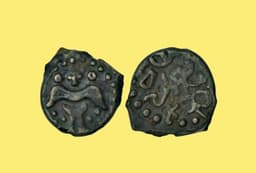
Dantidurga
Emperor · Medieval
58.7Total
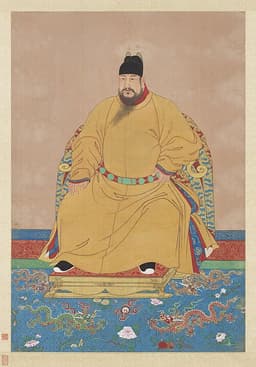
Zhu Gaochi
Emperor · Medieval
54.2Total
Basic Information
Born
735
1378
Died
756
1425
Era
Medieval
Medieval
Nationality
India
China
Occupation
Emperor
Emperor
Civilization
Indian
Eastern
Score Comparison
Military (10%)
67.5
51.4
Political (20%)
68.0
68.0
Influence (20%)
56.4
50.2
Legacy (20%)
50.0
42.5
Leadership (15%)
65.7
58.8
Strategy (15%)
52.5
68.7
TOTAL
58.7
54.2
Dantidurga — Complete Timeline
753 AD
Founding of the Rashtrakuta DynastyPolitical Action
Dantidurga overthrew his overlord, the Chalukya king Kirtivarman II, in a coup. He established the Rashtrakuta dynasty as the dominant power in the Deccan, with Manyakheta as his capital. This marked the beginning of a new imperial era.
Impact: regionalconstructive
754 AD
Performance of the Hiranyagarbha RitualCultural
Dantidurga performed the Hiranyagarbha (golden womb) ritual, a Vedic ceremony that symbolically rebirthed him as a Kshatriya. This legitimized his rule by claiming a higher caste status, as the Rashtrakutas were originally of humble origin.
Impact: nationalconstructive
755 AD
Conquest of MalwaWar◆ Major
Dantidurga led a military campaign into Malwa, defeating the Gurjara-Pratihara ruler Nagabhata I. He annexed the region, expanding Rashtrakuta territory northward. This victory established Rashtrakuta influence in central India.
Impact: regionaldestructive
Zhu Gaochi — Complete Timeline
1424 AD
Reversal of Yongle's Maritime ExpeditionsReform◆ Major
The Hongxi Emperor ordered the suspension of the treasure fleet voyages led by Zheng He, halting the costly maritime expeditions that had characterized his father's reign. This decision redirected resources to domestic needs and ended China's early naval expansion.
Maritime PolicyZheng HeFiscal Reform
Impact: global
Restoration of Civil Service ExaminationsReform◆ Major
The Hongxi Emperor reinstated the civil service examination system as the primary route to officialdom, reversing the Yongle Emperor's reliance on eunuchs and military appointments. This strengthened the scholar-official class and bureaucratic governance.
Civil ServiceBureaucracyReform
Impact: nationalconstructive
Accession as Hongxi EmperorPolitical Action◆ Major
Zhu Gaochi ascended the Ming throne as the Hongxi Emperor following the death of his father, the Yongle Emperor. His reign began with a shift away from Yongle's expansive policies, focusing on domestic governance and fiscal retrenchment.
Ming DynastySuccessionReform
Impact: nationalconstructive
Pardon of Disgraced OfficialsPolitical Action
The Hongxi Emperor pardoned many officials who had been purged or exiled under the Yongle Emperor, including the scholar Fang Xiaoru's associates. This act aimed to heal political divisions and restore confidence in the Ming court.
PardonPolitical ReconciliationMing Court
Impact: nationalconstructive
1425 AD
Death from IllnessOther◆ Major
The Hongxi Emperor died suddenly after a reign of only nine months, likely from a heart attack or stroke. His brief rule ended the immediate reformist agenda, but his policies influenced his son, the Xuande Emperor.
DeathShort ReignMing Dynasty
Impact: nationaltragic
Expert Analysis
Origins
Dantidurga, born around 700 CE, was a feudatory chief of the Chalukya dynasty in the Deccan region of India. His early life is obscure, but he belonged to a family of minor rulers who served under the Chalukyas. He rose from a subordinate position to challenge his overlord, leveraging the political fragmentation of the time.
Zhu Gaochi, born in 1378 CE, was the eldest son of the Yongle Emperor of Ming China. He grew up in the imperial court, receiving a Confucian education. His father's long reign and aggressive policies shaped Zhu Gaochi's worldview, leading him to favor restraint and civil governance.
Rise to Power
Dantidurga's rise culminated around 753 CE when he overthrew the Chalukya king Kirtivarman II. This coup established the Rashtrakuta dynasty. He then expanded his territory by conquering Malwa from the Gurjara-Pratihara ruler Nagabhata I. His military score of 67.5 reflects his effectiveness in conquest, though his political score of 68.0 shows his strategic maneuvering.
Zhu Gaochi's rise was more conventional. As the designated heir, he became emperor in 1424 CE after his father's death. His accession was smooth, but his brief reign of only nine months limited his ability to consolidate power. His political score of 68.0 matches Dantidurga's, but his military score is lower at 51.4.
Leadership & Governance
Dantidurga's governance focused on legitimizing his rule. He performed the Hiranyagarbha ritual, a Vedic ceremony that symbolically rebirthed him as a Kshatriya, to gain acceptance from orthodox Hindu society. He also patronized Jainism and Hinduism, balancing religious support. His leadership score of 65.7 indicates competent but not exceptional rule.
Zhu Gaochi, in contrast, immediately reversed his father's expansionist policies. He suspended Zheng He's maritime expeditions, halting costly voyages. He restored the civil service examinations as the primary route to officialdom, reducing eunuch influence. He also pardoned officials purged under the Yongle Emperor. His strategy score of 68.7 highlights his focus on internal consolidation.
Triumph & Tragedy
Dantidurga's greatest triumph was founding the Rashtrakuta dynasty, which ruled for over two centuries. His conquest of Malwa expanded his territory significantly. However, his failure to fully secure succession led to later conflicts. His influence score of 56.4 reflects his regional impact.
Zhu Gaochi's triumph was his swift reform of Ming governance, which restored civil service dominance and reduced military spending. His tragedy was his sudden death after only nine months, preventing long-term implementation. His legacy score of 42.5 shows limited lasting impact due to his short reign.
Character & Destiny
Dantidurga was ambitious and pragmatic, willing to overthrow his overlord and adopt rituals to legitimize his rule. His character drove him to seize power and expand territory, but his reliance on force limited his dynasty's stability. Historical assessments note his role as a founder who set the stage for later Rashtrakuta greatness.
Zhu Gaochi was cautious and reform-minded, prioritizing civil governance over military adventures. His character shaped his brief reign, but his death cut short his reforms. Historians view him as a benevolent ruler who might have changed Ming direction had he lived longer.
Legacy
Dantidurga's legacy is the Rashtrakuta dynasty, which became a major power in India, influencing politics, art, and religion. His descendants built the Ellora caves and expanded the empire. His total score of 58.7 reflects his foundational role.
Zhu Gaochi's legacy is more modest. His suspension of maritime expeditions ended an era of exploration. His restoration of civil exams influenced Ming bureaucracy. However, his short reign means his impact is overshadowed by his father and son. His total score of 54.2 is lower.
Conclusion
Dantidurga had a greater impact than Zhu Gaochi. Dantidurga's founding of the Rashtrakuta dynasty, which lasted over 200 years and shaped medieval Indian history, outweighs Zhu Gaochi's brief reforms. While Zhu Gaochi's policies were significant, their implementation was limited. Dantidurga's total score of 58.7 versus Zhu Gaochi's 54.2 supports this. Dantidurga's military and political achievements created a lasting empire, while Zhu Gaochi's legacy was cut short by his early death.
Rankings
🥇
DantidurgaLeader
Mil: 67.5Pol: 68.0Inf: 56.4
58.7
🥈
Zhu Gaochi
Mil: 51.4Pol: 68.0Inf: 50.2
54.2
+4.5 behind
How This Comparison Works
Algorithm
Each figure is scored on 6 dimensions (0—100 scale) based on structured historical data: Military (10%), Political (20%), Influence (20%), Legacy (20%), Leadership (15%), Strategy (15%). The weighted total produces the final ranking.
Data Sources
Scores are computed from structured sub-indicators in the database. Scale factors adjust for era (Ancient ×0.85, Modern ×1.0) and civilization size (Eastern ×1.05, Other ×0.80) to account for differences in population and military scale.
Maximum 3 Figures
Comparisons are limited to 2—3 figures to ensure readability and statistical meaningfulness.
Error Margins
±5 points per dimension — Sub-scores are derived from historical records with inherent uncertainty. Two figures within 5 points on a dimension should be considered roughly equivalent in that area.
Total Score Accuracy
±3 points overall — The weighted combination of 6 dimensions produces a total score with approximately ±3 points of uncertainty. Differences of less than 3 points are not statistically significant— the figures are effectively tied.
Known Limitations
- Historical records are incomplete and uneven across civilizations
- Figures from oral-tradition societies may be underrepresented
- Occupation labels can misclassify multi-role figures
- Scores measure capability and impact, not moral character
- Quantitative scoring is a comparison tool, not absolute truth
Capability Radar
Military (10%) — Battles & Warfare
Battles
60
47
Win Rate
65
49
Expansion
65
51
Political (20%) — Governance & Reform
Reform
45
55
Diplomacy
55
50
Economy
50
60
Influence (20%) — Cultural & Global Reach
Cultural
40
30
Global
30
10
Legacy (20%) — Historical Impact
Historical
55
35
Longevity
50
20
Leadership (15%) — Power & Stability
Tenure
40
20
Stability
45
55
Strategy (15%) — Tactics & Innovation
Strategy
60
54
Tactics
55
57
Reform
40
62
Similar Comparisons
Comments & Discussion
No comments yet. Be the first to share your thoughts!