Loading...
David Marshall vs Theresa May
Theresa May leads by 11.0 pts · 2 figures compared
…
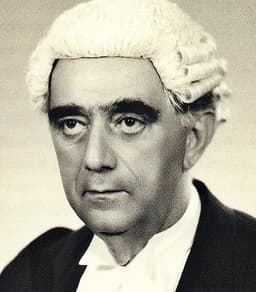
David Marshall
Politician · Modern
39.7Total

Theresa May
Politician · Modern
50.7Total
Basic Information
Born
1908
1956
Died
1995
—
Era
Modern
Modern
Nationality
Singapore
United Kingdom
Occupation
Politician
Politician
Civilization
Eastern
Western
Score Comparison
Military (10%)
14.4
50.0
Political (20%)
39.4
48.0
Influence (20%)
50.2
54.9
Legacy (20%)
41.7
43.3
Leadership (15%)
45.0
64.0
Strategy (15%)
26.7
43.2
TOTAL
39.7
50.7
David Marshall — Complete Timeline
1955 AD
Appointed First Chief Minister of SingaporePolitical Action◆ Major
David Marshall became the first Chief Minister of Singapore following the 1955 general election. He led a minority government and negotiated with the British for self-governance, but resigned in 1956 after failing to secure full internal self-rule.
Singapore self-governmentConstitutional negotiations
Impact: national
1956 AD
Led the Merdeka Talks in LondonPolitical Action◆ Major
Marshall led a delegation to London to negotiate full internal self-government for Singapore. The talks collapsed when the British refused to grant control over internal security and defense, leading to Marshall's resignation as Chief Minister.
Merdeka talksSelf-government failure
Impact: national
Resigned as Chief MinisterPolitical Action◆ Major
After the failure of the London talks, Marshall resigned as Chief Minister on June 7, 1956. He was succeeded by Lim Yew Hock. Marshall's resignation marked a turning point in Singapore's path to self-government.
ResignationPolitical transition
Impact: national
1957 AD
Founded the Workers' Party of SingaporePolitical Action◆ Major
After leaving office, Marshall founded the Workers' Party, a political party that became a key opposition force in Singapore. He served as its first secretary-general, advocating for social democracy and workers' rights.
Political party foundingOpposition
Impact: nationalconstructive
1978 AD
Appointed Singapore's First Ambassador to FrancePolitical Action
Marshall served as Singapore's first ambassador to France from 1978 to 1980. He also held concurrent accreditation to Spain and Portugal, representing Singapore's diplomatic interests in Europe.
DiplomacyAmbassador
Impact: national
Theresa May — Complete Timeline
2016 AD
Appointed Prime MinisterPolitical Action◆ Major
May became Prime Minister of the United Kingdom after David Cameron's resignation following the Brexit referendum. She was the second female prime minister after Margaret Thatcher and faced the challenge of implementing Brexit.
Political TransitionBrexitPrime Minister
Impact: national
2017 AD
Triggered Article 50Political Action
May formally triggered Article 50 of the Treaty on European Union, beginning the two-year process of the UK's withdrawal from the EU. This was a historic step, initiating the formal Brexit negotiations.
BrexitArticle 50EU Withdrawal
Impact: global
Called the 2017 General ElectionPolitical Action◆ Major
May called a snap general election, hoping to strengthen her majority for Brexit negotiations. The election resulted in a hung parliament, with the Conservatives losing their majority, a major political miscalculation.
General ElectionHung ParliamentPolitical Mistake
Impact: nationaldestructive
2018 AD
Negotiated the Withdrawal AgreementPolitical Action◆ Major
May negotiated a Withdrawal Agreement with the European Union, including the controversial Northern Ireland backstop. The agreement was rejected three times by the House of Commons, leading to a political deadlock.
BrexitWithdrawal AgreementParliamentary Defeat
Impact: regional
2019 AD
Resigned as Prime MinisterPolitical Action◆ Major
May resigned as prime minister after failing to get her Brexit deal through Parliament. She acknowledged that she had done her best but that it was time for a new leader to take forward the Brexit process.
BrexitResignationPolitical Failure
Impact: nationaltragic
Expert Analysis
Origins
David Marshall was born in 1908 in Singapore, then a British colony, into a Jewish family of Baghdadi descent. His father was a merchant. Marshall studied at St. Andrew's School and later at Raffles Institution, but financial constraints prevented him from attending university. He became a successful lawyer, known for his oratory and defense of the underdog. His early life was marked by a strong sense of justice and a commitment to anti-colonialism.
Theresa May was born in 1956 in Eastbourne, England, the daughter of a Church of England vicar. She attended state schools and studied geography at St Hugh's College, Oxford. After university, she worked at the Bank of England and later in financial services. She became a local councillor and was elected as MP for Maidenhead in 1997. Her early career was shaped by her methodical, detail-oriented approach and her Anglican faith.
Rise to Power
Marshall rose to prominence through his legal career and involvement in the Labour Front party. In the 1955 general election, his party won 10 of 32 elected seats, and he became the first Chief Minister of Singapore, leading a minority government. His tenure was defined by the Merdeka Talks in London (1956), where he demanded full internal self-government from the British. The talks collapsed when the British refused to grant control over internal security, leading to his resignation on June 7, 1956.
May rose through the Conservative Party ranks, serving as Chairman of the party (2002-2003) and later as Home Secretary (2010-2016), the longest-serving in decades. After the 2016 Brexit referendum, David Cameron resigned, and May became Prime Minister on July 13, 2016. She triggered Article 50 on March 29, 2017, beginning the two-year Brexit process. Despite her initial popularity, her snap election in 2017 backfired, resulting in a hung parliament.
Leadership & Governance
Marshall's leadership was characterized by passionate oratory and a principled stance on self-determination. He led a minority government with limited power, as the British still controlled defense, external affairs, and internal security. His governance focused on social welfare and anti-colonial agitation. He scored 45.0 in leadership and 26.7 in strategy, reflecting his idealistic but ineffective governance.
May's leadership was methodical but cautious. She sought to unite a divided party and country over Brexit. Her governance was marked by the negotiation of the Withdrawal Agreement, which included the Northern Ireland backstop. She scored 64.0 in leadership and 43.2 in strategy. Her approach was criticized for being inflexible and lacking a clear vision, leading to three parliamentary defeats of her deal.
Triumph & Tragedy
Marshall's greatest triumph was his role in laying the groundwork for Singapore's eventual independence. His resignation over the failure of the Merdeka Talks highlighted the colonial impasse and galvanized the independence movement. He later founded the Workers' Party, which became a key opposition force. His tragedy was his short tenure and inability to achieve self-government, scoring 39.4 in political influence and 41.7 in legacy.
May's greatest triumph was triggering Article 50 and negotiating a withdrawal agreement, a historic step in UK-EU relations. She also championed domestic issues like modern slavery and mental health. Her tragedy was her failure to pass the deal, leading to her resignation on June 7, 2019. She scored 48.0 in political influence and 43.3 in legacy. Her tenure is largely seen as a failure to deliver Brexit.
Character & Destiny
Marshall was charismatic, eloquent, and principled, but also impulsive and uncompromising. His decision to resign after the failed talks was seen as noble but politically naive. His character led to a short political career but a lasting legacy as a founding father of Singapore's opposition.
May was determined, resilient, and hardworking, but lacked charisma and flexibility. Her famous conference speech 'Strong and Stable' reflected her desire for control. Her character led to a dogged pursuit of a deal that ultimately failed. She is often compared to a 'tragic figure' in British politics.
Legacy
Marshall's legacy is as a pioneer of Singapore's independence and a symbol of principled opposition. The Workers' Party he founded remains a significant opposition force. His scores: military 14.4, political 39.4, influence 50.2, legacy 41.7, leadership 45.0, strategy 26.7, total 39.7.
May's legacy is tied to Brexit. She will be remembered as the PM who triggered Article 50 but failed to deliver a deal. Her domestic reforms are overshadowed. Her scores: military 50.0, political 48.0, influence 54.9, legacy 43.3, leadership 64.0, strategy 43.2, total 50.7.
Conclusion
Theresa May had a higher total score (50.7 vs 39.7) and greater impact on global affairs due to the UK's power and Brexit's consequences. However, Marshall's role in Singapore's path to independence was foundational. Taking a stance: May's impact was larger in scale, but Marshall's was more transformative for his nation.
Rankings
🥇
Theresa MayLeader
Mil: 50.0Pol: 48.0Inf: 54.9
50.7
🥈
David Marshall
Mil: 14.4Pol: 39.4Inf: 50.2
39.7
+11.0 behind
How This Comparison Works
Algorithm
Each figure is scored on 6 dimensions (0—100 scale) based on structured historical data: Military (10%), Political (20%), Influence (20%), Legacy (20%), Leadership (15%), Strategy (15%). The weighted total produces the final ranking.
Data Sources
Scores are computed from structured sub-indicators in the database. Scale factors adjust for era (Ancient ×0.85, Modern ×1.0) and civilization size (Eastern ×1.05, Other ×0.80) to account for differences in population and military scale.
Maximum 3 Figures
Comparisons are limited to 2—3 figures to ensure readability and statistical meaningfulness.
Error Margins
±5 points per dimension — Sub-scores are derived from historical records with inherent uncertainty. Two figures within 5 points on a dimension should be considered roughly equivalent in that area.
Total Score Accuracy
±3 points overall — The weighted combination of 6 dimensions produces a total score with approximately ±3 points of uncertainty. Differences of less than 3 points are not statistically significant— the figures are effectively tied.
Known Limitations
- Historical records are incomplete and uneven across civilizations
- Figures from oral-tradition societies may be underrepresented
- Occupation labels can misclassify multi-role figures
- Scores measure capability and impact, not moral character
- Quantitative scoring is a comparison tool, not absolute truth
Capability Radar
Military (10%) — Battles & Warfare
Battles
16
30
Win Rate
15
30
Expansion
20
32
Political (20%) — Governance & Reform
Reform
30
40
Diplomacy
40
30
Economy
20
35
Influence (20%) — Cultural & Global Reach
Cultural
20
25
Global
20
35
Legacy (20%) — Historical Impact
Historical
30
30
Longevity
20
20
Leadership (15%) — Power & Stability
Tenure
15
55
Stability
20
20
Strategy (15%) — Tactics & Innovation
Strategy
23
39
Tactics
28
41
Reform
30
45
Similar Comparisons
Comments & Discussion
No comments yet. Be the first to share your thoughts!