Loading...
David Marshall vs Napoleon Bonaparte
Napoleon Bonaparte leads by 31.2 pts · 2 figures compared
…
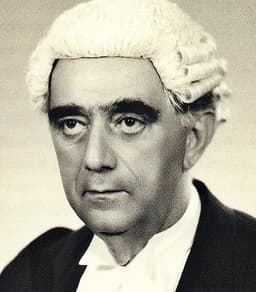
David Marshall
Politician · Modern
39.7Total

Napoleon Bonaparte
General · Modern
70.9Total
Basic Information
Born
1908
1769
Died
1995
1821
Era
Modern
Modern
Nationality
Singapore
France
Occupation
Politician
General
Civilization
Eastern
Western
Score Comparison
Military (10%)
14.4
94.0
Political (20%)
39.4
72.0
Influence (20%)
50.2
40.0
Legacy (20%)
41.7
80.0
Leadership (15%)
45.0
78.0
Strategy (15%)
26.7
90.0
TOTAL
39.7
70.9
David Marshall — Complete Timeline
1955 AD
Appointed First Chief Minister of SingaporePolitical Action◆ Major
David Marshall became the first Chief Minister of Singapore following the 1955 general election. He led a minority government and negotiated with the British for self-governance, but resigned in 1956 after failing to secure full internal self-rule.
Singapore self-governmentConstitutional negotiations
Impact: national
1956 AD
Led the Merdeka Talks in LondonPolitical Action◆ Major
Marshall led a delegation to London to negotiate full internal self-government for Singapore. The talks collapsed when the British refused to grant control over internal security and defense, leading to Marshall's resignation as Chief Minister.
Merdeka talksSelf-government failure
Impact: national
Resigned as Chief MinisterPolitical Action◆ Major
After the failure of the London talks, Marshall resigned as Chief Minister on June 7, 1956. He was succeeded by Lim Yew Hock. Marshall's resignation marked a turning point in Singapore's path to self-government.
ResignationPolitical transition
Impact: national
1957 AD
Founded the Workers' Party of SingaporePolitical Action◆ Major
After leaving office, Marshall founded the Workers' Party, a political party that became a key opposition force in Singapore. He served as its first secretary-general, advocating for social democracy and workers' rights.
Political party foundingOpposition
Impact: nationalconstructive
1978 AD
Appointed Singapore's First Ambassador to FrancePolitical Action
Marshall served as Singapore's first ambassador to France from 1978 to 1980. He also held concurrent accreditation to Spain and Portugal, representing Singapore's diplomatic interests in Europe.
DiplomacyAmbassador
Impact: national
Napoleon Bonaparte — Complete Timeline
1799 AD
Coup of 18 BrumaireOther◆ Major
Napoleon Bonaparte, with support from his brother Lucien and key political figures, overthrew the Directory in a bloodless coup. He established the Consulate with himself as First Consul, effectively becoming the ruler of France. This event ended the French Revolution's most unstable period.
French RevolutionCoupRise to Power
Impact: regional
1804 AD
Promulgation of the Napoleonic CodeOther◆ Major
Napoleon enacted the Civil Code of the French, known as the Napoleonic Code, a comprehensive set of laws that replaced the fragmented feudal legal systems. The code established legal equality, protected property rights, and secularized law. It became the basis for legal systems in many European and world countries.
Legal ReformNapoleonic CodeCivil Law
Impact: globalconstructive
1805 AD
Battle of AusterlitzWar◆ Major
Napoleon's Grande Arm
Napoleonic WarsBattleDecisive Victory
Impact: global
1812 AD
Invasion of RussiaWar◆ Major
Napoleon led the Grande Arm
Napoleonic WarsInvasionDisaster
Impact: globaldestructive
1815 AD
Battle of WaterlooWar◆ Major
Napoleon's French army was defeated by the combined forces of the Duke of Wellington's Anglo-Allied army and Gebhard Leberecht von Bl
Napoleonic WarsBattleFinal Defeat
Impact: globaldestructive
Expert Analysis
david-marshall-vs-napoleon-bonaparte
# The Conqueror and the Conciliator
On a June morning in 1815, Napoleon Bonaparte surveyed the muddy fields of Waterloo, his Grande Armée poised to crush the Duke of Wellington’s allied forces. He had conquered Europe from Madrid to Moscow, rewritten the laws of nations, and crowned himself emperor. Less than 140 years later, on the other side of the world, a Jewish lawyer named David Marshall stood before British officials in London, pleading not for territory but for the right of a tiny island—Singapore—to govern its own affairs. One man commanded armies that numbered in the hundreds of thousands; the other led a delegation of clerks and politicians. Yet both were driven by the same fire: an unyielding belief that they could reshape their worlds. Why did one leave a continent in ruins and a legend that still burns, while the other left a quiet legacy of principle and a party that would outlast him?
Origins
Napoleon was born in 1769 on the rugged island of Corsica, a place that had only recently become French. His family was minor nobility, but his father’s political maneuvering secured him a scholarship to a military academy in mainland France. There, the awkward, accented boy was mocked by aristocratic classmates—but he devoured history, artillery tactics, and the works of Rousseau. The French Revolution erupted when he was twenty, and he saw opportunity in chaos. The old order crumbled; talent, not birth, would now command.
David Marshall was born in 1908 in Singapore, then a British colony, into a Baghdadi Jewish family that had flourished under imperial rule. His father was a prosperous merchant. Marshall studied law in England, returned to Singapore, and built a reputation as a brilliant, impassioned criminal lawyer—a man who defended the poor and the accused with theatrical flair. Where Napoleon was forged by revolution and war, Marshall was shaped by the quiet hum of colonial courts and the slow burn of nationalist sentiment. The era of his youth was not one of cannon fire but of petitions, strikes, and negotiations.
Rise to Power
Napoleon’s rise was a blitzkrieg of ambition. At twenty-four, he drove the British out of Toulon and was promoted to brigadier general. At twenty-six, he crushed a royalist uprising in Paris with a “whiff of grapeshot.” By thirty, he had conquered Italy and Egypt, turning military victories into political capital. Each campaign was a stepping stone; each victory, a new title. In 1799, he staged a coup and made himself First Consul. By 1804, he crowned himself Emperor of the French. His path was paved with the bodies of enemies and the adulation of a nation desperate for glory.
Marshall’s rise was slower, more deliberate. He entered politics in 1955, at age forty-seven, when Singapore’s first general election was held under British colonial rule. The Labour Front, a coalition of trade unionists and professionals, tapped him as their leader. He became the island’s first Chief Minister—a modest title that carried little real power. The British still controlled defense, foreign affairs, and internal security. Marshall’s rise was not a conquest but a negotiation, a careful dance between a colonial master and a colony demanding its voice.
Leadership & Governance
Napoleon governed as he fought: with speed, brilliance, and ruthless efficiency. He centralized the French state, created the Napoleonic Code—a legal framework that enshrined merit, property rights, and secular authority—and reformed education, banking, and infrastructure. His military genius was staggering: at Austerlitz in 1805, he destroyed a larger Austro-Russian army with a feigned retreat and a devastating flank attack. He was a master of logistics, morale, and deception. But his political wisdom was brittle. He appointed family members as puppet kings, ignored the limits of his empire, and courted wars he could not win.
Marshall’s leadership was the opposite: principled, democratic, and painfully aware of limits. As Chief Minister, he faced a fractious coalition, labor strikes, and communist agitation. He did not command armies; he commanded arguments. In 1956, he led the Merdeka Talks in London, demanding full internal self-government for Singapore. When the British refused to yield on internal security, Marshall refused to compromise. He walked out, returned to Singapore, and resigned—not in defeat, but in protest. “I would rather be a private citizen with my self-respect than a Chief Minister without it,” he said. It was a decision that cost him power but defined his character.
Triumph & Tragedy
Napoleon’s greatest triumph was the Napoleonic Code, which influenced legal systems across Europe and the world. His greatest tragedy was the invasion of Russia in 1812. He marched 600,000 men into the vast, frozen emptiness; fewer than 100,000 returned. The disaster shattered his aura of invincibility. He was exiled to Elba in 1814, escaped, ruled for a hundred days, and was finally crushed at Waterloo in 1815. His tragedy was not defeat—it was that he could not stop.
Marshall’s greatest triumph was not a victory but a stand. The 1956 London talks failed, but his resignation forced Singaporeans to confront the reality of colonial power. He founded the Workers’ Party in 1957, giving voice to opposition in a political landscape that would soon be dominated by the People’s Action Party. His tragedy was that he was a man of principle in an era that rewarded pragmatism. He never held high office again. Yet in 1978, he was appointed Singapore’s first ambassador to France—a quiet capstone to a career of lost battles and enduring ideals.
Character & Destiny
Napoleon’s character was a paradox: a genius who could not listen, a reformer who craved dynasty, a liberator who became a tyrant. His destiny was shaped by his own relentless ambition. He once said, “Power is my mistress.” That mistress consumed him.
Marshall’s character was steadier: stubborn, eloquent, and fiercely ethical. He was a fighter who knew when to yield nothing. His destiny was shaped by his refusal to bend. He did not conquer; he bore witness. And in a world that worships winners, that is a harder legacy to carry.
Legacy
Napoleon’s legacy is written in stone and blood. His legal code survives. His name is synonymous with military genius and imperial overreach. He is remembered as the man who reshaped Europe and then lost it all.
Marshall’s legacy is quieter but no less real. The Workers’ Party he founded became Singapore’s most enduring opposition. His stand in 1956 is taught as a lesson in integrity. He is remembered not as a ruler but as a man who, when given the choice between power and principle, chose principle.
Conclusion
We remember Napoleon because he changed the map. We remember Marshall because he changed the conversation. One conquered; the other convinced. Both were men of their time—and both remind us that history is not only written by the victors, but by those who refused to surrender what they believed. In the end, the conqueror died alone on a remote island, while the conciliator lived to see his small nation become a beacon. Perhaps the truest measure of greatness is not how much you take, but what you leave standing.
Rankings
🥇
Napoleon BonaparteLeader
Mil: 94.0Pol: 72.0Inf: 40.0
70.9
🥈
David Marshall
Mil: 14.4Pol: 39.4Inf: 50.2
39.7
+31.2 behind
How This Comparison Works
Algorithm
Each figure is scored on 6 dimensions (0—100 scale) based on structured historical data: Military (10%), Political (20%), Influence (20%), Legacy (20%), Leadership (15%), Strategy (15%). The weighted total produces the final ranking.
Data Sources
Scores are computed from structured sub-indicators in the database. Scale factors adjust for era (Ancient ×0.85, Modern ×1.0) and civilization size (Eastern ×1.05, Other ×0.80) to account for differences in population and military scale.
Maximum 3 Figures
Comparisons are limited to 2—3 figures to ensure readability and statistical meaningfulness.
Error Margins
±5 points per dimension — Sub-scores are derived from historical records with inherent uncertainty. Two figures within 5 points on a dimension should be considered roughly equivalent in that area.
Total Score Accuracy
±3 points overall — The weighted combination of 6 dimensions produces a total score with approximately ±3 points of uncertainty. Differences of less than 3 points are not statistically significant— the figures are effectively tied.
Known Limitations
- Historical records are incomplete and uneven across civilizations
- Figures from oral-tradition societies may be underrepresented
- Occupation labels can misclassify multi-role figures
- Scores measure capability and impact, not moral character
- Quantitative scoring is a comparison tool, not absolute truth
Capability Radar
Military (10%) — Battles & Warfare
Battles
16
95
Win Rate
15
90
Expansion
20
95
Political (20%) — Governance & Reform
Reform
30
95
Diplomacy
40
80
Economy
20
85
Influence (20%) — Cultural & Global Reach
Cultural
20
85
Global
20
90
Legacy (20%) — Historical Impact
Historical
30
95
Longevity
20
90
Leadership (15%) — Power & Stability
Tenure
15
85
Stability
20
70
Strategy (15%) — Tactics & Innovation
Strategy
23
95
Tactics
28
98
Reform
30
92
Similar Comparisons
Comments & Discussion
No comments yet. Be the first to share your thoughts!