Loading...
This comparison has not been analyzed yet.
One-time AI generation (~1 minute). Scores and timeline are already available below.
Dawit I vs Valdemar II of Denmark
Valdemar II of Denmark leads by 7.5 pts · 2 figures compared
…

Dawit I
Emperor · Medieval
51.3Total
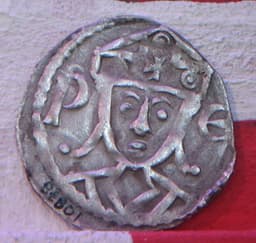
Valdemar II of Denmark
Emperor · Medieval
58.8Total
Basic Information
Born
1350
1170
Died
1413
1241
Era
Medieval
Medieval
Nationality
Ethiopia
Denmark
Occupation
Emperor
Emperor
Civilization
Other
Western
Score Comparison
Military (10%)
50.0
61.7
Political (20%)
39.4
62.7
Influence (20%)
62.0
58.0
Legacy (20%)
50.0
50.0
Leadership (15%)
53.2
68.0
Strategy (15%)
43.7
60.7
TOTAL
51.3
58.8
Dawit I — Complete Timeline
1380 AD
Patronage of Religious LiteratureCultural◆ Major
Dawit I commissioned the translation and copying of numerous religious texts, including the Kebra Nagast (Glory of the Kings) and other Ge'ez works. This patronage strengthened the Ethiopian Orthodox Church and preserved its theological heritage.
Religious LiteraturePatronageEthiopian Orthodox Church
Impact: nationalconstructive
1400 AD
Campaign against the Sultanate of AdalWar
Dawit I led a military expedition against the rising Sultanate of Adal in the eastern lowlands. The campaign aimed to curb Adal's influence and protect Christian territories, though it did not permanently subdue the sultanate.
Military CampaignAdalConflict
Impact: regional
Valdemar II of Denmark — Complete Timeline
1202 AD
Became King of DenmarkPolitical Action◆ Major
Valdemar II became King of Denmark after the death of his brother, King Canute VI. He inherited a kingdom that was already a major Baltic power, and he continued his predecessor's expansionist policies, aiming to control the Baltic Sea trade routes.
SuccessionDenmarkBaltic Power
Impact: regional
1219 AD
Conquered EstoniaWar◆ Major
Valdemar II led a Danish crusade to conquer Estonia, defeating the Estonian tribes at the Battle of Lyndanisse (near modern Tallinn). According to legend, the Danish flag Dannebrog fell from the sky during this battle. Estonia became a Danish possession until 1346.
ConquestEstoniaCrusade
Impact: regional
1223 AD
Captured by Count Henry of SchwerinPolitical Action◆ Major
Valdemar II was captured by Count Henry of Schwerin during a hunting trip and held prisoner for over two years. His captivity forced Denmark to pay a huge ransom and cede territories in northern Germany, weakening Danish power in the region.
CaptureRansomGermany
Impact: regionaltragic
1227 AD
Defeated at the Battle of BornhövedWar◆ Major
After his release, Valdemar II attempted to regain lost territories but was decisively defeated by a coalition of German princes at the Battle of Bornh
BattleDefeatGermany
Impact: regionaldestructive
1241 AD
Codified Danish law with the Jutland CodeReform◆ Major
Valdemar II oversaw the compilation of the Jutland Code (Jyske Lov), a comprehensive legal code for Denmark. The code standardized laws, reduced the power of local chieftains, and established a uniform legal system that influenced Danish law for centuries.
Legal CodeReformDenmark
Impact: nationalconstructive
This comparison has not been analyzed yet.
One-time AI generation (~1 minute). Scores and timeline are already available below.
Rankings
🥇
Valdemar II of DenmarkLeader
Mil: 61.7Pol: 62.7Inf: 58.0
58.8
🥈
Dawit I
Mil: 50.0Pol: 39.4Inf: 62.0
51.3
+7.5 behind
How This Comparison Works
Algorithm
Each figure is scored on 6 dimensions (0—100 scale) based on structured historical data: Military (10%), Political (20%), Influence (20%), Legacy (20%), Leadership (15%), Strategy (15%). The weighted total produces the final ranking.
Data Sources
Scores are computed from structured sub-indicators in the database. Scale factors adjust for era (Ancient ×0.85, Modern ×1.0) and civilization size (Eastern ×1.05, Other ×0.80) to account for differences in population and military scale.
Maximum 3 Figures
Comparisons are limited to 2—3 figures to ensure readability and statistical meaningfulness.
Error Margins
±5 points per dimension — Sub-scores are derived from historical records with inherent uncertainty. Two figures within 5 points on a dimension should be considered roughly equivalent in that area.
Total Score Accuracy
±3 points overall — The weighted combination of 6 dimensions produces a total score with approximately ±3 points of uncertainty. Differences of less than 3 points are not statistically significant— the figures are effectively tied.
Known Limitations
- Historical records are incomplete and uneven across civilizations
- Figures from oral-tradition societies may be underrepresented
- Occupation labels can misclassify multi-role figures
- Scores measure capability and impact, not moral character
- Quantitative scoring is a comparison tool, not absolute truth
Capability Radar
Military (10%) — Battles & Warfare
Battles
20
65
Win Rate
25
70
Expansion
20
70
Political (20%) — Governance & Reform
Reform
40
60
Diplomacy
35
65
Economy
30
60
Influence (20%) — Cultural & Global Reach
Cultural
55
50
Global
25
40
Legacy (20%) — Historical Impact
Historical
50
55
Longevity
45
45
Leadership (15%) — Power & Stability
Tenure
70
70
Stability
50
55
Strategy (15%) — Tactics & Innovation
Strategy
20
65
Tactics
20
60
Reform
15
55
Similar Comparisons
Comments & Discussion
No comments yet. Be the first to share your thoughts!