Loading...
Li Zhi vs Valdemar II of Denmark
Li Zhi leads by 3.0 pts · 2 figures compared
…
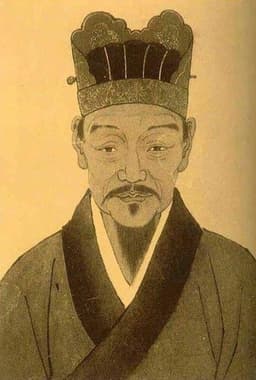
Li Zhi
Emperor · Medieval
61.8Total
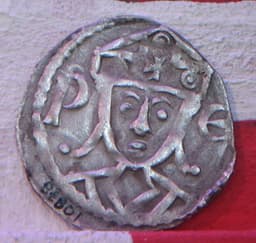
Valdemar II of Denmark
Emperor · Medieval
58.8Total
Basic Information
Born
628
1170
Died
683
1241
Era
Medieval
Medieval
Nationality
China
Denmark
Occupation
Emperor
Emperor
Civilization
Eastern
Western
Score Comparison
Military (10%)
85.0
61.7
Political (20%)
55.0
62.7
Influence (20%)
58.3
58.0
Legacy (20%)
52.0
50.0
Leadership (15%)
72.0
68.0
Strategy (15%)
66.3
60.7
TOTAL
61.8
58.8
Li Zhi — Complete Timeline
640 AD
Establishment of the Protectorate General to Pacify the WestReform◆ Major
Li Zhi established the Anxi Protectorate to administer the newly conquered territories in Central Asia. This administrative structure governed the Tarim Basin and parts of modern Xinjiang, securing Tang control over the Silk Road trade routes.
AdministrationCentral AsiaSilk Road
Impact: regionalconstructive
657 AD
Conquest of the Western TurksWar◆ Major
Under Li Zhi's reign, Tang forces under Su Dingfang defeated the Western Turkic Khaganate, destroying their power in Central Asia. This victory extended Tang control over the Silk Road and established Chinese hegemony in the region for decades.
Tang ExpansionWestern TurksCentral Asia
Impact: regionalconstructive
660 AD
Conquest of Baekje and GoguryeoWar◆ Major
Tang forces allied with Silla to conquer the Korean kingdom of Baekje in 660, then Goguryeo in 668. These campaigns brought the Korean Peninsula under Tang suzerainty for a time, marking the greatest territorial extent of the Tang dynasty.
Korean CampaignsTang ExpansionSilla Alliance
Impact: regional
Illness and Regency of Wu ZetianPolitical Action
Li Zhi suffered a stroke that impaired his vision and ability to govern. His empress, Wu Zetian, began to handle state affairs, gradually accumulating power. This marked the beginning of her rise to de facto rule, which would later lead to her becoming emperor.
Wu ZetianRegencyPower Shift
Impact: national
Valdemar II of Denmark — Complete Timeline
1202 AD
Became King of DenmarkPolitical Action◆ Major
Valdemar II became King of Denmark after the death of his brother, King Canute VI. He inherited a kingdom that was already a major Baltic power, and he continued his predecessor's expansionist policies, aiming to control the Baltic Sea trade routes.
SuccessionDenmarkBaltic Power
Impact: regional
1219 AD
Conquered EstoniaWar◆ Major
Valdemar II led a Danish crusade to conquer Estonia, defeating the Estonian tribes at the Battle of Lyndanisse (near modern Tallinn). According to legend, the Danish flag Dannebrog fell from the sky during this battle. Estonia became a Danish possession until 1346.
ConquestEstoniaCrusade
Impact: regional
1223 AD
Captured by Count Henry of SchwerinPolitical Action◆ Major
Valdemar II was captured by Count Henry of Schwerin during a hunting trip and held prisoner for over two years. His captivity forced Denmark to pay a huge ransom and cede territories in northern Germany, weakening Danish power in the region.
CaptureRansomGermany
Impact: regionaltragic
1227 AD
Defeated at the Battle of BornhövedWar◆ Major
After his release, Valdemar II attempted to regain lost territories but was decisively defeated by a coalition of German princes at the Battle of Bornh
BattleDefeatGermany
Impact: regionaldestructive
1241 AD
Codified Danish law with the Jutland CodeReform◆ Major
Valdemar II oversaw the compilation of the Jutland Code (Jyske Lov), a comprehensive legal code for Denmark. The code standardized laws, reduced the power of local chieftains, and established a uniform legal system that influenced Danish law for centuries.
Legal CodeReformDenmark
Impact: nationalconstructive
Expert Analysis
Origins
Li Zhi (628–683), born Li Zhi, was the ninth son of Emperor Taizong of Tang. His mother was Empress Zhangsun. As a child, he received a Confucian education and was known for his filial piety. He became crown prince after his elder brother Li Chengqian was deposed for plotting rebellion. Li Zhi's early life was marked by the shadow of his formidable father and the court intrigues of the Tang palace.
Valdemar II (1170–1241), son of King Valdemar I of Denmark and Sophia of Minsk, was born into a royal family that had consolidated power in the Baltic region. He was raised in the court of his father, who had expanded Danish influence. Valdemar II's brother, King Canute VI, ruled before him, and Valdemar served as duke of Southern Jutland, gaining administrative experience. His early life was shaped by the ongoing conflicts with the Wends and the Holy Roman Empire.
Rise to Power
Li Zhi ascended the throne in 649 after Taizong's death. His reign initially continued the prosperous policies of his father, with capable ministers like Zhangsun Wuji and Chu Suiliang guiding state affairs. However, Li Zhi's rise was not marked by personal ambition but by his position as the chosen heir. His early years as emperor saw the consolidation of Tang power and the beginning of campaigns against the Western Turks.
Valdemar II became king in 1202 upon the death of his brother Canute VI. He inherited a kingdom that was a major Baltic power, having already conquered Holstein and parts of Pomerania. Valdemar II's rise was smooth, as he was the natural successor. He quickly asserted his authority by leading a crusade to Livonia and Estonia, expanding Danish territory across the Baltic Sea.
Leadership & Governance
Li Zhi's leadership style was passive and delegative. He relied heavily on his officials, especially after his stroke in 660, when his empress Wu Zetian began to handle state affairs. Li Zhi's governance was characterized by administrative continuity with his father's policies, but his lack of direct control allowed Wu Zetian to accumulate power. For example, he established the Anxi Protectorate to administer Central Asia, but the day-to-day management fell to generals and officials. His political score of 55.0 reflects his limited personal involvement in governance.
Valdemar II was a more active leader, personally leading military campaigns and overseeing legal reforms. He codified the Jutland Code (Jyske Lov) in 1241, which standardized laws, reduced the power of local nobles, and established a uniform legal system for Denmark. His governance combined military expansion with administrative consolidation, earning him a political score of 62.7. However, his captivity in 1223–1225 showed a lapse in security and judgment.
Triumph & Tragedy
Li Zhi's greatest triumphs were the conquests of the Western Turks (657), Baekje (660), and Goguryeo (668). These campaigns expanded Tang territory to its maximum extent, stretching from the Korean Peninsula to Central Asia. The establishment of the Anxi Protectorate ensured Chinese influence over the Silk Road for decades. However, his greatest tragedy was his illness and the subsequent rise of Wu Zetian, who eventually deposed his heirs and established her own Zhou dynasty. Li Zhi's legacy as emperor is overshadowed by his wife's usurpation.
Valdemar II's greatest triumph was the conquest of Estonia in 1219, famously associated with the legend of the Dannebrog, the Danish national flag. This victory extended Danish control across the Baltic and secured a foothold in the region. His codification of the Jutland Code was also a lasting achievement. However, his capture by Count Henry of Schwerin in 1223 was a major humiliation. He was held for over two years and forced to pay a huge ransom, cede territories, and recognize German overlordship. His defeat at the Battle of Bornhöved in 1227 ended Danish dominance in the Baltic and marked the decline of his kingdom.
Character & Destiny
Li Zhi was known for his kindness and filial piety, but also for his indecisiveness. His character led him to rely on others, which ultimately allowed Wu Zetian to seize power. His destiny was to be a transitional figure between the golden age of his father and the chaotic rule of his wife. Historians often view him as a weak emperor, but his military achievements were enabled by capable generals like Su Dingfang.
Valdemar II was energetic and ambitious, earning the nickname "the Victorious." His character drove him to expand Danish power aggressively. However, his overconfidence led to his capture, and his inability to regain lost territories after Bornhöved showed the limits of his strategic vision. His destiny was to be a great builder of Denmark's Baltic empire, but also to witness its unraveling.
Legacy
Li Zhi's legacy is mixed. He is remembered as the emperor during Tang's greatest territorial expansion, but also as the husband of Wu Zetian, whose reign is often seen as a usurpation. The Anxi Protectorate he established lasted until the An Lushan Rebellion, and his conquests of Baekje and Goguryeo reshaped East Asian geopolitics. However, his political score of 55.0 and influence score of 58.3 reflect his overshadowed role.
Valdemar II's legacy is more straightforward: he is celebrated as a national hero in Denmark for his conquests and legal reforms. The Jutland Code remained in force until 1683, and his military campaigns established Danish claims in Estonia that lasted until 1346. His legacy score of 50.0 is lower than Li Zhi's 52.0, but his political and military achievements are more directly associated with him personally.
Conclusion
Li Zhi had a greater impact on world history than Valdemar II. His military score of 85.0 versus Valdemar's 61.7 reflects the scale and significance of his conquests, which extended Chinese power into Central Asia and the Korean Peninsula. Despite his passive leadership and the overshadowing of Wu Zetian, the territorial gains under Li Zhi were more extensive and enduring than Valdemar's Baltic acquisitions. Valdemar II's achievements were important for Denmark, but his empire collapsed after Bornhöved, while Tang China continued as a major power for decades after Li Zhi's death. The total score gap of 3.0 points (61.8 vs 58.8) understates Li Zhi's edge in military and strategic impact. Li Zhi's legacy, though flawed, shaped the course of East Asian history in a way that Valdemar's did not for Europe.
Rankings
🥇
Li ZhiLeader
Mil: 85.0Pol: 55.0Inf: 58.3
61.8
🥈
Valdemar II of Denmark
Mil: 61.7Pol: 62.7Inf: 58.0
58.8
+3.0 behind
How This Comparison Works
Algorithm
Each figure is scored on 6 dimensions (0—100 scale) based on structured historical data: Military (10%), Political (20%), Influence (20%), Legacy (20%), Leadership (15%), Strategy (15%). The weighted total produces the final ranking.
Data Sources
Scores are computed from structured sub-indicators in the database. Scale factors adjust for era (Ancient ×0.85, Modern ×1.0) and civilization size (Eastern ×1.05, Other ×0.80) to account for differences in population and military scale.
Maximum 3 Figures
Comparisons are limited to 2—3 figures to ensure readability and statistical meaningfulness.
Error Margins
±5 points per dimension — Sub-scores are derived from historical records with inherent uncertainty. Two figures within 5 points on a dimension should be considered roughly equivalent in that area.
Total Score Accuracy
±3 points overall — The weighted combination of 6 dimensions produces a total score with approximately ±3 points of uncertainty. Differences of less than 3 points are not statistically significant— the figures are effectively tied.
Known Limitations
- Historical records are incomplete and uneven across civilizations
- Figures from oral-tradition societies may be underrepresented
- Occupation labels can misclassify multi-role figures
- Scores measure capability and impact, not moral character
- Quantitative scoring is a comparison tool, not absolute truth
Capability Radar
Military (10%) — Battles & Warfare
Battles
85
65
Win Rate
80
70
Expansion
90
70
Political (20%) — Governance & Reform
Reform
65
60
Diplomacy
80
65
Economy
70
60
Influence (20%) — Cultural & Global Reach
Cultural
55
50
Global
65
40
Legacy (20%) — Historical Impact
Historical
70
55
Longevity
60
45
Leadership (15%) — Power & Stability
Tenure
75
70
Stability
65
55
Strategy (15%) — Tactics & Innovation
Strategy
85
65
Tactics
70
60
Reform
60
55
Similar Comparisons
Comments & Discussion
No comments yet. Be the first to share your thoughts!