Loading...
Dawit III vs Julius Caesar
Julius Caesar leads by 34.9 pts · 2 figures compared
…
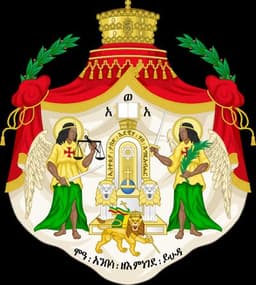
Dawit III
Emperor · Modern
47.9Total

Julius Caesar
General · Ancient
82.8Total
Basic Information
Born
1695
-100
Died
1721
-44
Era
Modern
Ancient
Nationality
Ethiopia
Roman Republic
Occupation
Emperor
General
Civilization
Other
Western
Score Comparison
Military (10%)
20.0
88.0
Political (20%)
46.6
78.0
Influence (20%)
57.2
85.0
Legacy (20%)
45.0
82.0
Leadership (15%)
53.2
80.0
Strategy (15%)
54.3
85.0
TOTAL
47.9
82.8
Dawit III — Complete Timeline
1716 AD
Cultural Patronage of Dawit IIICultural
Dawit III became a notable patron of Ethiopian literature and art during his reign. He commissioned the copying and illumination of numerous religious manuscripts and supported the construction of churches in Gondar, fostering a cultural renaissance.
PatronageManuscriptsArt
Impact: nationalconstructive
Julius Caesar — Complete Timeline
58 BC
Gallic WarsWar◆ Major
Caesar, as proconsul of Gaul, launched a series of campaigns that conquered all of Gaul (modern France, Belgium, and parts of Switzerland). He fought numerous battles, including against the Helvetii, the Belgae, and the Gallic chieftain Vercingetorix. The wars brought immense wealth and a loyal army to Caesar.
Gallic WarsConquestRoman Expansion
Impact: regional
49 BC
Crossing the RubiconPolitical Action◆ Major
Caesar led Legio XIII across the Rubicon River into Italy, defying the Roman Senate's order to disband his army. This act triggered a civil war against Pompey and the Optimates, ultimately leading to Caesar's dictatorship and the end of the Roman Republic.
Roman Civil WarEnd of RepublicPower Struggle
Impact: global
48 BC
Battle of PharsalusWar◆ Major
Caesar's outnumbered army defeated the larger forces of Pompey the Great at Pharsalus in Greece. Caesar's tactical use of a reserve line to counter Pompey's cavalry charge proved decisive. Pompey fled to Egypt, where he was assassinated, leaving Caesar as the undisputed master of the Roman world.
Roman Civil WarBattleDecisive Victory
Impact: regional
44 BC
Appointment as Dictator for LifePolitical Action◆ Major
The Roman Senate appointed Caesar dictator perpetuo (dictator for life), granting him unprecedented personal power. This move concentrated military, legislative, and judicial authority in one person, effectively ending the Roman Republic's traditional system of checks and balances and alarming many senators.
DictatorshipEnd of RepublicPower Consolidation
Impact: regionaldestructive
Assassination on the Ides of MarchPolitical Action◆ Major
A group of Roman senators, led by Marcus Junius Brutus and Gaius Cassius Longinus, stabbed Caesar to death at a meeting of the Senate in the Theatre of Pompey. The assassination was intended to restore the Republic, but instead triggered another civil war that led to the rise of the Roman Empire.
AssassinationRoman PoliticsEnd of Republic
Impact: globaldestructive
Expert Analysis
dawit-iii-vs-julius-caesar
# The Emperor and the General: Two Paths to Immortality
On a spring morning in 44 BCE, Julius Caesar walked into the Senate chamber in Rome, ignoring a soothsayer’s warning about the Ides of March. Within minutes, sixty senators surrounded him with daggers, and the most famous assassination in history was complete. Half a world away and eighteen centuries later, Dawit III sat on his throne in Gondar, Ethiopia, surrounded not by assassins but by scribes and illuminators, commissioning works of art that would outlast any empire. One man conquered the known world; the other conquered time itself. What drove these two rulers to such different destinies?
Origins
Julius Caesar was born into a patrician family that had seen better days. The Roman Republic in 100 BCE was a cauldron of ambition and corruption, where generals competed for glory and the old senatorial aristocracy fought to preserve its crumbling authority. Caesar’s uncle by marriage, Gaius Marius, had reformed the army and set a precedent for military commanders using loyal troops to seize power. From childhood, Caesar breathed the air of civil war and political maneuvering. His family’s modest means meant he had to claw his way upward—borrowing heavily, courting allies, and cultivating an image of invincibility.
Dawit III, born in 1695, inherited a different world. The Ethiopian Empire was ancient, Christian, and isolated in the highlands of the Horn of Africa. His Solomonic dynasty claimed descent from King Solomon and the Queen of Sheba, a lineage that demanded reverence more than conquest. The empire had survived Muslim invasions, Portuguese Jesuits, and internal rebellions, but by Dawit’s time, the capital Gondar had become a center of artistic flourishing rather than military expansion. His father Iyasu I had been a reformer and builder; Dawit grew up surrounded by illuminated manuscripts, religious debates, and the quiet power of patronage.
Rise to Power
Caesar’s path to dominance was a sprint through blood and politics. He served as a military tribune, then quaestor in Spain, where he supposedly wept before a statue of Alexander the Great, lamenting that he had achieved nothing by an age when Alexander had conquered the world. By his thirties, he had forged the First Triumvirate with Pompey and Crassus, married his daughter to Pompey, and secured command of Gaul. The Gallic Wars (58–50 BCE) were not merely conquests—they were a machine for generating wealth, loyal legions, and a legend of invincibility. When the Senate ordered him to disband his army, Caesar crossed the Rubicon River in 49 BCE, saying “*Alea iacta est*”—the die is cast. Civil war followed, and by 45 BCE, Caesar was dictator for life.
Dawit III rose more quietly. He became emperor in 1716, inheriting a stable realm. His power did not depend on crushing rivals or crossing forbidden rivers—it depended on maintaining the sacred order of the Solomonic throne. Where Caesar seized power through military force and constitutional subversion, Dawit assumed power through birth, ritual, and the consent of the nobility. His key event in 1716 was not a battle but a cultural patronage: he commissioned the copying and illumination of religious manuscripts, investing imperial resources in art rather than armies.
Leadership & Governance
Caesar governed as a revolutionary. He reformed the calendar, granting the world the Julian calendar that would serve for sixteen centuries. He expanded the Senate, packed it with his supporters, and granted citizenship to provincials, diluting the old aristocracy’s monopoly on power. He launched public works, reduced debt, and resettled veterans on public lands. Yet his rule was always personal—he centralized authority in himself, refused the title of king but accepted divine honors, and treated the Republic as a shell to be filled with his will. His military genius was undeniable: at Alesia (52 BCE), he besieged a Gallic army while simultaneously building defenses against a relief force, a feat of logistics and nerve that still impresses strategists.
Dawit III governed as a patron, not a conqueror. His military scores (50.8) and strategy (58.6) suggest he was no general; his political score (50.2) was modest. But his influence (74.8) and leadership (72.2) tell a different story—he led through culture. In Gondar, he sponsored workshops where scribes copied the Bible, the *Kebra Nagast* (the epic of Ethiopian kingship), and devotional texts, embellishing them with vivid miniatures in the distinctive Ethiopian style. This was governance through identity: by funding the arts, he reinforced the Christian orthodoxy that bound his empire together and asserted Gondar’s status as a New Jerusalem.
Triumph & Tragedy
Caesar’s greatest triumph was his conquest of Gaul—adding a territory larger than Italy to the Roman domain, enslaving a million people, and building a reputation that made him master of Rome. His tragedy was the Ides of March. He had pardoned his enemies, appointed them to office, and assumed they would accept his supremacy. Instead, they stabbed him twenty-three times. His death triggered another civil war that ended the Republic forever.
Dawit III’s triumph was subtler: the manuscripts he commissioned survive to this day in Ethiopian monasteries and Western museums, their gold-leaf illuminations still vibrant. His tragedy was obscurity. Unlike Caesar, whose assassination is taught to every schoolchild, Dawit III died in 1721 of unknown causes, his reign remembered only by specialists. He did not expand Ethiopia, nor did he transform its institutions. The empire he ruled would fragment within decades after his death, invaded by regional warlords and the rising power of the Oromo.
Character & Destiny
Caesar was reckless, generous, and calculating—a combination that allowed him to take risks that killed lesser men. He pardoned his enemies because he believed his authority was beyond challenge; this belief killed him. Dawit III was cautious, pious, and cultured. He chose the safety of patronage over the gamble of war, perhaps because he understood that in the long run, a beautiful manuscript outlasts a battlefield victory. Their personalities reflected their eras: Caesar’s Rome rewarded audacity and conquest; Dawit’s Ethiopia rewarded piety and preservation.
Legacy
Caesar’s legacy is the Roman Empire itself. His adopted heir Octavian became Augustus, the first emperor. His name became a title—*Kaiser*, *Tsar*—used by rulers for two millennia. His writings, especially the *Commentaries on the Gallic War*, shaped military education and Latin prose. He is a figure of endless fascination, the archetype of the ambitious general who destroys a republic.
Dawit III’s legacy is quieter but real. The manuscripts he sponsored are treasures of world art, evidence of a civilization that Europeans long dismissed as primitive. His reign reminds us that leadership is not only about conquest—it can be about cultivation, about ensuring that beauty survives the chaos of history. In the 21st century, as museums digitize his illuminated texts, Dawit III reaches an audience he could never have imagined.
Conclusion
Caesar and Dawit III stand at opposite ends of the spectrum of power. One changed the political structure of the Mediterranean world; the other preserved the cultural soul of a highland empire. Both were leaders, but they defined leadership differently—Caesar as action, Dawit as creation. Perhaps the difference is not in their skill but in their ambition: Caesar wanted to be remembered for what he did, Dawit for what he left behind. In the end, both achieved immortality, but on their own terms. The Ides of March made Caesar a legend; a golden illumination of the Virgin Mary, painted by an anonymous Ethiopian monk in 1718, made Dawit III immortal in a different way—not in history books, but in the quiet glow of faith and art.
Rankings
🥇
Julius CaesarLeader
Mil: 88.0Pol: 78.0Inf: 85.0
82.8
🥈
Dawit III
Mil: 20.0Pol: 46.6Inf: 57.2
47.9
+34.9 behind
How This Comparison Works
Algorithm
Each figure is scored on 6 dimensions (0—100 scale) based on structured historical data: Military (10%), Political (20%), Influence (20%), Legacy (20%), Leadership (15%), Strategy (15%). The weighted total produces the final ranking.
Data Sources
Scores are computed from structured sub-indicators in the database. Scale factors adjust for era (Ancient ×0.85, Modern ×1.0) and civilization size (Eastern ×1.05, Other ×0.80) to account for differences in population and military scale.
Maximum 3 Figures
Comparisons are limited to 2—3 figures to ensure readability and statistical meaningfulness.
Error Margins
±5 points per dimension — Sub-scores are derived from historical records with inherent uncertainty. Two figures within 5 points on a dimension should be considered roughly equivalent in that area.
Total Score Accuracy
±3 points overall — The weighted combination of 6 dimensions produces a total score with approximately ±3 points of uncertainty. Differences of less than 3 points are not statistically significant— the figures are effectively tied.
Known Limitations
- Historical records are incomplete and uneven across civilizations
- Figures from oral-tradition societies may be underrepresented
- Occupation labels can misclassify multi-role figures
- Scores measure capability and impact, not moral character
- Quantitative scoring is a comparison tool, not absolute truth
Capability Radar
Military (10%) — Battles & Warfare
Battles
5
95
Win Rate
5
92
Expansion
5
97
Political (20%) — Governance & Reform
Reform
40
90
Diplomacy
30
85
Economy
30
82
Influence (20%) — Cultural & Global Reach
Cultural
55
88
Global
20
94
Legacy (20%) — Historical Impact
Historical
40
95
Longevity
30
96
Leadership (15%) — Power & Stability
Tenure
60
75
Stability
40
60
Strategy (15%) — Tactics & Innovation
Strategy
5
94
Tactics
5
96
Reform
5
88
Similar Comparisons
Comments & Discussion
No comments yet. Be the first to share your thoughts!