Loading...
This comparison has not been analyzed yet.
One-time AI generation (~1 minute). Scores and timeline are already available below.
Demetris Christofias vs Forbes Burnham
Demetris Christofias leads by 0.3 pts · 2 figures compared
…

Demetris Christofias
Politician · Modern
51.9Total
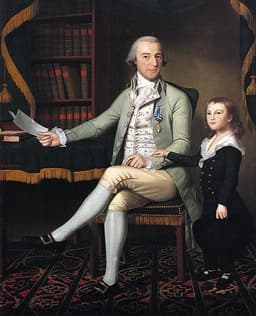
Forbes Burnham
Politician · Modern
51.6Total
Basic Information
Born
1946
1923
Died
—
—
Era
Modern
Modern
Nationality
Cyprus
Guyana
Occupation
Politician
Politician
Civilization
Western
Western
Score Comparison
Military (10%)
50.0
50.0
Political (20%)
61.3
68.0
Influence (20%)
52.5
56.4
Legacy (20%)
42.5
48.3
Leadership (15%)
65.0
40.0
Strategy (15%)
42.5
42.7
TOTAL
51.9
51.6
Demetris Christofias — Complete Timeline
2008 AD
Elected President of CyprusPolitical Action
Demetris Christofias was elected President of Cyprus, becoming the first communist head of state in the European Union. His election marked a shift to the left in Cypriot politics, with a focus on reunification and social welfare.
ElectionCommunismCyprus
Impact: regionalprogressive
Resumed reunification talks with Turkish CypriotsPolitical Action◆ Major
Christofias resumed UN-led reunification talks with Turkish Cypriot leader Mehmet Ali Talat. The negotiations aimed to create a bi-zonal, bi-communal federation, but made limited progress due to disagreements on power-sharing and property.
ReunificationNegotiationsCyprus
Impact: nationalconstructive
2012 AD
Faced economic crisis and bailoutPolitical Action◆ Major
Christofias's government faced a severe economic crisis due to exposure to Greek debt and banking sector problems. Cyprus requested a bailout from the EU and IMF, leading to austerity measures and a loss of public confidence.
Economic CrisisBailoutAusterity
Impact: nationaltragic
2013 AD
Lost re-election bidPolitical Action◆ Major
Christofias was defeated in the presidential election by Nicos Anastasiades, ending his single term. His loss was largely due to the economic crisis and the failure of reunification talks, leading to a return to conservative governance.
ElectionTransitionCyprus
Impact: national
Forbes Burnham — Complete Timeline
1964 AD
Elected Premier of British GuianaPolitical Action◆ Major
Burnham became Premier of British Guiana in December 1964, leading a coalition government after a controversial election. His victory was supported by the British and US governments, who opposed the Marxist Cheddi Jagan.
ElectionCold War
Impact: national
1966 AD
Led Guyana to IndependencePolitical Action
Burnham led British Guiana to independence from the United Kingdom on May 26, 1966, becoming the first Prime Minister of Guyana. The country adopted a new constitution and joined the Commonwealth.
IndependenceDecolonization
Impact: nationalconstructive
1970 AD
Declared Guyana a RepublicPolitical Action◆ Major
Burnham's government declared Guyana a republic on February 23, 1970, replacing the British monarch as head of state with a ceremonial president. This was part of his policy of 'cooperative socialism' and national assertion.
RepublicConstitutional Reform
Impact: nationalconstructive
Nationalized Key IndustriesPolitical Action◆ Major
Burnham nationalized the bauxite industry (1971) and sugar industry (1975), along with other key sectors. This was central to his 'cooperative socialism' policy, but led to economic decline and emigration.
NationalizationSocialism
Impact: nationaldestructive
1980 AD
Became President of GuyanaPolitical Action◆ Major
Burnham became the first Executive President of Guyana under a new constitution in 1980, concentrating power in his office. The constitution was criticized for entrenching authoritarian rule.
PresidencyAuthoritarianism
Impact: nationaldestructive
1985 AD
Died in OfficeOther◆ Major
Burnham died suddenly on August 6, 1985, during a minor surgical procedure. His death ended 21 years of uninterrupted rule, leaving a legacy of economic decline and political repression.
DeathEnd of Era
Impact: national
This comparison has not been analyzed yet.
One-time AI generation (~1 minute). Scores and timeline are already available below.
Rankings
🥇
Demetris ChristofiasLeader
Mil: 50.0Pol: 61.3Inf: 52.5
51.9
🥈
Forbes Burnham
Mil: 50.0Pol: 68.0Inf: 56.4
51.6
+0.3 behind
How This Comparison Works
Algorithm
Each figure is scored on 6 dimensions (0—100 scale) based on structured historical data: Military (10%), Political (20%), Influence (20%), Legacy (20%), Leadership (15%), Strategy (15%). The weighted total produces the final ranking.
Data Sources
Scores are computed from structured sub-indicators in the database. Scale factors adjust for era (Ancient ×0.85, Modern ×1.0) and civilization size (Eastern ×1.05, Other ×0.80) to account for differences in population and military scale.
Maximum 3 Figures
Comparisons are limited to 2—3 figures to ensure readability and statistical meaningfulness.
Error Margins
±5 points per dimension — Sub-scores are derived from historical records with inherent uncertainty. Two figures within 5 points on a dimension should be considered roughly equivalent in that area.
Total Score Accuracy
±3 points overall — The weighted combination of 6 dimensions produces a total score with approximately ±3 points of uncertainty. Differences of less than 3 points are not statistically significant— the figures are effectively tied.
Known Limitations
- Historical records are incomplete and uneven across civilizations
- Figures from oral-tradition societies may be underrepresented
- Occupation labels can misclassify multi-role figures
- Scores measure capability and impact, not moral character
- Quantitative scoring is a comparison tool, not absolute truth
Capability Radar
Military (10%) — Battles & Warfare
Battles
29
31
Win Rate
31
31
Expansion
33
32
Political (20%) — Governance & Reform
Reform
45
55
Diplomacy
55
50
Economy
30
40
Influence (20%) — Cultural & Global Reach
Cultural
25
45
Global
30
35
Legacy (20%) — Historical Impact
Historical
35
50
Longevity
20
40
Leadership (15%) — Power & Stability
Tenure
60
65
Stability
20
30
Strategy (15%) — Tactics & Innovation
Strategy
38
37
Tactics
41
43
Reform
44
44
Similar Comparisons
Comments & Discussion
No comments yet. Be the first to share your thoughts!