Loading...
Deng Xiaoping vs Han Xin
Deng Xiaoping leads by 5.6 pts · 2 figures compared
…
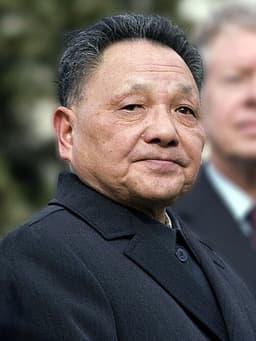
Deng Xiaoping
Politician · Modern
66.0Total
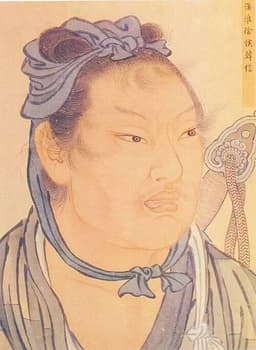
Han Xin
General · Ancient
60.4Total
Basic Information
Born
1904
-230
Died
1997
-196
Era
Modern
Ancient
Nationality
China
China
Occupation
Politician
General
Civilization
Eastern
Eastern
Score Comparison
Military (10%)
30.0
88.0
Political (20%)
90.0
25.0
Influence (20%)
68.0
65.0
Legacy (20%)
65.0
70.8
Leadership (15%)
78.0
33.5
Strategy (15%)
45.0
88.6
TOTAL
66.0
60.4
Deng Xiaoping — Complete Timeline
1978 AD
Third Plenum of the 11th Central CommitteePolitical Action
Deng Xiaoping consolidated power and announced the policy of Reform and Opening-Up. This meeting marked the end of Maoist class struggle as the national priority and shifted focus to economic modernization, initiating market-oriented reforms.
Economic ReformOpening-UpChina Modernization
Impact: globalconstructive
1980 AD
Establishment of Special Economic ZonesReform◆ Major
Deng Xiaoping approved the creation of Special Economic Zones in Shenzhen, Zhuhai, Shantou, and Xiamen. These zones offered tax incentives and market freedoms to attract foreign investment and technology, serving as experimental laboratories for capitalist practices within a socialist framework.
Economic ZonesForeign InvestmentMarket Reforms
Impact: nationalconstructive
1984 AD
Sino-British Joint Declaration on Hong KongPolitical Action◆ Major
Deng Xiaoping negotiated with British Prime Minister Margaret Thatcher to agree on the return of Hong Kong to Chinese sovereignty in 1997. The declaration established the 'One Country, Two Systems' principle, allowing Hong Kong to maintain its capitalist system for 50 years.
Hong KongDiplomacyOne Country Two Systems
Impact: globalconstructive
1989 AD
Tiananmen Square Protests CrackdownPolitical Action
Deng Xiaoping authorized the military to suppress pro-democracy protests in Tiananmen Square. The crackdown resulted in hundreds of civilian deaths and injuries, leading to international condemnation and a tightening of political control while economic reforms continued.
TiananmenSuppressionHuman Rights
Impact: globaldestructive
1992 AD
Southern Tour (Nanxun)Political Action◆ Major
Deng Xiaoping traveled to southern China to reaffirm the course of economic reform after conservative backlash. His speeches in Shenzhen and other cities revitalized market-oriented policies, accelerating foreign investment and pushing China toward a socialist market economy.
Economic ReformNanxunMarket Economy
Impact: nationalconstructive
Han Xin — Complete Timeline
205 BC
Battle of JingxingWar◆ Major
Han Xin led a Han army through the narrow Jingxing Pass, facing a larger Zhao force. He used a stratagem of placing his troops with their backs to a river, forcing them to fight without retreat. The Han won decisively, capturing the Zhao king.
Military StrategyZhao CampaignDecisive Victory
Impact: regional
204 BC
Battle of Wei RiverWar◆ Major
Han Xin defeated the Qi army at the Wei River. He used a feigned retreat to lure the Qi forces across the river, then attacked them while they were crossing. This victory secured the Qi state for Han and eliminated a major rival.
Qi CampaignMilitary TacticsRiver Battle
Impact: regional
203 BC
Appointment as King of QiPolitical Action
After his victories, Liu Bang appointed Han Xin as King of Qi, granting him control over the conquered territory. This elevated Han Xin from general to a regional ruler, but also created tensions with Liu Bang, who feared his growing power.
AppointmentFeudal TitlePower Dynamics
Impact: regional
201 BC
Demotion and ArrestPolitical Action◆ Major
Emperor Gaozu, suspecting Han Xin of rebellion, tricked him into attending a meeting and arrested him. Han Xin was demoted from king to marquis and placed under house arrest in Chang'an. This reflected the emperor's fear of powerful generals.
Political PurgeHouse ArrestImperial Suspicion
Impact: nationaltragic
196 BC
Execution of Han XinPolitical Action◆ Major
Han Xin was executed on charges of plotting rebellion with Chen Xi. He was killed in the palace by Empress L
ExecutionPolitical ViolenceLü Zhi
Impact: nationaltragic
Expert Analysis
Deng Xiaoping vs Han Xin
# The General and the Reformer: Han Xin and Deng Xiaoping
In the winter of 196 BCE, a man who had once commanded armies that reshaped China was lured into a trap within the palace of Chang’an. Empress Lü Zhi’s guards seized Han Xin, the greatest military mind of his age, and executed him in a bamboo cage, his body displayed as a warning. Two thousand years later, in the spring of 1992, an elderly Deng Xiaoping stepped off a train in Shenzhen, a fishing village he had transformed into a symbol of China’s future. He smiled at the skyscrapers rising from the Pearl River Delta and said, “Development is the hard truth.” Between these two figures lies a chasm not merely of centuries, but of vision, power, and the very nature of leadership. One conquered through blood and steel; the other through ink and policy. Why did one end as a cautionary tale, the other as a national architect?
Origins
Han Xin was born into poverty during the twilight of the Warring States period, a time when China was a patchwork of warring kingdoms. Orphaned and starving, he endured humiliations that would haunt him—most famously, when a street bully forced him to crawl between his legs rather than fight. That moment of calculated submission revealed a man who understood that survival sometimes requires swallowing pride. His era rewarded raw ambition and martial prowess; a boy with nothing could rise only by wielding a sword.
Deng Xiaoping, by contrast, was born in 1904 into a prosperous landowning family in Sichuan, during the dying days of the Qing dynasty. He received a modern education in France, where he worked in a factory and absorbed the radical ideas of the early Communist movement. His world was one of ideologies, mass movements, and bureaucratic struggle. Where Han Xin learned strategy on battlefields, Deng learned it in party committees and exile.
Rise to Power
Han Xin’s ascent was a gamble. He first served under Xiang Yu, the mighty Chu general, but left after his advice was ignored. Then he found Liu Bang, a peasant-turned-rebel leader who initially dismissed him. Only when the prime minister Xiao He chased down Han Xin after he fled—a legendary pursuit—did Liu Bang appoint him supreme commander. Within months, Han Xin devised the strategy that would topple the Qin dynasty and defeat Xiang Yu. His rise was meteoric, dependent on the whims of a suspicious patron.
Deng Xiaoping’s rise was a marathon. He joined the Communist Party in the 1920s, served as a political commissar during the Long March, and was purged twice during Mao’s Cultural Revolution, forced to work in a tractor factory. Each time, he survived by keeping silent and waiting. His return to power in 1978, after Mao’s death, was not a conquest but a consolidation. He maneuvered through the wreckage of the Cultural Revolution, outlasting rivals like Hua Guofeng, and emerged as the “paramount leader” without ever holding the top titles of party chairman or president.
Leadership & Governance
Han Xin’s genius was tactical, not political. At the Battle of Jingxing in 205 BCE, he led 30,000 soldiers through a narrow pass against a Zhao army of 200,000. He placed his troops with their backs to a river—a suicidal position in conventional warfare—and then ordered a feigned retreat. The Zhao army pursued, only to be crushed when Han Xin’s hidden cavalry seized their camp. His stratagem “placing troops with their backs to the water” became a classic of Chinese military lore. Yet his political naivety was staggering. When offered the title King of Qi in 203 BCE, he accepted without sensing Liu Bang’s resentment. He thought loyalty was enough; he failed to understand that power requires constant reassurance.
Deng Xiaoping’s genius was institutional. He did not lead armies; he led committees. His signature reform—the “household responsibility system”—allowed peasants to sell surplus grain, unleashing agricultural productivity that lifted hundreds of millions from poverty. The Special Economic Zones, established in 1980, were his laboratory for capitalism within a socialist framework. He did not fight battles but shaped laws, incentives, and bureaucracies. His strategy was patience: “Cross the river by feeling the stones,” he said. Where Han Xin sought decisive victory, Deng sought manageable evolution.
Triumph & Tragedy
Han Xin’s greatest triumph was the Battle of Wei River in 204 BCE, where he defeated a Qi army by damming the river, then releasing the water to drown his pursuing enemies. It was a masterpiece of environmental warfare. His greatest tragedy was his own death. Accused of plotting rebellion with the general Chen Xi, he was executed by Empress Lü Zhi—not for what he did, but for what he represented: a military hero too powerful to trust. His last words, according to tradition, were: “I regret not heeding Kuai Tong’s advice to break away from Liu Bang.” He died at fifty-four, his potential unfulfilled.
Deng Xiaoping’s triumph was the transformation of China itself. By 1997, when he died at ninety-two, China’s GDP had quadrupled. The tragedy was Tiananmen Square in 1989, when he authorized the military to crush pro-democracy protests. The crackdown killed hundreds, perhaps thousands, and stained his legacy. Yet Deng never expressed regret. He saw stability as the prerequisite for prosperity, and he chose prosperity. His tragedy was not personal but moral: he sacrificed political freedom for economic growth, a bargain that China still lives with.
Character & Destiny
Han Xin’s character was forged in humiliation and brilliance. He was proud yet insecure, brilliant yet blind to court intrigue. He trusted that military success would guarantee political safety—a fatal miscalculation in a world where emperors feared their own generals. His destiny was to be a tool, used and discarded.
Deng Xiaoping’s character was forged in survival. He was pragmatic, unemotional, and ruthlessly patient. He once said, “It doesn’t matter whether a cat is black or white, as long as it catches mice.” He saw ideology as a means, not an end. His destiny was to be a builder, not a conqueror. He outlived his enemies, his rivals, and even his own era.
Legacy
Han Xin is remembered as the “God of War” in Chinese folklore, his stratagems studied in military academies. But his political failure serves as a warning: raw talent without political acumen leads to ruin. His name is synonymous with both genius and tragedy.
Deng Xiaoping is remembered as the architect of modern China. His reforms lifted 800 million people out of poverty, a feat unprecedented in human history. Yet his legacy is contested: his economic success is celebrated, his authoritarian methods critiqued. He left behind a China that was prosperous, powerful, and politically unfree.
Conclusion
Standing at the crossroads of Chinese history, Han Xin and Deng Xiaoping represent two paths to greatness. One conquered through war, the other through reform. One died betrayed, the other died revered. Their differences are not merely personal but epochal: Han Xin’s China was a world of swords and chariots, where power was seized; Deng Xiaoping’s China was a world of factories and trade, where power was negotiated. Yet both understood a truth that transcends time: that leadership is not about being right, but about being effective. And effectiveness, in the end, is measured not by intentions but by outcomes—by the lives changed, the nations built, and the futures made possible.
Rankings
🥇
Deng XiaopingLeader
Mil: 30.0Pol: 90.0Inf: 68.0
66.0
🥈
Han Xin
Mil: 88.0Pol: 25.0Inf: 65.0
60.4
+5.6 behind
How This Comparison Works
Algorithm
Each figure is scored on 6 dimensions (0—100 scale) based on structured historical data: Military (10%), Political (20%), Influence (20%), Legacy (20%), Leadership (15%), Strategy (15%). The weighted total produces the final ranking.
Data Sources
Scores are computed from structured sub-indicators in the database. Scale factors adjust for era (Ancient ×0.85, Modern ×1.0) and civilization size (Eastern ×1.05, Other ×0.80) to account for differences in population and military scale.
Maximum 3 Figures
Comparisons are limited to 2—3 figures to ensure readability and statistical meaningfulness.
Error Margins
±5 points per dimension — Sub-scores are derived from historical records with inherent uncertainty. Two figures within 5 points on a dimension should be considered roughly equivalent in that area.
Total Score Accuracy
±3 points overall — The weighted combination of 6 dimensions produces a total score with approximately ±3 points of uncertainty. Differences of less than 3 points are not statistically significant— the figures are effectively tied.
Known Limitations
- Historical records are incomplete and uneven across civilizations
- Figures from oral-tradition societies may be underrepresented
- Occupation labels can misclassify multi-role figures
- Scores measure capability and impact, not moral character
- Quantitative scoring is a comparison tool, not absolute truth
Capability Radar
Military (10%) — Battles & Warfare
Battles
36
95
Win Rate
37
95
Expansion
41
90
Political (20%) — Governance & Reform
Reform
95
30
Diplomacy
80
50
Economy
95
20
Influence (20%) — Cultural & Global Reach
Cultural
70
85
Global
90
80
Legacy (20%) — Historical Impact
Historical
90
90
Longevity
85
88
Leadership (15%) — Power & Stability
Tenure
85
40
Stability
75
25
Strategy (15%) — Tactics & Innovation
Strategy
47
97
Tactics
48
98
Reform
49
85
Similar Comparisons
Comments & Discussion
东海舰长6/16/2026
说韩信是军事天才我认,可把他跟邓小平放一起比,简直是把诸葛亮跟木匠放一起比。韩信用兵如神不假,他背水一战靠的是三万老弱病残,硬扛赵军二十万,这仗打成这样确实牛。但他干的事说到底就是打打杀杀,打完天下就被吕后弄死了。邓小平呢?人家搞改革开放,四十年就搞出世界第二大经济体,这是下棋的高手。韩信的战场赢的是一两场仗,邓小平的战场赢的是整个时代。
夜读秦汉6/16/2026
分析里说"一个是流血征服,一个是墨笔政策",这太表面了。韩信用的是计,不是蛮力。他收服李左车那招,明知道对方是敌人还要虚心请教,这种格局不服不行。可邓公的厉害之处在于,他用一句"不管黑猫白猫"就解了整个国家的思想绑绳。韩信的权谋是个人层面的,他的生死取决于刘邦的心情;邓公的制度是结构性的,他走了改革开放还在继续。这才是质的区别——一个是棋子,一个是棋盘设计师。
BoldScribe976/16/2026
Han Xin was China's Hannibal—a tactical genius who turned ambush into an art form. The ambush at Gaixia trapped Xiang Yu's army while Han's forces collapsed their flanks, a textbook pincer used by militaries today. But here's the difference: Deng Xiaoping never commanded a single company. He couldn't read a terrain map or call a cavalry charge. Calling them comparable is like comparing a samurai sword to a cruise missile. One mastered movement, the other mastered systems. Han Xin would've been l
Historian1876/16/2026
The comparison ignores one glaring fact: Deng Xiaoping died in his bed at 92, respected and mourned as a patriarch. Han Xin was executed in a bamboo cage in a palace courtyard, his family exterminated to the third generation. That's not just different outcomes—it's a difference in political intelligence. Han Xin commanded armies but couldn't read a court. He begged for the fief of a "false king" but never understood that emperors treat ambition as treason. Deng played the game of factional polit