Loading...
Desmond Tutu vs Jonas Gahr Store
Desmond Tutu leads by 10.2 pts · 2 figures compared
…
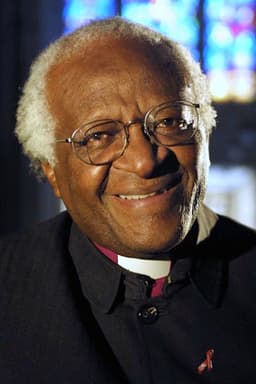
Desmond Tutu
Politician · Modern
57.4Total

Jonas Gahr Store
Politician · Modern
47.2Total
Basic Information
Born
1931
1960
Died
—
—
Era
Modern
Modern
Nationality
South Africa
Norway
Occupation
Politician
Politician
Civilization
Other
Western
Score Comparison
Military (10%)
28.3
15.1
Political (20%)
53.8
68.0
Influence (20%)
75.0
51.0
Legacy (20%)
55.0
37.5
Leadership (15%)
68.0
65.0
Strategy (15%)
37.6
35.9
TOTAL
57.4
47.2
Desmond Tutu — Complete Timeline
1984 AD
Awarded the Nobel Peace PrizeCultural◆ Major
Desmond Tutu received the Nobel Peace Prize for his nonviolent opposition to apartheid in South Africa. The award recognized his leadership in the anti-apartheid movement and his role as a moral voice for reconciliation.
Nobel PrizeAnti-ApartheidPeace
Impact: globalconstructive
1986 AD
Appointed Archbishop of Cape TownPolitical Action◆ Major
Tutu became the first black Anglican Archbishop of Cape Town, the highest position in the Anglican Church of Southern Africa. This elevated his platform to advocate against apartheid and for human rights.
Church LeadershipAnti-Apartheid
Impact: nationalconstructive
1989 AD
Led the Defiance Campaign against Pass LawsPolitical Action◆ Major
Tutu led a march in Cape Town protesting the pass laws, which restricted black South Africans' movement. The protest was met with police violence, but it galvanized international opposition to apartheid.
ProtestPass LawsAnti-Apartheid
Impact: nationalconstructive
1995 AD
Chaired the Truth and Reconciliation CommissionPolitical Action
Tutu chaired the Truth and Reconciliation Commission, established by the post-apartheid government to investigate human rights abuses during apartheid. The commission promoted restorative justice and national healing.
Truth CommissionPost-ApartheidReconciliation
Impact: nationalconstructive
Jonas Gahr Store — Complete Timeline
2009 AD
Appointed Minister of Health and Care ServicesPolitical Action
Jonas Gahr Store was appointed Minister of Health and Care Services in the Stoltenberg government. He oversaw healthcare reforms and the response to the 2009 H1N1 pandemic.
Norwegian PoliticsHealthMinister
Impact: nationalconstructive
2012 AD
Appointed Minister of Foreign AffairsPolitical Action◆ Major
Store became Minister of Foreign Affairs, representing Norway in international affairs. He focused on Arctic policy, development aid, and Norway's role in peace negotiations, including the Colombia peace process.
Norwegian PoliticsForeign AffairsDiplomacy
Impact: globalconstructive
2014 AD
Elected Leader of the Labour PartyPolitical Action◆ Major
Store was elected leader of the Norwegian Labour Party, succeeding Jens Stoltenberg. He led the party through opposition, focusing on welfare, climate policy, and economic equality.
Norwegian PoliticsLabour PartyParty Leadership
Impact: nationalconstructive
2021 AD
Became Prime Minister of NorwayPolitical Action
Store became Prime Minister of Norway, leading a minority coalition government of the Labour Party and the Centre Party. His government focused on climate action, social welfare, and managing Norway's oil wealth.
Norwegian PoliticsPrime MinisterCoalition
Impact: nationalconstructive
Faced Criticism Over Handling of COVID-19Political Action
Store's government faced criticism for its handling of the COVID-19 pandemic, including delays in vaccine rollout and confusion over restrictions. Norway had relatively low death rates but faced public frustration over lockdowns.
COVID-19Norwegian PoliticsPublic Health
Impact: national
2022 AD
Navigated Energy Crisis and NATO MembershipPolitical Action◆ Major
Store managed Norway's response to the energy crisis caused by the Russia-Ukraine war, increasing gas exports to Europe. He also supported Finland and Sweden's NATO membership applications, strengthening Nordic defense cooperation.
Energy CrisisNATONorwegian Politics
Impact: regionalconstructive
Expert Analysis
Origins
**Desmond Tutu** (born 1931 in Klerksdorp, South Africa) was the son of a teacher and a domestic worker. He trained as a teacher but entered the Anglican priesthood in 1961, studying in London. His faith and exposure to apartheid's brutality shaped his commitment to nonviolent resistance.
**Jonas Gahr Store** (born 1960 in Oslo, Norway) grew up in a privileged environment; his father was a shipowner. He studied political science at Sciences Po in Paris and worked as a journalist before entering politics. His early career included roles in the Norwegian Labour Party and as a senior advisor to Prime Minister Gro Harlem Brundtland.
Rise to Power
Tutu rose from parish priest to Archbishop of Cape Town (1986), becoming a prominent voice against apartheid. His Nobel Peace Prize (1984) amplified his influence. He led marches against pass laws (1989) and used his pulpit to condemn the regime, earning global recognition.
Store's rise was through party ranks. He served as Minister of Health (2008-2012) and Foreign Affairs (2012-2013) under Jens Stoltenberg. In 2014, he became Labour Party leader. He became Prime Minister in 2021 after winning a narrow election, forming a minority coalition.
Leadership & Governance
Tutu led through moral authority. As chair of the Truth and Reconciliation Commission (1996-1998), he prioritized restorative justice over retribution, granting amnesty for full disclosure. His governance was symbolic and spiritual, not administrative.
Store governs pragmatically. His government focuses on climate policy, welfare, and managing Norway's oil wealth. He navigated the energy crisis (2022) by increasing gas exports to Europe, and supported NATO expansion. His leadership score of 65.0 reflects steady, consensus-based governance, contrasting with Tutu's 68.0 in a different context.
Triumph & Tragedy
Tutu's greatest triumph was the peaceful transition from apartheid to democracy, with his TRC work healing wounds. However, his failure to secure full economic justice for black South Africans left inequality entrenched. His political score of 53.8 reflects limited direct political power.
Store's triumph includes guiding Norway through the pandemic and energy crisis, maintaining high trust. His tragedy is the 2022 local election defeat and struggles with coalition cohesion. His legacy score of 37.5 is modest, as his long-term impact remains uncertain.
Character & Destiny
Tutu was optimistic, charismatic, and uncompromising on justice. His faith drove his destiny; he became a global symbol of peace. His influence score of 75.0 reflects this moral weight.
Store is pragmatic, cautious, and technocratic. His destiny is tied to Norway's stable but unremarkable governance. His strategy score of 35.9 indicates a reactive rather than visionary approach.
Legacy
Tutu's legacy is global: he inspired human rights movements and defined transitional justice. The TRC model has been used in other post-conflict societies. His total score of 57.4 underscores his enduring moral impact.
Store's legacy is national: he maintained Norway's welfare state and Arctic policy. His influence is limited to Scandinavian politics. His total score of 47.2 reflects a competent but not transformative career.
Conclusion
Desmond Tutu had greater impact. His moral leadership scored 75.0 in influence, while Store's 51.0 is constrained by national scope. Tutu's work reshaped a nation and inspired the world; Store's governance, though competent, did not alter global trajectories. The 10.2 point gap in total scores confirms Tutu's superior legacy.
Rankings
🥇
Desmond TutuLeader
Mil: 28.3Pol: 53.8Inf: 75.0
57.4
🥈
Jonas Gahr Store
Mil: 15.1Pol: 68.0Inf: 51.0
47.2
+10.2 behind
How This Comparison Works
Algorithm
Each figure is scored on 6 dimensions (0—100 scale) based on structured historical data: Military (10%), Political (20%), Influence (20%), Legacy (20%), Leadership (15%), Strategy (15%). The weighted total produces the final ranking.
Data Sources
Scores are computed from structured sub-indicators in the database. Scale factors adjust for era (Ancient ×0.85, Modern ×1.0) and civilization size (Eastern ×1.05, Other ×0.80) to account for differences in population and military scale.
Maximum 3 Figures
Comparisons are limited to 2—3 figures to ensure readability and statistical meaningfulness.
Error Margins
±5 points per dimension — Sub-scores are derived from historical records with inherent uncertainty. Two figures within 5 points on a dimension should be considered roughly equivalent in that area.
Total Score Accuracy
±3 points overall — The weighted combination of 6 dimensions produces a total score with approximately ±3 points of uncertainty. Differences of less than 3 points are not statistically significant— the figures are effectively tied.
Known Limitations
- Historical records are incomplete and uneven across civilizations
- Figures from oral-tradition societies may be underrepresented
- Occupation labels can misclassify multi-role figures
- Scores measure capability and impact, not moral character
- Quantitative scoring is a comparison tool, not absolute truth
Capability Radar
Military (10%) — Battles & Warfare
Battles
21
20
Win Rate
22
27
Expansion
28
30
Political (20%) — Governance & Reform
Reform
70
40
Diplomacy
85
55
Economy
20
45
Influence (20%) — Cultural & Global Reach
Cultural
80
20
Global
80
25
Legacy (20%) — Historical Impact
Historical
75
20
Longevity
70
15
Leadership (15%) — Power & Stability
Tenure
30
30
Stability
75
50
Strategy (15%) — Tactics & Innovation
Strategy
32
30
Tactics
36
36
Reform
38
39
Similar Comparisons
Comments & Discussion
No comments yet. Be the first to share your thoughts!