Loading...
Desmond Tutu vs Napoleon Bonaparte
Napoleon Bonaparte leads by 13.5 pts · 2 figures compared
…
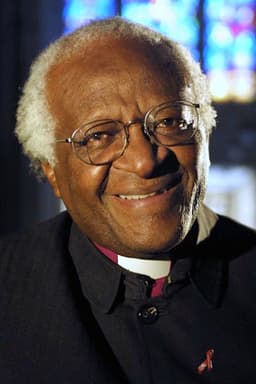
Desmond Tutu
Politician · Modern
57.4Total

Napoleon Bonaparte
General · Modern
70.9Total
Basic Information
Born
1931
1769
Died
—
1821
Era
Modern
Modern
Nationality
South Africa
France
Occupation
Politician
General
Civilization
Other
Western
Score Comparison
Military (10%)
28.3
94.0
Political (20%)
53.8
72.0
Influence (20%)
75.0
40.0
Legacy (20%)
55.0
80.0
Leadership (15%)
68.0
78.0
Strategy (15%)
37.6
90.0
TOTAL
57.4
70.9
Desmond Tutu — Complete Timeline
1984 AD
Awarded the Nobel Peace PrizeCultural◆ Major
Desmond Tutu received the Nobel Peace Prize for his nonviolent opposition to apartheid in South Africa. The award recognized his leadership in the anti-apartheid movement and his role as a moral voice for reconciliation.
Nobel PrizeAnti-ApartheidPeace
Impact: globalconstructive
1986 AD
Appointed Archbishop of Cape TownPolitical Action◆ Major
Tutu became the first black Anglican Archbishop of Cape Town, the highest position in the Anglican Church of Southern Africa. This elevated his platform to advocate against apartheid and for human rights.
Church LeadershipAnti-Apartheid
Impact: nationalconstructive
1989 AD
Led the Defiance Campaign against Pass LawsPolitical Action◆ Major
Tutu led a march in Cape Town protesting the pass laws, which restricted black South Africans' movement. The protest was met with police violence, but it galvanized international opposition to apartheid.
ProtestPass LawsAnti-Apartheid
Impact: nationalconstructive
1995 AD
Chaired the Truth and Reconciliation CommissionPolitical Action
Tutu chaired the Truth and Reconciliation Commission, established by the post-apartheid government to investigate human rights abuses during apartheid. The commission promoted restorative justice and national healing.
Truth CommissionPost-ApartheidReconciliation
Impact: nationalconstructive
Napoleon Bonaparte — Complete Timeline
1799 AD
Coup of 18 BrumaireOther◆ Major
Napoleon Bonaparte, with support from his brother Lucien and key political figures, overthrew the Directory in a bloodless coup. He established the Consulate with himself as First Consul, effectively becoming the ruler of France. This event ended the French Revolution's most unstable period.
French RevolutionCoupRise to Power
Impact: regional
1804 AD
Promulgation of the Napoleonic CodeOther◆ Major
Napoleon enacted the Civil Code of the French, known as the Napoleonic Code, a comprehensive set of laws that replaced the fragmented feudal legal systems. The code established legal equality, protected property rights, and secularized law. It became the basis for legal systems in many European and world countries.
Legal ReformNapoleonic CodeCivil Law
Impact: globalconstructive
1805 AD
Battle of AusterlitzWar◆ Major
Napoleon's Grande Arm
Napoleonic WarsBattleDecisive Victory
Impact: global
1812 AD
Invasion of RussiaWar◆ Major
Napoleon led the Grande Arm
Napoleonic WarsInvasionDisaster
Impact: globaldestructive
1815 AD
Battle of WaterlooWar◆ Major
Napoleon's French army was defeated by the combined forces of the Duke of Wellington's Anglo-Allied army and Gebhard Leberecht von Bl
Napoleonic WarsBattleFinal Defeat
Impact: globaldestructive
Expert Analysis
desmond-tutu-vs-napoleon-bonaparte
# The General and the Prophet
On a June morning in 1815, Napoleon Bonaparte watched his imperial guard advance through the mud of Waterloo, their blue uniforms a final, defiant splash of color against the gray sky. Less than two centuries later and half a world away, Desmond Tutu stood before a microphone in Cape Town, his voice trembling not with the thunder of cannons but with the quiet authority of moral conviction. What connects a man who commanded armies across a continent to a man who commanded only the respect of his people? The answer lies not in their similarities—for they had almost none—but in the stark choices their eras forced upon them, and in how each man’s character became the engine of his destiny.
Origins
Napoleon was born in 1769 on the island of Corsica, a place that had only recently become French. His family was minor nobility, poor enough to feel the sting of ambition but privileged enough to nurture it. He learned French with an accent that would never quite fade, and he carried the resentment of a provincial outsider into the heart of Paris. The French Revolution, which erupted when he was twenty, shattered the old world and created a vacuum that a young artillery officer with genius and hunger could fill. His era was one of chaos and opportunity, where a man could rise by talent alone—and where the price of failure was often death.
Desmond Tutu was born in 1931 in Klerksdorp, a small South African town where the color of his skin dictated where he could walk, whom he could marry, and whether his mother could afford to keep him in school. His father was a teacher, his mother a domestic worker. He contracted polio as a child and nearly died. He wanted to be a doctor, but his family could not afford the tuition. So he became a teacher, then a priest, then a bishop. His era was one of systematic oppression, where the state used every tool of law and violence to enforce racial hierarchy—and where the only weapon available to the powerless was their own dignity.
Rise to Power
Napoleon’s rise was a masterpiece of speed and audacity. In 1793, at age twenty-four, he drove the British out of Toulon and was promoted to brigadier general. By 1796, he commanded the Army of Italy, where he won a string of victories that stunned Europe. He was not merely a general; he was a political entrepreneur. He staged a coup in 1799, crowned himself emperor in 1804, and by 1807, he controlled an empire that stretched from Spain to Poland. His power came from the barrel of a cannon and the stroke of a pen—but it was always, ultimately, power over others.
Tutu’s rise was quieter but no less remarkable. He was ordained in 1961, the same year South Africa became a republic and deepened its apartheid laws. He rose through the church, not the army. In 1984, he was awarded the Nobel Peace Prize for his nonviolent opposition to apartheid—a recognition that turned him into a global symbol. In 1986, he became the first black Archbishop of Cape Town, the highest position in the Anglican Church of Southern Africa. His power came not from coercion but from moral authority, from the simple fact that he told the truth when others lied, and that he stood where others fled.
Leadership & Governance
Napoleon governed with the precision of a military campaign. He centralized the state, standardized the legal system through the Napoleonic Code, and reformed education and taxation. He was a genius of organization, a man who could dictate four letters simultaneously and remember the face of every soldier in his guard. But his governance was also deeply authoritarian. He suppressed dissent, censored the press, and treated conquered territories as assets to be exploited. His political score of 75.0 reflects a man who understood power but not liberty.
Tutu governed with the patience of a pastor. As chair of the Truth and Reconciliation Commission from 1995, he presided over hearings that exposed the horrors of apartheid—not to punish, but to heal. He insisted on forgiveness, on the idea that the truth, however painful, could set a nation free. His leadership was not about commanding but about reconciling. He had no army, no treasury, no police. He had only his voice, his faith, and his unshakable belief that every human being was made in the image of God.
Triumph & Tragedy
Napoleon’s greatest triumph was his empire—the sheer scale of his ambition realized. His greatest tragedy was its collapse. The invasion of Russia in 1812 destroyed his Grand Army, and after his defeat at Leipzig in 1813, he was exiled to Elba. He returned in 1815 for the Hundred Days, only to be crushed at Waterloo. He died in 1821 on Saint Helena, a British prisoner, abandoned by his allies and his family. His total score of 82.4 reflects a man who achieved greatness but could not sustain it.
Tutu’s greatest triumph was the fall of apartheid itself—a victory won not by violence but by endurance. He lived to see Nelson Mandela walk free in 1990, to see the first democratic elections in 1994, to see his country become a beacon of reconciliation. His greatest tragedy was that the reconciliation he championed was never complete. Poverty, inequality, and corruption remained. He spent his later years criticizing the very government he had helped to create, insisting that freedom without justice was a hollow thing.
Character & Destiny
Napoleon was driven by ambition, by a hunger for glory that could never be satisfied. He once said, “Glory is fleeting, but obscurity is forever.” He could not stop—not because he was evil, but because his sense of self was built on conquest. When conquest failed, so did he.
Tutu was driven by faith, by a conviction that love was stronger than hate. He once said, “If you are neutral in situations of injustice, you have chosen the side of the oppressor.” He could not stop either—not because he was ambitious, but because his conscience would not let him. When apartheid fell, he did not seek power. He sought peace.
Legacy
Napoleon left behind a transformed Europe. The Napoleonic Code influenced legal systems from France to Japan. He redrew borders, toppled monarchies, and awakened nationalism. But he also left behind war, death, and the bitter memory of a man who could have been a reformer but chose to be a conqueror.
Tutu left behind a transformed South Africa. The Truth and Reconciliation Commission became a model for post-conflict justice around the world. He showed that moral authority could defeat armed power. But he also left behind a question: Can a nation forgive without forgetting? Can it heal without justice?
Conclusion
Napoleon and Tutu lived in different worlds, faced different enemies, and wielded different weapons. One conquered with armies; the other with words. One sought glory; the other sought justice. Yet both understood that history does not forgive those who do nothing. The general and the prophet—each, in his own way, demanded that the world change. And it did—though never quite as they imagined.
Rankings
🥇
Napoleon BonaparteLeader
Mil: 94.0Pol: 72.0Inf: 40.0
70.9
🥈
Desmond Tutu
Mil: 28.3Pol: 53.8Inf: 75.0
57.4
+13.5 behind
How This Comparison Works
Algorithm
Each figure is scored on 6 dimensions (0—100 scale) based on structured historical data: Military (10%), Political (20%), Influence (20%), Legacy (20%), Leadership (15%), Strategy (15%). The weighted total produces the final ranking.
Data Sources
Scores are computed from structured sub-indicators in the database. Scale factors adjust for era (Ancient ×0.85, Modern ×1.0) and civilization size (Eastern ×1.05, Other ×0.80) to account for differences in population and military scale.
Maximum 3 Figures
Comparisons are limited to 2—3 figures to ensure readability and statistical meaningfulness.
Error Margins
±5 points per dimension — Sub-scores are derived from historical records with inherent uncertainty. Two figures within 5 points on a dimension should be considered roughly equivalent in that area.
Total Score Accuracy
±3 points overall — The weighted combination of 6 dimensions produces a total score with approximately ±3 points of uncertainty. Differences of less than 3 points are not statistically significant— the figures are effectively tied.
Known Limitations
- Historical records are incomplete and uneven across civilizations
- Figures from oral-tradition societies may be underrepresented
- Occupation labels can misclassify multi-role figures
- Scores measure capability and impact, not moral character
- Quantitative scoring is a comparison tool, not absolute truth
Capability Radar
Military (10%) — Battles & Warfare
Battles
21
95
Win Rate
22
90
Expansion
28
95
Political (20%) — Governance & Reform
Reform
70
95
Diplomacy
85
80
Economy
20
85
Influence (20%) — Cultural & Global Reach
Cultural
80
85
Global
80
90
Legacy (20%) — Historical Impact
Historical
75
95
Longevity
70
90
Leadership (15%) — Power & Stability
Tenure
30
85
Stability
75
70
Strategy (15%) — Tactics & Innovation
Strategy
32
95
Tactics
36
98
Reform
38
92
Similar Comparisons
Comments & Discussion
BattlefieldVicar6/17/2026
Tutu’s moral authority did more to dismantle apartheid than Napoleon’s cannons ever did to hold Europe. Bonaparte’s genius was in maneuvering armies across battlefields; Tutu’s was in maneuvering a nation toward reconciliation without a single shot. The difference? Napoleon’s legacy is measured in graves—over a million dead for his ambition. Tutu’s is measured in testimonies—thousands of survivors finding voice through the Truth and Reconciliation Commission. Give me the prophet who heals over t
炮灰统计员6/17/2026
所谓"和平斗士"图图,其真相委会数据根本经不起推敲——截至1998年,仅7022名受害者和1121名施暴者申请了大赦,而据南非安全研究所统计,种族隔离时期系统性的死亡人数至少在一万以上。这是选择性遗忘,不是和解。相比之下,拿破仑至少留下了民法典,算明白账。图图那套道德算术,分数永远为负。
EagleEyeErasmus6/17/2026
You’re all missing the deeper irony here: Napoleon’s treason trial in 1815 for the Hundred Days was a farce—he was judged by his enemies under exile. Tutu’s Truth Commission was the opposite, built on voluntary confession and amnesty. Yet both men used the theater of judgment to reshape history. Napoleon’s drama ended in a British prison island; Tutu’s ended in a pulpit that echoed globally. The difference? One commanded through fear, the other through grace. History remembers the graces, not th
帝国算术家6/17/2026
拿坡仑和德图?一个是军事数学大师,一个是道德几何学霸。拿破仑在奥斯特利茨战役里以七万三千人击溃八万六千俄奥联军,伤亡比是1:15——这是战术算力的极限。而图图的真相与和解委员会,本质是政治拓扑学:用"宽恕"这个变量扭曲了权力空间的曲率,让曼德拉能平滑过渡。两人都在玩系统,只是坐标系不同——一个用炮火,一个用泪水。
CoffeeAndCompassion6/17/2026
Let’s be real: comparing a tiny emperor who conquered Europe through bloodshed to a diminutive priest who conquered hearts through laughter is like comparing a hurricane to a sunrise. Napoleon’s greatest legacy is the Napoleonic Code—good for lawyers, not souls. Tutu’s greatest legacy is the rainbow nation—messy, imperfect, but alive. Waterloo was one day; Tutu’s work took decades. Give me the man who danced at funerals over the one who cried at defeats.