Loading...
Dhruva Dharavarsha vs Dmitry Donskoy
Dmitry Donskoy leads by 0.1 pts · 2 figures compared
…
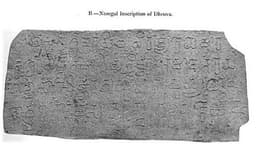
Dhruva Dharavarsha
Emperor · Medieval
55.4Total
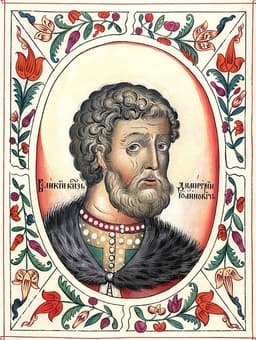
Dmitry Donskoy
Emperor · Medieval
55.5Total
Basic Information
Born
780
1350
Died
793
1389
Era
Medieval
Medieval
Nationality
India
Muscovy
Occupation
Emperor
Emperor
Civilization
Indian
Western
Score Comparison
Military (10%)
67.5
70.0
Political (20%)
61.3
68.0
Influence (20%)
53.3
55.0
Legacy (20%)
45.0
52.0
Leadership (15%)
64.0
40.0
Strategy (15%)
52.5
55.0
TOTAL
55.4
55.5
Dhruva Dharavarsha — Complete Timeline
785 AD
Defeat of the Pratihara EmpireWar◆ Major
Dhruva Dharavarsha led a successful military campaign against the Pratihara king Vatsaraja in the Ganges-Yamuna doab. This victory established Rashtrakuta dominance over northern India and weakened the Pratihara Empire.
Northern IndiaPratiharaMilitary Campaign
Impact: regional
790 AD
Defeat of the Pala EmpireWar◆ Major
Dhruva Dharavarsha defeated the Pala king Dharmapala in battle, further extending Rashtrakuta influence into eastern India. This victory made the Rashtrakutas the dominant power in the Indian subcontinent during his reign.
Eastern IndiaPalaDominance
Impact: regional
Dmitry Donskoy — Complete Timeline
1359 AD
Became Grand Prince of MoscowPolitical Action◆ Major
Dmitry inherited the throne at age nine after his father Ivan II died. His regency was managed by Metropolitan Alexius, who secured the Mongol yarlyk for Moscow against claims from Suzdal and other rivals.
MoscowSuccessionRegency
Impact: regional
1378 AD
Battle of the Vozha RiverWar
Dmitry defeated a Mongol army led by Murza Begich on the Vozha River in Ryazan. This was the first Russian victory over a major Mongol force and a prelude to the Battle of Kulikovo.
Golden HordeRyazanPrelude
Impact: regional
1380 AD
Battle of KulikovoWar
Dmitry Donskoy led a coalition of Russian principalities to defeat the Mongol army of Mamai at Kulikovo Field near the Don River. This was the first major Russian victory over the Golden Horde, though Mongol rule continued for another century.
Golden HordeMamaiRussian Victory
Impact: regional
1382 AD
Burned Moscow to Prevent Mongol CaptureWar◆ Major
After Khan Tokhtamysh besieged Moscow, Dmitry fled to Kostroma. The Mongols sacked the city, killing thousands. Dmitry returned to rebuild but was forced to resume tribute payments to the Horde.
MoscowTokhtamyshSiege
Impact: regionaltragic
Expert Analysis
Origins
Dhruva Dharavarsha (born circa 740 CE) was a member of the Rashtrakuta dynasty, which ruled from the Deccan region of India. His father was King Krishna I, under whom the Rashtrakutas had already established a powerful kingdom. Dhruva received military training and administrative experience from a young age, preparing him for leadership. He ascended the throne around 780 CE after a brief struggle with his elder brother Govinda II, who had been deposed for incompetence.
Dmitry Donskoy (born 12 October 1350) was the son of Ivan II, Grand Prince of Moscow, and a descendant of Alexander Nevsky. His early years were marked by the dominance of the Mongol Golden Horde over the Russian principalities. After his father's death in 1359, nine-year-old Dmitry inherited the throne, with regency managed by Metropolitan Alexius, who secured the Mongol yarlyk (patent) for Moscow. Dmitry grew up amidst political intrigue and constant threats from neighboring princes and the Mongols.
Rise to Power
Dhruva Dharavarsha's rise came through a military campaign against his own brother. After Govinda II's misrule, Dhruva seized the throne in a coup around 780 CE. He then turned his attention to expanding Rashtrakuta influence northward. In the Ganges-Yamuna doab, he encountered the Pratihara king Vatsaraja, whom he defeated around 785 CE. This victory brought the strategic region under Rashtrakuta control. Dhruva then marched east and defeated the Pala king Dharmapala in battle around 790 CE, further extending his reach into Bengal. These two victories made the Rashtrakutas a dominant power in northern India, though Dhruva did not annex all territories permanently.
Dmitry Donskoy's rise was more gradual. He became Grand Prince of Moscow at age nine, but his authority was initially limited. The Mongol Horde held suzerainty, and rival princes, especially the Prince of Tver, contested Moscow's supremacy. In 1368, Dmitry defeated the Lithuanian-led coalition that supported Tver, securing his position. His first major victory over the Mongols came at the Battle of the Vozha River in 1378, where he defeated a Mongol army led by Murza Begich. This was the first Russian victory over a major Mongol force. Two years later, in 1380, Dmitry led a coalition of Russian principalities to the Battle of Kulikovo Field, where they defeated the Mongol army of Mamai. This victory made Dmitry a national hero and solidified Moscow's leadership among Russian states.
Leadership & Governance
Dhruva Dharavarsha ruled as an expansionist monarch, focusing on military campaigns to extend Rashtrakuta influence. He did not implement major administrative reforms; instead, he relied on existing feudal structures, granting lands to vassals in exchange for military support. His governance was typical of early medieval Indian rulers, with a strong emphasis on tribute and plunder. Dhruva's military score of 67.5 reflects his success in field battles, but his political score of 61.3 indicates limited institutional innovation.
Dmitry Donskoy's leadership style was more strategic and focused on state-building. He centralized power in Moscow, reducing the autonomy of boyars and other princes. He also strengthened the economy by promoting trade and collecting taxes efficiently. Dmitry's political score of 68.0 is higher than Dhruva's, reflecting his success in consolidating authority. However, his leadership score of 40.0 is lower, partly due to his controversial decision to flee Moscow during Tokhtamysh's siege in 1382. Dmitry ordered Moscow burned to prevent Mongol capture, but the Mongols sacked the city anyway, killing thousands. This event damaged his reputation as a defender.
Triumph & Tragedy
Dhruva Dharavarsha's greatest triumph was his double victory over the Pratiharas and Palas, which made the Rashtrakutas the supreme power in northern India for a brief period. His military campaigns demonstrated strategic acumen and effective use of cavalry. However, his greatest failure was the lack of lasting territorial consolidation. After his death around 793 CE, the Rashtrakuta empire declined, and the conquered territories quickly reasserted independence. His legacy score of 45.0 reflects this transient impact.
Dmitry Donskoy's greatest triumph was the Battle of Kulikovo in 1380, where he defeated a Mongol army and broke the myth of Mongol invincibility. This victory inspired Russian unity and laid the groundwork for future independence. His tragedy was the Mongol retaliation under Khan Tokhtamysh in 1382, which forced Dmitry to flee and resulted in Moscow's sack. Dmitry was forced to resume paying tribute to the Horde, though he retained the title of Grand Prince. His military score of 70.0 is higher than Dhruva's, but his leadership score of 40.0 reflects his failure to protect his capital.
Character & Destiny
Dhruva Dharavarsha was characterized by ambition and military prowess. He seized power from his brother and launched aggressive campaigns, displaying decisiveness and courage. However, his focus on conquest over administration meant his achievements were not sustained. Historians view him as a capable general but not a transformative ruler.
Dmitry Donskoy was a determined and strategic leader, but his character was marked by caution and occasional recklessness. He showed bravery at Kulikovo but also prudence in fleeing from Tokhtamysh. His decision to burn Moscow was controversial but aimed at denying the Mongols resources. Dmitry's character shaped his destiny: his victory at Kulikovo earned him fame, but his inability to secure lasting independence meant he ended his reign still a vassal. He scored 55.0 in strategy, reflecting mixed outcomes.
Legacy
Dhruva Dharavarsha's legacy is primarily as a military conqueror who temporarily expanded Rashtrakuta power. His campaigns demonstrated the reach of the Rashtrakutas but did not lead to lasting institutions. He is remembered in Indian history as a minor figure compared to later emperors. His influence score of 53.3 and legacy score of 45.0 indicate limited long-term impact.
Dmitry Donskoy's legacy is far more significant. He is revered as a national hero in Russia, credited with beginning the liberation from Mongol rule. The Battle of Kulikovo is celebrated as a turning point, and Dmitry's consolidation of Moscow's power set the stage for the rise of the Tsardom of Russia. He is canonized as a saint in the Russian Orthodox Church. His influence score of 55.0 and legacy score of 52.0 are higher than Dhruva's, reflecting his enduring impact on Russian identity.
Conclusion
While both rulers achieved notable military victories, Dmitry Donskoy had a greater historical impact. His victory at Kulikovo was a pivotal moment in Russian history, inspiring national unity and eventual independence. Dhruva Dharavarsha's victories, though impressive, did not lead to lasting change. Dmitry's higher scores in military (70.0 vs 67.5), political (68.0 vs 61.3), influence (55.0 vs 53.3), and legacy (52.0 vs 45.0) support this assessment. Dmitry Donskoy is the more significant figure in world history.
Rankings
🥇
Dmitry DonskoyLeader
Mil: 70.0Pol: 68.0Inf: 55.0
55.5
🥈
Dhruva Dharavarsha
Mil: 67.5Pol: 61.3Inf: 53.3
55.4
+0.1 behind
How This Comparison Works
Algorithm
Each figure is scored on 6 dimensions (0—100 scale) based on structured historical data: Military (10%), Political (20%), Influence (20%), Legacy (20%), Leadership (15%), Strategy (15%). The weighted total produces the final ranking.
Data Sources
Scores are computed from structured sub-indicators in the database. Scale factors adjust for era (Ancient ×0.85, Modern ×1.0) and civilization size (Eastern ×1.05, Other ×0.80) to account for differences in population and military scale.
Maximum 3 Figures
Comparisons are limited to 2—3 figures to ensure readability and statistical meaningfulness.
Error Margins
±5 points per dimension — Sub-scores are derived from historical records with inherent uncertainty. Two figures within 5 points on a dimension should be considered roughly equivalent in that area.
Total Score Accuracy
±3 points overall — The weighted combination of 6 dimensions produces a total score with approximately ±3 points of uncertainty. Differences of less than 3 points are not statistically significant— the figures are effectively tied.
Known Limitations
- Historical records are incomplete and uneven across civilizations
- Figures from oral-tradition societies may be underrepresented
- Occupation labels can misclassify multi-role figures
- Scores measure capability and impact, not moral character
- Quantitative scoring is a comparison tool, not absolute truth
Capability Radar
Military (10%) — Battles & Warfare
Battles
60
65
Win Rate
65
60
Expansion
65
60
Political (20%) — Governance & Reform
Reform
40
55
Diplomacy
55
65
Economy
50
50
Influence (20%) — Cultural & Global Reach
Cultural
35
60
Global
25
55
Legacy (20%) — Historical Impact
Historical
40
70
Longevity
30
65
Leadership (15%) — Power & Stability
Tenure
45
60
Stability
50
55
Strategy (15%) — Tactics & Innovation
Strategy
60
65
Tactics
55
70
Reform
40
55
Similar Comparisons
Comments & Discussion
No comments yet. Be the first to share your thoughts!