Loading...
Dmitry Donskoy vs Julius Caesar
Julius Caesar leads by 27.3 pts · 2 figures compared
…
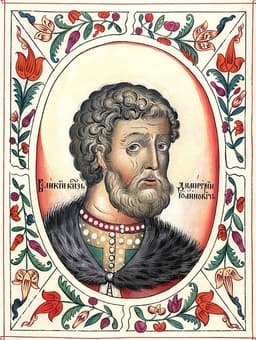
Dmitry Donskoy
Emperor · Medieval
55.5Total

Julius Caesar
General · Ancient
82.8Total
Basic Information
Born
1350
-100
Died
1389
-44
Era
Medieval
Ancient
Nationality
Muscovy
Roman Republic
Occupation
Emperor
General
Civilization
Western
Western
Score Comparison
Military (10%)
70.0
88.0
Political (20%)
68.0
78.0
Influence (20%)
55.0
85.0
Legacy (20%)
52.0
82.0
Leadership (15%)
40.0
80.0
Strategy (15%)
55.0
85.0
TOTAL
55.5
82.8
Dmitry Donskoy — Complete Timeline
1359 AD
Became Grand Prince of MoscowPolitical Action◆ Major
Dmitry inherited the throne at age nine after his father Ivan II died. His regency was managed by Metropolitan Alexius, who secured the Mongol yarlyk for Moscow against claims from Suzdal and other rivals.
MoscowSuccessionRegency
Impact: regional
1378 AD
Battle of the Vozha RiverWar
Dmitry defeated a Mongol army led by Murza Begich on the Vozha River in Ryazan. This was the first Russian victory over a major Mongol force and a prelude to the Battle of Kulikovo.
Golden HordeRyazanPrelude
Impact: regional
1380 AD
Battle of KulikovoWar
Dmitry Donskoy led a coalition of Russian principalities to defeat the Mongol army of Mamai at Kulikovo Field near the Don River. This was the first major Russian victory over the Golden Horde, though Mongol rule continued for another century.
Golden HordeMamaiRussian Victory
Impact: regional
1382 AD
Burned Moscow to Prevent Mongol CaptureWar◆ Major
After Khan Tokhtamysh besieged Moscow, Dmitry fled to Kostroma. The Mongols sacked the city, killing thousands. Dmitry returned to rebuild but was forced to resume tribute payments to the Horde.
MoscowTokhtamyshSiege
Impact: regionaltragic
Julius Caesar — Complete Timeline
58 BC
Gallic WarsWar◆ Major
Caesar, as proconsul of Gaul, launched a series of campaigns that conquered all of Gaul (modern France, Belgium, and parts of Switzerland). He fought numerous battles, including against the Helvetii, the Belgae, and the Gallic chieftain Vercingetorix. The wars brought immense wealth and a loyal army to Caesar.
Gallic WarsConquestRoman Expansion
Impact: regional
49 BC
Crossing the RubiconPolitical Action◆ Major
Caesar led Legio XIII across the Rubicon River into Italy, defying the Roman Senate's order to disband his army. This act triggered a civil war against Pompey and the Optimates, ultimately leading to Caesar's dictatorship and the end of the Roman Republic.
Roman Civil WarEnd of RepublicPower Struggle
Impact: global
48 BC
Battle of PharsalusWar◆ Major
Caesar's outnumbered army defeated the larger forces of Pompey the Great at Pharsalus in Greece. Caesar's tactical use of a reserve line to counter Pompey's cavalry charge proved decisive. Pompey fled to Egypt, where he was assassinated, leaving Caesar as the undisputed master of the Roman world.
Roman Civil WarBattleDecisive Victory
Impact: regional
44 BC
Appointment as Dictator for LifePolitical Action◆ Major
The Roman Senate appointed Caesar dictator perpetuo (dictator for life), granting him unprecedented personal power. This move concentrated military, legislative, and judicial authority in one person, effectively ending the Roman Republic's traditional system of checks and balances and alarming many senators.
DictatorshipEnd of RepublicPower Consolidation
Impact: regionaldestructive
Assassination on the Ides of MarchPolitical Action◆ Major
A group of Roman senators, led by Marcus Junius Brutus and Gaius Cassius Longinus, stabbed Caesar to death at a meeting of the Senate in the Theatre of Pompey. The assassination was intended to restore the Republic, but instead triggered another civil war that led to the rise of the Roman Empire.
AssassinationRoman PoliticsEnd of Republic
Impact: globaldestructive
Expert Analysis
dmitry-donskoy-vs-julius-caesar
### The Rubicon and the Kulikovo Field: Two Paths to Power
On a January day in 49 BCE, a Roman general stood at the banks of a small river in northern Italy. Julius Caesar, pausing before crossing the Rubicon, is said to have uttered, “The die is cast.” He was defying the Senate, launching a civil war that would end the Republic and make him master of Rome. Almost fifteen centuries later, in the autumn of 1380, another commander, Dmitry Donskoy, led a coalition of Russian princes onto a field near the Don River. His victory at Kulikovo would not topple an empire, but it would crack the foundations of Mongol dominance over Russia. Both men were warriors who reshaped their worlds—yet their outcomes could not have been more different. Why did Caesar’s ambition destroy a republic while Donskoy’s defiance forge a nation? The answer lies not in their swords, but in the worlds they inherited.
### Origins: The Republic and the Khanate
Caesar was born into the chaos of the late Roman Republic, a world of senatorial intrigue, civil wars, and crumbling traditions. His family, the Julii, was patrician but not wealthy, and his youth was marked by exile and debt. He learned early that in Rome, power was won through military glory, political alliances, and sheer audacity. The Republic was a machine of competition, and Caesar mastered its gears. Dmitry Donskoy, by contrast, was born in 1350 into a world of stark subjugation. Muscovy was a tributary state of the Mongol Golden Horde, a vast steppe empire that had crushed Russian principalities a century earlier. Dmitry inherited the throne of Moscow at age nine, after his father Ivan II died in 1359. His regency was managed by Metropolitan Alexius, a churchman who taught him that survival meant patience, faith, and the careful accumulation of power within the shadow of the Khan. Where Caesar saw a republic to be conquered, Donskoy saw a yoke to be broken.
### Rise to Power: The General and the Prince
Caesar’s path was a relentless climb through the Republic’s ladder. He served as quaestor in Spain, aedile in Rome, and pontifex maximus, all while building a network of allies through lavish debts and calculated generosity. His true turning point came in 58 BCE, when he secured the governorship of Gaul. Over the next eight years, he conquered the entire region—modern France, Belgium, and parts of Germany—in a series of brutal campaigns. His *Commentaries on the Gallic War* were not just history; they were propaganda, painting him as Rome’s greatest general. When the Senate ordered him to disband his army, he crossed the Rubicon in 49 BCE, igniting a civil war that ended with his appointment as dictator for life. Donskoy’s rise was quieter but no less decisive. As Grand Prince, he spent two decades consolidating Moscow’s power, allying with the Orthodox Church, and slowly testing Mongol authority. His first major victory came in 1378 at the Battle of the Vozha River, where he defeated a Mongol army led by Murza Begich. It was a small skirmish, but it proved that the Horde could bleed. Two years later, he gambled everything on a larger confrontation.
### Leadership & Governance: The Reformer and the Unifier
Caesar governed as a revolutionary. As dictator, he reformed the calendar (creating the Julian calendar), granted citizenship to provincials, and initiated massive building projects in Rome. He centralized power, reduced the Senate’s authority, and filled it with his own supporters. His military genius was unmatched—he won battles through speed, discipline, and personal bravery, often leading from the front. Yet his governance was a paradox: he brought order to a chaotic empire, but his methods destroyed the Republic’s delicate balance. Donskoy ruled differently. He was not a reformer but a unifier. After his victory at Kulikovo Field in 1380, he did not declare himself emperor or abolish the Mongol tribute. Instead, he strengthened Moscow’s role as the leader of the Russian principalities, using the victory as a moral and political shield. His strategy was defensive, not expansionist. When Khan Tokhtamysh besieged Moscow in 1382, Dmitry fled to Kostroma, and the Mongols sacked the city, killing thousands. He returned to rebuild, not to conquer. His leadership was about endurance, not glory.
### Triumph & Tragedy: The Ides and the Sack
Caesar’s greatest triumph was his victory over Pompey at Pharsalus in 48 BCE, which made him undisputed master of Rome. His tragedy was the Ides of March in 44 BCE, when senators, led by Brutus and Cassius, stabbed him to death in the Theatre of Pompey. He had centralized power so completely that his own allies feared him. His assassination plunged Rome into another civil war, ending only with the rise of his adopted heir, Octavian, and the birth of the Empire. Donskoy’s triumph was Kulikovo Field, where his coalition of Russian princes defeated the Mongol army of Mamai. It was a stunning victory—the first major Russian success against the Horde—and it earned him the name “Donskoy” (of the Don). But his tragedy came two years later, when Khan Tokhtamysh besieged Moscow. Dmitry fled, and the Mongols burned the city, slaughtering thousands. His victory had not ended the yoke; it only made Moscow a target. He died in 1389, still a vassal of the Horde, but having planted a seed that would grow into Russian independence.
### Character & Destiny: The Gambler and the Builder
Caesar was a gambler in the highest stakes. He crossed the Rubicon knowing it meant civil war; he pardoned his enemies believing in his own magnanimity; he accepted a crown because he thought Rome would accept him. His arrogance and brilliance were inseparable. He once said, “I came, I saw, I conquered,” and he meant it. His destiny was to be the man who broke the Republic, whether he intended it or not. Donskoy was a builder, not a breaker. He was pious, cautious, and deeply aware of his limits. He did not seek to destroy the Horde—only to weaken its grip. His flight from Moscow in 1382 was not cowardice but calculation; he knew that a dead prince could not rebuild. His character was shaped by the Orthodox faith and the memory of Mongol terror, and his destiny was to be a symbol, not a conqueror. He gave Russia hope, not victory.
### Legacy: The Empire and the Icon
Caesar’s legacy is the Roman Empire. His name became a title—Caesar, Kaiser, Tsar—and his reforms shaped Western governance for millennia. But he also left a warning: unchecked ambition can destroy the very system that creates it. He is remembered as a genius and a tyrant, a man who changed history but paid the price. Donskoy’s legacy is more spiritual. He is a saint in the Russian Orthodox Church, canonized for his role in defending the faith. His victory at Kulikovo did not end Mongol rule—that would take another century—but it made Moscow the center of Russian resistance. He is remembered as a unifier, a prince who put his people above his own glory. His legacy is not an empire, but a nation.
### Conclusion: Two Rivers, One Question
Caesar crossed the Rubicon and drowned the Republic. Donskoy crossed the Don and watered a seed. Both were men of their time, shaped by forces they could not fully control. Caesar lived in a world of ambition, where the only limit was death. Donskoy lived in a world of survival, where the only victory was endurance. One built an empire that crumbled; the other built a memory that endured. In the end, the question is not who was greater, but what their stories tell us about power itself. Caesar shows us its intoxicating danger; Donskoy shows us its patient, humble strength. Both are worth remembering—but for very different reasons.
Rankings
🥇
Julius CaesarLeader
Mil: 88.0Pol: 78.0Inf: 85.0
82.8
🥈
Dmitry Donskoy
Mil: 70.0Pol: 68.0Inf: 55.0
55.5
+27.3 behind
How This Comparison Works
Algorithm
Each figure is scored on 6 dimensions (0—100 scale) based on structured historical data: Military (10%), Political (20%), Influence (20%), Legacy (20%), Leadership (15%), Strategy (15%). The weighted total produces the final ranking.
Data Sources
Scores are computed from structured sub-indicators in the database. Scale factors adjust for era (Ancient ×0.85, Modern ×1.0) and civilization size (Eastern ×1.05, Other ×0.80) to account for differences in population and military scale.
Maximum 3 Figures
Comparisons are limited to 2—3 figures to ensure readability and statistical meaningfulness.
Error Margins
±5 points per dimension — Sub-scores are derived from historical records with inherent uncertainty. Two figures within 5 points on a dimension should be considered roughly equivalent in that area.
Total Score Accuracy
±3 points overall — The weighted combination of 6 dimensions produces a total score with approximately ±3 points of uncertainty. Differences of less than 3 points are not statistically significant— the figures are effectively tied.
Known Limitations
- Historical records are incomplete and uneven across civilizations
- Figures from oral-tradition societies may be underrepresented
- Occupation labels can misclassify multi-role figures
- Scores measure capability and impact, not moral character
- Quantitative scoring is a comparison tool, not absolute truth
Capability Radar
Military (10%) — Battles & Warfare
Battles
65
95
Win Rate
60
92
Expansion
60
97
Political (20%) — Governance & Reform
Reform
55
90
Diplomacy
65
85
Economy
50
82
Influence (20%) — Cultural & Global Reach
Cultural
60
88
Global
55
94
Legacy (20%) — Historical Impact
Historical
70
95
Longevity
65
96
Leadership (15%) — Power & Stability
Tenure
60
75
Stability
55
60
Strategy (15%) — Tactics & Innovation
Strategy
65
94
Tactics
70
96
Reform
55
88
Similar Comparisons
Comments & Discussion
HISTORICAL-NOSE-DIVER6/17/2026
Apples to oranges with a black eye. Caesar crossing the Rubicon was a constitutional coup, pure and simple; he had a loyal, experienced army behind him and a Senate that had already blinked. Dmitry Donskoy’s stand at Kulikovo was a defensive battle against a Mongol force that had been fragmenting for decades due to internal succession crises. Caesar’s victory created a dictator; Donskoy’s victory created a legend. Different contexts, different plays. Don’t confuse a political chess move with a s
东正教的铁锤6/17/2026
凯撒是制度的背叛者,德米特里是民族的救星。凯撒打破了共和国的脊梁,让自己成为了罗马的上帝;德米特里在库利科沃战场上用八万人的鲜血敲碎了蒙古铁蹄的神话。凯撒的胜利催生了一个帝国,却扼杀了民主;德米特里的胜利催生了俄罗斯,却保留了东正教的信仰。我选德米特里,他不仅是个将军,还是个民族之父。凯撒?不过是个自我膨胀的叛国贼罢了。
BATTLEFIELD-PERSISTENT6/17/2026
Let's get specific: Caesar had about 20,000–30,000 legionaries crossing the Rubicon, while Donskoy fielded maybe 50,000–60,000 Russians against Mamai's allied forces. Caesar's outcome—a five-year civil war and dictatorship for life. Donskoy's outcome—immediate Mongol retaliation (Tokhtamysh burned Moscow in 1382) but a shattered aura of Mongol invincibility. Different scales, different results. Donskoy's legacy was symbolic resilience; Caesar's was constitutional destruction. Both bold, but only
凯撒的门徒6/17/2026
凯撒在面对卢比孔河时,已经是一个征服了整个高卢、拥有十多支军团的军阀。他选择内战纯粹是为了个人权力;德米特里面对的是蒙古压迫,他是为了民族的生存权而战。凯撒的"骰子已经抛下"这句话充满了狂妄和自私,而德米特里的领导则植根于东正教的责任感。前者破坏了共和法制,后者强化了集权统治。从道德角度讲,德米特里赢得了我的尊重;凯撒只是个摧毁了自己文明的野心家。