Loading...
Ding Feng vs Gongsun Zan
Gongsun Zan leads by 2.8 pts · 2 figures compared
…

Ding Feng
General · Ancient
42.7Total
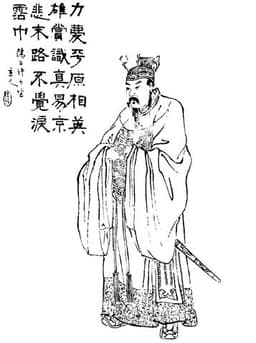
Gongsun Zan
General · Ancient
45.5Total
Basic Information
Born
190
151
Died
271
199
Era
Ancient
Ancient
Nationality
China
China
Occupation
General
General
Civilization
Eastern
Eastern
Score Comparison
Military (10%)
40.0
61.7
Political (20%)
35.0
32.1
Influence (20%)
45.5
50.2
Legacy (20%)
36.7
43.3
Leadership (15%)
51.7
33.5
Strategy (15%)
51.7
60.7
TOTAL
42.7
45.5
Ding Feng — Complete Timeline
200 AD
Service under Sun QuanWar
Ding Feng began his military career under Sun Quan, serving as a general in the Wu army. Despite his short stature, he was known for his exceptional combat skills and bravery in battle.
ServiceSun QuanBravery
Impact: regional
252 AD
Saved Sun Liang's LifeWar◆ Major
During a coup attempt by the regent Zhuge Ke, Ding Feng protected the young emperor Sun Liang. He personally led troops to confront the rebels, ensuring Sun Liang's safety and suppressing the uprising.
RescueSun LiangCoup
Impact: nationalconstructive
Battle of DongxingWar◆ Major
Ding Feng fought in the Battle of Dongxing against Wei forces. He led a cavalry charge that broke the Wei lines, contributing to a decisive Wu victory that secured the eastern border.
BattleDongxingCavalry
Impact: regional
264 AD
Service under Sun HaoWar◆ Major
Ding Feng continued to serve under the last Wu emperor, Sun Hao, despite the kingdom's decline. He remained loyal and fought in the final campaigns against the Jin dynasty until his death.
ServiceSun HaoLoyalty
Impact: regional
271 AD
Death of Ding FengOther
Ding Feng died of natural causes at an advanced age, having served four Wu emperors. He was remembered as one of the last great generals of Wu, known for his loyalty and martial prowess.
DeathLoyaltyLast General
Impact: regional
Gongsun Zan — Complete Timeline
191 AD
Battle of JieqiaoWar◆ Major
Gongsun Zan fought Yuan Shao at the Battle of Jieqiao. Despite using his elite White Horse Cavalry, Gongsun Zan was defeated by Yuan Shao's infantry tactics, marking a turning point in their rivalry for control of northern China.
Three KingdomsBattleDefeat
Impact: regionaldestructive
199 AD
Siege of YijingWar◆ Major
Gongsun Zan was besieged in his fortress at Yijing by Yuan Shao's forces. After a prolonged siege, Gongsun Zan committed suicide by setting his palace on fire, ending his rule over the northeast.
Three KingdomsSiegeDeath
Impact: regionaltragic
Expert Analysis
Origins
Ding Feng was born around 190 AD in Lujiang, Yang Province, during the late Eastern Han dynasty. He came from a modest family and joined Sun Quan's forces as a young man. His short stature—often noted in historical records—did not hinder his development as a formidable warrior. He rose through the ranks by demonstrating exceptional combat skills and loyalty during a time when Wu was consolidating power in the south.
Gongsun Zan, born in 175 AD in Liaoning, came from a noble family that served as border commanders in the northeast. He received a classical education but was drawn to military life. He became known for his skill in cavalry tactics and for raising a personal army of elite horsemen mounted on white horses, which became his trademark. His early career involved suppressing Wuhuan rebels and maintaining order along the frontier.
Rise to Power
Ding Feng's rise was gradual and marked by consistent service. He first gained notice during the reign of Sun Quan, participating in campaigns against the Shanyue tribes and later against Wei. His defining moment came in 253 AD when the regent Zhuge Ke was overthrown. During the coup, Ding Feng personally led troops to protect the young emperor Sun Liang, killing several rebels and securing the palace. This act earned him the title of General of the Left and a position in the inner court.
Gongsun Zan's ascent was more dramatic and independent. He became a warlord in the northeast after the collapse of central authority in 190 AD. He forged alliances with Liu Yu, the imperial governor, but later turned against him, seizing control of You Province. His White Horse Cavalry became legendary, and he defeated rival warlords like Yuan Shu's allies. By 195 AD, he controlled a vast territory from Liaoning to Hebei, challenging Yuan Shao for dominance.
Leadership & Governance
Ding Feng's leadership was characterized by personal bravery and loyalty to the Wu state. He led from the front, as seen at the Battle of Dongxing in 252 AD, where he charged with cavalry into the Wei army, breaking their formation. He was known for discipline among his troops and for maintaining order during turbulent transitions of power. However, he had limited political influence and never sought supreme command. His governance approach was conservative, focusing on defense and stability.
Gongsun Zan was a charismatic but erratic leader. He inspired fierce loyalty in his White Horse Cavalry, who wore distinctive white uniforms and fought with exceptional discipline. However, his governance was harsh and arbitrary. He alienated local officials and commoners by imposing heavy taxes and executing perceived enemies without trial. His strategic score of 60.7 reflects his tactical acumen, but his political score of 32.1 indicates poor statecraft. He failed to build a sustainable administration, relying instead on military intimidation.
Triumph & Tragedy
Ding Feng's greatest success was his role in the Battle of Dongxing, where his cavalry charge contributed to a major Wu victory over 100,000 Wei troops. He also served four Wu emperors without disloyalty, dying of natural causes around 271 AD at an advanced age. His tragedy was that he lived to see Wu's decline under Sun Hao, unable to prevent the eventual fall of his kingdom in 280 AD.
Gongsun Zan's triumph was his dominance in the northeast, where he crushed the Wuhuan and defeated Yuan Shao's early offensives. His White Horse Cavalry became a symbol of elite mobility. His tragedy was his defeat at the Battle of Jieqiao in 191 AD, where Yuan Shao's infantry used crossbows and trenches to neutralize his cavalry. He later retreated to Yijing, built a fortified palace, and hoarded supplies. In 199 AD, when Yuan Shao besieged Yijing, Gongsun Zan's strategy failed—his forces mutinied, and he committed suicide by setting fire to his palace, killing himself and his family.
Character & Destiny
Ding Feng was pragmatic and loyal, never overreaching. His physical short stature was compensated by his fighting spirit. He avoided political factions and focused on his duties, which allowed him to survive multiple regime changes. His character was suited to a subordinate role, not independent command. This constrained his impact but ensured his survival.
Gongsun Zan was proud and uncompromising. He refused to negotiate with Yuan Shao even when outmatched. His paranoia led him to mistreat subordinates, causing defections. His decision to build a fortress at Yijing and hoard food reflected a defensive mindset that ultimately trapped him. His character flaws—arrogance and cruelty—directly led to his downfall.
Legacy
Ding Feng is remembered as one of Wu's last loyal generals, a symbol of steadfastness. His military score of 40.0 reflects his limited scope, but his influence score of 45.5 acknowledges his role in stabilizing Wu during crises. He is not widely known outside of Three Kingdoms scholarship.
Gongsun Zan left a more complex legacy. His White Horse Cavalry became a romanticized icon in Chinese culture. His failure against Yuan Shao is a classic example of how military prowess alone cannot secure power. His influence score of 50.2 and legacy score of 43.3 indicate a lasting but cautionary tale. Historians note that his defeat accelerated Yuan Shao's rise, shaping the course of the Three Kingdoms period.
Conclusion
Gongsun Zan had greater impact despite his ultimate failure. His military innovations and territorial control directly influenced the power dynamics of northern China. Ding Feng was a competent general but operated within a stable state structure. Gongsun Zan's total score of 45.5 versus Ding Feng's 42.7 reflects this difference. Although Gongsun Zan's political ineptitude led to his demise, his actions had more far-reaching consequences. Therefore, Gongsun Zan is the more significant historical figure.
Rankings
🥇
Gongsun ZanLeader
Mil: 61.7Pol: 32.1Inf: 50.2
45.5
🥈
Ding Feng
Mil: 40.0Pol: 35.0Inf: 45.5
42.7
+2.8 behind
How This Comparison Works
Algorithm
Each figure is scored on 6 dimensions (0—100 scale) based on structured historical data: Military (10%), Political (20%), Influence (20%), Legacy (20%), Leadership (15%), Strategy (15%). The weighted total produces the final ranking.
Data Sources
Scores are computed from structured sub-indicators in the database. Scale factors adjust for era (Ancient ×0.85, Modern ×1.0) and civilization size (Eastern ×1.05, Other ×0.80) to account for differences in population and military scale.
Maximum 3 Figures
Comparisons are limited to 2—3 figures to ensure readability and statistical meaningfulness.
Error Margins
±5 points per dimension — Sub-scores are derived from historical records with inherent uncertainty. Two figures within 5 points on a dimension should be considered roughly equivalent in that area.
Total Score Accuracy
±3 points overall — The weighted combination of 6 dimensions produces a total score with approximately ±3 points of uncertainty. Differences of less than 3 points are not statistically significant— the figures are effectively tied.
Known Limitations
- Historical records are incomplete and uneven across civilizations
- Figures from oral-tradition societies may be underrepresented
- Occupation labels can misclassify multi-role figures
- Scores measure capability and impact, not moral character
- Quantitative scoring is a comparison tool, not absolute truth
Capability Radar
Military (10%) — Battles & Warfare
Battles
35
55
Win Rate
40
45
Expansion
10
55
Political (20%) — Governance & Reform
Reform
5
20
Diplomacy
15
25
Economy
5
30
Influence (20%) — Cultural & Global Reach
Cultural
15
35
Global
5
15
Legacy (20%) — Historical Impact
Historical
20
40
Longevity
10
30
Leadership (15%) — Power & Stability
Tenure
20
40
Stability
20
25
Strategy (15%) — Tactics & Innovation
Strategy
30
50
Tactics
45
60
Reform
5
40
Similar Comparisons
Comments & Discussion
No comments yet. Be the first to share your thoughts!