Loading...
Gongsun Zan vs Julius Caesar
Julius Caesar leads by 37.3 pts · 2 figures compared
…
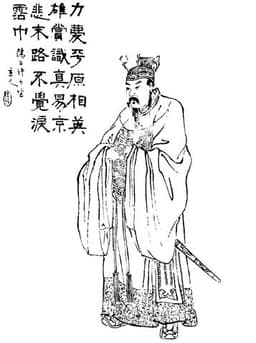
Gongsun Zan
General · Ancient
45.5Total

Julius Caesar
General · Ancient
82.8Total
Basic Information
Born
151
-100
Died
199
-44
Era
Ancient
Ancient
Nationality
China
Roman Republic
Occupation
General
General
Civilization
Eastern
Western
Score Comparison
Military (10%)
61.7
88.0
Political (20%)
32.1
78.0
Influence (20%)
50.2
85.0
Legacy (20%)
43.3
82.0
Leadership (15%)
33.5
80.0
Strategy (15%)
60.7
85.0
TOTAL
45.5
82.8
Gongsun Zan — Complete Timeline
191 AD
Battle of JieqiaoWar◆ Major
Gongsun Zan fought Yuan Shao at the Battle of Jieqiao. Despite using his elite White Horse Cavalry, Gongsun Zan was defeated by Yuan Shao's infantry tactics, marking a turning point in their rivalry for control of northern China.
Three KingdomsBattleDefeat
Impact: regionaldestructive
199 AD
Siege of YijingWar◆ Major
Gongsun Zan was besieged in his fortress at Yijing by Yuan Shao's forces. After a prolonged siege, Gongsun Zan committed suicide by setting his palace on fire, ending his rule over the northeast.
Three KingdomsSiegeDeath
Impact: regionaltragic
Julius Caesar — Complete Timeline
58 BC
Gallic WarsWar◆ Major
Caesar, as proconsul of Gaul, launched a series of campaigns that conquered all of Gaul (modern France, Belgium, and parts of Switzerland). He fought numerous battles, including against the Helvetii, the Belgae, and the Gallic chieftain Vercingetorix. The wars brought immense wealth and a loyal army to Caesar.
Gallic WarsConquestRoman Expansion
Impact: regional
49 BC
Crossing the RubiconPolitical Action◆ Major
Caesar led Legio XIII across the Rubicon River into Italy, defying the Roman Senate's order to disband his army. This act triggered a civil war against Pompey and the Optimates, ultimately leading to Caesar's dictatorship and the end of the Roman Republic.
Roman Civil WarEnd of RepublicPower Struggle
Impact: global
48 BC
Battle of PharsalusWar◆ Major
Caesar's outnumbered army defeated the larger forces of Pompey the Great at Pharsalus in Greece. Caesar's tactical use of a reserve line to counter Pompey's cavalry charge proved decisive. Pompey fled to Egypt, where he was assassinated, leaving Caesar as the undisputed master of the Roman world.
Roman Civil WarBattleDecisive Victory
Impact: regional
44 BC
Appointment as Dictator for LifePolitical Action◆ Major
The Roman Senate appointed Caesar dictator perpetuo (dictator for life), granting him unprecedented personal power. This move concentrated military, legislative, and judicial authority in one person, effectively ending the Roman Republic's traditional system of checks and balances and alarming many senators.
DictatorshipEnd of RepublicPower Consolidation
Impact: regionaldestructive
Assassination on the Ides of MarchPolitical Action◆ Major
A group of Roman senators, led by Marcus Junius Brutus and Gaius Cassius Longinus, stabbed Caesar to death at a meeting of the Senate in the Theatre of Pompey. The assassination was intended to restore the Republic, but instead triggered another civil war that led to the rise of the Roman Empire.
AssassinationRoman PoliticsEnd of Republic
Impact: globaldestructive
Expert Analysis
gongsun-zan-vs-julius-caesar
# The General Who Crossed a River, and the General Who Burned His Bridge
On a January morning in 49 BCE, Julius Caesar stood on the northern bank of the Rubicon, a small river that marked the boundary of his legal command. He paused, knowing that crossing would mean civil war. He crossed anyway, uttering the famous words *“Alea iacta est”* — the die is cast. A century and a half later and half a world away, another general, Gongsun Zan of China, found himself cornered in his fortress at Yijing. His situation was desperate, his enemies closing in. Instead of gambling on a breakout, he burned his own supplies, sealed his gates, and waited for death. Two generals, two decisions, two utterly different fates. Why did one become a legend whose name still echoes in the halls of power, while the other became a footnote, remembered only by scholars of the Three Kingdoms?
Origins
Julius Caesar was born into the patrician Julian clan, an ancient but politically marginalized family in Rome’s turbulent Republic. His youth was marked by the brutal civil wars between Marius and Sulla, which taught him that survival required both cunning and ruthlessness. He was captured by pirates as a young man and famously told them he would return to crucify them — and did. This combination of audacity and calculation became his hallmark.
Gongsun Zan, born in 151 CE in the declining Han Dynasty, came from a powerful but declining aristocratic family in the northeast. His early career was built on military prowess, not political maneuvering. He earned a reputation by defeating northern nomads and commanding a fearsome cavalry unit mounted on white horses — a symbol that struck terror into enemies and loyalty into his troops. Where Caesar learned statecraft in the Roman Forum, Gongsun Zan learned warfare on the steppes.
Rise to Power
Caesar’s path to power was a masterclass in political engineering. He forged the First Triumvirate with Pompey and Crassus, secured the governorship of Gaul, and then spent eight years conquering a territory that made him fabulously wealthy and beloved by his legions. His *Commentaries on the Gallic Wars* were not just history; they were propaganda, crafted to make him the hero of Rome. When the Senate ordered him to disband his army, he chose war.
Gongsun Zan’s rise was simpler and more brutal. He carved out a domain in the northeast, using his White Horse Cavalry to dominate the region. His great test came in 191 CE at the Battle of Jieqiao, where he faced Yuan Shao, the most powerful warlord of the north. Gongsun Zan had the elite cavalry, the momentum, and the confidence. But Yuan Shao had better tactics and a more disciplined infantry. The battle ended in a stalemate that became a defeat for Gongsun Zan, who lost the psychological edge that had made him feared.
Leadership & Governance
Caesar governed with a blend of clemency and iron. He pardoned his enemies, reformed the calendar, granted citizenship to provincials, and centralized power in ways that made the old Republic obsolete. His military genius lay not just in winning battles, but in winning wars — he understood that logistics, loyalty, and propaganda were as important as tactics. At Alesia, he besieged the besiegers; at Pharsalus, he outthought Pompey’s larger army.
Gongsun Zan governed through fear and isolation. He trusted no one outside his inner circle, alienating potential allies and even his own subordinates. His political score of 39.7 reflects a man who could win battles but could not build a state. He fortified himself in Yijing, a fortress so vast it could hold his entire army, but so isolated that it became a trap. When Yuan Shao laid siege in 199 CE, Gongsun Zan had no allies, no escape plan, and no vision beyond survival.
Triumph & Tragedy
Caesar’s greatest triumph was his own death. When the conspirators stabbed him on the Ides of March in 44 BCE, they thought they were saving the Republic. Instead, they ensured its destruction and Caesar’s immortality. His name became synonymous with imperial power: *Kaiser* in German, *Tsar* in Russian.
Gongsun Zan’s tragedy was his final act. Trapped in Yijing, he watched his supplies dwindle and his men desert. In a desperate last stand, he burned his own family and committed suicide, leaving behind a legacy of wasted potential. His military score of 62.0 and leadership score of 37.8 tell the story of a man who could command horses but not men.
Character & Destiny
Caesar was a gambler who calculated his risks. He understood that power was a performance — he wore a laurel wreath to hide his baldness, forgave enemies to win their loyalty, and wrote his own history to control his legacy. His fatal flaw was not arrogance but ambition; he believed he alone could save Rome, and in a sense, he was right.
Gongsun Zan was a fighter who never learned to be a politician. He trusted his cavalry and his walls, but not his people. When Yuan Shao offered him terms, he refused, preferring death to submission. His destiny was shaped by a world that was changing faster than he could adapt — the age of warlords demanded coalition-building, not just cavalry charges.
Legacy
Caesar’s legacy is immeasurable. He transformed the Roman Republic into an empire, set the template for Western political leadership, and remains one of the most studied figures in history. His influence score of 85.0 and legacy score of 82.0 place him among the titans.
Gongsun Zan’s legacy is a cautionary tale. His White Horse Cavalry became a legend, but his name is known only to students of the Three Kingdoms period. His total score of 57.5 reflects a man who had the tools for greatness but lacked the wisdom to use them.
Conclusion
The difference between Caesar and Gongsun Zan is not talent, but vision. Caesar crossed the Rubicon because he saw a future he could build; Gongsun Zan burned his bridges because he saw only a past he could not escape. One became the father of an empire; the other became a ghost in his own fortress. The Rubicon and Yijing are both rivers of history, but only one leads to Rome.
Rankings
🥇
Julius CaesarLeader
Mil: 88.0Pol: 78.0Inf: 85.0
82.8
🥈
Gongsun Zan
Mil: 61.7Pol: 32.1Inf: 50.2
45.5
+37.3 behind
How This Comparison Works
Algorithm
Each figure is scored on 6 dimensions (0—100 scale) based on structured historical data: Military (10%), Political (20%), Influence (20%), Legacy (20%), Leadership (15%), Strategy (15%). The weighted total produces the final ranking.
Data Sources
Scores are computed from structured sub-indicators in the database. Scale factors adjust for era (Ancient ×0.85, Modern ×1.0) and civilization size (Eastern ×1.05, Other ×0.80) to account for differences in population and military scale.
Maximum 3 Figures
Comparisons are limited to 2—3 figures to ensure readability and statistical meaningfulness.
Error Margins
±5 points per dimension — Sub-scores are derived from historical records with inherent uncertainty. Two figures within 5 points on a dimension should be considered roughly equivalent in that area.
Total Score Accuracy
±3 points overall — The weighted combination of 6 dimensions produces a total score with approximately ±3 points of uncertainty. Differences of less than 3 points are not statistically significant— the figures are effectively tied.
Known Limitations
- Historical records are incomplete and uneven across civilizations
- Figures from oral-tradition societies may be underrepresented
- Occupation labels can misclassify multi-role figures
- Scores measure capability and impact, not moral character
- Quantitative scoring is a comparison tool, not absolute truth
Capability Radar
Military (10%) — Battles & Warfare
Battles
55
95
Win Rate
45
92
Expansion
55
97
Political (20%) — Governance & Reform
Reform
20
90
Diplomacy
25
85
Economy
30
82
Influence (20%) — Cultural & Global Reach
Cultural
35
88
Global
15
94
Legacy (20%) — Historical Impact
Historical
40
95
Longevity
30
96
Leadership (15%) — Power & Stability
Tenure
40
75
Stability
25
60
Strategy (15%) — Tactics & Innovation
Strategy
50
94
Tactics
60
96
Reform
40
88
Similar Comparisons
Comments & Discussion
LEGIONARY_LOVER6/17/2026
Caesar crossing the Rubicon wasn't some brilliant gamble—it was a calculated power grab by a ruthless aristocrat playing with Rome's future. He knew his legions were loyal because he'd bribed them with promises of land and loot, not because of some mythical leadership. Gongsun Zan, meanwhile, faced literal starvation at Yijing after burning his own granaries—that's desperation, not strategy. Caesar's "alea iacta est" is just propaganda; he crossed because he'd already won through corruption.
历史考证狂6/17/2026
公孙瓒输在信息差上:他根本不知道袁绍已经派麴义抄了后路,还在傻等援军。公元199年易京之战时,他烧粮仓自守,以为能熬到春天,结果袁绍挖地道直接爆破城墙。对比之下,凯撒过卢比孔河前早已派密使收买了库里奥等元老,情报战完胜。军事决策从来都是情报筛选的结果,公孙瓒的悲剧在于信息茧房。
CLIO'S_CRITIC6/17/2026
Let's be real: comparing these two is like comparing a lightning strike to a slow-motion car crash. Caesar was a PR genius who used his own writings to craft a legend, while Gongsun Zan left no memoirs, just burned bridges. That "dice" quote? Caesar probably never said it—Suetonius reports it as Greek, decades later. Gongsun's story is authentic tragedy: a Han warlord who failed the Confucian ideal of adaptation, trapped by his own stubbornness. One's hype, the other's history.
数据控6/17/2026
从兵力模型看:凯撒过卢比孔河时仅带第十三军团约5000人,但靠着政治收买和快速动员,在希腊战役前扩军至8万;公孙瓒巅峰时有白马义从数万骑,但易京之围时只剩千余残兵,粮草储备只能撑三个月。两人相同点是都面临资源枯竭,不同在于凯撒选择动态扩张求生,公孙瓒选择了静态消耗等死。纯数据角度,公孙瓒的决策逻辑在战略教科书里是反面案例——被动防御永远是输家。
REVISIONIST_ROME6/17/2026
Enough with the "bold Caesar" myth—his crossing was a desperate act of a man facing prosecution for corruption in Gaul. The Rubicon wasn't a grand strategic decision; it was a last-ditch escape from debt and disgrace. Gongsun Zan's move at Yijing was arguably more rational: he knew his peasant soldiers wouldn't fight for an absentee landlord, so hoarding grain made tactical sense in a siege. Caesar got lucky with Pompey's incompetence; Gongsun faced Yuan Shao's brilliant tunneling. Context is ev