Loading...
Dinh Tien Hoang vs Gojong of Korea
Dinh Tien Hoang leads by 4.9 pts · 2 figures compared
…
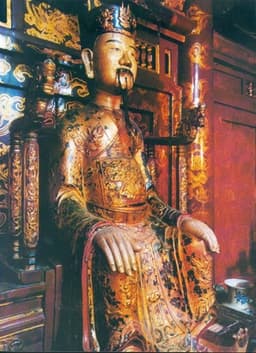
Dinh Tien Hoang
Emperor · Medieval
60.4Total
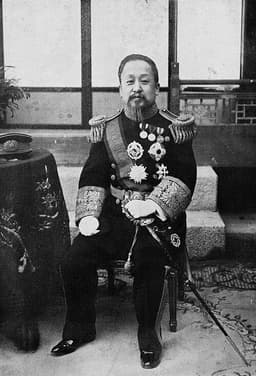
Gojong of Korea
Emperor · Modern
55.5Total
Basic Information
Born
924
1852
Died
979
1919
Era
Medieval
Modern
Nationality
Vietnam
Korea
Occupation
Emperor
Emperor
Civilization
Eastern
Eastern
Score Comparison
Military (10%)
60.0
43.3
Political (20%)
72.0
68.0
Influence (20%)
65.0
60.0
Legacy (20%)
40.0
50.0
Leadership (15%)
77.2
53.2
Strategy (15%)
58.0
54.6
TOTAL
60.4
55.5
Dinh Tien Hoang — Complete Timeline
968 AD
Defeat of the Twelve WarlordsWar
Dinh Bo Linh, later known as Dinh Tien Hoang, unified Vietnam by defeating the Twelve Warlords who had divided the country after the collapse of Chinese rule. He established the Dinh dynasty and became the first emperor of an independent Vietnam.
UnificationDinh DynastyVietnamese Independence
Impact: nationalconstructive
Establishment of the Dinh DynastyPolitical Action◆ Major
Dinh Tien Hoang founded the Dinh dynasty and declared himself Emperor. He moved the capital to Hoa Lu and implemented administrative reforms to consolidate power. This marked the beginning of a new era of Vietnamese independence after centuries of Chinese domination.
Dynasty FoundingCapital MoveAdministrative Reform
Impact: nationalconstructive
979 AD
Assassination of Dinh Tien HoangPolitical Action◆ Major
Dinh Tien Hoang and his crown prince were assassinated by a court official while sleeping. The murder plunged the Dinh dynasty into chaos, leading to a succession crisis and eventual takeover by Le Hoan. The assassination ended the short-lived Dinh dynasty.
AssassinationSuccession CrisisEnd of Dinh Dynasty
Impact: nationaltragic
Gojong of Korea — Complete Timeline
1897 AD
Proclamation of the Korean EmpirePolitical Action
Gojong declared Korea an empire, assuming the title of Emperor. This was an attempt to assert Korea's sovereignty and equal status with China and Japan, and to modernize the state. The move was partly a response to the assassination of his wife, Empress Myeongseong.
Korean EmpireSovereigntyModernization
Impact: nationalconstructive
1905 AD
Signing of the Japan-Korea Treaty of 1905Political Action
Under Japanese pressure, Gojong's government signed the Eulsa Treaty, making Korea a Japanese protectorate. Gojong did not sign the treaty himself and later attempted to appeal to international powers, but the treaty stripped Korea of its diplomatic sovereignty.
TreatyJapanese ProtectorateLoss of Sovereignty
Impact: nationaltragic
1907 AD
Forced Abdication by JapanPolitical Action◆ Major
Japanese authorities forced Gojong to abdicate in favor of his son, Sunjong, after Gojong sent a secret envoy to the Hague Peace Conference to protest Japanese control. The abdication was part of Japan's consolidation of power over Korea.
AbdicationJapanese ImperialismHague Secret Envoy Affair
Impact: nationaltragic
1919 AD
Death and Funeral of GojongOther
Gojong died suddenly, with rumors of poisoning by Japanese agents. His funeral on March 1, 1919, became a catalyst for the March First Movement, a massive nationwide protest against Japanese rule. The movement was brutally suppressed but galvanized Korean independence efforts.
DeathMarch First MovementKorean Independence
Impact: nationaltragic
Expert Analysis
Gojong of Korea vs Dinh Tien Hoang
# The Emperor’s Last Stand
On a cold January morning in 1907, a fifty-five-year-old emperor sat alone in his palace in Seoul, staring at a document that would end his reign. Across the sea, in the imperial capital of Tokyo, his captors had already written his fate. Three thousand miles away, in The Hague, a secret mission he had dispatched to plead Korea’s case before the world was being turned away at the door. Gojong of Korea, once the proud emperor of the Korean Empire, was about to become the last ruler of a dynasty that had lasted five centuries. A thousand years earlier and a thousand miles south, another emperor had faced a different kind of ending—not by foreign hands, but by a dagger in the dark. Dinh Tien Hoang, the man who had pulled Vietnam from the chaos of a dozen warring lords, died in his sleep, murdered by a trusted courtier. Two emperors, two East Asian kingdoms, two very different fates. What drove them apart?
Origins
Gojong was born in 1852 into a Joseon dynasty already gasping for breath. His father, the regent Heungseon Daewongun, seized power when Gojong was just twelve, placing the boy on the throne as a puppet. The kingdom was a fortress of Confucian tradition, but the world outside was changing fast. Western gunboats had pried open China; Japan had emerged from isolation with terrifying speed. Gojong grew up in a palace where the walls whispered of ancient rites, but the cannons at the harbor spoke a different language.
Dinh Tien Hoang, born in 924, came from a world even more fractured. Vietnam had been under Chinese domination for nearly a thousand years, and when the Tang dynasty collapsed, the land shattered into a dozen petty fiefdoms. Dinh Bo Linh—his birth name—was the son of a provincial governor, a man who had known war since childhood. He grew up not in a palace but on horseback, learning to read the landscape for ambush and the hearts of men for loyalty. His era demanded a sword, not a scepter.
Rise to Power
Gojong’s path to power was one of inheritance, not conquest. He was made king at twelve, but for a decade, his father ruled from behind the throne. When the Daewongun was finally pushed aside, Gojong stepped into a role he had never been trained for—a ruler who had to navigate between the old Confucian order and the relentless pressure of imperial powers. His real turning point came in 1897, when he proclaimed the Korean Empire, declaring himself emperor rather than king. It was a bold move, an attempt to assert Korea’s sovereignty on the world stage, to claim equality with China and Japan. But it was a gesture of defiance, not a plan for survival.
Dinh Tien Hoang earned his throne through blood. In 968, after years of war, he defeated the Twelve Warlords who had carved up Vietnam. He did not inherit a kingdom; he built one from wreckage. His rise was a story of strategy and brutality—he knew when to negotiate, when to strike, and when to execute a rival to send a message. When he declared himself emperor and founded the Dinh dynasty, he moved the capital to Hoa Lu, a fortress of limestone cliffs and rivers, a place that could be defended. He understood that power, once seized, must be held with both hands.
Leadership & Governance
Gojong was a reformer trapped in a crumbling house. He opened Korea to foreign trade, built telegraph lines, and sent students abroad to learn Western technology. He even installed electric lights in the palace, a marvel that scandalized the Confucian court. But his reforms were half-hearted, blocked by conservative ministers and undermined by Japanese agents. His military was weak, his treasury empty, and his strategy—such as it was—relied on diplomacy and appeals to international law. He believed that if he could just make Korea modern enough, the world would respect its independence. He was wrong.
Dinh Tien Hoang governed like a warlord who had become a king. He imposed a strict legal code, executed corrupt officials, and built a centralized administration from scratch. He minted coins, standardized weights and measures, and forced the local lords to swear allegiance. His military genius lay not in grand battles but in the brutal logic of consolidation: he knew that a kingdom divided by warlords was a kingdom doomed. His leadership score of 84.2 reflects a man who ruled through fear and respect, not love. He was a builder, not a diplomat.
Triumph & Tragedy
Gojong’s greatest moment was also his most tragic. In 1905, Japan forced the Eulsa Treaty on his government, making Korea a protectorate. Gojong did not sign it—he refused, even as his ministers capitulated. In secret, he sent a delegation to the Hague Peace Conference in 1907, hoping to rally the world against Japanese aggression. The mission failed. The Western powers, already carving up their own empires, turned their backs. Japan responded by forcing Gojong to abdicate, replacing him with his feeble son Sunjong. He died in 1919, suddenly, under suspicious circumstances, and rumors of Japanese poison spread like wildfire. His funeral on March 1, 1919, ignited the March First Movement, a nationwide protest for independence that Japan crushed with bullets and bayonets.
Dinh Tien Hoang’s tragedy was more intimate. In 979, at the height of his power, he and his crown prince were assassinated while sleeping by a court official named Do Thich. The murder was a betrayal so sudden it left the kingdom reeling. The Dinh dynasty collapsed within months, plunging Vietnam back into chaos until the Ly dynasty rose to restore order. Dinh’s triumph—the unification of Vietnam—was undone by a single knife in the dark.
Character & Destiny
Gojong was a man of intellect and courage, but he was also a prisoner of his own position. He had the vision to see that Korea needed to change, but not the ruthlessness to force that change through. His political score of 85.0 reflects his skill at maneuvering within the court, but his strategy score of 30.0 reveals his fatal weakness: he could not think like a general. He believed in diplomacy, in international law, in the power of right. But in the age of empires, right meant nothing without might.
Dinh Tien Hoang was a man of iron. He understood that power was personal, that loyalty was bought with victory, and that mercy was a luxury for those who could afford it. His strategy score of 60.0 is modest by military standards, but his leadership score of 84.2 shows a ruler who commanded absolute obedience. He did not try to change the world; he conquered it. His tragedy was that he trusted a courtier, and that trust cost him everything.
Legacy
Gojong is remembered as a symbol of Korean independence, a martyr who stood against Japan even when standing meant losing everything. The Korean Empire he proclaimed lasted only thirteen years, but his funeral sparked a movement that would eventually lead to Korean independence in 1945. Today, he is honored as a tragic hero, a man who tried to save his country and failed, but whose failure inspired others to fight.
Dinh Tien Hoang is remembered as the founder of independent Vietnam, the man who broke the cycle of foreign domination. His reign was short—only eleven years—but his achievement was monumental. He is worshipped in Vietnamese temples as a national hero, a figure who proved that Vietnam could rule itself. But his legacy is also a warning: that power built by one hand can be destroyed by another.
Conclusion
Two emperors, two kingdoms, two very different ends. Gojong died a prisoner, his kingdom stolen, his name a rallying cry for a future he would not see. Dinh Tien Hoang died a conqueror, his kingdom intact, his name a monument to what one man could build. But both men shared a common fate: they were the last of their kind. Gojong was the last emperor of Korea; Dinh Tien Hoang was the first emperor of an independent Vietnam, but his dynasty died with him. In the end, what separates them is not their vision or their courage, but the brutal reality of their times. Gojong faced an empire that was industrial and relentless; Dinh Tien Hoang faced warlords who were no match for his will. One was crushed by the weight of history; the other carved his name into it. Both remind us that the difference between triumph and tragedy is often not the man, but the moment.
Rankings
🥇
Dinh Tien HoangLeader
Mil: 60.0Pol: 72.0Inf: 65.0
60.4
🥈
Gojong of Korea
Mil: 43.3Pol: 68.0Inf: 60.0
55.5
+4.9 behind
How This Comparison Works
Algorithm
Each figure is scored on 6 dimensions (0—100 scale) based on structured historical data: Military (10%), Political (20%), Influence (20%), Legacy (20%), Leadership (15%), Strategy (15%). The weighted total produces the final ranking.
Data Sources
Scores are computed from structured sub-indicators in the database. Scale factors adjust for era (Ancient ×0.85, Modern ×1.0) and civilization size (Eastern ×1.05, Other ×0.80) to account for differences in population and military scale.
Maximum 3 Figures
Comparisons are limited to 2—3 figures to ensure readability and statistical meaningfulness.
Error Margins
±5 points per dimension — Sub-scores are derived from historical records with inherent uncertainty. Two figures within 5 points on a dimension should be considered roughly equivalent in that area.
Total Score Accuracy
±3 points overall — The weighted combination of 6 dimensions produces a total score with approximately ±3 points of uncertainty. Differences of less than 3 points are not statistically significant— the figures are effectively tied.
Known Limitations
- Historical records are incomplete and uneven across civilizations
- Figures from oral-tradition societies may be underrepresented
- Occupation labels can misclassify multi-role figures
- Scores measure capability and impact, not moral character
- Quantitative scoring is a comparison tool, not absolute truth
Capability Radar
Military (10%) — Battles & Warfare
Battles
70
5
Win Rate
75
5
Expansion
65
5
Political (20%) — Governance & Reform
Reform
70
40
Diplomacy
65
30
Economy
60
30
Influence (20%) — Cultural & Global Reach
Cultural
65
50
Global
55
40
Legacy (20%) — Historical Impact
Historical
75
60
Longevity
70
40
Leadership (15%) — Power & Stability
Tenure
60
60
Stability
55
20
Strategy (15%) — Tactics & Innovation
Strategy
70
5
Tactics
65
5
Reform
60
10
Similar Comparisons
Comments & Discussion
BLOODLESS BETRAYER6/16/2026
Gojong’s attempt at the Hague peace conference wasn’t a heroic stand; it was a diplomatic death wish. He sent envoys without any real military backing, expecting European powers to pity him. Dinh Tien Hoang at least died with a sword in his hand, murdered by a courtier but unbroken. Gojong surrendered before the ink on his abdication dried.
铁血编年史家6/16/2026
丁先皇才是真铁腕,光靠一条血路统一了十二使君之乱后的越南。高宗的朝鲜呢?甲申政变、东学党乱、甲午战争,全是被动挨打。丁先皇死了,但基业留了二十年;高宗活着,却把五百年王朝送给日本。一个战死,一个败降。
ROYAL SCRIPT REBEL6/16/2026
Data point: Gojong ruled 44 years, Dinh Tien Hoang barely 8. Yet Dinh subdued 12 warlords; Gojong couldn’t even control his own father, the Daewongun. Quantity of years doesn’t equal quality of leadership. One forged a kingdom from chaos, the other watched his kingdom dissolve into empire.
废墟上的独裁者6/16/2026
别被高宗的“独立抗争”骗了。他秘密派往海牙的特使李相卨,连护照都是假的,被日本情报网秒杀。丁先皇虽然残暴,但至少敢在国都建宫殿、铸钱币、定官制。高宗表面上改革,实则连军队指挥权都握不住。掌权不是靠哭诉,是靠刀把子。
HISTORY'S HANGMAN6/16/2026
Comparing these two is like comparing a chess grandmaster to a man who burns the board. Dinh murdered his own general for a perceived slight—classic authoritarian paranoia. Gojong might have been weak, but he never ordered public executions of his best commanders. Give me a ruler who dies in bed over one who kills his own power base.