Loading...
Dinuzulu kaCetshwayo vs George IV
Dinuzulu kaCetshwayo leads by 9.8 pts · 2 figures compared
…

Dinuzulu kaCetshwayo
Emperor · Modern
47.8Total
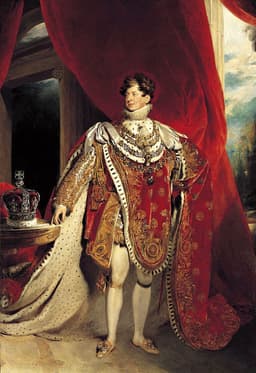
George IV
Emperor · Modern
38.0Total
Basic Information
Born
1868
1762
Died
1913
1830
Era
Modern
Modern
Nationality
Zulu Kingdom
United Kingdom
Occupation
Emperor
Emperor
Civilization
Other
Western
Score Comparison
Military (10%)
50.0
12.4
Political (20%)
35.1
27.9
Influence (20%)
55.7
50.2
Legacy (20%)
45.8
37.5
Leadership (15%)
51.9
31.2
Strategy (15%)
43.7
60.0
TOTAL
47.8
38.0
Dinuzulu kaCetshwayo — Complete Timeline
1889 AD
Exile to St HelenaPolitical Action◆ Major
Following the Zulu Civil War and the British annexation of Zululand, Dinuzulu was captured by British forces and exiled to the island of St Helena. This removed the last Zulu monarch from his kingdom, ending the independent Zulu monarchy.
British ColonialismExileZulu Kingdom
Impact: regionaltragic
1897 AD
Return from ExilePolitical Action
After eight years on St Helena, Dinuzulu was allowed to return to Zululand, which had been incorporated into the British Colony of Natal. He was reinstated as a chief but under British authority, with reduced powers.
British ColonialismReturnZulu Kingdom
Impact: regional
1908 AD
Arrest for RebellionPolitical Action◆ Major
Dinuzulu was arrested by British authorities on charges of inciting the Bambatha Rebellion of 1906. He was tried and convicted, leading to a second exile, this time to a farm in the Transvaal.
Bambatha RebellionBritish ColonialismExile
Impact: regionaltragic
George IV — Complete Timeline
1811 AD
Regency PeriodPolitical Action◆ Major
George IV became Prince Regent after his father George III was declared mentally unfit. He ruled as regent for nine years, overseeing the final years of the Napoleonic Wars and the Congress of Vienna. The Regency era was marked by cultural and architectural developments.
RegencyNapoleonic WarsCultural Era
Impact: national
1820 AD
Accession to the ThronePolitical Action◆ Major
George IV became king upon the death of his father George III. His accession was overshadowed by his attempt to divorce his wife Caroline of Brunswick, leading to a public scandal. He was crowned in a lavish ceremony at Westminster Abbey.
AccessionScandalCoronation
Impact: national
1829 AD
Catholic EmancipationPolitical Action◆ Major
George IV reluctantly gave royal assent to the Catholic Relief Act, which removed most restrictions on Catholics in the United Kingdom. This act allowed Catholics to sit in Parliament and hold public office. It was a major step toward religious equality.
Catholic EmancipationReligious ReformParliament
Impact: nationalconstructive
1830 AD
Death from Gastrointestinal IllnessOther
George IV died of gastrointestinal illness at Windsor Castle at age 67. He was buried in St George's Chapel. His death ended the Regency era and passed the throne to his brother William IV. His reign was marked by extravagance and scandal.
DeathSuccessionMonarchy
Impact: national
Expert Analysis
Origins
Dinuzulu kaCetshwayo was born in 1868 into the Zulu royal family, the son of King Cetshwayo, who had led the Zulu nation during the Anglo-Zulu War of 1879. His early life was shaped by the aftermath of that war, which fractured the Zulu kingdom into British-controlled reserves. Dinuzulu was raised in a period of intense political upheaval, with his father exiled and the monarchy reduced to a figurehead role. He received traditional Zulu education, learning governance and military tactics from elders.
George IV was born in 1762 as the eldest son of King George III and Queen Charlotte. His upbringing was strictly supervised by tutors, focusing on languages, music, and history. He was groomed for kingship from childhood, but his relationship with his father was strained due to George III's strict moral code and George IV's extravagant tendencies. He was made Prince of Wales in 1762 and became a central figure in the British aristocracy, known for his charm and patronage of the arts.
Rise to Power
Dinuzulu's rise began after his father's death in 1884. He was proclaimed king with the support of the Zulu people, but his authority was challenged by rival factions and British interference. The British had divided Zululand into 13 chieftaincies, and Dinuzulu sought to reunite them. In 1887, the British annexed Zululand, and Dinuzulu was exiled to St. Helena after being accused of leading a rebellion. He returned in 1898 but was arrested again in 1907 for inciting the Bambatha Rebellion, leading to a second exile.
George IV became Prince Regent in 1811 after his father was declared mentally unfit. He ruled as regent for nine years, a period marked by the Napoleonic Wars and the rise of British industrial power. His regency was known for its cultural flourishing, including the construction of the Royal Pavilion in Brighton. Upon his father's death in 1820, he became king, but his accession was marred by his attempt to divorce his wife, Caroline of Brunswick, leading to public scandal.
Leadership & Governance
Dinuzulu's leadership was defined by his struggle to preserve Zulu sovereignty under British colonial rule. He attempted to navigate between traditional governance and British demands, but his authority was undermined by colonial administrators. For instance, he agreed to British terms in 1887 to avoid conflict, but this led to internal dissent. His political score of 35.1 reflects his limited autonomy; he was often a pawn in British strategy. However, his influence score of 55.7 shows his symbolic importance as a unifier of the Zulu people.
George IV's governance was characterized by his hands-off approach, delegating most state affairs to his ministers. He was more interested in personal pleasures, such as architecture and fashion, than in political reform. His reluctance to support Catholic Emancipation until forced by Prime Minister Wellington in 1829 demonstrated his conservative instincts. His leadership score of 31.2 and political score of 27.9 indicate his lack of engagement, though his strategy score of 60.0 suggests he could be politically astute when needed.
Triumph & Tragedy
Dinuzulu's greatest triumph was his role in the Zulu resistance against British annexation. Despite being exiled, he remained a symbol of Zulu unity. His return from St. Helena in 1898 was a moment of hope for his people. However, his tragedy was his inability to prevent the disintegration of the Zulu kingdom. The Bambatha Rebellion, which he was accused of inciting, resulted in the deaths of thousands of Zulus and his own second exile. His military score of 50.0 reflects his limited direct command, but his influence endured.
George IV's triumph was his patronage of the arts, which left a lasting cultural legacy. He commissioned the Royal Pavilion and expanded the Royal Collection. He also oversaw the end of the Napoleonic Wars and the Congress of Vienna. His tragedy was his personal life: his marriage to Caroline was a disaster, and his extravagance alienated the public. His death in 1830 was largely unmourned, and his legacy as a monarch was overshadowed by his regency period.
Character & Destiny
Dinuzulu was seen as a determined but pragmatic leader, willing to negotiate with the British to preserve his people. However, his cooperation was often interpreted as weakness, leading to internal challenges. His character was shaped by a sense of duty to his lineage, but his destiny was controlled by colonial powers. Historians note his resilience in the face of exile, but also his inability to adapt to the changing political landscape.
George IV was known for his charm, intelligence, and extravagance. He was a patron of the arts and a trendsetter in fashion and architecture. However, his selfishness and lack of discipline led to strained relationships with his family and ministers. His character contributed to his unpopularity; he was often ridiculed for his weight and debauchery. His destiny was to be remembered more as a regent than a king, with his reign seen as a transition between his father's madness and his brother's reformist era.
Legacy
Dinuzulu's legacy is that of the last independent Zulu monarch. He is remembered as a symbol of resistance against colonialism, and his life is taught in South African history. His exile and trials highlighted the brutality of British imperialism. He scored 45.8 in legacy, reflecting his enduring cultural significance. The Zulu monarchy was restored in the 20th century, but under the authority of the South African government.
George IV's legacy is mixed. He is credited with fostering the Regency style in architecture and fashion, and his patronage of the arts enriched British culture. However, his political legacy is minimal, as he exerted little influence on policy. His score of 37.5 in legacy reflects his limited impact. He is often ranked among the least effective British monarchs due to his personal excesses and lack of leadership.
Conclusion
In comparing Dinuzulu kaCetshwayo and George IV, Dinuzulu had a greater impact on history. Despite his lower political score, his influence and legacy scores (55.7 and 45.8) exceed George IV's (50.2 and 37.5). Dinuzulu's struggle against colonialism shaped the narrative of African resistance, while George IV's reign was largely inconsequential. The score gap of 9.8 points in total (47.8 vs 38.0) reflects Dinuzulu's more significant role in the broader historical context. Therefore, Dinuzulu kaCetshwayo stands as the more impactful figure.
Rankings
🥇
Dinuzulu kaCetshwayoLeader
Mil: 50.0Pol: 35.1Inf: 55.7
47.8
🥈
George IV
Mil: 12.4Pol: 27.9Inf: 50.2
38.0
+9.8 behind
How This Comparison Works
Algorithm
Each figure is scored on 6 dimensions (0—100 scale) based on structured historical data: Military (10%), Political (20%), Influence (20%), Legacy (20%), Leadership (15%), Strategy (15%). The weighted total produces the final ranking.
Data Sources
Scores are computed from structured sub-indicators in the database. Scale factors adjust for era (Ancient ×0.85, Modern ×1.0) and civilization size (Eastern ×1.05, Other ×0.80) to account for differences in population and military scale.
Maximum 3 Figures
Comparisons are limited to 2—3 figures to ensure readability and statistical meaningfulness.
Error Margins
±5 points per dimension — Sub-scores are derived from historical records with inherent uncertainty. Two figures within 5 points on a dimension should be considered roughly equivalent in that area.
Total Score Accuracy
±3 points overall — The weighted combination of 6 dimensions produces a total score with approximately ±3 points of uncertainty. Differences of less than 3 points are not statistically significant— the figures are effectively tied.
Known Limitations
- Historical records are incomplete and uneven across civilizations
- Figures from oral-tradition societies may be underrepresented
- Occupation labels can misclassify multi-role figures
- Scores measure capability and impact, not moral character
- Quantitative scoring is a comparison tool, not absolute truth
Capability Radar
Military (10%) — Battles & Warfare
Battles
25
38
Win Rate
20
38
Expansion
10
45
Political (20%) — Governance & Reform
Reform
20
5
Diplomacy
25
15
Economy
15
10
Influence (20%) — Cultural & Global Reach
Cultural
40
30
Global
25
10
Legacy (20%) — Historical Impact
Historical
45
20
Longevity
30
15
Leadership (15%) — Power & Stability
Tenure
35
10
Stability
10
5
Strategy (15%) — Tactics & Innovation
Strategy
25
48
Tactics
30
48
Reform
15
50
Similar Comparisons
Comments & Discussion
No comments yet. Be the first to share your thoughts!