Loading...
George IV vs Mary II of England
Mary II of England leads by 12.9 pts · 2 figures compared
…
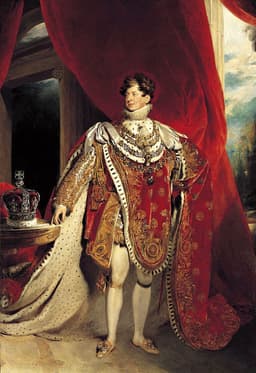
George IV
Emperor · Modern
38.0Total
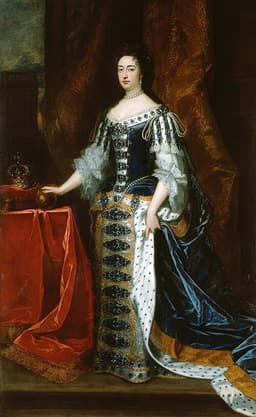
Mary II of England
Emperor · Modern
50.9Total
Basic Information
Born
1762
1662
Died
1830
1694
Era
Modern
Modern
Nationality
United Kingdom
England
Occupation
Emperor
Emperor
Civilization
Western
Western
Score Comparison
Military (10%)
12.4
13.0
Political (20%)
27.9
68.0
Influence (20%)
50.2
52.5
Legacy (20%)
37.5
43.3
Leadership (15%)
31.2
65.0
Strategy (15%)
60.0
57.4
TOTAL
38.0
50.9
George IV — Complete Timeline
1811 AD
Regency PeriodPolitical Action◆ Major
George IV became Prince Regent after his father George III was declared mentally unfit. He ruled as regent for nine years, overseeing the final years of the Napoleonic Wars and the Congress of Vienna. The Regency era was marked by cultural and architectural developments.
RegencyNapoleonic WarsCultural Era
Impact: national
1820 AD
Accession to the ThronePolitical Action◆ Major
George IV became king upon the death of his father George III. His accession was overshadowed by his attempt to divorce his wife Caroline of Brunswick, leading to a public scandal. He was crowned in a lavish ceremony at Westminster Abbey.
AccessionScandalCoronation
Impact: national
1829 AD
Catholic EmancipationPolitical Action◆ Major
George IV reluctantly gave royal assent to the Catholic Relief Act, which removed most restrictions on Catholics in the United Kingdom. This act allowed Catholics to sit in Parliament and hold public office. It was a major step toward religious equality.
Catholic EmancipationReligious ReformParliament
Impact: nationalconstructive
1830 AD
Death from Gastrointestinal IllnessOther
George IV died of gastrointestinal illness at Windsor Castle at age 67. He was buried in St George's Chapel. His death ended the Regency era and passed the throne to his brother William IV. His reign was marked by extravagance and scandal.
DeathSuccessionMonarchy
Impact: national
Mary II of England — Complete Timeline
1688 AD
Glorious RevolutionPolitical Action
Mary II accepted the invitation from English parliamentarians to replace her father James II. She and her husband William of Orange invaded England with a Dutch fleet, forcing James II to flee. This bloodless transfer of power established parliamentary sovereignty over the monarchy.
Glorious RevolutionConstitutional ChangeDynastic Shift
Impact: nationalconstructive
1689 AD
Joint Coronation with William IIIPolitical Action◆ Major
Mary II was crowned joint sovereign with her husband William III at Westminster Abbey. She accepted the Bill of Rights, which limited royal powers and affirmed parliamentary authority. This coronation formalized the new constitutional arrangement.
CoronationConstitutional MonarchyBill of Rights
Impact: nationalconstructive
1690 AD
Regency During William's AbsencePolitical Action
Mary II served as regent while William III campaigned in Ireland against James II's forces. She effectively governed England, managing the Treasury and military logistics. Her regency demonstrated her administrative competence and maintained stability.
RegencyGovernanceStability
Impact: nationalconstructive
1694 AD
Death from SmallpoxOther◆ Major
Mary II died of smallpox at Kensington Palace at age 32. Her death deeply affected William III and the nation. She was buried in Westminster Abbey. Her early death ended her joint reign and left William as sole monarch.
DeathSmallpoxMonarchy
Impact: nationaltragic
Expert Analysis
Origins
George IV, born in 1762, was the eldest son of King George III and Queen Charlotte. He was raised in the royal court, receiving a formal education but showing early signs of extravagance and rebellion. His father's strictness and his own indulgence led to a strained relationship. Mary II, born in 1662, was the eldest daughter of James II and Anne Hyde. She was raised as a Protestant, despite her father's Catholic conversion, and received a strong education in statecraft. Her marriage to William of Orange was arranged to strengthen Protestant alliances.
Rise to Power
George IV's rise came through the Regency Act of 1811, when his father was declared mentally unfit. He served as Prince Regent for nine years, effectively ruling Britain during the Napoleonic Wars. His accession to the throne in 1820 was marred by his attempt to divorce Caroline of Brunswick. Mary II's rise came through the Glorious Revolution of 1688. Invited by Protestant leaders to replace her Catholic father James II, she and William invaded England. She was crowned joint sovereign in 1689, accepting the Bill of Rights that limited royal power.
Leadership & Governance
George IV's leadership was marked by extravagance and personal indulgence. He spent heavily on building projects like the Royal Pavilion and Carlton House, leading to public criticism. Politically, he was a reluctant reformer; he opposed Catholic Emancipation but eventually gave royal assent in 1829. His governance score of 27.9 reflects his minimal involvement in state affairs. Mary II, with a political score of 68.0, was a more effective ruler. She served as regent during William's absences, managing the Treasury and overseeing the war with France. She supported the Bill of Rights, which established parliamentary supremacy and limited royal prerogative.
Triumph & Tragedy
George IV's greatest triumph was his role as a patron of the arts and architecture, leaving a cultural legacy. However, his personal life was tragic: his marriage to Caroline was a public scandal, and his weight and health deteriorated from excess. He died in 1830 from gastrointestinal illness. Mary II's triumph was the peaceful establishment of a constitutional monarchy. Her tragedy was her early death from smallpox at age 32, which left William grief-stricken and ended a promising reign. Her military score of 13.0 is low, but her political and leadership scores (68.0 and 65.0 respectively) highlight her governance strengths.
Character & Destiny
George IV was known for his charm, wit, and extravagance, but also for his selfishness and lack of discipline. His character led to public contempt and a strained relationship with his father. Mary II was dutiful, intelligent, and devoutly Protestant. Her character made her a stabilizing force during the Glorious Revolution and William's absences. Her destiny was to die young, but her legacy endured.
Legacy
George IV's legacy is mixed: he is remembered as a patron of the arts but also as a wasteful monarch. His reign saw the beginning of the Reform movement, but he contributed little to it. Mary II's legacy is more profound: she helped establish the constitutional framework that limits the British monarchy to this day. Her cooperation with William set a precedent for joint sovereignty. In terms of scores, Mary II's total of 50.9 exceeds George IV's 38.0, with particularly large gaps in political and leadership categories.
Conclusion
Mary II had a greater impact on British history. While George IV's cultural contributions are notable, Mary II's role in the Glorious Revolution and the establishment of constitutional monarchy reshaped the nation's governance. Her political score of 68.0 versus George's 27.9, and leadership score of 65.0 versus 31.2, demonstrate her superior effectiveness. George IV's reign was a footnote; Mary II's was foundational.
Rankings
🥇
Mary II of EnglandLeader
Mil: 13.0Pol: 68.0Inf: 52.5
50.9
🥈
George IV
Mil: 12.4Pol: 27.9Inf: 50.2
38.0
+12.9 behind
How This Comparison Works
Algorithm
Each figure is scored on 6 dimensions (0—100 scale) based on structured historical data: Military (10%), Political (20%), Influence (20%), Legacy (20%), Leadership (15%), Strategy (15%). The weighted total produces the final ranking.
Data Sources
Scores are computed from structured sub-indicators in the database. Scale factors adjust for era (Ancient ×0.85, Modern ×1.0) and civilization size (Eastern ×1.05, Other ×0.80) to account for differences in population and military scale.
Maximum 3 Figures
Comparisons are limited to 2—3 figures to ensure readability and statistical meaningfulness.
Error Margins
±5 points per dimension — Sub-scores are derived from historical records with inherent uncertainty. Two figures within 5 points on a dimension should be considered roughly equivalent in that area.
Total Score Accuracy
±3 points overall — The weighted combination of 6 dimensions produces a total score with approximately ±3 points of uncertainty. Differences of less than 3 points are not statistically significant— the figures are effectively tied.
Known Limitations
- Historical records are incomplete and uneven across civilizations
- Figures from oral-tradition societies may be underrepresented
- Occupation labels can misclassify multi-role figures
- Scores measure capability and impact, not moral character
- Quantitative scoring is a comparison tool, not absolute truth
Capability Radar
Military (10%) — Battles & Warfare
Battles
38
38
Win Rate
38
39
Expansion
45
42
Political (20%) — Governance & Reform
Reform
5
45
Diplomacy
15
40
Economy
10
35
Influence (20%) — Cultural & Global Reach
Cultural
30
30
Global
10
25
Legacy (20%) — Historical Impact
Historical
20
40
Longevity
15
30
Leadership (15%) — Power & Stability
Tenure
10
30
Stability
5
50
Strategy (15%) — Tactics & Innovation
Strategy
48
44
Tactics
48
50
Reform
50
51
Similar Comparisons
Comments & Discussion
No comments yet. Be the first to share your thoughts!