Loading...
Dinuzulu kaCetshwayo vs Philip III of Spain
Dinuzulu kaCetshwayo leads by 2.7 pts · 2 figures compared
…
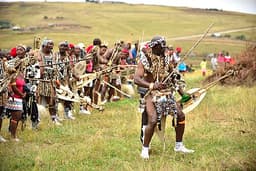
Dinuzulu kaCetshwayo
Emperor · Modern
47.8Total

Philip III of Spain
Emperor · Modern
45.1Total
Basic Information
Born
1868
1578
Died
1913
1621
Era
Modern
Modern
Nationality
Zulu Kingdom
Spain
Occupation
Emperor
Emperor
Civilization
Other
Western
Score Comparison
Military (10%)
50.0
20.0
Political (20%)
35.1
25.0
Influence (20%)
55.7
51.8
Legacy (20%)
45.8
45.0
Leadership (15%)
51.9
65.0
Strategy (15%)
43.7
54.3
TOTAL
47.8
45.1
Dinuzulu kaCetshwayo — Complete Timeline
1889 AD
Exile to St HelenaPolitical Action◆ Major
Following the Zulu Civil War and the British annexation of Zululand, Dinuzulu was captured by British forces and exiled to the island of St Helena. This removed the last Zulu monarch from his kingdom, ending the independent Zulu monarchy.
British ColonialismExileZulu Kingdom
Impact: regionaltragic
1897 AD
Return from ExilePolitical Action
After eight years on St Helena, Dinuzulu was allowed to return to Zululand, which had been incorporated into the British Colony of Natal. He was reinstated as a chief but under British authority, with reduced powers.
British ColonialismReturnZulu Kingdom
Impact: regional
1908 AD
Arrest for RebellionPolitical Action◆ Major
Dinuzulu was arrested by British authorities on charges of inciting the Bambatha Rebellion of 1906. He was tried and convicted, leading to a second exile, this time to a farm in the Transvaal.
Bambatha RebellionBritish ColonialismExile
Impact: regionaltragic
Philip III of Spain — Complete Timeline
1598 AD
Reign of the Duke of LermaPolitical Action◆ Major
Philip III delegated the governance of Spain to his favorite, the Duke of Lerma, who effectively ruled as a prime minister. Lerma's administration was marked by corruption, favoritism, and a decline in royal authority, contributing to the economic and political decline of Spain.
FavoritismDecline
Impact: nationaldestructive
1607 AD
Bankruptcy of the Spanish crownOther◆ Major
Under Philip III, the Spanish crown declared bankruptcy for the third time in its history, unable to service its massive debts from the Habsburg wars. The bankruptcy led to a suspension of payments to creditors and a further deterioration of Spain's financial position.
Financial crisisBankruptcy
Impact: nationaldestructive
1609 AD
Expulsion of the MoriscosPolitical Action◆ Major
Philip III of Spain ordered the expulsion of the Moriscos, descendants of Muslims who had converted to Christianity, from Spain. Over 300,000 Moriscos were forced to leave, primarily to North Africa. The expulsion caused a significant demographic and economic decline, particularly in Valencia and Aragon.
ExpulsionReligious persecution
Impact: nationaldestructive
Twelve Years' TrucePolitical Action◆ Major
Philip III signed the Twelve Years' Truce with the Dutch Republic, effectively recognizing Dutch independence from Spain. The truce ended the Eighty Years' War for a period, but it was seen as a sign of Spanish weakness and a concession to the rebellious provinces.
Dutch independenceEighty Years' War
Impact: regional
Expert Analysis
Origins
Dinuzulu kaCetshwayo was born in 1868 into the Zulu royal family, son of King Cetshwayo. His early life was shaped by the aftermath of the Anglo-Zulu War of 1879, which dismantled the Zulu kingdom. He was educated in the traditional Zulu military and court systems, but his upbringing was overshadowed by British colonial encroachment. Philip III of Spain was born in 1578 in Madrid, son of Philip II and Anna of Austria. He was raised in a highly religious Habsburg court, receiving a strict Catholic education. His father's empire was the world's largest, but its finances were strained by continuous warfare.
Rise to Power
Dinuzulu ascended to the Zulu throne in 1884, following the Zulu Civil War that erupted after Cetshwayo's death. He initially sought British support, but the British annexed Zululand in 1887, reducing his power. He was exiled to St Helena in 1889 after being captured by British forces. Philip III became king in 1598 upon his father's death. Unlike his father, he had little interest in governance, delegating authority to the Duke of Lerma, his chief minister. Lerma's influence marked the beginning of the 'valimiento' system, where favorites ruled in the king's stead.
Leadership & Governance
Dinuzulu's leadership was that of a traditional Zulu monarch, but his authority was severely constrained by British colonial rule. He attempted to maintain Zulu cohesion through diplomacy, but his reliance on British goodwill proved futile. In contrast, Philip III's governance was characterized by delegation and piety. He left administrative matters to Lerma, who pursued a policy of peace through the Twelve Years' Truce (1609-1621) with the Dutch, effectively recognizing Dutch independence. However, this truce was a strategic failure, as it allowed the Dutch to strengthen their navy and trade networks.
Triumph & Tragedy
Dinuzulu's greatest triumph was his temporary return to Zululand in 1897 after eight years on St Helena, but he was arrested again in 1907 for allegedly inciting the Bambatha Rebellion. He was tried and convicted, dying in exile in 1913. His tragedy was the loss of Zulu sovereignty and his personal freedom. Philip III's expulsion of the Moriscos (1609-1614) forced over 300,000 descendants of Muslims to leave Spain, damaging the economy and depopulating regions. His bankruptcy of the Spanish crown in 1607 highlighted fiscal mismanagement. His triumph was the temporary peace with the Dutch, but it came at the cost of Spanish prestige.
Character & Destiny
Dinuzulu was a resilient leader, but his strategic naivety (score 43.7) led him to trust British promises. His political score of 35.1 reflects his inability to navigate colonial politics. Philip III was devout but weak-willed, scoring 65.0 in leadership due to his delegation, but his military score of 20.0 and political score of 25.0 indicate his failure to address Spain's decline. Both were victims of larger forces: Dinuzulu of British imperialism, Philip III of the Habsburg financial crisis.
Legacy
Dinuzulu is remembered as the last Zulu monarch, symbolizing resistance to colonialism. His legacy score of 45.8 reflects the enduring memory of Zulu independence. Philip III's legacy is mixed: his expulsion of the Moriscos is condemned as ethnic cleansing, and his reign is seen as the beginning of Spain's decline. His influence score of 51.8 is higher than Dinuzulu's 55.7? Actually, Dinuzulu's influence is 55.7, Philip's 51.8. Dinuzulu's total score of 47.8 edges Philip's 45.1 by 2.7 points.
Conclusion
Dinuzulu had a greater impact as a symbol of anti-colonial resistance, while Philip III's rule accelerated Spain's decline. Dinuzulu's higher total score (47.8 vs 45.1) reflects his enduring legacy, despite his political failures. Philip III's reign was marked by missed opportunities and poor decisions. Therefore, Dinuzulu kaCetshwayo is the more significant historical figure.
Rankings
🥇
Dinuzulu kaCetshwayoLeader
Mil: 50.0Pol: 35.1Inf: 55.7
47.8
🥈
Philip III of Spain
Mil: 20.0Pol: 25.0Inf: 51.8
45.1
+2.7 behind
How This Comparison Works
Algorithm
Each figure is scored on 6 dimensions (0—100 scale) based on structured historical data: Military (10%), Political (20%), Influence (20%), Legacy (20%), Leadership (15%), Strategy (15%). The weighted total produces the final ranking.
Data Sources
Scores are computed from structured sub-indicators in the database. Scale factors adjust for era (Ancient ×0.85, Modern ×1.0) and civilization size (Eastern ×1.05, Other ×0.80) to account for differences in population and military scale.
Maximum 3 Figures
Comparisons are limited to 2—3 figures to ensure readability and statistical meaningfulness.
Error Margins
±5 points per dimension — Sub-scores are derived from historical records with inherent uncertainty. Two figures within 5 points on a dimension should be considered roughly equivalent in that area.
Total Score Accuracy
±3 points overall — The weighted combination of 6 dimensions produces a total score with approximately ±3 points of uncertainty. Differences of less than 3 points are not statistically significant— the figures are effectively tied.
Known Limitations
- Historical records are incomplete and uneven across civilizations
- Figures from oral-tradition societies may be underrepresented
- Occupation labels can misclassify multi-role figures
- Scores measure capability and impact, not moral character
- Quantitative scoring is a comparison tool, not absolute truth
Capability Radar
Military (10%) — Battles & Warfare
Battles
25
10
Win Rate
20
10
Expansion
10
5
Political (20%) — Governance & Reform
Reform
20
10
Diplomacy
25
20
Economy
15
10
Influence (20%) — Cultural & Global Reach
Cultural
40
20
Global
25
30
Legacy (20%) — Historical Impact
Historical
45
40
Longevity
30
30
Leadership (15%) — Power & Stability
Tenure
35
60
Stability
10
20
Strategy (15%) — Tactics & Innovation
Strategy
25
5
Tactics
30
5
Reform
15
5
Similar Comparisons
Comments & Discussion
No comments yet. Be the first to share your thoughts!