Loading...
Diocletian vs Eumenes II
Diocletian leads by 15.2 pts · 2 figures compared
…
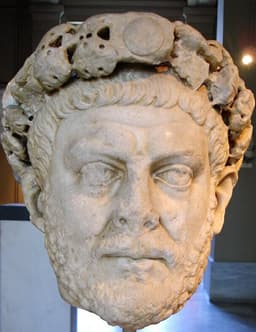
Diocletian
Emperor · Ancient
69.6Total
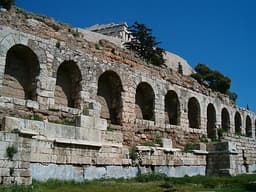
Eumenes II
Emperor · Ancient
54.4Total
Basic Information
Born
244
-220
Died
311
-158
Era
Ancient
Ancient
Nationality
Roman Empire
Pergamon
Occupation
Emperor
Emperor
Civilization
Western
Western
Score Comparison
Military (10%)
65.0
47.5
Political (20%)
82.0
62.7
Influence (20%)
72.0
58.0
Legacy (20%)
55.0
50.0
Leadership (15%)
82.0
53.2
Strategy (15%)
67.2
52.5
TOTAL
69.6
54.4
Diocletian — Complete Timeline
293 AD
Establishment of the TetrarchyReform
Diocletian created the Tetrarchy, dividing the Roman Empire into four administrative regions ruled by two senior emperors (Augusti) and two junior emperors (Caesares). This system aimed to improve governance and defense, and stabilize imperial succession.
TetrarchyReformAdministration
Impact: globalconstructive
Administrative Reorganization of the EmpireReform◆ Major
Diocletian reorganized the Roman provinces into smaller units (dioceses) grouped into four prefectures, separating civilian and military authority. This reform improved tax collection and administration, but also increased bureaucracy.
AdministrationReformProvinces
Impact: globalconstructive
301 AD
Economic Reforms (Edict on Maximum Prices)Reform◆ Major
Diocletian issued the Edict on Maximum Prices, setting price ceilings on over 1,000 goods and services to combat inflation. The edict was largely ineffective and led to black markets, but demonstrated the state's attempt to control the economy.
Economic ReformPrice ControlsInflation
Impact: global
303 AD
Diocletianic Persecution of ChristiansPolitical Action◆ Major
Diocletian issued a series of edicts ordering the persecution of Christians throughout the Roman Empire. Churches were destroyed, scriptures burned, and Christians were executed or forced to sacrifice to Roman gods. This was the last and most severe state-sponsored persecution.
PersecutionChristianityReligion
Impact: globaldestructive
305 AD
Abdication of DiocletianPolitical Action
Diocletian voluntarily abdicated the throne, retiring to his palace in Split (modern Croatia). He forced his co-emperor Maximian to do the same, setting a precedent for orderly succession, though the Tetrarchy soon collapsed after his departure.
AbdicationRetirementTetrarchy
Impact: global
Eumenes II — Complete Timeline
190 BC
Battle of MagnesiaWar◆ Major
Eumenes II fought alongside the Roman army under Scipio Asiaticus against Antiochus III at the Battle of Magnesia. His cavalry charge on the Seleucid left flank contributed to the decisive Roman victory that ended the Roman-Seleucid War.
Roman-Seleucid WarBattleAlliance
Impact: regionalconstructive
188 BC
Treaty of ApameaPolitical Action
Eumenes II negotiated the Treaty of Apamea with the Roman Republic after the Roman victory over Antiochus III. The treaty granted Pergamon control over most of the former Seleucid territories in Asia Minor, making Pergamon the dominant power in the region.
Roman-Seleucid WarTerritorial ExpansionDiplomacy
Impact: regionalconstructive
186 BC
War with Prusias I of BithyniaWar
Eumenes II fought a war against Prusias I of Bithynia, who was allied with the Galatians. The conflict ended with a Roman-mediated peace that confirmed Pergamon's territorial gains but strained relations with Rome.
Bithynian WarGalatiansRoman Mediation
Impact: regional
180 BC
Construction of the Great Altar of ZeusCultural◆ Major
Eumenes II commissioned the construction of the Great Altar of Zeus in Pergamon. The altar, adorned with a monumental frieze depicting the Gigantomachy, became a masterpiece of Hellenistic art and a symbol of Pergamene power and cultural achievement.
Hellenistic ArtArchitecturePergamon
Impact: regionalconstructive
Expert Analysis
Origins
Diocletian, born around 244 AD in Salona (modern Croatia), was the son of a freedman. He rose through the military ranks, serving under emperors like Aurelian and Probus. His humble origins contrasted with the senatorial elite, and his early career was marked by competence in logistics and command. Eumenes II, born around 221 BC in Pergamon (modern Turkey), was the son of Attalus I, the first Pergamene king to claim the title of king. He inherited a kingdom that was a minor Hellenistic state, but his father had established alliances with Rome and defeated the Galatians. Eumenes received a Greek education and was groomed for rule, steeped in the diplomatic and military traditions of the Hellenistic world.
Rise to Power
Diocletian became emperor in 284 AD after the death of Numerian. He was proclaimed by the army and quickly defeated Carinus, the other claimant. His rise was a product of the turbulent third century, where emperors were made and unmade by legions. He recognized the need for systemic change and, in 293 AD, established the Tetrarchy, dividing the empire into two halves, each ruled by an Augustus and a Caesar. This was a radical departure from previous single-emperor rule. Eumenes II ascended the throne in 197 BC upon his father's death. His early reign was dominated by the war between Rome and Antiochus III of the Seleucid Empire. Eumenes skillfully allied Pergamon with Rome, providing crucial military support, especially cavalry at the Battle of Magnesia in 190 BC. The Treaty of Apamea in 188 BC awarded Pergamon vast territories in Asia Minor, transforming it into a major power.
Leadership & Governance
Diocletian's leadership was authoritarian and reformist. He reorganized the empire into 12 dioceses and 100 provinces, separating civilian and military authority to prevent rebellions. He issued the Edict on Maximum Prices in 301 AD, attempting to curb inflation, but it failed due to black markets. He also launched the Great Persecution of Christians (303-311 AD), aiming to restore traditional Roman religion. His governance scored 82.0 in political acumen, reflecting his systemic reforms. Eumenes II governed as a Hellenistic monarch, promoting culture and diplomacy. He built the Great Altar of Zeus, a masterpiece of Hellenistic art, and expanded the library of Pergamon. He maintained a balance between Roman hegemony and local autonomy, using diplomacy to secure Roman support against enemies like Prusias I of Bithynia. His political score was 62.7, lower due to his dependence on Rome.
Triumph & Tragedy
Diocletian's greatest triumph was stabilizing the Roman Empire after decades of crisis. The Tetrarchy provided a succession mechanism and administrative efficiency. He voluntarily abdicated in 305 AD, a rare act in Roman history, and retired to his palace in Split. His tragedy was the failure of his economic reforms and the persecution of Christians, which alienated a growing segment of the population. The Tetrarchy collapsed after his abdication due to civil wars. Eumenes II's triumph was the expansion of Pergamon through the Treaty of Apamea, gaining control over Phrygia, Lydia, and other regions. He also built the Altar of Zeus, a symbol of Pergamene power. His tragedy was the endless wars with neighbors like the Galatians and Bithynia, which drained resources. He died in 159 BC, likely from illness, leaving a kingdom that soon declined under his son Attalus II.
Character & Destiny
Diocletian was pragmatic, ruthless, and systematic. He believed in strong central control and traditional Roman values. His decision to persecute Christians stemmed from a desire for religious unity. His abdication showed a rare awareness of his own mortality and the need for orderly succession. Eumenes II was a diplomat and patron of the arts. He relied on cunning and alliance-building rather than military might. His character was shaped by the need to navigate between Rome and the Hellenistic kingdoms. His destiny was to elevate Pergamon to its zenith, but his legacy was tied to Roman patronage.
Legacy
Diocletian's reforms outlasted him: the division of the empire into East and West became permanent, and his administrative structure influenced the Byzantine Empire. The Tetrarchy concept, though short-lived, inspired later imperial colleges. His economic policies were failures, but his persecution of Christians ironically strengthened the church. His total score of 69.6 reflects his high political and leadership scores but lower legacy due to the collapse of his system. Eumenes II left a cultural legacy: the Altar of Zeus is a UNESCO World Heritage site, and Pergamon's library rivaled Alexandria's. However, his kingdom was annexed by Rome in 133 BC, just 26 years after his death. His influence score of 58.0 reflects his regional impact, but his legacy score of 50.0 is modest.
Conclusion
Diocletian had a greater impact on world history. His reforms reshaped the Roman Empire and set the stage for the medieval world. Eumenes II was a competent ruler but operated within the shadow of Rome. Diocletian's total score of 69.6 versus Eumenes' 54.4 reflects this disparity. While Eumenes built a beautiful altar, Diocletian built a system that lasted centuries. The Tetrarchy's failure does not diminish its influence on later imperial structures. Therefore, Diocletian is the more significant figure in terms of political and administrative impact.
Rankings
🥇
DiocletianLeader
Mil: 65.0Pol: 82.0Inf: 72.0
69.6
🥈
Eumenes II
Mil: 47.5Pol: 62.7Inf: 58.0
54.4
+15.2 behind
How This Comparison Works
Algorithm
Each figure is scored on 6 dimensions (0—100 scale) based on structured historical data: Military (10%), Political (20%), Influence (20%), Legacy (20%), Leadership (15%), Strategy (15%). The weighted total produces the final ranking.
Data Sources
Scores are computed from structured sub-indicators in the database. Scale factors adjust for era (Ancient ×0.85, Modern ×1.0) and civilization size (Eastern ×1.05, Other ×0.80) to account for differences in population and military scale.
Maximum 3 Figures
Comparisons are limited to 2—3 figures to ensure readability and statistical meaningfulness.
Error Margins
±5 points per dimension — Sub-scores are derived from historical records with inherent uncertainty. Two figures within 5 points on a dimension should be considered roughly equivalent in that area.
Total Score Accuracy
±3 points overall — The weighted combination of 6 dimensions produces a total score with approximately ±3 points of uncertainty. Differences of less than 3 points are not statistically significant— the figures are effectively tied.
Known Limitations
- Historical records are incomplete and uneven across civilizations
- Figures from oral-tradition societies may be underrepresented
- Occupation labels can misclassify multi-role figures
- Scores measure capability and impact, not moral character
- Quantitative scoring is a comparison tool, not absolute truth
Capability Radar
Military (10%) — Battles & Warfare
Battles
65
45
Win Rate
70
50
Expansion
50
50
Political (20%) — Governance & Reform
Reform
95
55
Diplomacy
80
70
Economy
75
60
Influence (20%) — Cultural & Global Reach
Cultural
60
65
Global
75
45
Legacy (20%) — Historical Impact
Historical
85
60
Longevity
70
55
Leadership (15%) — Power & Stability
Tenure
85
65
Stability
80
55
Strategy (15%) — Tactics & Innovation
Strategy
75
60
Tactics
60
55
Reform
85
40
Similar Comparisons
Comments & Discussion
No comments yet. Be the first to share your thoughts!