Loading...
Eumenes II vs Tiberius
Eumenes II leads by 3.1 pts · 2 figures compared
…
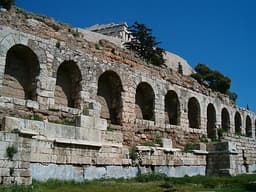
Eumenes II
Emperor · Ancient
54.4Total
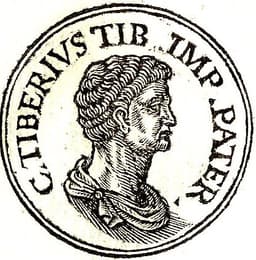
Tiberius
Emperor · Ancient
51.3Total
Basic Information
Born
-220
-42
Died
-158
37
Era
Ancient
Ancient
Nationality
Pergamon
Roman Empire
Occupation
Emperor
Emperor
Civilization
Western
Western
Score Comparison
Military (10%)
47.5
20.0
Political (20%)
62.7
68.0
Influence (20%)
58.0
54.1
Legacy (20%)
50.0
49.2
Leadership (15%)
53.2
53.2
Strategy (15%)
52.5
52.5
TOTAL
54.4
51.3
Eumenes II — Complete Timeline
190 BC
Battle of MagnesiaWar◆ Major
Eumenes II fought alongside the Roman army under Scipio Asiaticus against Antiochus III at the Battle of Magnesia. His cavalry charge on the Seleucid left flank contributed to the decisive Roman victory that ended the Roman-Seleucid War.
Roman-Seleucid WarBattleAlliance
Impact: regionalconstructive
188 BC
Treaty of ApameaPolitical Action
Eumenes II negotiated the Treaty of Apamea with the Roman Republic after the Roman victory over Antiochus III. The treaty granted Pergamon control over most of the former Seleucid territories in Asia Minor, making Pergamon the dominant power in the region.
Roman-Seleucid WarTerritorial ExpansionDiplomacy
Impact: regionalconstructive
186 BC
War with Prusias I of BithyniaWar
Eumenes II fought a war against Prusias I of Bithynia, who was allied with the Galatians. The conflict ended with a Roman-mediated peace that confirmed Pergamon's territorial gains but strained relations with Rome.
Bithynian WarGalatiansRoman Mediation
Impact: regional
180 BC
Construction of the Great Altar of ZeusCultural◆ Major
Eumenes II commissioned the construction of the Great Altar of Zeus in Pergamon. The altar, adorned with a monumental frieze depicting the Gigantomachy, became a masterpiece of Hellenistic art and a symbol of Pergamene power and cultural achievement.
Hellenistic ArtArchitecturePergamon
Impact: regionalconstructive
Tiberius — Complete Timeline
14 AD
Accession as Roman EmperorPolitical Action◆ Major
Upon Augustus's death, Tiberius became the second Roman emperor. He was adopted by Augustus and had been given tribunician power and imperium, ensuring a smooth transition of power.
SuccessionImperial RuleAugustus
Impact: global
19 AD
Germanicus's Death and AftermathOther◆ Major
Tiberius's adopted son and heir Germanicus died under suspicious circumstances in Syria. Tiberius was suspected of involvement, leading to public grief and political tension.
DeathSuccessionSuspicion
Impact: nationaltragic
26 AD
Retirement to CapriPolitical Action◆ Major
Tiberius withdrew from Rome to the island of Capri, leaving administration to the Praetorian Prefect Sejanus. This retreat led to a power vacuum and Sejanus's eventual execution for conspiracy.
RetirementSejanusAdministration
Impact: nationaldestructive
31 AD
Execution of SejanusPolitical Action◆ Major
Tiberius ordered the arrest and execution of Sejanus, his powerful Praetorian Prefect, for plotting against him. Sejanus's family and supporters were also purged, restoring Tiberius's control.
PurgePraetorian GuardConspiracy
Impact: nationaldestructive
Reign of Terror (Tiberius)Political Action◆ Major
After Sejanus's fall, Tiberius conducted a series of treason trials and executions, targeting senators and equestrians. Many were condemned on flimsy charges, creating an atmosphere of fear.
Treason TrialsPolitical RepressionTerror
Impact: nationaldestructive
Expert Analysis
Origins
Eumenes II (r. 197–159 BCE) was born into the Attalid dynasty of Pergamon, a small Hellenistic kingdom in western Anatolia. His father, Attalus I, had established Pergamon as a major power by defeating the Galatians. Eumenes received a Greek education and was groomed for rule from an early age. His family’s wealth came from silver mines and trade, enabling ambitious building projects.
Tiberius (42 BCE–37 CE) was born to Tiberius Claudius Nero and Livia Drusilla, a patrician family. His mother later divorced and married Octavian (Augustus), making Tiberius the stepson of the first Roman emperor. He received a traditional Roman education and military training. His early career included command in campaigns in Armenia and Pannonia.
Rise to Power
Eumenes II ascended the throne in 197 BCE upon his father’s death, inheriting a kingdom allied with Rome. His rise was cemented by his role in the Roman-Seleucid War. At the Battle of Magnesia (190 BCE), Eumenes led a decisive cavalry charge that broke the Seleucid left wing, contributing to Rome’s victory. His diplomatic skill secured the Treaty of Apamea (188 BCE), which granted Pergamon control over much of western Asia Minor, effectively making it a regional hegemonic power.
Tiberius’s rise was more complex. Augustus forced him to divorce his wife Vipsania and marry Julia, Augustus’s daughter, in 11 BCE. He was adopted by Augustus in 4 CE, becoming the designated heir alongside his nephew Germanicus. After Augustus’s death in 14 CE, Tiberius assumed power smoothly due to his earlier grant of tribunician power and imperium. His political score of 68.0 reflects his careful maneuvering within the imperial system.
Leadership & Governance
Eumenes II governed Pergamon as a Hellenistic king, blending Greek culture with pragmatic diplomacy. He commissioned the Great Altar of Zeus, a massive structure with a frieze depicting the Gigantomachy, symbolizing Pergamon’s victory over the Galatians. He also supported libraries and schools, making Pergamon a cultural rival to Alexandria. His leadership score of 53.2 reflects effective but unremarkable administrative skills.
Tiberius’s governance was marked by efficiency and parsimony. He maintained Augustus’s policies, kept the provinces under control, and reduced taxes. However, his leadership style was aloof and indecisive. He relied heavily on the Praetorian Prefect Sejanus, leading to a concentration of power that culminated in Sejanus’s conspiracy. After executing Sejanus in 31 CE, Tiberius unleashed a reign of terror, executing many senators and equestrians on treason charges. His military score of 20.0 is low because he rarely commanded armies after his accession.
Triumph & Tragedy
Eumenes II’s greatest triumph was the Treaty of Apamea, which expanded Pergamon’s territory and wealth. He also successfully defended against Prusias I of Bithynia and the Galatians. His tragedy was the growing dependence on Rome: after his death, his son Attalus III bequeathed the kingdom to Rome, ending the dynasty. Eumenes’s score of 58.0 in influence reflects his ability to shape regional politics but also his ultimate subordination to Rome.
Tiberius’s triumphs include a stable succession and effective provincial administration. He also annexed Cappadocia and consolidated Roman control in the east. His tragedies are manifold: the suspicious death of Germanicus (19 CE), his retreat to Capri (26 CE), and the reign of terror after Sejanus’s fall. His legacy score of 49.2 is middling, as his later years tarnished his reputation. Tacitus and Suetonius painted him as a tyrant, though modern historians note his administrative competence.
Character & Destiny
Eumenes II was a capable diplomat and patron of the arts. His character was pragmatic, seeking to preserve Pergamon’s autonomy through alliance with Rome. His destiny was to build a kingdom that thrived under Roman protection but could not survive without it.
Tiberius was intelligent but melancholic and suspicious. His character flaws—indecision, paranoia, and cruelty—led to his isolation and the terror of his final years. His destiny was to be a competent emperor whose reputation was destroyed by his own actions and the bias of historical sources.
Legacy
Eumenes II’s legacy is the Great Altar of Zeus, now in the Pergamon Museum in Berlin, and the cultural flourishing of Pergamon. The city’s library and school of sculpture influenced Hellenistic art. Politically, his reign marked the peak of Attalid power, but his dependence on Rome set the stage for the kingdom’s absorption.
Tiberius’s legacy is mixed. He established the precedent of imperial adoption and succession, but his reign exposed the dangers of concentrating power in the Praetorian Guard. His legal reforms and financial prudence were overshadowed by the terror. In historical memory, he is often compared unfavorably to Augustus.
Conclusion
Eumenes II had a greater impact on his region and era than Tiberius. His diplomatic and cultural achievements (total score 54.4) shaped the Hellenistic world and left a lasting artistic monument. Tiberius (51.3) was a competent administrator whose reign was marred by paranoia and repression. While both ruled effectively, Eumenes II’s positive legacy and strategic alliance with Rome secured Pergamon’s influence for decades, whereas Tiberius’s later years damaged the principate’s reputation. Eumenes II emerges as the more successful leader.
Rankings
🥇
Eumenes IILeader
Mil: 47.5Pol: 62.7Inf: 58.0
54.4
🥈
Tiberius
Mil: 20.0Pol: 68.0Inf: 54.1
51.3
+3.1 behind
How This Comparison Works
Algorithm
Each figure is scored on 6 dimensions (0—100 scale) based on structured historical data: Military (10%), Political (20%), Influence (20%), Legacy (20%), Leadership (15%), Strategy (15%). The weighted total produces the final ranking.
Data Sources
Scores are computed from structured sub-indicators in the database. Scale factors adjust for era (Ancient ×0.85, Modern ×1.0) and civilization size (Eastern ×1.05, Other ×0.80) to account for differences in population and military scale.
Maximum 3 Figures
Comparisons are limited to 2—3 figures to ensure readability and statistical meaningfulness.
Error Margins
±5 points per dimension — Sub-scores are derived from historical records with inherent uncertainty. Two figures within 5 points on a dimension should be considered roughly equivalent in that area.
Total Score Accuracy
±3 points overall — The weighted combination of 6 dimensions produces a total score with approximately ±3 points of uncertainty. Differences of less than 3 points are not statistically significant— the figures are effectively tied.
Known Limitations
- Historical records are incomplete and uneven across civilizations
- Figures from oral-tradition societies may be underrepresented
- Occupation labels can misclassify multi-role figures
- Scores measure capability and impact, not moral character
- Quantitative scoring is a comparison tool, not absolute truth
Capability Radar
Military (10%) — Battles & Warfare
Battles
45
45
Win Rate
50
50
Expansion
50
20
Political (20%) — Governance & Reform
Reform
55
65
Diplomacy
70
60
Economy
60
55
Influence (20%) — Cultural & Global Reach
Cultural
65
40
Global
45
45
Legacy (20%) — Historical Impact
Historical
60
55
Longevity
55
50
Leadership (15%) — Power & Stability
Tenure
65
70
Stability
55
50
Strategy (15%) — Tactics & Innovation
Strategy
60
60
Tactics
55
55
Reform
40
40
Similar Comparisons
Comments & Discussion
No comments yet. Be the first to share your thoughts!