Loading...
This comparison has not been analyzed yet.
One-time AI generation (~1 minute). Scores and timeline are already available below.
Djet vs Shabaka
Shabaka leads by 21.5 pts · 2 figures compared
…
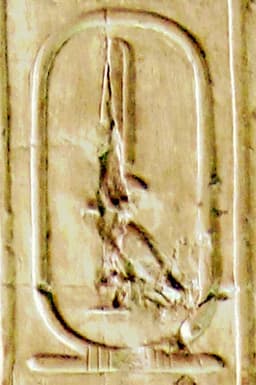
Djet
Emperor · Ancient
34.6Total

Shabaka
Emperor · Ancient
56.1Total
Basic Information
Born
-3000
-714
Died
-2980
-702
Era
Ancient
Ancient
Nationality
Early Egypt
Third Intermediate Egypt
Occupation
Emperor
Emperor
Civilization
Middle Eastern
Other
Score Comparison
Military (10%)
10.2
55.0
Political (20%)
32.1
68.0
Influence (20%)
44.0
56.4
Legacy (20%)
34.2
47.5
Leadership (15%)
31.2
67.0
Strategy (15%)
45.0
43.3
TOTAL
34.6
56.1
Djet — Complete Timeline
3000 BC
Reigned as Serpent KingPolitical Action
Djet ruled for about 10-20 years, known from his serpent hieroglyph. His reign saw continued consolidation of the First Dynasty, though fewer records survive compared to his predecessors.
ReignSerpentFirst Dynasty
Impact: regional
Married MerneithPolitical Action◆ Major
Djet married Merneith, who later became regent for their son Den. This marriage linked the royal line and ensured dynastic continuity, with Merneith playing a key role in the succession.
MarriageDynastyMerneith
Impact: national
Built Tomb at AbydosCultural
Djet constructed a tomb at Abydos, featuring a large rectangular superstructure and subsidiary burials. The tomb contained a stela with his serpent name, one of the earliest examples of royal iconography.
TombAbydosStela
Shabaka — Complete Timeline
714 BC
Conquest of EgyptWar
Shabaka, a Kushite king from Napata, invaded Egypt and defeated the fragmented 22nd and 23rd Dynasties, unifying the Nile Valley under the 25th Dynasty. He established his capital at Memphis, ruling as pharaoh.
Kushite Conquest25th DynastyUnification
Impact: regional
710 BC
Commission of the Shabaka StoneCultural◆ Major
Shabaka ordered the inscription of the Memphite Theology on a basalt stone, preserving an ancient creation myth centered on the god Ptah. This artifact became a key source for Egyptian religious thought.
Shabaka StoneMemphite TheologyReligion
Impact: regionalconstructive
Restoration of Egyptian templesCultural
Shabaka initiated a program of temple restoration across Egypt, particularly at Karnak and Luxor, reviving traditional religious practices after the fragmentation of the preceding dynasties.
Temple RestorationKarnakLuxor
Impact: nationalconstructive
702 BC
Death and successionPolitical Action
Shabaka died after a reign of about 12 years, succeeded by his nephew Shebitku. His death marked the end of the initial Kushite consolidation, but his dynasty continued to rule Egypt.
DeathSuccession25th Dynasty
Impact: national
This comparison has not been analyzed yet.
One-time AI generation (~1 minute). Scores and timeline are already available below.
Rankings
🥇
ShabakaLeader
Mil: 55.0Pol: 68.0Inf: 56.4
56.1
🥈
Djet
Mil: 10.2Pol: 32.1Inf: 44.0
34.6
+21.5 behind
How This Comparison Works
Algorithm
Each figure is scored on 6 dimensions (0—100 scale) based on structured historical data: Military (10%), Political (20%), Influence (20%), Legacy (20%), Leadership (15%), Strategy (15%). The weighted total produces the final ranking.
Data Sources
Scores are computed from structured sub-indicators in the database. Scale factors adjust for era (Ancient ×0.85, Modern ×1.0) and civilization size (Eastern ×1.05, Other ×0.80) to account for differences in population and military scale.
Maximum 3 Figures
Comparisons are limited to 2—3 figures to ensure readability and statistical meaningfulness.
Error Margins
±5 points per dimension — Sub-scores are derived from historical records with inherent uncertainty. Two figures within 5 points on a dimension should be considered roughly equivalent in that area.
Total Score Accuracy
±3 points overall — The weighted combination of 6 dimensions produces a total score with approximately ±3 points of uncertainty. Differences of less than 3 points are not statistically significant— the figures are effectively tied.
Known Limitations
- Historical records are incomplete and uneven across civilizations
- Figures from oral-tradition societies may be underrepresented
- Occupation labels can misclassify multi-role figures
- Scores measure capability and impact, not moral character
- Quantitative scoring is a comparison tool, not absolute truth
Capability Radar
Military (10%) — Battles & Warfare
Battles
5
40
Win Rate
5
45
Expansion
5
50
Political (20%) — Governance & Reform
Reform
10
55
Diplomacy
10
50
Economy
10
45
Influence (20%) — Cultural & Global Reach
Cultural
15
60
Global
5
40
Legacy (20%) — Historical Impact
Historical
15
55
Longevity
10
50
Leadership (15%) — Power & Stability
Tenure
20
40
Stability
15
50
Strategy (15%) — Tactics & Innovation
Strategy
5
40
Tactics
5
35
Reform
5
30
Similar Comparisons
Comments & Discussion
No comments yet. Be the first to share your thoughts!