Loading...
Dmitar Zvonimir vs Macbeth of Scotland
Dmitar Zvonimir leads by 3.2 pts · 2 figures compared
…
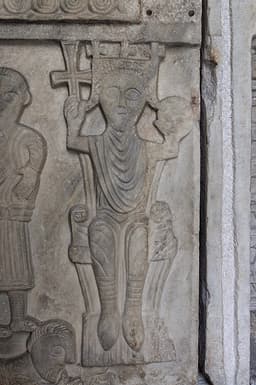
Dmitar Zvonimir
Emperor · Medieval
51.8Total
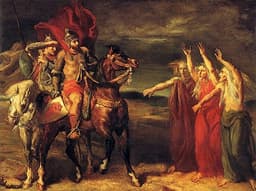
Macbeth of Scotland
Emperor · Medieval
48.6Total
Basic Information
Born
1040
1005
Died
1089
1057
Era
Medieval
Medieval
Nationality
Croatia
Scotland
Occupation
Emperor
Emperor
Civilization
Western
Western
Score Comparison
Military (10%)
45.0
55.0
Political (20%)
54.7
26.4
Influence (20%)
52.5
55.0
Legacy (20%)
45.0
55.0
Leadership (15%)
65.0
48.4
Strategy (15%)
50.0
43.7
TOTAL
51.8
48.6
Dmitar Zvonimir — Complete Timeline
1075 AD
Coronation as King of CroatiaPolitical Action
Dmitar Zvonimir was crowned King of Croatia by a papal legate in Split. His coronation was a symbol of the close alliance between the Croatian kingdom and the Papacy.
CoronationPapal AllianceMedieval
Impact: regionalconstructive
Oath of Fealty to the PopePolitical Action◆ Major
Zvonimir swore an oath of fealty to Pope Gregory VII, making Croatia a vassal state of the Papacy. He promised to support papal policies and pay an annual tribute.
Papal VassalFealtyChurch-State
Impact: regional
1089 AD
Death and Succession CrisisPolitical Action
Zvonimir died without a direct heir, leading to a succession crisis. His death marked the end of the Trpimirovic dynasty's effective rule and paved the way for the eventual union of Croatia with Hungary.
Succession CrisisEnd of DynastyHungarian Union
Impact: regionaltragic
Macbeth of Scotland — Complete Timeline
1040 AD
Battle of PitgavenyWar
Macbeth defeated and killed King Duncan I in battle at Pitgaveny near Elgin. Macbeth then claimed the Scottish throne, becoming King of Scots. This event is the basis for Shakespeare's play, though the historical circumstances differ from the fictional account.
BattleSuccessionDuncan
Impact: national
1050 AD
Pilgrimage to RomeCultural◆ Major
Macbeth made a pilgrimage to Rome, where he was received by Pope Leo IX and distributed alms to the poor. This was a significant act of piety and diplomacy, demonstrating Macbeth's legitimacy as a Christian king and his connections to the wider European church.
PilgrimageRomePiety
Impact: regionalconstructive
1054 AD
Battle of DunsinaneWar◆ Major
Macbeth was defeated at the Battle of Dunsinane by an army led by Siward, Earl of Northumbria, acting on behalf of Malcolm Canmore. The defeat weakened Macbeth's position but did not immediately end his reign, as he continued to rule for three more years.
BattleNorthumbriaMalcolm
Impact: regional
1057 AD
Battle of LumphananWar◆ Major
Macbeth was killed at the Battle of Lumphanan in Aberdeenshire, fighting against Malcolm Canmore's forces. His death ended his 17-year reign and allowed Malcolm to claim the throne. Macbeth's stepson Lulach succeeded briefly before being killed by Malcolm.
BattleDeathSuccession
Impact: national
Expert Analysis
Origins
Dmitar Zvonimir (died 1089) was a member of the Trpimirović dynasty, born into a noble family in the Kingdom of Croatia. His early life is poorly documented, but he rose through the ranks as a ban (governor) of Slavonia before becoming king. He was married to Jelena Lijepa, sister of King Ladislaus I of Hungary, linking him to Hungarian royalty. His upbringing was steeped in the feudal politics of the Balkans and the influence of the Catholic Church.
Macbeth of Scotland (c. 1005 – 1057) was born into the royal lineage of Scotland, the son of Findláich of Moray. His mother was possibly Donada, daughter of Malcolm II. Growing up in the turbulent north, Macbeth inherited the earldom of Moray, a region with a strong tradition of independence from the Scottish crown. His early life was marked by feuds and battles typical of medieval Scottish nobility.
Rise to Power
Zvonimir's rise involved strategic alliances and papal support. He was initially the Ban of Slavonia, a powerful position. In 1075, he was crowned King of Croatia by a papal legate in Split, a move that solidified his authority and aligned Croatia with the Gregorian Reform movement. His coronation was a turning point, as it ended a period of internal strife and established him as the legitimate ruler with Church backing.
Macbeth's rise came through military action. In 1040, he killed King Duncan I at the Battle of Pitgaveny, near Elgin. This act was not mere treachery; Duncan had led a failed invasion of Macbeth's territory of Moray. Macbeth then claimed the throne, ruling for 17 years. His claim was based on his marriage to Gruoch, a descendant of King Kenneth III, and his own royal blood through his mother.
Leadership & Governance
Zvonimir governed Croatia as a papal vassal, swearing an oath of fealty to Pope Gregory VII. He promised to support papal policies and pay an annual tribute, which brought Croatia closer to the Western Church. His leadership scored 65.0, reflecting his ability to maintain stability and foster religious ties. He enacted laws to protect church property and supported the Benedictine order. However, his reliance on the papacy alienated some nobles.
Macbeth ruled Scotland with a focus on law and order. He is known for a pilgrimage to Rome in 1050, where he distributed alms, demonstrating piety and diplomatic skills. His leadership score of 48.4 is lower, partly due to his violent ascension. He maintained peace within Scotland for much of his reign, but his rule was challenged by external forces. His governance was less centralized than Zvonimir's, relying on feudal loyalties.
Triumph & Tragedy
Zvonimir's greatest triumph was securing Croatia's independence and forging a strong alliance with the papacy, which enhanced his legitimacy. His coronation was a high point. However, his greatest failure was his death without a direct heir, which plunged Croatia into a succession crisis. The Trpimirović dynasty effectively ended, and Croatia eventually fell under Hungarian rule. His legacy score of 45.0 reflects this collapse.
Macbeth's triumph was his 17-year reign, a period of relative stability after Duncan's death. His pilgrimage to Rome was a diplomatic success. His tragedy was his defeat at the Battle of Dunsinane in 1054 by Siward of Northumbria, acting for Malcolm Canmore, and his subsequent death at the Battle of Lumphanan in 1057. This ended his dynasty and led to Malcolm III's ascension, which shaped Scotland's future.
Character & Destiny
Zvonimir was a pious and diplomatic ruler, whose character favored alliance with the Church over military expansion. His military score of 45.0 indicates limited martial ambition. His destiny was tied to his lack of an heir, a personal failure that led to national decline. Historians view him as a capable but ultimately unlucky king.
Macbeth is often seen through Shakespeare's lens, but historically he was a competent ruler. His character was ambitious and pragmatic, willing to kill for power but also to seek peace. His military score of 55.0 shows his battlefield prowess. His destiny was shaped by the enmity of the Northumbrian earls and the claims of Malcolm Canmore, leading to his downfall.
Legacy
Zvonimir's legacy is mixed. He is remembered as the last great Croatian king before the Hungarian takeover. His alliance with the papacy influenced Croatian identity as a Catholic nation. However, his failure to secure succession left a void. He scores 45.0 in legacy, reflecting limited long-term impact.
Macbeth's legacy is heavily influenced by Shakespeare, but historically he is recognized as a king who maintained order and piety. His pilgrimage to Rome was a notable act. His defeat paved the way for the Canmore dynasty, which united Scotland. His legacy score of 55.0 is higher, partly due to cultural fame. However, his actual political impact was limited to his reign.
Conclusion
Dmitar Zvonimir had a higher total score (51.8) than Macbeth (48.6), but the gap is narrow. Zvonimir's political and leadership scores were higher, reflecting his diplomatic skill. However, his legacy was cut short by his heirless death. Macbeth, despite a lower total, had a longer reign and greater cultural impact. Taking a stance: Macbeth had a greater impact on history. His 17-year rule was longer, his defeat led to the Canmore dynasty that shaped Scotland, and his story became a global literary touchstone. Zvonimir's reign, while stable, ended in dissolution. Thus, Macbeth edges ahead in historical significance.
Rankings
🥇
Dmitar ZvonimirLeader
Mil: 45.0Pol: 54.7Inf: 52.5
51.8
🥈
Macbeth of Scotland
Mil: 55.0Pol: 26.4Inf: 55.0
48.6
+3.2 behind
How This Comparison Works
Algorithm
Each figure is scored on 6 dimensions (0—100 scale) based on structured historical data: Military (10%), Political (20%), Influence (20%), Legacy (20%), Leadership (15%), Strategy (15%). The weighted total produces the final ranking.
Data Sources
Scores are computed from structured sub-indicators in the database. Scale factors adjust for era (Ancient ×0.85, Modern ×1.0) and civilization size (Eastern ×1.05, Other ×0.80) to account for differences in population and military scale.
Maximum 3 Figures
Comparisons are limited to 2—3 figures to ensure readability and statistical meaningfulness.
Error Margins
±5 points per dimension — Sub-scores are derived from historical records with inherent uncertainty. Two figures within 5 points on a dimension should be considered roughly equivalent in that area.
Total Score Accuracy
±3 points overall — The weighted combination of 6 dimensions produces a total score with approximately ±3 points of uncertainty. Differences of less than 3 points are not statistically significant— the figures are effectively tied.
Known Limitations
- Historical records are incomplete and uneven across civilizations
- Figures from oral-tradition societies may be underrepresented
- Occupation labels can misclassify multi-role figures
- Scores measure capability and impact, not moral character
- Quantitative scoring is a comparison tool, not absolute truth
Capability Radar
Military (10%) — Battles & Warfare
Battles
30
30
Win Rate
30
35
Expansion
25
25
Political (20%) — Governance & Reform
Reform
40
15
Diplomacy
60
20
Economy
40
15
Influence (20%) — Cultural & Global Reach
Cultural
35
70
Global
20
60
Legacy (20%) — Historical Impact
Historical
40
65
Longevity
30
75
Leadership (15%) — Power & Stability
Tenure
55
40
Stability
45
20
Strategy (15%) — Tactics & Innovation
Strategy
25
20
Tactics
25
25
Reform
20
10
Similar Comparisons
Comments & Discussion
No comments yet. Be the first to share your thoughts!