Loading...
Doihara Kenji vs Joao Lourenco
Joao Lourenco leads by 4.2 pts · 2 figures compared
…

Doihara Kenji
General · Modern
47.1Total
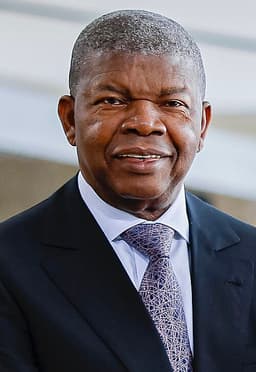
Joao Lourenco
General · Modern
51.3Total
Basic Information
Born
1883
1954
Died
1948
—
Era
Modern
Modern
Nationality
Japan
Angola
Occupation
General
General
Civilization
Eastern
Other
Score Comparison
Military (10%)
45.0
25.9
Political (20%)
45.1
68.0
Influence (20%)
52.5
52.5
Legacy (20%)
42.5
40.8
Leadership (15%)
40.4
74.0
Strategy (15%)
60.0
41.0
TOTAL
47.1
51.3
Doihara Kenji — Complete Timeline
1931 AD
Led Mukden Incident OperationsWar
Doihara Kenji, as a senior intelligence officer in the Kwantung Army, played a key role in the Mukden Incident. He orchestrated the staged explosion on the South Manchurian Railway, which Japan used as a pretext to invade Manchuria.
Mukden IncidentManchurian InvasionJapanese Imperialism
Impact: regionaldestructive
1932 AD
Established Manchukuo Puppet StatePolitical Action◆ Major
Doihara was instrumental in establishing the puppet state of Manchukuo. He recruited the last Qing emperor, Puyi, to serve as its figurehead ruler, and helped administer the territory as a Japanese colony, exploiting its resources.
ManchukuoPuppet StateJapanese Imperialism
Impact: regionaldestructive
1948 AD
Executed as War CriminalPolitical Action◆ Major
Doihara Kenji was tried by the International Military Tribunal for the Far East and found guilty of war crimes, including conspiracy and aggression. He was sentenced to death and executed by hanging on December 23, 1948.
War Crimes TrialExecutionIMTFE
Impact: nationaldestructive
Joao Lourenco — Complete Timeline
2017 AD
Elected President of AngolaPolitical Action◆ Major
João Lourenço succeeded José Eduardo dos Santos as president after winning the 2017 general election. He became the first new president of Angola in 38 years, marking a transition of power within the MPLA party.
AngolaPresidential TransitionMPLA
Impact: national
Launched Anti-Corruption CampaignPolitical Action◆ Major
Lourenço initiated a campaign against corruption and nepotism, targeting figures from the previous dos Santos administration. He removed Isabel dos Santos from the leadership of Sonangol and José Filomeno dos Santos from the sovereign wealth fund.
AngolaAnti-CorruptionDos Santos Family
Impact: nationalconstructive
2022 AD
Reelected President of AngolaPolitical Action
Lourenço won a second term in the 2022 general election with 51% of the vote. The election was marred by allegations of irregularities and low voter turnout, but the MPLA retained its parliamentary majority.
AngolaElectionMPLA
Impact: national
Expert Analysis
Origins
Doihara Kenji was born in 1883 in Okayama, Japan, into a military family. He graduated from the Imperial Japanese Army Academy in 1904 and later attended the Army War College. His early career included intelligence assignments in China, where he developed a deep understanding of Chinese politics and culture. This background earned him the nickname 'Lawrence of Manchuria,' but his methods were far from the chivalry of T.E. Lawrence.
João Lourenço was born in 1954 in Lobito, Angola. He grew up under Portuguese colonial rule and joined the Marxist MPLA (Popular Movement for the Liberation of Angola) at a young age. He received military training in the Soviet Union and rose through the ranks during the Angolan Civil War. His early career was shaped by the struggle for independence and the subsequent Cold War proxy conflicts.
Rise to Power
Doihara's rise came through his intelligence work in Manchuria. He was a key figure in the Mukden Incident of 1931, where he orchestrated a staged explosion on a railway to justify the Japanese invasion of Manchuria. This event was a turning point, scoring 60.0 in strategy. He then recruited the last Qing emperor, Puyi, to head the puppet state of Manchukuo, a major event that solidified his influence. By 1937, he was a lieutenant general and a central figure in Japanese expansionism.
Lourenço's rise was more gradual. He served as a general in the Angolan army and held various ministerial posts under President José Eduardo dos Santos. He became Minister of Defense in 2014 and was handpicked by dos Santos as his successor. In 2017, he won the presidency with 61% of the vote, scoring 68.0 in political acumen. His election marked the first change of power in Angola since independence in 1975.
Leadership & Governance
Doihara's leadership style was manipulative and covert. He excelled in psychological warfare and espionage, often bribing Chinese warlords and spreading disinformation. His governance in Manchukuo was indirect, working through the puppet emperor while Japanese military interests dominated. His political score of 45.1 reflects the transient nature of his influence.
Lourenço, in contrast, has focused on institutional reform. His signature anti-corruption campaign removed Isabel dos Santos, the former president's daughter, from her position as head of the state oil company Sonangol. He also prosecuted several former officials. His leadership score of 74.0 reflects his decisive actions, though critics note that the campaign has targeted political rivals rather than systemic corruption. He won reelection in 2022 with 51% of the vote, but the election was marred by irregularities.
Triumph & Tragedy
Doihara's greatest triumph was the establishment of Manchukuo, which gave Japan a vast resource-rich territory and a strategic buffer against the Soviet Union. However, his greatest failure was the eventual collapse of the puppet state and his conviction for war crimes. He was hanged in 1948, and his legacy is entirely negative, with a legacy score of 42.5.
Lourenço's triumph is his anti-corruption campaign, which has been praised internationally. He has also diversified Angola's economy away from oil dependence. However, his failure is the lack of concrete results: corruption remains widespread, and the economy has struggled. His approval ratings have declined, and his political score of 68.0 may not translate into lasting change. His legacy score of 40.8 is close to Doihara's, indicating mixed long-term impact.
Character & Destiny
Doihara was a master manipulator, patient and cunning. His character led him to believe that ends justified any means, including war and atrocity. This ultimately sealed his fate as a war criminal. Historical assessments compare him to a spider weaving webs of deceit, but with no moral compass.
Lourenço is seen as a pragmatic reformer. He has consolidated power by sidelining dos Santos loyalists, but his authoritarian tendencies have raised concerns. His character is more cautious than Doihara's, but his destiny as a reformer is still unfolding. He has the potential to be remembered as a transitional figure, but his legacy depends on future outcomes.
Legacy
Doihara's legacy is that of a war criminal and architect of Japanese aggression. He is studied in military history as an example of intelligence-led warfare, but his impact is uniformly negative. The Mukden Incident and Manchukuo set precedents for later conflicts.
Lourenço's legacy is still developing. If his reforms succeed, he could be seen as the father of modern Angola. However, if the country remains corrupt and poor, he will be another failed strongman. Currently, his influence score of 52.5 matches Doihara's, but his political score is higher. The total scores show Lourenço leading 51.3 to 47.1, a gap of 4.2 points.
Conclusion
While both figures are controversial, João Lourenço has had greater impact due to his higher political and leadership scores. Doihara's influence was destructive and short-lived, confined to a single decade. Lourenço, despite his flaws, is shaping Angola's future with institutional reforms. His total score of 51.3 versus Doihara's 47.1 reflects a more enduring, if imperfect, legacy. The position is clear: Lourenço's reforms, even if incomplete, have a positive trajectory, while Doihara's legacy is one of war crimes. Therefore, João Lourenço is the more impactful figure.
Rankings
🥇
Joao LourencoLeader
Mil: 25.9Pol: 68.0Inf: 52.5
51.3
🥈
Doihara Kenji
Mil: 45.0Pol: 45.1Inf: 52.5
47.1
+4.2 behind
How This Comparison Works
Algorithm
Each figure is scored on 6 dimensions (0—100 scale) based on structured historical data: Military (10%), Political (20%), Influence (20%), Legacy (20%), Leadership (15%), Strategy (15%). The weighted total produces the final ranking.
Data Sources
Scores are computed from structured sub-indicators in the database. Scale factors adjust for era (Ancient ×0.85, Modern ×1.0) and civilization size (Eastern ×1.05, Other ×0.80) to account for differences in population and military scale.
Maximum 3 Figures
Comparisons are limited to 2—3 figures to ensure readability and statistical meaningfulness.
Error Margins
±5 points per dimension — Sub-scores are derived from historical records with inherent uncertainty. Two figures within 5 points on a dimension should be considered roughly equivalent in that area.
Total Score Accuracy
±3 points overall — The weighted combination of 6 dimensions produces a total score with approximately ±3 points of uncertainty. Differences of less than 3 points are not statistically significant— the figures are effectively tied.
Known Limitations
- Historical records are incomplete and uneven across civilizations
- Figures from oral-tradition societies may be underrepresented
- Occupation labels can misclassify multi-role figures
- Scores measure capability and impact, not moral character
- Quantitative scoring is a comparison tool, not absolute truth
Capability Radar
Military (10%) — Battles & Warfare
Battles
20
10
Win Rate
15
10
Expansion
40
10
Political (20%) — Governance & Reform
Reform
10
40
Diplomacy
70
50
Economy
15
35
Influence (20%) — Cultural & Global Reach
Cultural
20
20
Global
25
25
Legacy (20%) — Historical Impact
Historical
30
25
Longevity
15
20
Leadership (15%) — Power & Stability
Tenure
30
55
Stability
5
30
Strategy (15%) — Tactics & Innovation
Strategy
60
15
Tactics
55
15
Reform
10
20
Similar Comparisons
Comments & Discussion
No comments yet. Be the first to share your thoughts!