Loading...
Dolores Ibarruri vs Joseph Kabila
Dolores Ibarruri leads by 11.2 pts · 2 figures compared
…

Dolores Ibarruri
Politician · Modern
58.4Total
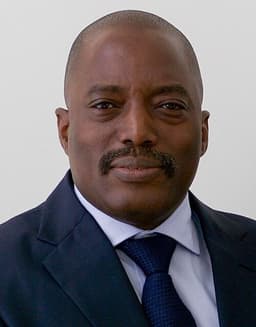
Joseph Kabila
Politician · Modern
47.2Total
Basic Information
Born
1895
1971
Died
1989
—
Era
Modern
Modern
Nationality
Spain
Congo
Occupation
Politician
Politician
Civilization
Western
Other
Score Comparison
Military (10%)
49.8
20.0
Political (20%)
68.0
40.8
Influence (20%)
56.7
49.4
Legacy (20%)
54.0
40.8
Leadership (15%)
65.0
74.0
Strategy (15%)
57.6
54.6
TOTAL
58.4
47.2
Dolores Ibarruri — Complete Timeline
1936 AD
Coined the Phrase 'No Pasarán'Cultural◆ Major
Ibarruri, known as La Pasionaria, delivered a famous radio speech on July 19, 1936, ending with the slogan 'No Pasar
SloganPropagandaCivil War
Impact: national
Elected to the Cortes as a Communist DeputyPolitical Action
Ibarruri was elected as a deputy for the Spanish Communist Party in the February 1936 general election. Her election gave her a platform to advocate for communist policies and mobilize support for the Popular Front government.
ElectionParliamentCommunism
Impact: national
1942 AD
Became President of the Spanish Communist PartyPolitical Action◆ Major
Ibarruri was appointed president of the Spanish Communist Party (PCE) in 1942 while in exile in the Soviet Union. She held this position until 1960, leading the party's opposition to Franco's regime from abroad and maintaining its ideological alignment with Moscow.
Party LeadershipExileCommunism
Impact: national
1977 AD
Returned to Spain After Franco's DeathPolitical Action◆ Major
After 38 years in exile, Ibarruri returned to Spain on May 13, 1977, following the legalization of the Communist Party. She was re-elected to the Cortes in the 1977 general election, symbolizing the return of democratic pluralism to Spain.
Return from ExileDemocratizationTransition
Impact: nationalprogressive
Joseph Kabila — Complete Timeline
2001 AD
Became President of the Democratic Republic of the CongoPolitical Action◆ Major
Joseph Kabila became President of the DRC at age 29 after his father Laurent Kabila's assassination. He inherited a country embroiled in the Second Congo War and faced the challenge of ending the conflict.
PresidencySuccessionDRC
Impact: national
2002 AD
Signed Sun City AgreementPolitical Action
Kabila's government signed the Sun City Agreement, a peace deal that ended the Second Congo War. The agreement established a transitional government and paved the way for democratic elections.
Peace AgreementSecond Congo WarTransition
Impact: regionalconstructive
2006 AD
Won First Democratic Elections in DRCPolitical Action◆ Major
Joseph Kabila won the first democratic presidential elections in the DRC since independence, defeating Jean-Pierre Bemba in a runoff. The elections were largely peaceful but marred by allegations of irregularities.
ElectionsDemocracyDRC
Impact: nationalconstructive
2016 AD
Refused to Step Down After 2016 ElectionsPolitical Action◆ Major
Kabila's refusal to step down after his constitutional term limit expired in 2016 sparked political crisis and protests. He remained in power until 2019, citing delays in organizing elections.
Constitutional CrisisTerm LimitsPolitical Instability
Impact: nationaldestructive
2019 AD
Peacefully Transferred Power to Félix TshisekediPolitical Action
Joseph Kabila peacefully transferred power to opposition leader F
Power TransferDemocracyDRC
Impact: nationalconstructive
Expert Analysis
Origins
Dolores Ibarruri, born in 1895 in Gallarta, Spain, to a Basque mining family, experienced poverty that shaped her radicalization. She joined the Spanish Socialist Workers' Party (PSOE) in 1917 and later co-founded the Spanish Communist Party (PCE) in 1921. Her education was limited, but her oratorical skills developed through labor activism. Joseph Kabila, born in 1971 in Hewa Bora, Congo, was the son of Laurent Kabila, a rebel leader. He studied in Tanzania and Uganda, and later attended military training in China. His early life was marked by exile and guerrilla warfare, as his father fought to overthrow Mobutu Sese Seko.
Rise to Power
Ibarruri rose to prominence during the Second Spanish Republic. Elected as a deputy for the PCE in 1936, she became a symbol of Republican resistance. Her radio speech on July 19, 1936, ending with 'No Pasarán', galvanized anti-fascist forces. She fled to the Soviet Union after Franco's victory in 1939, becoming president of the PCE in exile in 1942. Joseph Kabila became president at age 29 after his father's assassination on January 16, 2001. He inherited the Second Congo War, a complex conflict involving multiple African nations. He secured peace through the Sun City Agreement in 2003 and won the first democratic elections in 2006, defeating Jean-Pierre Bemba.
Leadership & Governance
Ibarruri's leadership was ideological and symbolic. As PCE president, she maintained party unity during exile, but her influence waned after Stalin's death. She supported the Soviet line, including the invasion of Czechoslovakia in 1968, which alienated some communists. She returned to Spain in 1977 and was re-elected to the Cortes, but her role was more ceremonial. Kabila's governance focused on stabilization. He oversaw a transitional government and held elections in 2006. His rule was criticized for authoritarianism, corruption, and human rights abuses. He amended the constitution in 2011 to change election rules, and his refusal to step down in 2016 sparked protests. He achieved a peaceful transfer of power in 2019, a rare feat in Africa.
Triumph & Tragedy
Ibarruri's greatest triumph was her iconic role in the Spanish Civil War, inspiring resistance. Her tragedy was the exile and the eventual defeat of the Republic. She lived to see Franco's death and the return of democracy but died in 1989, just before the fall of the USSR. Kabila's triumph includes ending the Second Congo War and holding democratic elections. His tragedy is the ongoing instability in eastern Congo and his legacy of flawed elections and repression. The 2016 political crisis damaged his reputation.
Character & Destiny
Ibarruri was passionate and unwavering, a true believer in communism. Her destiny was tied to the Republican cause; she became a myth. Kabila was pragmatic and cautious, often described as reserved. He navigated a complex political landscape but failed to build strong institutions. His character led to a mixed legacy: peacemaker but also an autocrat.
Legacy
Ibarruri's legacy is as a feminist and communist icon. The phrase 'No Pasarán' remains a symbol of resistance. She scored 54.0 in legacy. Kabila's legacy is more contested: he brought peace but not prosperity. His peaceful transfer of power is his most positive achievement. He scored 40.8 in legacy.
Conclusion
Dolores Ibarruri had greater historical impact. Her total score of 58.4 exceeds Kabila's 47.2. Her influence as a symbol of anti-fascism transcends Spain, while Kabila's achievements are more situational and less enduring. Despite his role in ending war, his governance failures and authoritarian tendencies limit his legacy. Ibarruri's impact on global leftist movements is more significant than Kabila's on Congolese politics.
Rankings
🥇
Dolores IbarruriLeader
Mil: 49.8Pol: 68.0Inf: 56.7
58.4
🥈
Joseph Kabila
Mil: 20.0Pol: 40.8Inf: 49.4
47.2
+11.2 behind
How This Comparison Works
Algorithm
Each figure is scored on 6 dimensions (0—100 scale) based on structured historical data: Military (10%), Political (20%), Influence (20%), Legacy (20%), Leadership (15%), Strategy (15%). The weighted total produces the final ranking.
Data Sources
Scores are computed from structured sub-indicators in the database. Scale factors adjust for era (Ancient ×0.85, Modern ×1.0) and civilization size (Eastern ×1.05, Other ×0.80) to account for differences in population and military scale.
Maximum 3 Figures
Comparisons are limited to 2—3 figures to ensure readability and statistical meaningfulness.
Error Margins
±5 points per dimension — Sub-scores are derived from historical records with inherent uncertainty. Two figures within 5 points on a dimension should be considered roughly equivalent in that area.
Total Score Accuracy
±3 points overall — The weighted combination of 6 dimensions produces a total score with approximately ±3 points of uncertainty. Differences of less than 3 points are not statistically significant— the figures are effectively tied.
Known Limitations
- Historical records are incomplete and uneven across civilizations
- Figures from oral-tradition societies may be underrepresented
- Occupation labels can misclassify multi-role figures
- Scores measure capability and impact, not moral character
- Quantitative scoring is a comparison tool, not absolute truth
Capability Radar
Military (10%) — Battles & Warfare
Battles
29
15
Win Rate
33
20
Expansion
34
10
Political (20%) — Governance & Reform
Reform
55
30
Diplomacy
50
40
Economy
30
25
Influence (20%) — Cultural & Global Reach
Cultural
65
15
Global
60
20
Legacy (20%) — Historical Impact
Historical
60
25
Longevity
55
20
Leadership (15%) — Power & Stability
Tenure
60
65
Stability
20
20
Strategy (15%) — Tactics & Innovation
Strategy
40
15
Tactics
40
10
Reform
45
25
Similar Comparisons
Comments & Discussion
No comments yet. Be the first to share your thoughts!