Loading...
Dong Zhuo vs Jugurtha
Dong Zhuo leads by 2.2 pts · 2 figures compared
…
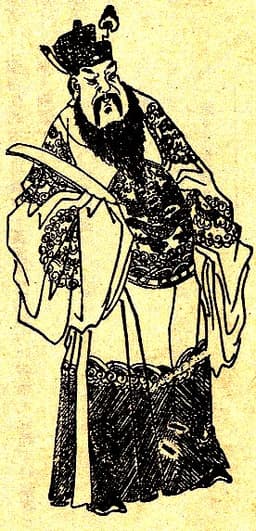
Dong Zhuo
General · Ancient
50.0Total

Jugurtha
General · Ancient
47.8Total
Basic Information
Born
138
-160
Died
192
-104
Era
Ancient
Ancient
Nationality
China
Numidia
Occupation
General
General
Civilization
Eastern
Other
Score Comparison
Military (10%)
67.5
61.7
Political (20%)
35.0
26.4
Influence (20%)
49.4
55.7
Legacy (20%)
44.2
48.3
Leadership (15%)
57.1
40.4
Strategy (15%)
60.0
56.2
TOTAL
50.0
47.8
Dong Zhuo — Complete Timeline
189 AD
Dong Zhuo's Entry into LuoyangPolitical Action
After the death of Emperor Ling, Dong Zhuo marched his army into the capital Luoyang, ostensibly to support the He family. He deposed the young Emperor Liu Bian and installed his brother Liu Xie (Emperor Xian), seizing control of the imperial government.
CoupPower SeizureImperial Control
Impact: nationaldestructive
190 AD
Burning of LuoyangOther◆ Major
Facing a coalition of eastern warlords, Dong Zhuo ordered the evacuation and systematic destruction of Luoyang. The city was burned, its palaces and libraries destroyed, and the population forcibly relocated to Chang'an. This act devastated the Han capital.
DestructionCapital BurnedWar Crime
Impact: nationaldestructive
192 AD
Dong Zhuo's AssassinationPolitical Action◆ Major
Dong Zhuo was assassinated in a plot orchestrated by his trusted subordinate L
AssassinationPower ShiftConspiracy
Impact: national
Jugurtha — Complete Timeline
117 BC
Assassination of HiempsalPolitical Action◆ Major
Jugurtha ordered the assassination of his cousin Hiempsal, a co-heir to the Numidian throne. This act triggered a civil war with his other cousin Adherbal and led to Roman intervention in Numidia, setting the stage for the Jugurthine War.
NumidiaAssassinationCivil War
Impact: regionaldestructive
112 BC
Siege of CirtaWar◆ Major
Jugurtha besieged the city of Cirta, where his rival Adherbal had taken refuge. After capturing the city, Jugurtha executed Adherbal and massacred many Roman and Italian merchants, provoking the Roman Republic to declare war on Numidia.
NumidiaSiegeRoman Republic
Impact: regionaldestructive
109 BC
Battle of the MuthulWar◆ Major
Jugurtha's forces fought the Roman army under Quintus Caecilius Metellus at the Muthul River. Although the battle was tactically indecisive, Jugurtha's guerrilla tactics prevented a decisive Roman victory, prolonging the war and demonstrating his military skill.
Jugurthine WarBattleRoman Republic
Impact: regional
105 BC
Betrayal and capture by BocchusPolitical Action◆ Major
Jugurtha was betrayed by his father-in-law, King Bocchus of Mauretania, who had been allied with him. Bocchus lured Jugurtha into a trap and handed him over to the Roman general Gaius Marius, ending the Jugurthine War.
NumidiaBetrayalJugurthine War
Impact: regionaltragic
104 BC
Execution in the TullianumPolitical Action◆ Major
Jugurtha was paraded in Gaius Marius's triumph in Rome and then thrown into the Tullianum prison, where he was executed by strangulation. His death marked the end of Numidian independence and the consolidation of Roman control over North Africa.
ExecutionRoman RepublicNumidia
Impact: regionaltragic
Expert Analysis
Origins
Dong Zhuo was born around 138 AD in Lintao, Gansu, during the Eastern Han dynasty. His family had military connections, and he grew up on the frontier, where he developed martial skills and a reputation for brutality. He rose through the ranks as a general, gaining experience suppressing rebellions among the Qiang people. Jugurtha was born around 160 BC in Numidia (modern Algeria). He was an illegitimate grandson of King Masinissa, but his intelligence and military prowess earned him favor. He was adopted by his uncle Micipsa and sent to command Numidian auxiliaries in the Roman siege of Numantia (134 BC), where he learned Roman tactics and made valuable connections.
Rise to Power
Dong Zhuo's rise came during the turmoil after Emperor Ling's death in 189 AD. He marched his army into Luoyang, ostensibly to support the He family, but quickly seized control. He deposed the young Emperor Shao and installed his puppet, Emperor Xian, effectively becoming the de facto ruler. His entry into Luoyang (turning point) marked the beginning of his dominance. Jugurtha's rise was more calculated. After Micipsa's death in 118 BC, the kingdom was divided between Jugurtha and his cousins Hiempsal and Adherbal. Jugurtha ordered the assassination of Hiempsal (major event), then waged war against Adherbal, besieging him in Cirta. Despite Roman intervention, Jugurtha captured Cirta, executed Adherbal, and massacred Italian merchants, provoking Rome.
Leadership & Governance
Dong Zhuo's leadership was characterized by cruelty and paranoia. He ruled Luoyang through terror, executing opponents and confiscating property. He failed to build alliances, instead alienating the aristocracy and even his own subordinates. His governance score of 35.0 reflects his inability to establish legitimacy or administrative stability. In contrast, Jugurtha's leadership (40.4) was more cunning. He used bribery and diplomacy to sway Roman senators, delaying military action against him. However, his reliance on tribal loyalty and personal charisma was insufficient against Roman discipline. Both lacked systematic governance: Dong Zhuo's regime collapsed within two years, while Jugurtha's kingdom was annexed after his capture.
Triumph & Tragedy
Dong Zhuo's greatest triumph was his swift seizure of the capital and installation of a puppet emperor, demonstrating his military prowess (67.5). His tragedy was the burning of Luoyang in 190 AD (major event), which destroyed the Han capital and triggered decades of civil war. His assassination in 192 AD by his trusted officer Lü Bu (major event) ended his rule in a fittingly treacherous act. Jugurtha's triumph was his prolonged resistance against Rome, including the Battle of the Muthul (major event) where he fought the Romans to a standstill. His tragedy was his betrayal by his father-in-law Bocchus (major event), who handed him to the Romans. He was executed in the Tullianum prison (major event) after being paraded in Marius's triumph.
Character & Destiny
Dong Zhuo was notoriously cruel and impulsive. His decision to burn Luoyang alienated the entire realm and united his enemies. His paranoia led him to distrust even his closest allies, ultimately causing his downfall. Jugurtha was more patient and strategic, but his corruption of Roman officials only delayed the inevitable. His overconfidence in tribal alliances proved fatal when Bocchus switched sides. Both men's characters—Dong Zhuo's brutality and Jugurtha's duplicity—shaped their fates: Dong Zhuo died violently at the hands of a subordinate, while Jugurtha was betrayed by a relative.
Legacy
Dong Zhuo's legacy is one of destruction. His seizure of power and destruction of Luoyang accelerated the collapse of the Han dynasty, leading to the Three Kingdoms period. His influence on Chinese history is indirect but profound: the chaos he unleashed shaped the careers of figures like Cao Cao and Yuan Shao. Jugurtha's legacy is more symbolic. His war exposed the corruption of the Roman Senate and paved the way for the reforms of Gaius Marius. The Jugurthine War (112-106 BC) demonstrated the decline of the Roman aristocracy and the rise of populist generals. His name became synonymous with resistance against imperialism.
Conclusion
Dong Zhuo and Jugurtha were both ambitious warlords who challenged established orders, but their impacts differ. Dong Zhuo's total score of 50.0 edges out Jugurtha's 47.8, but the gap is narrow. However, Dong Zhuo's actions triggered a chain reaction that reshaped Chinese history for centuries, while Jugurtha's war was a symptom of Rome's growing pains. Dong Zhuo had greater immediate impact: his destruction of Luoyang and destabilization of the Han dynasty set the stage for the Three Kingdoms era, a formative period in Chinese civilization. Jugurtha's resistance, while impressive, was ultimately a footnote in Rome's expansion. Therefore, Dong Zhuo's influence on history is more significant.
Rankings
🥇
Dong ZhuoLeader
Mil: 67.5Pol: 35.0Inf: 49.4
50.0
🥈
Jugurtha
Mil: 61.7Pol: 26.4Inf: 55.7
47.8
+2.2 behind
How This Comparison Works
Algorithm
Each figure is scored on 6 dimensions (0—100 scale) based on structured historical data: Military (10%), Political (20%), Influence (20%), Legacy (20%), Leadership (15%), Strategy (15%). The weighted total produces the final ranking.
Data Sources
Scores are computed from structured sub-indicators in the database. Scale factors adjust for era (Ancient ×0.85, Modern ×1.0) and civilization size (Eastern ×1.05, Other ×0.80) to account for differences in population and military scale.
Maximum 3 Figures
Comparisons are limited to 2—3 figures to ensure readability and statistical meaningfulness.
Error Margins
±5 points per dimension — Sub-scores are derived from historical records with inherent uncertainty. Two figures within 5 points on a dimension should be considered roughly equivalent in that area.
Total Score Accuracy
±3 points overall — The weighted combination of 6 dimensions produces a total score with approximately ±3 points of uncertainty. Differences of less than 3 points are not statistically significant— the figures are effectively tied.
Known Limitations
- Historical records are incomplete and uneven across civilizations
- Figures from oral-tradition societies may be underrepresented
- Occupation labels can misclassify multi-role figures
- Scores measure capability and impact, not moral character
- Quantitative scoring is a comparison tool, not absolute truth
Capability Radar
Military (10%) — Battles & Warfare
Battles
55
65
Win Rate
50
55
Expansion
35
45
Political (20%) — Governance & Reform
Reform
5
20
Diplomacy
20
60
Economy
15
25
Influence (20%) — Cultural & Global Reach
Cultural
20
40
Global
25
35
Legacy (20%) — Historical Impact
Historical
45
55
Longevity
30
45
Leadership (15%) — Power & Stability
Tenure
30
55
Stability
5
20
Strategy (15%) — Tactics & Innovation
Strategy
40
68
Tactics
45
70
Reform
10
30
Similar Comparisons
Comments & Discussion
No comments yet. Be the first to share your thoughts!