Loading...
Dong Zhuo vs Napoleon Bonaparte
Napoleon Bonaparte leads by 20.9 pts · 2 figures compared
…
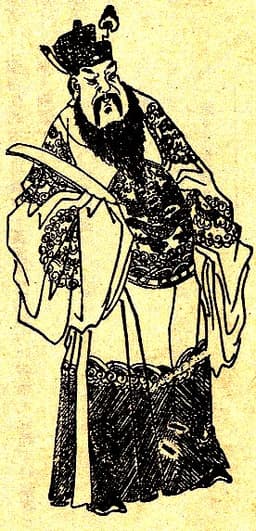
Dong Zhuo
General · Ancient
50.0Total

Napoleon Bonaparte
General · Modern
70.9Total
Basic Information
Born
138
1769
Died
192
1821
Era
Ancient
Modern
Nationality
China
France
Occupation
General
General
Civilization
Eastern
Western
Score Comparison
Military (10%)
67.5
94.0
Political (20%)
35.0
72.0
Influence (20%)
49.4
40.0
Legacy (20%)
44.2
80.0
Leadership (15%)
57.1
78.0
Strategy (15%)
60.0
90.0
TOTAL
50.0
70.9
Dong Zhuo — Complete Timeline
189 AD
Dong Zhuo's Entry into LuoyangPolitical Action
After the death of Emperor Ling, Dong Zhuo marched his army into the capital Luoyang, ostensibly to support the He family. He deposed the young Emperor Liu Bian and installed his brother Liu Xie (Emperor Xian), seizing control of the imperial government.
CoupPower SeizureImperial Control
Impact: nationaldestructive
190 AD
Burning of LuoyangOther◆ Major
Facing a coalition of eastern warlords, Dong Zhuo ordered the evacuation and systematic destruction of Luoyang. The city was burned, its palaces and libraries destroyed, and the population forcibly relocated to Chang'an. This act devastated the Han capital.
DestructionCapital BurnedWar Crime
Impact: nationaldestructive
192 AD
Dong Zhuo's AssassinationPolitical Action◆ Major
Dong Zhuo was assassinated in a plot orchestrated by his trusted subordinate L
AssassinationPower ShiftConspiracy
Impact: national
Napoleon Bonaparte — Complete Timeline
1799 AD
Coup of 18 BrumaireOther◆ Major
Napoleon Bonaparte, with support from his brother Lucien and key political figures, overthrew the Directory in a bloodless coup. He established the Consulate with himself as First Consul, effectively becoming the ruler of France. This event ended the French Revolution's most unstable period.
French RevolutionCoupRise to Power
Impact: regional
1804 AD
Promulgation of the Napoleonic CodeOther◆ Major
Napoleon enacted the Civil Code of the French, known as the Napoleonic Code, a comprehensive set of laws that replaced the fragmented feudal legal systems. The code established legal equality, protected property rights, and secularized law. It became the basis for legal systems in many European and world countries.
Legal ReformNapoleonic CodeCivil Law
Impact: globalconstructive
1805 AD
Battle of AusterlitzWar◆ Major
Napoleon's Grande Arm
Napoleonic WarsBattleDecisive Victory
Impact: global
1812 AD
Invasion of RussiaWar◆ Major
Napoleon led the Grande Arm
Napoleonic WarsInvasionDisaster
Impact: globaldestructive
1815 AD
Battle of WaterlooWar◆ Major
Napoleon's French army was defeated by the combined forces of the Duke of Wellington's Anglo-Allied army and Gebhard Leberecht von Bl
Napoleonic WarsBattleFinal Defeat
Impact: globaldestructive
Expert Analysis
dong-zhuo-vs-napoleon-bonaparte
# The Eagle and the Tyrant
On a May morning in 1815, Napoleon Bonaparte stood before his army at Waterloo, the sun breaking through clouds after a night of torrential rain. Twenty-three years earlier and half a world away, in the summer of 192, the warlord Dong Zhuo lay dead in the streets of Chang’an, his body burning with a torch thrust into his navel by his own guards. One ended his career in a blaze of glory and defeat; the other in a grotesque spectacle of betrayal. Both seized power through military force, both reshaped their worlds, and both fell because of what they were. Why did Napoleon become a legend while Dong Zhuo became a cautionary tale? The answer lies not in their ambitions, which were equally vast, but in the soil from which they grew.
Origins
Napoleon Bonaparte was born in 1769 on the island of Corsica, a Mediterranean rock that had passed from Italian to French control only a year before his birth. His family was minor nobility, impoverished and resentful of French rule. From childhood, he carried the chip of an outsider on his shoulder, a man who would conquer France to prove he belonged to it. The French Revolution, which erupted when he was twenty, shattered the old order and opened a path for talent over birth. It was a world of chaos and opportunity, and Napoleon was its perfect child.
Dong Zhuo was born in 138, in a very different world: the declining Eastern Han dynasty of China, a civilization already ancient when Napoleon’s ancestors were painting themselves blue. Dong Zhuo came from the northwest frontier, a region of rough horsemen and hardened soldiers. His family was locally powerful but coarse and unlettered by the standards of the Han court. Where Napoleon learned mathematics and military theory at elite schools, Dong Zhuo learned to ride, fight, and intimidate. The Han Empire was rotting from within—corrupt eunuchs controlled the emperor, peasant rebellions simmered, and the central government had lost its teeth. For a man like Dong Zhuo, this was not a tragedy but an invitation.
Rise to Power
Napoleon’s rise was a staircase of victories. In 1793, at the age of twenty-four, he drove British forces from the port of Toulon, earning promotion to brigadier general. By 1796, he commanded the Army of Italy, where his lightning campaigns humiliated the Austrians and made him a national hero. In 1799, he returned from a disastrous Egyptian expedition to find France exhausted by war and misrule. In the coup of 18 Brumaire, he seized power not with an army in the streets but with a combination of nerve, oratory, and a handful of grenadiers. He became First Consul, then Emperor in 1804. His path was one of calculated audacity, each step building on the last.
Dong Zhuo’s rise was a single, brutal lunge. In 189, the death of Emperor Ling left a power vacuum in the capital Luoyang. The eunuchs and the imperial family were locked in a murderous struggle. Dong Zhuo marched his frontier army—hardened, loyal, and utterly ruthless—into the city on the pretext of restoring order. He deposed the young emperor, installed a puppet child, and declared himself Chancellor. There was no subtlety, no coalition-building, no appeal to law or legitimacy. He simply took. Where Napoleon climbed, Dong Zhuo smashed.
Leadership & Governance
Napoleon governed as he fought: with energy, intelligence, and a relentless drive for order. He centralized the French state, created the Bank of France, and most enduringly, codified French law in the Napoleonic Code—a system that enshrined equality before the law, protected property rights, and secularized the state. His military genius is beyond dispute: he won over sixty battles, from Austerlitz in 1805 to Jena in 1806, by combining speed, deception, and devastating artillery. He inspired loyalty in his men, who called him “the Little Corporal” with affection, not contempt. Yet his political score of 75.0 reflects his fatal flaw: he could conquer but not consolidate. He made peace only when it suited him, and he alienated the very monarchies he might have reformed.
Dong Zhuo’s governance was a study in terror. He did not reform; he plundered. He did not build institutions; he destroyed them. In 190, facing a coalition of eastern warlords, he ordered the evacuation and systematic burning of Luoyang, the capital of the Han dynasty for two centuries. The imperial library, the palaces, the homes of hundreds of thousands—all went up in flames. He moved the court to Chang’an, where he ruled through fear, humiliating nobles, executing critics, and indulging in grotesque cruelties. His political score of 37.9 is not a judgment but a description: he had no political vision beyond his own survival. His military score of 71.0 reflects competence, not genius—he was a bully, not a strategist.
Triumph & Tragedy
Napoleon’s greatest moment was Austerlitz in 1805, where he crushed the combined armies of Russia and Austria in a battle so perfect it became a textbook example of military art. His tragedy was the invasion of Russia in 1812. He marched 600,000 men east; fewer than 100,000 returned. The disaster broke his aura of invincibility, and by 1814, his enemies had captured Paris. Exiled to Elba, he escaped in 1815, raised another army, and met his final defeat at Waterloo. His tragedy was not that he failed, but that he could not stop.
Dong Zhuo’s triumph was brief: for three years, he was the most powerful man in China. His tragedy was his assassination in 192, orchestrated by his own adopted son, the warrior Lü Bu, and the minister Wang Yun. He was lured into a trap, stabbed, and then—in a detail that history has not forgotten—his body was left in the street, where a guard thrust a torch into his navel, and he burned like a candle. His tragedy was that he inspired no loyalty beyond fear, and fear is a fragile foundation.
Character & Destiny
Napoleon was driven by ambition, but also by a vision of order and glory. He believed in merit, in law, in the possibility of a unified Europe under French leadership. His arrogance was immense, but it was the arrogance of a man who had remade the world. Dong Zhuo was driven by appetite—for power, for wealth, for pleasure. He had no vision beyond the next banquet, the next execution, the next woman. He was cruel not as a strategy but as a habit. Their characters shaped their fates: Napoleon fell because he reached too far; Dong Zhuo fell because he never reached at all.
Legacy
Napoleon’s legacy is written in the legal codes of Europe, the streets of Paris, and the memory of a world he reshaped. His influence score of 82.0 reflects a man who changed how nations wage war and how states govern. Dong Zhuo’s legacy is a cautionary tale in Chinese history, a symbol of tyranny and chaos. His influence score of 71.3 is surprisingly high, but it is the influence of a negative example. He is remembered not as a builder but as a destroyer, a figure who accelerated the collapse of the Han dynasty and plunged China into centuries of division.
Conclusion
Napoleon and Dong Zhuo both seized power with the sword, but one wielded it as a tool of creation, the other as a weapon of destruction. Napoleon’s tragedy was that his ambition outran his wisdom; Dong Zhuo’s was that he had no wisdom to outrun. In the end, the difference between the eagle and the tyrant is not in their claws but in their vision. Napoleon wanted to build an empire; Dong Zhuo only wanted to sit on its throne. History remembers the builder, even in his fall, and forgets the tyrant, except as a warning.
Rankings
🥇
Napoleon BonaparteLeader
Mil: 94.0Pol: 72.0Inf: 40.0
70.9
🥈
Dong Zhuo
Mil: 67.5Pol: 35.0Inf: 49.4
50.0
+20.9 behind
How This Comparison Works
Algorithm
Each figure is scored on 6 dimensions (0—100 scale) based on structured historical data: Military (10%), Political (20%), Influence (20%), Legacy (20%), Leadership (15%), Strategy (15%). The weighted total produces the final ranking.
Data Sources
Scores are computed from structured sub-indicators in the database. Scale factors adjust for era (Ancient ×0.85, Modern ×1.0) and civilization size (Eastern ×1.05, Other ×0.80) to account for differences in population and military scale.
Maximum 3 Figures
Comparisons are limited to 2—3 figures to ensure readability and statistical meaningfulness.
Error Margins
±5 points per dimension — Sub-scores are derived from historical records with inherent uncertainty. Two figures within 5 points on a dimension should be considered roughly equivalent in that area.
Total Score Accuracy
±3 points overall — The weighted combination of 6 dimensions produces a total score with approximately ±3 points of uncertainty. Differences of less than 3 points are not statistically significant— the figures are effectively tied.
Known Limitations
- Historical records are incomplete and uneven across civilizations
- Figures from oral-tradition societies may be underrepresented
- Occupation labels can misclassify multi-role figures
- Scores measure capability and impact, not moral character
- Quantitative scoring is a comparison tool, not absolute truth
Capability Radar
Military (10%) — Battles & Warfare
Battles
55
95
Win Rate
50
90
Expansion
35
95
Political (20%) — Governance & Reform
Reform
5
95
Diplomacy
20
80
Economy
15
85
Influence (20%) — Cultural & Global Reach
Cultural
20
85
Global
25
90
Legacy (20%) — Historical Impact
Historical
45
95
Longevity
30
90
Leadership (15%) — Power & Stability
Tenure
30
85
Stability
5
70
Strategy (15%) — Tactics & Innovation
Strategy
40
95
Tactics
45
98
Reform
10
92
Similar Comparisons
Comments & Discussion
IronCorsican6/17/2026
You revisionists love to paint Napoleon as a "tyrant," but at least he inherited an Enlightenment framework, not a crumbling dynasty built on eunuch conspiracies. Dong Zhuo had the audacity to march into Luoyang with frontier troops and install a child emperor—then he melted down bronze statues for coins? That’s not ambition, that’s economic sabotage. Napoleon centralized the Bank of France and codified laws. Dong Zhuo torched the capital for spite. One built, the other burned. Case closed.
城墙上的史官6/17/2026
拿破仑的滑铁卢败于欧洲联军,而董卓死在自己干儿子手里——这差距比拿破仑的个子还明显。董卓的凉州军进洛阳后烧杀抢掠,连汉少帝都被他毒死,这种操作放在文明社会,连西罗马的蛮族都嫌粗鲁。拿破仑败了还有《拿破仑法典》传世,董卓剩什么?一个被点了天灯的传说。说他们同级,是对军事史的不尊重。
BoneyardRider6/17/2026
Let’s talk numbers. Napoleon fielded armies of 600,000 for the Russian campaign. Dong Zhuo's entire force was maybe 30,000—and half were bribed away by Yuan Shu’s coalition. One man mobilized a continent, the other couldn’t hold a single palace. The scale of ambition isn’t even in the same sky. Dong Zhuo was a warlord with a grudge; Napoleon was a force of nature that temporarily broke the European balance. Call me when Dong Zhuo marches a Grande Armée across the Alps.
乱世食客6/17/2026
你们这些数据党盯着人数有意义吗?董卓要是生在18世纪法国,早被三级会议的键盘侠喷成筛子了。他的问题是格局太小:纳凉州蛮夷入京当私人武装,这种玩法相当于把哥萨克骑兵请进巴黎圣母院当保安。拿破仑至少知道用元帅和省长来管理帝国,董卓呢?连李儒这种半吊子谋士都当宝。他输在管理,不是实力。
LittleCorporalLover6/17/2026
Sure, Dong Zhuo seized power, but after that? He threw a party while the empire burned. Napoleon at least fought his way across Europe, winning 70 battles for the revolutionary ideals he betrayed. Dong Zhuo’s legacy is a cautionary tale because he had no vision beyond personal greed. Napoleon’s is a legend because he almost created a new order. One left roads, schools, and a legal code. The other left a corpse with a candle in its belly.
赤壁余烬6/17/2026
说拿破仑是"进步"?省省吧。他恢复奴隶制、加冕称帝、把欧洲打成废墟,就为了给自己兄弟封王。董卓乱政