Loading...
Dou Gu vs Gildo
Dou Gu leads by 2.4 pts · 2 figures compared
…
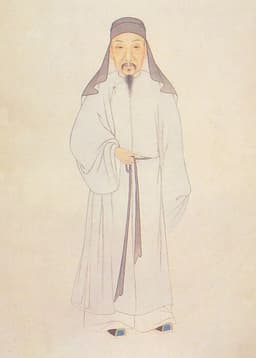
Dou Gu
General · Ancient
47.3Total
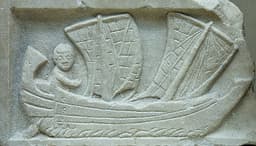
Gildo
General · Ancient
44.9Total
Basic Information
Born
19
350
Died
89
398
Era
Ancient
Ancient
Nationality
China
Western Roman Empire
Occupation
General
General
Civilization
Eastern
Western
Score Comparison
Military (10%)
61.7
45.0
Political (20%)
35.0
35.0
Influence (20%)
46.3
45.5
Legacy (20%)
40.0
34.2
Leadership (15%)
57.1
68.0
Strategy (15%)
57.5
50.0
TOTAL
47.3
44.9
Dou Gu — Complete Timeline
73 AD
Battle of YiwuluWar◆ Major
Dou Gu led a Han expeditionary force against the Xiongnu at Yiwulu (modern Hami). He defeated the Xiongnu and established a military garrison, securing the strategic gateway to the Western Regions and reopening the Silk Road.
Han DynastyXiongnuSilk Road
Impact: regional
74 AD
Appointed as Protector General of the Western RegionsPolitical Action◆ Major
Dou Gu was appointed Protector General (Duhu) of the Western Regions, overseeing Han interests in Central Asia. He established diplomatic relations with local kingdoms and maintained Han military presence in the region.
Han DynastyWestern RegionsDiplomacy
Impact: regionalconstructive
89 AD
Campaign Against the Northern XiongnuWar
Dou Gu, as a general under Emperor He, launched a major campaign against the Northern Xiongnu. His forces advanced deep into the steppe, defeating the Xiongnu and forcing their remnants to flee westward, ending the Xiongnu threat to Han China.
Han DynastyXiongnuMilitary Campaign
Impact: regional
Death in BattleWar
Dou Gu died in battle during the campaign against the Northern Xiongnu. His death marked the end of a distinguished military career that had secured Han dominance over the northern frontier.
Han DynastyDeathMilitary
Impact: regionaltragic
Gildo — Complete Timeline
397 AD
Rebelled as Count of AfricaWar◆ Major
Gildo, a Berber prince and Roman Count of Africa, rebelled against the Western Roman Emperor Honorius. He withheld grain shipments to Rome, threatening the city's food supply, and declared allegiance to the Eastern Empire.
RevoltRoman EmpireNorth Africa
Impact: regionaldestructive
398 AD
Defeated and Killed by His BrotherWar◆ Major
The Western Roman general Stilicho sent an army under Gildo's own brother, Maseezel, to suppress the rebellion. Maseezel defeated Gildo's forces, and Gildo was captured and executed, ending the revolt.
BattleRoman EmpireNorth Africa
Impact: regionaltragic
Expert Analysis
Origins
Dou Gu was born into a prominent Han dynasty family during the 1st century AD. His father, Dou Rong, was a powerful general and regent, providing Dou Gu with access to military education and political connections. Little is known of his early life, but he likely received training in classical Chinese texts and military strategy, preparing him for a career in the Han military.
Gildo was a Berber prince born around the mid-4th century AD in the Roman province of Mauretania Caesariensis (modern Algeria). He was the son of Nubel, a powerful Berber chieftain and Roman military commander. Gildo grew up in a turbulent environment where Roman and Berber cultures clashed, and his brother Firmus had previously led a major rebellion against Rome. This family background shaped his ambitions and resentments.
Rise to Power
Dou Gu rose to prominence during the reign of Emperor Ming of Han (r. 57–75 AD). His family's influence helped him secure military commands. In 73 AD, he was appointed General of the Chariot and Cavalry and led a campaign against the Northern Xiongnu. His victory at the Battle of Yiwulu (modern Hami) in 73 AD was a turning point, establishing a Han garrison in the Tarim Basin. Subsequently, he was appointed Protector General of the Western Regions (Duhu), overseeing Han interests in Central Asia from 74 AD.
Gildo's rise came through Roman military service. He was appointed Count of Africa (Comes Africae) around 385 AD by Emperor Theodosius I, likely due to his family's local power and his own military abilities. As count, he controlled the province of Africa Proconsularis, which supplied grain to Rome. His brother Firmus had rebelled in 372 AD but was defeated; Gildo avoided that fate by remaining loyal to Rome until 397 AD.
Leadership & Governance
Dou Gu governed the Western Regions with a combination of military force and diplomacy. He established garrisons, built roads, and fostered trade along the Silk Road. His governance was pragmatic, often co-opting local rulers rather than imposing direct rule. For example, he appointed the king of Khotan as a vassal and secured alliances with other city-states. Militarily, he led from the front, personally commanding campaigns that expanded Han control.
Gildo's leadership was more autocratic and focused on consolidating his own power. As Count of Africa, he administered the province with a heavy hand, suppressing local Berber rivals and enriching himself. He withheld grain shipments to Rome in 397 AD to pressure Emperor Honorius, demonstrating his control over a vital resource. However, his governance lacked institutional support and relied on personal loyalty.
Triumph & Tragedy
Dou Gu's greatest success was his campaign against the Northern Xiongnu, which secured the Han frontier and reopened the Silk Road. His establishment of the garrison at Yiwulu was a strategic achievement that lasted for decades. However, his greatest failure was his death in battle around 75 AD during a subsequent campaign. He was killed by Xiongnu forces, a tragic end that cut short his career. His military achievements scored 61.7, reflecting effective but not legendary skill.
Gildo's triumph was his rebellion itself: he successfully challenged Roman authority and disrupted grain supplies, forcing a response. His failure came swiftly: in 398 AD, a Roman army led by his own brother Maseezel defeated him. Gildo was captured and killed, his revolt crushed within months. His military score of 45.0 reflects his inability to sustain his rebellion against a determined counterattack.
Character & Destiny
Dou Gu was ambitious and disciplined, traits that served him well in the hierarchical Han military. He showed strategic vision in expanding Han influence but also rashness in pursuing glory, which led to his death. Historical assessments note his effectiveness as a frontier commander but criticize his overextension.
Gildo was proud and vengeful, driven by family grievances and a desire for autonomy. His decision to rebel was based on personal animosity toward the Western Roman court, but he overestimated his strength. His leadership score of 68.0 is higher than Dou Gu's 57.1, reflecting his ability to command loyalty, but his political score of 35.0 matches Dou Gu's, indicating limited strategic statecraft.
Legacy
Dou Gu's legacy is as a key figure in Han expansion into Central Asia. His campaigns laid the groundwork for the later successes of Ban Chao. The garrison at Yiwulu remained a Han outpost, and his diplomatic efforts influenced Silk Road trade for centuries. His total score of 47.3 reflects a solid but not transformative impact.
Gildo's legacy is as a rebel who exposed the fragility of Roman control in Africa. His revolt contributed to the weakening of the Western Roman Empire, but it was quickly suppressed and had no lasting institutional change. His total score of 44.9 is slightly lower, indicating a less enduring influence.
Conclusion
Dou Gu had a greater impact than Gildo. With a total score of 47.3 versus Gildo's 44.9, Dou Gu's military achievements were more consequential, securing Han borders and facilitating trade for decades. Gildo's rebellion, while dramatic, was a temporary disruption that failed to alter the empire's trajectory. Dou Gu's legacy as a builder of Han power in Central Asia outweighs Gildo's as a short-lived rebel. Thus, Dou Gu is the more significant historical figure.
Rankings
🥇
Dou GuLeader
Mil: 61.7Pol: 35.0Inf: 46.3
47.3
🥈
Gildo
Mil: 45.0Pol: 35.0Inf: 45.5
44.9
+2.4 behind
How This Comparison Works
Algorithm
Each figure is scored on 6 dimensions (0—100 scale) based on structured historical data: Military (10%), Political (20%), Influence (20%), Legacy (20%), Leadership (15%), Strategy (15%). The weighted total produces the final ranking.
Data Sources
Scores are computed from structured sub-indicators in the database. Scale factors adjust for era (Ancient ×0.85, Modern ×1.0) and civilization size (Eastern ×1.05, Other ×0.80) to account for differences in population and military scale.
Maximum 3 Figures
Comparisons are limited to 2—3 figures to ensure readability and statistical meaningfulness.
Error Margins
±5 points per dimension — Sub-scores are derived from historical records with inherent uncertainty. Two figures within 5 points on a dimension should be considered roughly equivalent in that area.
Total Score Accuracy
±3 points overall — The weighted combination of 6 dimensions produces a total score with approximately ±3 points of uncertainty. Differences of less than 3 points are not statistically significant— the figures are effectively tied.
Known Limitations
- Historical records are incomplete and uneven across civilizations
- Figures from oral-tradition societies may be underrepresented
- Occupation labels can misclassify multi-role figures
- Scores measure capability and impact, not moral character
- Quantitative scoring is a comparison tool, not absolute truth
Capability Radar
Military (10%) — Battles & Warfare
Battles
55
15
Win Rate
60
10
Expansion
50
10
Political (20%) — Governance & Reform
Reform
10
5
Diplomacy
40
10
Economy
10
5
Influence (20%) — Cultural & Global Reach
Cultural
20
5
Global
15
5
Legacy (20%) — Historical Impact
Historical
30
10
Longevity
20
5
Leadership (15%) — Power & Stability
Tenure
20
20
Stability
15
5
Strategy (15%) — Tactics & Innovation
Strategy
55
15
Tactics
50
20
Reform
10
5
Similar Comparisons
Comments & Discussion
No comments yet. Be the first to share your thoughts!